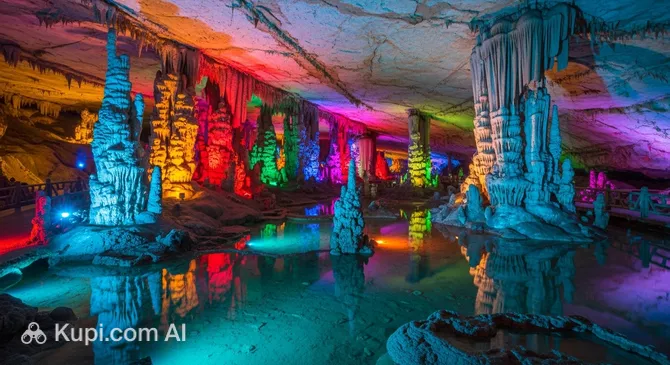
Imagine a fairytale underground world where time seems to have frozen in whimsical stone formations. Reed Flute Cave is a unique natural monument located on the outskirts of the city of Guilin. This natural wonder is situated in China and is rightfully considered one of the most impressive karst caves in the world.
Reed Flute Cave. Illustration.
Source: Kupi.com AI
Traveller photos:
Formed more than 180 million years ago within Guangminshan Mountain, the cave captures the imagination with a forest of stalactites and stalagmites, which, under skillful multicolored lighting, transform into true works of art. For its magnificence, it earned the unofficial title of the “Palace of Natural Art”.
The cave got its name from the reeds growing at the entrance, which have long been used to make melodic flutes. Today, it is not just a geological site, but a real underground gallery where natural formations coexist with ancient inscriptions and modern light installations.
Contacts
To plan your visit to this natural complex, you can use the following contact information. Please note that the site does not currently have an official website, so it is best to check for the latest news through the city's tourist centers.
The main adventure here is a walk along a well-equipped route about 1 kilometer long. You will pass through dozens of halls, each with its own name and legend. Pay attention to the lighting: it masterfully emphasizes the texture of the rocks, creating illusions of snow-covered forests, clouds, and even mythical creatures.
Be sure to linger at the underground lake. Portions of Tchaikovsky's "Swan Lake" ballet are often performed here, using the water surface and cave arches as natural scenery. In halls with magnificent acoustics, you can hear live flute performances, adding a special magic to your visit. Additionally, one of the halls shows a short film explaining how this beauty was formed drop by drop over millions of years.
For photography enthusiasts, there is endless creative potential: the contrast between light and shadow makes every shot dramatic and unique. After the tour, you can stroll through the surrounding area in the shade of bamboo groves or browse the souvenir market near the entrance. Remember that bargaining is expected here — it is part of the local flavor.
Getting There
Reaching this natural wonder is easy, as it is located just 5-7 kilometers northwest of the city center. The most comfortable and fastest way is by taxi or using the Didi mobile app. The journey from the center takes about 10-15 minutes and costs approximately 20-30 yuan.
For those who prefer public transport, buses run regularly from the city. Routes No. 2, 21, 25, and 26 stop within walking distance of the entrance. If you are coming from the airport, it is best to take a taxi; the journey will take 30 to 40 minutes depending on traffic.
Travelers in rental cars can follow the address: 1 Ludi Rd (芦笛路1号); there is a parking lot located near the site. Outdoor enthusiasts and eco-tourists should consider renting a bicycle or scooter, which allows you to enjoy scenic views of the surroundings on the way to Guangminshan Mountain.
Nearest city: Guilin
History & Facts
The history of this place is rooted in the distant past. Geologically, the formation of the underground chambers began about 180 million years ago. As a result of a long process of limestone dissolution by groundwater and subsequent deposition of calcium carbonate, nature created what is today called the “Palace of Natural Art”.
Interestingly, Reed Flute Cave is one of the oldest documented tourist attractions in the country. Human history here began more than 1,200 years ago. The earliest surviving inscription on the walls dates back to 792 AD, corresponding to the Tang Dynasty era.
In total, researchers have discovered 77 wall inscriptions, including poems and travel notes left by travelers from the Tang and Song dynasties. These cultural artifacts transform the natural site into a unique historical archive under the rock arches.
The site owes its poetic name to the thickets of a special type of reed (Phragmites) that has long grown at the entrance. Locals used it to make melodic flutes, which eventually became a recognizable regional brand and fixed in the local toponymy.
Time Needed
To explore all the beauties of the underground world at a leisurely pace, most tourists need between 1 and 2 hours. This is enough time to walk the main route of about one kilometer and take striking photos of the most famous stalactites.
However, if you plan to watch the multimedia show, see the ballet excerpts on the underground lake, and browse for souvenirs at the exit, we recommend setting aside about 2.5 – 3 hours for your visit. This will allow you to enjoy the atmosphere without feeling rushed.
Working Hours
The cave is open to visitors daily, including weekends and holidays. The standard operating schedule is from 08:00 to 18:00. It is worth noting that the last entry is usually allowed 30–60 minutes before the ticket office closes.
During the peak tourist season, hours may be slightly extended. As the exact schedule can vary, we recommend checking the information directly with hotel staff or at tourist centers before your trip.
Nearby
A visit to the underground chambers can easily be combined with exploring other interesting places in the area. The surroundings are famous for their parks, historical monuments, and cozy spots that help you fully experience the atmosphere of the region.