Support

Harbin Taiping International Airport

About the Airport

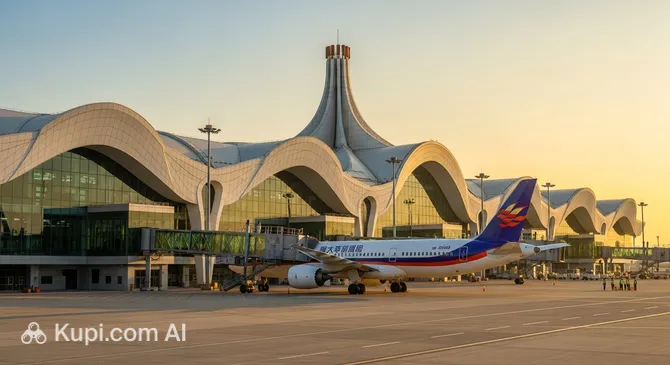
Harbin Taiping International Airport. Source: Kupi.com Binoculars

Welcome to Harbin Taiping International Airport (HRB) — the main aerial gateway to the "Ice City" and the largest aviation hub in all of Northeast China. This modern and constantly evolving airport serves as the starting point for millions of travelers seeking to explore the unique culture and winter wonders of Heilongjiang province. As a vital transport hub connecting domestic and international routes, Harbin Airport plays a key role in the region's tourism and economy. It is ready to offer a comfortable start to your journey, whether it is a business trip or a long-awaited vacation.

IATA Code HRB
ICAO Code ZYHB
City Harbin
Distance to center approx. 33 km
Status International
Annual Passengers almost 23.8 million people (2024)
Popular Airlines China Southern Airlines, Sichuan Airlines, China Eastern Airlines
Schedule online flight board "Harbin Taiping International Airport"

Harbin Taiping Airport consists of two passenger terminals — T1 and T2. Terminal T2 primarily serves domestic flights, while Terminal T1, recently renovated and reopened in 2023, handles international flights and selected domestic routes, offering passengers modern service. For the convenience of travelers, the terminals are interconnected. The airport serves as a hub for several major airlines, including China Southern Airlines, and offers an extensive network of routes.

Inside the terminals, you will find everything necessary for a comfortable wait before your flight: numerous cafes and restaurants offering local and European cuisine, currency exchange counters, ATMs, and luggage storage facilities. You can get to the center of Harbin via special shuttle buses that run on several routes, or by taxi. The bus ride will take about an hour, while a taxi ride takes approximately 30-40 minutes depending on traffic.

Contact Information

For your convenience, we have compiled the essential contact information for Harbin Taiping International Airport (HRB), which may be useful when planning your trip or in case of any questions.

  • Official Airport Website: The most up-to-date information on flights, services, and regulations can be found on the official website: www.hrbap.com.cn (the site is primarily in Chinese).
  • Inquiry Service Phone: For immediate information, you can call: +86-451-82894220.
  • Airport Address: Yingbin Rd, Daoli District, Harbin, Heilongjiang, China.
  • Email: The airport does not provide a public email address for general inquiries. It is recommended to use the phone or feedback forms on the official website if available.
  • Airport Social Media: The airport's main pages are maintained on popular Chinese platforms. For international tourists, the official website remains the most reliable source of information.
  • Lost Luggage Information: For issues related to lost or damaged luggage, please contact the Lost and Found service at: +86-451-82894230.
  • Passenger Support Contacts: For general questions and support, passengers can contact the main airport inquiry service at the number listed above.

How to Get to the Airport

Taiping International Airport (HRB) is located approximately 40 kilometers southwest of the center of Harbin, and there are several convenient options for traveling to the airport from the city. When planning your route, consider weather conditions and potential travel time, which may vary depending on the traffic situation in China.

Public Transport: Shuttle Buses. The most popular and budget-friendly way to get to the airport is via special shuttle buses. There are several routes (usually numbered: No. 1, No. 2, No. 3, etc.) departing from various key points in the city, including the Central Railway Station and major hotels. A trip on such a bus takes on average from 60 to 90 minutes depending on the route and traffic. This is a reliable and inexpensive option, ideal for most tourists.

Metro and Trains. Currently, there is no direct metro or train line to Taiping Airport. However, you can use the Harbin Metro to reach one of the shuttle bus stops. For example, travel to Harbin Railway Station, from where express buses to the airport depart regularly. Such a combined route can be convenient if you are staying near a metro station.

Taxi and Private Transfer. Taking a taxi is the fastest and most comfortable method. The journey from the city center will take about 45-60 minutes excluding traffic jams. The cost will be significantly higher than the bus. It is recommended to use official taxi services and always ask the driver to turn on the meter. Alternatively, you can pre-book a private transfer via online services, which guarantees a fixed price and a meeting at a location convenient for you.

Car Rental and Parking. If you prefer independence in your movements, you can rent a car. This gives you the freedom to explore not only the city but also its surroundings. Taiping Airport provides both short-term and long-term parking where you can leave your car during your absence. Ensure you have all the necessary documents for driving in China.

Terminals and Map

Harbin Taiping International Airport (HRB) consists of two passenger terminals serving domestic and international flights. Understanding their structure will help you orient yourself easily upon arrival or before departure.

Terminal 2 (T2) — this is the main, newest, and largest terminal of the airport. It serves all domestic flights within mainland China. The terminal features a modern design, spacious halls, and well-developed infrastructure. Most shops, cafes, and restaurants are concentrated here. Departure zones are located on the upper floors, and arrival halls on the lower level. Thanks to a thoughtful layout and clear signs in Chinese and English, navigating T2 is usually straightforward.

Terminal 1 (T1) — this is the older airport building, which is now fully used for international flights, including routes to Hong Kong, Macau, and Taiwan. It is significantly smaller and quieter than T2, making passport and customs control relatively quick. Although the selection of services here is more modest, everything necessary for a comfortable wait for your flight is available.

Terminals T1 and T2 are located in close proximity to each other, and the transfer between them can be made on foot in 5-10 minutes. This is particularly convenient for passengers transferring from a domestic flight to an international one or vice versa. It is recommended to allow about 1.5–2 hours for check-in and security on domestic flights (T2), and at least 2.5–3 hours for international flights (T1) before departure, to complete all formalities without rushing. Always check the terminal number on your flight ticket in advance to avoid confusion.

Airport History

The history of the international airport in Harbin reflects the rapid economic growth of the entire northeast region of China. The airport was opened in **1979** and was originally named Yanjiagang. From the very beginning, it played an important role in the transport system of Heilongjiang province, although its initial infrastructure was designed for a significantly smaller passenger flow.

A key stage in the development of the air harbor occurred in the 1990s. Due to the growth of business activity and tourism, a decision was made for large-scale reconstruction. In **1997**, a new terminal, modern for that time, was put into operation, and the airport received its current name — Harbin Taiping International Airport. This event marked its transformation from a regional airfield into an important international hub capable of receiving flights from various countries around the world.

A new round of modernization began in the 2010s when it became obvious that existing capacities were again reaching their limit. In **2018**, the grand opening of the new Terminal 2 took place, designed to serve domestic flights. This ultra-modern complex allowed for a significant increase in the airport's capacity, improved comfort levels for passengers, and the implementation of advanced service technologies. The old terminal was repurposed to serve international destinations.

Among interesting facts from the airport's history, it is worth noting its strategic location, making it a key point for flights connecting China with Russia, South Korea, and Japan. Over the years of its existence, the airport has repeatedly set records for passenger traffic growth, confirming its status as one of the most dynamically developing aviation centers in Northeast Asia.

Services and Amenities

Harbin Taiping International Airport offers passengers a wide range of services to make waiting for a flight as comfortable and productive as possible. Regardless of the purpose of your trip, here you will find everything needed for a pleasant time before departure.

The terminal houses numerous cafes and restaurants for every taste — from fast-food outlets and cozy coffee shops to establishments offering traditional Chinese cuisine and European dishes. For shopping enthusiasts, there are Duty Free shops where you can purchase perfumes, cosmetics, and confectionery, as well as souvenir stalls with local goods and gifts for loved ones.

Free Wi-Fi is available throughout the airport, and numerous charging stations for gadgets will allow you to stay connected at all times. For those who value enhanced comfort, business lounges and VIP zones are open. Here you can relax in a quiet atmosphere, have a snack, enjoy beverages, and work away from the general bustle.

To resolve practical issues, the airport has bank branches, ATMs, and currency exchange points. In case of feeling unwell, passengers can seek assistance at the medical center operating within the terminal.

Families with children will appreciate the presence of specially equipped mother and child rooms, where you can feed and change a baby in a quiet environment. For passengers with reduced mobility, a barrier-free environment has been created, including ramps, special elevators, and restrooms. You can also request an escort service through the airport territory in advance.

If you have a long layover or an early morning flight, several hotels of various price categories are located in the immediate vicinity of the airport. For business travelers, business centers and conference rooms for meetings and negotiations may be available at the airport or in adjacent hotels.

Where to Eat

At Harbin Taiping International Airport (HRB), travelers will find diverse dining spots capable of satisfying any taste and budget. Whether you are looking for a quick snack before departure or a full meal, there is plenty to choose from in the airport terminals.

For those wishing to experience local cuisine, it is worth paying attention to restaurants offering dishes from Northeast China (Dongbei cuisine). This is an excellent opportunity to try the famous dumplings (jiaozi), hearty soups, or other regional delicacies. In the menus of some establishments, you may notice dishes with Russian influence, which is a gastronomic feature of this region.

Main dining establishments are located both in the public area (before passport and security control) and in the sterile departure zone. As a rule, the selection of cafes and restaurants is wider in the departure zone. You will find here both popular international fast-food chains and local Chinese eateries offering noodles, rice, and other dishes. For a more relaxed meal, you can choose one of the à la carte restaurants.

If you have limited time, the best choice would be the numerous cafes and coffee shops. Here you can order coffee, tea, fresh pastries, and sandwiches. For a full lunch or dinner, it is better to head to one of the restaurants in the departure zone, where you can spend time comfortably while waiting for your flight. Travelers with specific dietary needs, such as vegetarians, are recommended to study the menus in Chinese cuisine restaurants, where a large selection of vegetable and tofu dishes is often presented.

The price range at the airport varies from budget options in food courts to higher prices in full-service restaurants, which is standard practice for airports. Most establishments operate according to the flight schedule, opening early in the morning and closing after the departure of the last planes. Some key spots may operate 24/7 or with extended hours.

Travel Tips

To ensure your journey through Harbin Taiping International Airport goes as comfortably as possible, we recommend familiarizing yourself with a few useful tips. This modern transport hub in Harbin serves many domestic and international destinations, so advance planning will help avoid hustle.

Arrival Time and Check-in: For domestic flights within China, arrive at the airport 2-3 hours before departure, and for international flights — at least 3-4 hours prior. This time is sufficient for calmly passing check-in, baggage drop, and security control. If possible, check in for your flight online to save time in queues at the counters.

Security Control and Carry-on Features: Be prepared for a thorough inspection. All electronics (laptops, tablets) must be removed from bags. Particular attention in Chinese airports is paid to portable chargers (power banks) — they can be carried only in carry-on luggage, and the casing must have a clear factory marking indicating the capacity. Devices without markings may be confiscated. Also, remember that carrying lighters and matches is generally strictly prohibited.

For Transfer Passengers: If you have a connecting flight, follow the "Transfer" signs. Check with your airline in advance whether you need to collect your luggage and check it in again, especially when transferring from an international to a domestic flight. Ensure you have enough time between flights for all formalities.

Customs Control: Upon arrival on an international flight, you will need to fill out an immigration card. If you are bringing in goods subject to declaration, be sure to declare them to avoid potential fines. Keep your passport and boarding pass handy until you exit the airport.

Saving Time and Money: To avoid overpaying for food, you can have a snack before arriving at the airport or bring an empty water bottle and fill it at drinking fountains after the security zone. It is more cost-effective to book a transfer from the airport in advance via online services.

In Case of Flight Delay: If your flight is delayed, contact your airline's information desk for current information. Clarify if you are entitled to compensation in the form of vouchers for food or drinks. It is always useful to have a book, headphones, and a charged gadget with you so that the wait passes unnoticed.

Seat Selection on the Plane: If the airline allows you to choose a seat, consider your preferences. Window seats will offer you beautiful views during takeoff and landing, while aisle seats allow you to stand up freely and stretch your legs without disturbing neighbors.

Reached the end of the page?

That means the route is fully explored