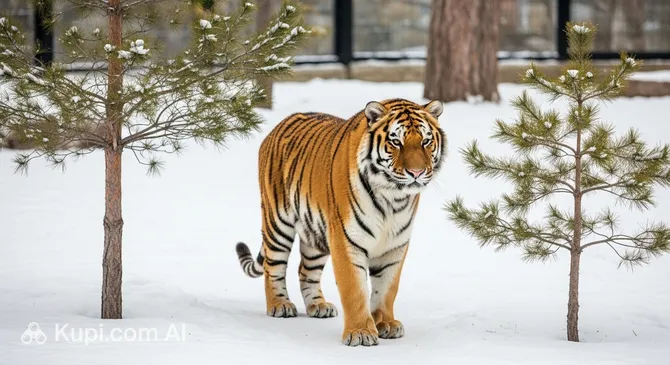
Imagine a place where majestic predators roam free while you observe them from a protected vehicle. The Siberian Tiger Park in the city of Harbin is not just a zoo, but the world\'s largest research center for the breeding and preservation of the rarest Siberian tigers, which are listed in the Red Data Book.
Siberian Tiger Park. Illustration.
Source: Kupi.com AI
Traveller photos:
The territory of this unique site in China is impressive in scale: the park spans 144 square kilometers on the north bank of the Songhua River. More than 300 Siberian tigers live here in conditions as close as possible to their natural habitat. In addition to them, visitors can encounter rare white tigers, lions, leopards, and even amazing ligers—hybrids of a lion and a tigress.
The park is divided into 15 themed zones, each designed for different age groups and feline species. This location combines an important scientific mission with exciting tourist infrastructure, offering guests not only safari tours but also educational exhibits on the history and biology of these "kings of the taiga."
Contacts
For those planning a self-guided visit to this unique location, it is helpful to have exact coordinates at hand. Below is the essential contact information to help you find your way and contact the park administration if needed.
Please note that the park currently does not have an official website, so it is best to check for current updates by phone or on-site.
The highlight of any visit is the thrilling safari tour. Visitors board special buses protected by sturdy metal mesh and head straight into the open enclosures. For about an hour, you can watch the big cats rest, play, or approach the windows. The bravest guests can try feeding the tigers meat through special openings using tongs—it provides an incredible adrenaline rush and lets you see the predators from an arm\'s length away.
After the bus ride, take a stroll along the safe pedestrian walkways located above the enclosures. Here, you can see the "younger generation"—one-year-old tiger cubs playfully splashing in pools or chasing each other. This is a great opportunity for quiet observation of animal behavior and photography without the hustle and bustle.
Don\'t forget to stop by the science and exhibition hall. It features unique photographs and facts about the struggle to preserve endangered species, allowing you to see the park not just as an attraction, but as a serious nature conservation project. The park is equally interesting in summer and winter, when the tigers look particularly striking against the snow.
Getting There
Reaching this sanctuary is easy, as it is located in the Songbei District (Song Bei Qu) on the north bank of the Songhua River. If you prefer public transport, numerous buses run from the city center, such as No. 69, No. 81, No. 82, No. 121, and No. 147. The journey to the "Tiger Park" stop takes about an hour, allowing you to enjoy the city views along the way.
For a faster and more comfortable trip, you can use a taxi or the Didi mobile app. A ride from the central district takes 30 to 50 minutes and costs approximately 50–100 yuan. If you are heading here directly from Harbin Taiping International Airport, prepare for a one-hour journey, as the distance is about 50 kilometers.
The best time to depart is early morning to avoid queues at the ticket office. While parking is available for private cars, remember that within the territory where the predators are kept, movement is only permitted on the park\'s specially equipped vehicles.
Nearest city: Harbin
History & Facts
The history of this place began in 1996, when the wild Siberian tiger population was on the brink of total extinction. At that time, the park housed only 8 individuals. The main goal of the project was not just tourist entertainment, but the creation of a research base for the survival and breeding of these majestic cats.
After ten years of work, the project transformed into a full-fledged tourist center. This helped attract additional funding, which was directed entirely toward developing the breeding program and improving animal welfare. The territory gradually expanded and today covers an impressive 144 square kilometers.
Thanks to the efforts of specialists, the tiger population in the park has grown to over 300 individuals, making it the world\'s largest center for Siberian tiger conservation. Today, the park plays a key role in global biodiversity, demonstrating successful experience in restoring an endangered species in conditions as close to the wild as possible.
Time Needed
To explore all sections at a leisurely pace and fully enjoy watching the predators, visitors are recommended to set aside 3 to 4 hours for their visit. This is enough time to complete the main route and visit the exhibition halls.
The organized bus safari takes approximately 45–60 minutes and is a mandatory part of the program. The remaining time (1–2 hours) is usually spent walking along the pedestrian bridges over the enclosures with young tigers, visiting the science pavilion, and, of course, taking memorable photos. If you plan to explore all 15 areas of the park in detail, it’s best to allow for a half-day trip.
Working Hours
The reserve gates are open to visitors daily from 08:30 to 16:30. It is important to note that ticket sales and the last entry to the territory close at 15:30, as the tour requires significant time.
During the winter months (November to February), the operating schedule may change slightly depending on daylight hours and weather conditions. Before your trip, it is recommended to check the current schedule by phone or on-site to ensure your visit is as comfortable as possible.
Nearby
A visit to the predator park can easily be combined with exploring other interesting locations in the northern part of the city. Exploring the surroundings will help you gain a more complete understanding of the cultural and entertainment life of this region.
Nearby, you\'ll find both scenic park areas and leisure centers that may be worth a stroll after an intense safari. Below is a list of nearby attractions and the approximate distance to them: