Support

Hengyang Nanyue Airport

About the Airport

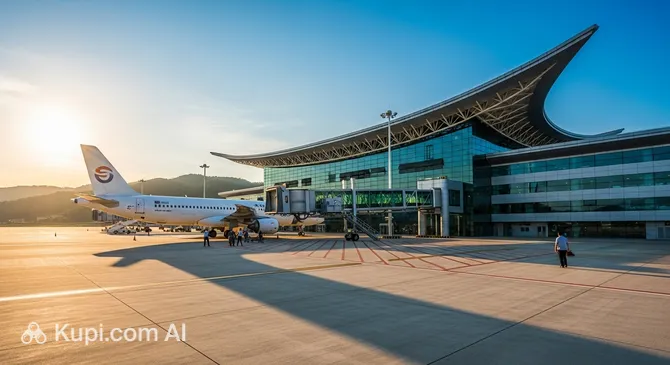
Hengyang Nanyue Airport. Source: Kupi.com Binoculars

Hengyang Nanyue Airport is the modern air gateway to the Hengyang urban area and the famous Mount Hengshan, one of China's five sacred mountains, after which it is named. Opened in 2014, the airport replaced the old Bajialing Airport and became an important transport hub in Hunan Province. This air harbour connects the region with the country's key metropolises, offering travelers a fast and convenient way to start exploring the cultural and natural treasures of southern China.

IATA Code HNY
ICAO Code ZGHY
City Hengyang
Distance to centre approx. 18-24 km
Status Domestic
Annual Passengers approx. 890,000 (2023)
Popular Airlines Air China, China Eastern Airlines, Hainan Airlines
Schedule Online Flight Board "Hengyang Nanyue Airport"

Despite its relatively small size, Hengyang Nanyue Airport boasts well-thought-out infrastructure. Its runway is capable of accommodating popular aircraft types such as the Boeing 737 and Airbus A320. The terminal, covering an area of over 14,000 square metres, ensures a comfortable stay for passengers. Convenient transport connections, including bus routes and taxis, make it easy to reach the city centre of Hengyang or head to the foot of Mount Hengshan. The airport serves flights to major cities such as Beijing, Shanghai, and Chengdu, making it a strategically important point for travel throughout China.

Contact Information

For up-to-date information on flights, services, and regulations at Hengyang Nanyue Airport (HNY), it is recommended to use the following official contacts:

  • Official Website: The airport is part of the Hunan Airport Management Group; current information can be found on their website: www.hunanairport.cn.
  • Help Desk Phone: For information on flights, services, and assistance, please call: +86 734 819 9999.
  • Airport Address: Yunji Town, Hengnan County, Hengyang, Hunan Province, China.
  • Email: An official email address for general inquiries is not published. It is recommended to contact them by phone.
  • Social Media: News and updates are often published on the official account of the management company, Hunan Airport Group, on WeChat (ID: HunanAirport).
  • Lost Luggage Information: For issues regarding lost or damaged luggage, please contact your airline's representative or the main airport help desk.
  • Customer Support Contacts: For all questions related to your stay at the airport, you can contact the help desk at: +86 734 819 9999.

How to Get to the Airport

You can reach Hengyang Nanyue Airport (HNY), located just 18 km from the city centre of Hengyang, in several ways. The choice depends on your budget and comfort preferences, and the trip from the centre usually takes between 30 to 50 minutes.

Public Transport: Shuttle Buses

The most economical option is special shuttle buses. They connect the airport with key points in the city, such as the central bus station. The fare is approximately 15-20 CNY. This is a reliable and budget-friendly method, ideal for solo travelers. The bus journey, including stops, will take about 40-50 minutes. We recommend checking the schedule in advance, as it may change.

Taxi and Transfer

Taking a taxi is the fastest and most convenient way to get to the airport. Travel time will be approximately 30 minutes depending on traffic conditions, and the cost of the trip is about 50-70 CNY. You can order a car via apps popular in China, such as DiDi, or simply hail one on the street. This option is especially convenient for families with children or travelers with large luggage. You can also book a private transfer in advance, which guarantees a fixed price.

Car Rental and Parking

If you prefer complete freedom of movement, you can rent a car. This will allow you not only to reach the airport but also to explore the scenic surroundings. It is important to remember that for driving in China, foreign tourists most often require a local driver's license or a special permit. Hengyang Nanyue Airport provides both short-term and long-term parking for those arriving in their own or rented vehicles.

Terminals and Map

Hengyang Nanyue Airport (HNY) is a modern and compact aviation hub distinguished by a simple and clear structure for passengers. It consists of one terminal building serving all domestic flights. Thanks to this, you do not have to worry about complex transfers or searching for the right building—all processes are concentrated in one place, making your stay at the airport as comfortable as possible.

The airport layout is logical and intuitive. The terminal has several levels: the Arrivals Area and baggage claim are usually located on the ground floor, where passengers enter immediately after disembarking. The Departures Area is located on the upper level. Here you will find check-in counters, security checkpoints, and the main waiting lounges with boarding gates.

Completing pre-flight formalities at Hengyang Airport generally does not take much time. Check-in and baggage drop-off take an average of 15–30 minutes, and security checks take another 10–20 minutes. Nevertheless, it is recommended to arrive at the airport well in advance—at least 1.5–2 hours before departure—to complete all procedures without rushing, enjoy a coffee, and find your gate.

Navigation inside the terminal will not cause difficulties even for those visiting for the first time. All signs and information boards are duplicated in English, which significantly simplifies orientation. Thanks to the compact size and the lack of need to move between terminals, you will easily and quickly find your boarding gate. Simply follow the standard signs for "Departures" and the gate numbers.

Airport History

Hengyang Nanyue Airport (HNY) is a modern aviation hub whose history is closely linked to the rapid development of the city of Hengyang and the entire region. Unlike airports with a century-long history, Nanyue is an example of the latest infrastructure in China, created to meet the growing needs for passenger and cargo transportation.

The official opening of the airport took place on December 23, 2014. It was built to replace the old Hengyang Bajialing Airport, which, having been founded back in 1929, had exhausted its possibilities for expansion due to its location within the city limits and technical limitations. The decision to build a new, more modern airport was made to stimulate the economy and, primarily, tourism, as one of the sacred mountains—Nanyue Hengshan, which gave the air harbour its name—is located nearby.

Construction of Nanyue Airport began in 2012 and became an important project for Hunan Province. The airport was designed and built in accordance with modern 4C standards, allowing it to accommodate medium-haul aircraft such as the Airbus A320 and Boeing 737. Since its opening, it has not undergone major renovations, as it was originally equipped with advanced technologies and passenger-friendly infrastructure.

The main achievement of the airport has been the significant improvement of Hengyang's transport accessibility. It connected the city with direct flights to the country's largest metropolises, including Beijing, Shanghai, and Guangzhou. This not only simplified travel for local residents but also opened the region to thousands of tourists wishing to visit Mount Nanyue and other local attractions. Thus, the history of the airport is the story of a new stage in the city's development, focused on openness and tourism.

Services and Amenities

Hengyang Nanyue Airport (HNY) offers passengers a basic set of services and amenities for a comfortable wait for their flight. Despite its relatively small size, the terminal is designed to meet the essential needs of travelers.

Within the terminal, you will find several cafes and snack bars where you can have a bite to eat before departure, choosing from local and general Chinese cuisine, as well as coffee or tea. There are shops selling souvenirs, travel essentials, newspapers, and light snacks.

For a more comfortable wait, VIP lounges are available at the airport. Business class passengers and loyalty programme members can use their services, which usually include comfortable seating, complimentary beverages and snacks, as well as fresh newspapers. Free Wi-Fi is available throughout the terminal; a local phone number may be required to connect. Special stands with power outlets and USB ports are equipped for charging electronic devices.

Passengers have access to ATMs for cash withdrawals. Currency exchange points in regional airports may not always be available, so it is recommended to take care of exchanging money in advance. In case of necessity, you can visit the medical point, where first aid will be provided.

Mother and child rooms are equipped for passengers with children, where you can feed and change your baby in a quiet environment. Travelers with reduced mobility can request special assistance, including the provision of wheelchairs and accompaniment during boarding. The airport infrastructure generally includes ramps and specially equipped restrooms.

Although there are no hotels directly inside the airport building, several hotels of various price categories are located in the vicinity, many of which offer transfers for their guests. There are no specialized conference rooms or business centres at the airport, but basic working conditions can be found in the VIP lounges.

Where to Eat

Hengyang Nanyue Airport (HNY) offers passengers several options for a snack or a full meal, although the selection may not be as extensive as in major international hubs. Most dining establishments are concentrated in the main terminal building, accessible to both departing passengers and those seeing them off.

The main focus of the menu is on Chinese cuisine. Travelers can find eateries here offering popular dishes such as noodles, rice with various toppings, dumplings, and steamed buns (baozi). This is a great opportunity to taste the authentic flavours of the region before departure. Additionally, the airport typically has cafes where you can order coffee, tea, pastries, and sandwiches.

Dining establishments are located both in the public area before security control (landside) and in the secure departure area (airside). Usually, the selection of restaurants is slightly wider in the public area, allowing you to have a leisurely lunch with those seeing you off. After passing security control, passengers have access to small cafes and vending machines where they can quickly grab a snack before boarding.

Regarding special dietary needs, finding options for vegans, vegetarians, or gluten-free dishes can be difficult. It is recommended to carry small snacks or clarify the ingredients of dishes in advance using a translator. Prices at the airport are generally higher than in the city, which is standard practice for most air hubs.

For a quick bite, small kiosks with ready-made food or cafes in the departure area are ideal. If you have time for a full lunch, it is better to use one of the restaurants in the main terminal hall before passing passport control. The opening hours of most establishments are tied to the flight schedule, but the main cafes and restaurants are usually open throughout the airport's operating day.

Travel Tips

To ensure your journey through Hengyang Nanyue Airport is as smooth and stress-free as possible, we have compiled some useful tips. Knowing some nuances will help you save time, money, and nerves, making the start or end of your trip to Hengyang more pleasant.

Arrival Time at the Airport. For domestic flights within China, it is recommended to arrive at the airport 1.5-2 hours before departure. If you have an international flight, it is better to allow more time—about 3 hours. This will give you enough margin to complete check-in, baggage drop-off, and security control without rushing.

Check-in and Security Control. To save time, use online check-in if your airline provides this option. Security checks at Chinese airports can be quite thorough. Be prepared to remove laptops, tablets, power banks, and liquid containers from your hand luggage in advance.

Hand Luggage. Standard rules for carrying liquids (in containers up to 100 ml, packed in a transparent bag) apply here as well. Particular attention in China is paid to power banks: they can only be carried in hand luggage, their capacity must be clearly indicated on the casing, and must not exceed the established limit (usually 100-160 Wh; check with the airline). Lighters and matches are often completely prohibited.

Seat Selection on the Plane. If you have the opportunity to choose a seat during check-in, consider your preferences. A window seat (A, F) will offer beautiful views during takeoff and landing. An aisle seat (C, D) will allow you to get up freely without disturbing your neighbours. Seats in emergency exit rows usually offer more legroom but may have restrictions.

Transfer Passengers and Customs. If you have a connecting flight, follow the "Transfers" signs. Clarify in advance whether you need to collect and re-check your luggage. For international transfers, you will likely have to pass passport and customs control. When entering the country, use the "Green Channel" if you have no goods to declare, and the "Red Channel" if you do.

Saving Time and Money. A pre-booked transfer from the airport often costs less than a taxi on the spot. Bring an empty reusable water bottle with you—after passing security control, you can fill it at drinking fountains, which are available in most airports.

In Case of Flight Delay. First, find the information board and check the status of your flight. If the flight is delayed or cancelled, contact your airline representative at the information counter. Depending on the duration of the delay, the airline is obliged to provide you with beverages, meals, and for long waits, hotel accommodation.
Reached the end of the page?

That means the route is fully explored