Support

Hohhot Baita International Airport

About the Airport

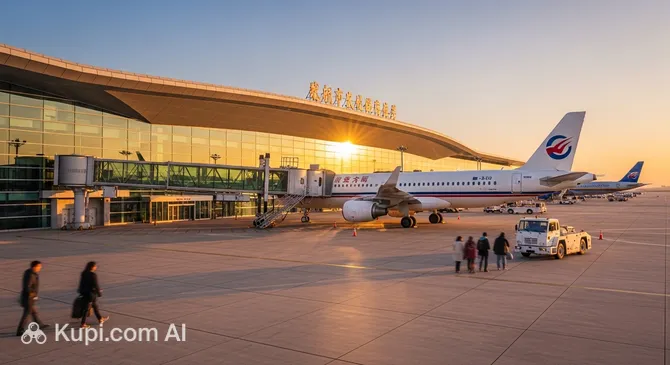
Hohhot Baita International Airport. Source: Kupi.com Binoculars

Hohhot Baita International Airport serves as the main aerial gateway to Inner Mongolia, wonderfully combining the modern rhythm of aviation with the spirit of the boundless steppes. Its name, meaning "White Pagoda," honors an ancient historical landmark located nearby, immediately setting the mood for travellers to explore the local culture. This is not merely a transit point, but the beginning of a fascinating journey into the land of nomads, where traditions are harmoniously interwoven with technology.

IATA Code HET
ICAO Code ZBHH
City Hohhot
Distance to Centre ~14 km
Status International
Annual Passengers Over 11 million

Airport Features and Advantages:

  • Unique Atmosphere: The airport is named after the famous Wanbu Huayanjing Pagoda (White Pagoda), located just a few kilometres away, giving the location special historical significance.
  • Transport Accessibility: The air hub is excellently connected to the city by the metro line (Hohhot Metro Line 1), allowing you to reach the centre quickly and without traffic directly from the terminal.
  • Convenient Navigation: Despite its status as the region's largest hub, the airport is distinguished by its compactness and clear layout, which significantly saves passengers time on procedures.
  • Gateway to the Region: It is the ideal starting point for travels across Inner Mongolia, linking the regional capital with numerous other cities in China and neighbouring countries.

Contact Information

To communicate with airport representatives, obtain information, and resolve any issues, you may use the following contact details:

  • Official Website: www.hhhtairport.com (the site may be available in Chinese).
  • Information Service Phone: +86 0471-96777 (unified number for enquiries).
  • Airport Address: Airport Road, Saihan District, Hohhot, Inner Mongolia, China.
  • Email: An official e-mail for general enquiries is not published. It is recommended to use the telephone connection or forms on the website.
  • Social Media: The airport does not maintain official pages on international social networks. All current information is published on the official website.
  • Lost & Found: If your luggage has been lost or damaged, please contact the tracing service at: +86 0471-4941151 or +86 0471-4941219.
  • Passenger Support Contacts: For assistance with any matters related to your journey, please contact the main airport information number.

How to Get to the Airport

Getting to Hohhot Baita International Airport (HET) from the centre of Hohhot is possible in several ways, each with its own advantages. When planning your trip, you can choose the most suitable option depending on your budget, amount of luggage, and available time.

Public Transport is the most economical and, in some cases, the fastest way to reach the airport. Main options:

  • Metro: The most convenient and predictable option is Metro Line 1, which directly connects the city centre with the airport. The "Baita International Airport" station is located in immediate proximity to the terminal. A metro journey eliminates the risk of getting stuck in traffic and usually takes about 30-40 minutes. This is an ideal choice for travellers with light luggage.
  • Shuttle Buses: Special bus routes (Airport Shuttle Bus) run between the airport and key points in the city, such as major hotels and railway stations. This is slightly cheaper than a taxi, but the journey may take longer (up to 60 minutes) due to stops and traffic conditions.

Taxis and Transfers offer maximum comfort, especially if you have a lot of luggage or are travelling with family. A taxi ride from the city centre to the airport will take approximately 30-45 minutes, excluding traffic. The cost will depend on the distance and time of day. In China, ride-hailing apps like DiDi are popular and often offer more favourable rates compared to hailing a car on the street. You can also book a private transfer in advance.

Car Rental is suitable for those planning to actively travel around the region. Counters for international and local rental companies operate at Hohhot Airport. Having your own transport gives complete freedom of movement. For drivers, parking is provided: there are both short-term and long-term car parks with different rates. It is recommended to familiarise yourself with traffic regulations and driving licence requirements in China beforehand.

Terminals and Map

Hohhot Baita International Airport (HET) consists of two passenger terminals — Terminal 1 (T1) and Terminal 2 (T2). It is important to check in advance from which terminal your flight departs, as they serve different destinations.

Terminal 2 (T2) is the primary and largest terminal. It serves the vast majority of domestic flights within China. It is a modern building with clear navigation, numerous check-in counters, shops, and cafes. The departure zone is located on the second floor, and arrivals on the first. Thanks to a well-thought-out layout, orienting yourself here is quite easy, and signs are duplicated in English.

Terminal 1 (T1) is the older airport building, now used mainly for servicing international flights, as well as some domestic flights of specific airlines. It is significantly smaller and quieter than T2, making the completion of formalities quicker. The selection of services here is more modest, but everything necessary for passengers is present.

The terminals are located in close proximity to each other, and the transfer between them can be made on foot in 5-10 minutes. There are no special shuttles between T1 and T2 due to the short distance. When planning a trip with a transfer between domestic and international flights, allow sufficient time for this walk and for passing through security control again.

For domestic flights (T2), it is recommended to arrive at the airport 1.5-2 hours before departure. For international flights (T1), arrive 2.5-3 hours prior to allow time for passport and customs control. Overall, the airport in Hohhot is considered sufficiently convenient and not overcrowded, allowing for pre-flight procedures to be completed without unnecessary hassle.

Airport History

The history of Hohhot Baita International Airport (HET) began on 1 October 1958, when it was officially opened. In the first decades of its existence, it was a modest airfield serving primarily domestic flights and playing a vital role in connecting the capital of Inner Mongolia with other regions of China. Initially, its infrastructure was designed for a small passenger flow and the aircraft of that era.

Significant changes began in the 1980s. In 1986, the airport underwent its first major reconstruction and expansion, allowing it to accommodate larger aircraft. A new phase of development occurred in the 1990s: in 1992, the first international flight was made to Ulaanbaatar, the capital of Mongolia, marking the airport's acquisition of international status. The airport received its name "Baita," which translates as "White Pagoda," in honour of the famous Liao Dynasty pagoda located nearby — an important historical and cultural monument of the region.

The most massive modernisation in the airport's history took place ahead of the 2008 Olympic Games in Beijing. In June 2007, a new, modern terminal with an area of over 54,000 square metres was put into operation, and the runway was extended to 3,600 metres. These improvements allowed the airport in Hohhot to service wide-body aircraft, such as the Boeing 747, and act as a primary backup airfield for Beijing's capital airport. Passenger traffic increased sharply, and the airport became one of the busiest in northern China.

Over its years of operation, Baita Airport has set numerous records for passenger and cargo turnover for the Inner Mongolia region, becoming a key transport hub. An interesting fact: its role as a backup for Beijing has been repeatedly confirmed during major international events and extraordinary situations, underscoring its strategic importance. Currently, due to the city's growing needs, the new Shengle International Airport is being built, which will take over major flights in the future, while the history of Baita Airport will become an important part of the region's aviation heritage.

Services and Amenities

Hohhot Baita International Airport (HET) offers passengers a wide range of services to make waiting for flights as comfortable as possible. In the terminal, you will find various dining outlets: from cosy coffee shops where you can quickly enjoy a cup of coffee, to restaurants offering dishes of both local and international cuisine. Additionally, shops are at your service where you can purchase souvenirs, travel goods, and products in the duty-free zone.

For comfortable waiting before boarding, the airport is equipped with spacious lounges. Passengers preferring a higher level of service can utilise the VIP lounges, which offer a more private atmosphere, snacks, and beverages. Free Wi-Fi is available throughout the terminal, and numerous charging stations for electronic devices will allow you to stay connected at all times.

To handle financial matters, bank branches, currency exchange points, and ATMs operate within the airport. In case of necessity, passengers can visit the medical point for first aid. For travellers with children, special mother and child rooms are provided, equipped with everything necessary for baby care.

Hohhot Airport also cares for passengers with reduced mobility, providing special equipment and staff assistance for convenient movement around the terminal. If you have a long layover or an early departure, you will easily find several hotels in the immediate vicinity of the airport. For business travellers, business centres and conference rooms for meetings may be available.

Where to Eat

At Hohhot Baita International Airport (HET), passengers will find diverse options for a snack or a full meal, catering to different tastes and budgets. Catering establishments are located both in the public area (before security control) and in the secure departure zone.

In the general area, accessible to all visitors, fast-service cafes and restaurants are usually found. Here you can leisurely drink coffee with dessert while seeing off or meeting loved ones, or have a quick bite before checking in for your flight. In the departure zone, after passport and customs control, the selection is generally wider. Both chain coffee shops and restaurants offering dishes of local and international cuisine are represented here.

Travellers wishing to explore the gastronomy of Inner Mongolia should pay attention to establishments offering local specialities. This might include traditional salty tea with milk (Suutei Tsai), mutton dishes, or hearty soups. For those who prefer familiar food, there are outlets serving Chinese noodles, rice, as well as European-style cafes where you can order sandwiches, salads, and pastries.

Regarding prices, they are expectedly higher than the city average within the airport. A quick snack in the food court will cost less than a full lunch in a restaurant with table service. Most establishments operate according to the flight schedule, opening early in the morning and closing after the departure of the last aircraft. For passengers with specific dietary requirements (such as Halal or vegetarian diets), it is recommended to carefully study the menu or clarify the ingredients with the staff, as specialised cafes may be limited.

Travel Tips

To ensure your journey through Hohhot Baita International Airport proceeds as smoothly as possible, we recommend arriving in advance. For international flights, allow 2.5-3 hours before departure, and for domestic flights within China — about 2 hours. This will allow you to pass through registration and security checks, which may take longer than expected, without rushing.

To save time, use online check-in if available with your airline. Security screening procedures at the country's airports can be very thorough. Be prepared to remove all electronics from your carry-on luggage. Pay special attention to carrying power banks: they can be transported only in carry-on luggage, and the device must have a clearly visible marking with its capacity. Lighters and matches will most likely be confiscated at security control.

If you are flying in transit through Hohhot, check with your carrier in advance whether you need to collect and re-check your luggage. When passing through customs control, have your passport, visa (if required), and boarding pass ready. Sometimes it is necessary to complete a special arrival/departure card.

Want to save a little? Bring an empty water bottle with you and fill it at drinking fountains after passing security. Public transport or a pre-booked transfer will cost less than a taxi hailed on the spot. Although cards are accepted in many places at the airport, having a small amount of cash in Yuan is useful.

When choosing a seat on the plane, be guided by your preferences: a window seat will offer beautiful views during takeoff and landing, while an aisle seat gives more legroom and the ability to stand up freely without disturbing neighbours.

In case of a flight delay, remain calm. First, contact your airline's counter for information and possible compensation (food vouchers, beverages). While waiting for departure, you can use the free Wi-Fi or visit the cafes and shops located in the terminal.

Reached the end of the page?

That means the route is fully explored