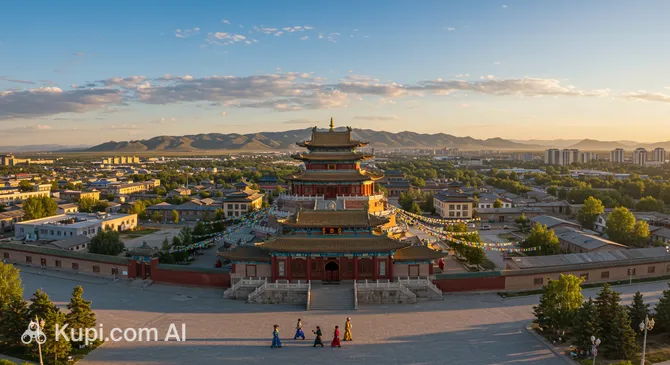
While Hohhot is famous as a gateway to the vast Mongolian steppes, the city itself is a sanctuary of lush greenery and profound history. Visitors will find a surprising number of well-maintained parks and cultural institutions that offer a quiet respite from the urban bustle, serving as windows into the daily lives and rich heritage of the local people.
Qingcheng Park is one of the city's most beloved green spaces, located right in the heart of downtown. Its name translates to "Green City Park," fitting for a place that serves as the primary lung of the metropolis. The park is divided into cultural, scenic, and recreational areas, featuring willow-lined walking paths, lotus ponds, and a small zoo. It is a fantastic spot to witness local life, as residents gather here for morning exercises, singing, and leisurely boat rides on the lake during summer.
For those seeking a more rugged natural experience, the Daqing Mountain National Forest Park to the north offers a dramatic backdrop to the city. This expansive area is perfect for hiking and breathing in fresh mountain air, often referred to as a "natural oxygen bar." The park features diverse vegetation and scenic trails that wind through the foothills of the Yinshan Mountains. As you ascend, the panoramic views of Hohhot below are breathtaking, especially in autumn when the foliage turns vibrant shades of gold and red. It serves as both a natural barrier against cold winds and a popular weekend escape for nature lovers.
To understand the strategic military importance of the region, a visit to the General's Government Office (Jiangjun Yashu) is essential. Built in 1737 during the Qing Dynasty, this is the largest and best-preserved general's office in China. It served as the residence and command center for 79 high-ranking generals who guarded the northern border. The complex is architecturally impressive, with strictly symmetrical courtyards, gray-tiled roofs, and a solemn atmosphere. Walking through the halls, visitors can see period furniture, weaponry, and historical documents that paint a vivid picture of the garrison life and political administration of the Suiyuan region.
While the provincial museum covers the broader region, the Hohhot Museum offers a more intimate look at the city's specific evolution. Distinct from the larger Inner Mongolia Museum, this venue focuses on the local history, folk customs, and the unique blend of cultures that formed the city. It is an excellent place to see artifacts related to the daily lives of Hohhot's residents through the centuries, from traditional clothing to commercial relics of the old trade routes.
For families and those interested in modern developments, the Inner Mongolia Science and Technology Museum is a standout attraction. Housed in a striking modern building, it features interactive exhibits that cover everything from aerospace technology to local geography and ecology. It provides a fun, hands-on educational experience that contrasts with the city's ancient temples, highlighting the region's stride towards the future.
Among the city's historical landmarks, the Great Mosque of Hohhot is a masterpiece of cultural fusion. Located in the Huimin District, it dates back to the Qing Dynasty and is unique for its architecture, which blends traditional Chinese roofs and courtyards with Islamic decor and minarets. It stands as a testament to the long-standing Hui Muslim community in the region and offers a peaceful, spiritual atmosphere amidst the busy market streets surrounding it.
For an authentic local experience, try visiting Manduhai Park in the early morning, shortly after sunrise. This is when the park comes alive with locals practicing Tai Chi, sword dancing, and even traditional throat singing. It is a candid and welcoming display of community spirit that offers a deeper connection to the city than any guidebook could provide.