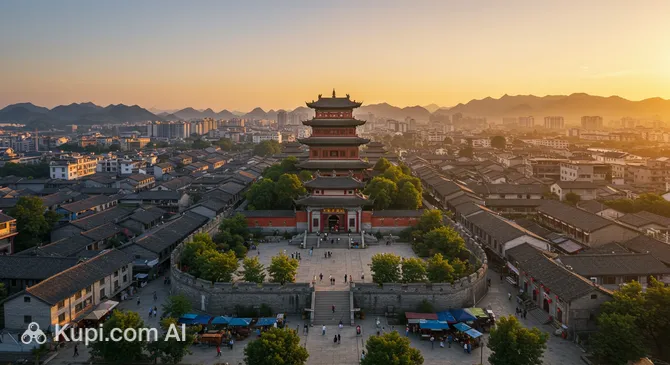
While Shuozhou is often recognized for its industrial significance, the city and its surrounding areas offer a surprising wealth of green spaces and cultural repositories. Visitors looking to step away from the bustling streets will find serenity in the region's wetland parks and forests, while history enthusiasts can delve deeper into the local heritage through well-curated museums and preserved architectural sites.
The Sanggan River National Wetland Park is the ecological jewel of the city, located along the upper reaches of the famous Sanggan River. This expansive natural area serves as a vital sanctuary for wildlife, particularly migratory birds such as the rare black stork and whooper swan. For tourists, it offers a network of scenic walking trails, wooden boardwalks, and observation decks that allow for peaceful birdwatching and photography. The park is especially beautiful in late spring and autumn when the reeds turn golden and the water reflects the clear northern sky.
Another remarkable green space is the Youyu National Forest Park, situated in nearby Youyu County. This area is celebrated across China as a symbol of environmental restoration, having been transformed from a barren desert into a lush oasis through decades of tree-planting efforts. Visitors can explore the Cangtou River Ecological Corridor, which winds through the forest, offering fresh air and picturesque landscapes that stand as a testament to the "Youyu Spirit" of perseverance. It is an ideal spot for hiking, cycling, and witnessing a man-made ecological miracle.
For a deep dive into the region's past, the Shuozhou City Museum (sometimes referred to as the Ma Yi Museum) is a key cultural stop. The museum houses an impressive collection of artifacts that trace the area's history from the Paleolithic age to the Ming and Qing dynasties. Highlights include exquisite pottery, bronze wares, and relics from the Han Dynasty, reflecting Shuozhou's historical role as a strategic garrison town known as Ma Yi. The exhibits provide excellent context for understanding the convergence of nomadic and agrarian cultures in northern Shanxi.
While primarily a religious site, Chongfu Temple functions effectively as a museum of Jin Dynasty art and architecture. Unlike typical museums with glass cases, here the exhibits are the buildings and statues themselves. The main hall houses monumental statues of Amitabha Buddha and Bodhisattvas that are considered some of the finest examples of clay sculpture from the 12th century. The intricate wall murals and the beautifully carved window lattices offer art lovers a rare, close-up look at the aesthetics of a bygone era.
Beyond these dedicated venues, the landscape itself serves as an open-air museum. The Guangwu Great Wall and the adjacent Han Dynasty Tombs offer a raw and unpolished connection to history. Unlike the reconstructed sections of the wall near Beijing, the ramparts here remain in their original, weathered state, stretching across the mountain ridges and providing a poignant reminder of the ancient frontier defense systems.
For an authentic local experience, consider visiting the smaller, less commercialized villages surrounding the Old Guangwu City. Here, you can find remnants of ancient earthen fortifications integrated into modern village life. A conversation with local elders often reveals folklore and stories about the Great Wall that you won't find in any guidebook, offering a personal touch to your historical exploration.