Support

Datong

About

Datong is a captivating city located in the northern Shanxi province of China, serving as a vital bridge between the agricultural lands of the south and the nomadic steppes of the north. Known for its remarkable blend of industrial energy and profound cultural heritage, the city offers travelers a unique glimpse into the nation's diverse past. With a population of approximately 3.39 million, it is a bustling regional hub that has successfully preserved its ancient treasures amidst modern development.
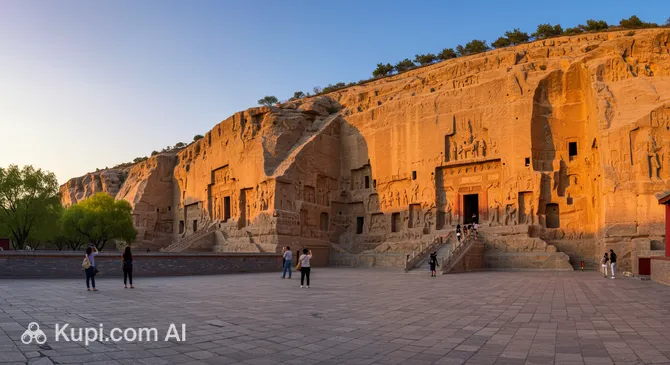
Datong. Source: Kupi.Binoculars

The city holds a prestigious place in the chronicles of time, having served as the capital of the Northern Wei Dynasty in the 5th century. Exploring the history of Datong reveals a legacy of artistic and architectural brilliance that continues to draw visitors from around the globe. Geographically, it sits in a basin at an elevation of over 1,000 meters, resulting in a continental monsoon climate with distinct seasons, making it a refreshing summer destination compared to the hotter southern regions.

Datong is world-renowned for its spectacular historical sites. The Yungang Grottoes, a UNESCO World Heritage site, feature thousands of ancient Buddhist statues carved into sandstone cliffs, showcasing exquisite craftsmanship. Another must-see is the awe-inspiring Hanging Temple, which clings precariously to a sheer cliff face near Mount Heng, defying gravity and architectural norms. Within the city itself, the massive Nine-Dragon Wall stands as the oldest and largest glazed-tile wall of its kind in the country, reflecting the grandeur of the Ming Dynasty.

Whether you are an archaeology enthusiast or simply seeking to experience the authentic atmosphere of northern Shanxi, Datong welcomes you with open arms. Its combination of breathtaking scenery, ancient wonders, and warm local hospitality makes it an unforgettable stop on any travel itinerary.

Weather Overview

Datong experiences a continental monsoon climate characterized by four distinct seasons, offering a different atmosphere depending on when you visit. The city is generally dry and cool, situated at a higher altitude which helps moderate the summer heat. To help you pack appropriately for your trip, it is advisable to consult the detailed forecast for the weather in Datong before your departure.

Winters are long, cold, and very dry, with January being the coldest month, averaging around -9.3°C and lows dipping to -15.6°C. Snowfall is rare, as precipitation is minimal during this time. In contrast, summers are pleasantly warm rather than scorching, with July averages sitting comfortably at 22.0°C. This season sees the most moisture, with July recording up to 14 wet days, although the overall rainfall volume remains relatively low.

Spring and autumn serve as short transitional periods with rapidly changing temperatures. May and September are particularly agreeable months, with average temperatures around 15°C, making them excellent times for sightseeing. Overall, you can expect warm summers with occasional rain and cold, dry winters.

Interesting Facts

Beyond the main attractions and historical grandeur, Datong holds many fascinating secrets that offer a deeper understanding of its unique character. Here are some surprising facts about this northern city:

  • A Unique Orientation: Unlike the vast majority of Buddhist temples in China which face south according to traditional Feng Shui, the magnificent Huayan Monastery in Datong faces east. This rare architectural alignment pays homage to the Khitan people of the Liao Dynasty, who worshipped the rising sun.

  • The Coal Capital: For decades, Datong has been famously nicknamed the "City of Coal," serving as a critical powerhouse for the nation's energy needs. While the city has successfully pivoted toward tourism and culture in recent years, this industrial heritage remains a significant part of its modern identity.

  • A Museum of Volcanoes: Just outside the city limits lies the Datong Volcanic Group, a geological cluster featuring over 30 extinct volcanoes. This rugged landscape is often called a "natural museum" of volcanic geology and offers a striking contrast to the region's cultural sites.

  • Psychological Support: Local legends suggest that the slender wooden pillars visible under the famous Hanging Temple were not part of the original design. It is said they were added later, not because the structure needed them to stay aloft, but simply to provide a false sense of security for terrified visitors afraid the temple might fall.

How to Get There

Reaching this historic city is relatively straightforward, with several transport options available depending on your starting point. Whether you prefer flying directly or connecting through major regional hubs, you can find detailed information on all ways to reach the city to help plan your journey.

The most convenient way to arrive by air is via Datong Airport (DAT), which serves as the primary gateway to the region. Located just 15.6 km from the city center, it is a regional hub that handles domestic flights. The journey from the airport to downtown Datong takes approximately 45 minutes by taxi or bus. Alternatively, travelers can fly into Hohhot Baita International Airport (HET) in the neighboring city of Hohhot. This larger airport is situated about 151.9 km from Datong, and the transfer by road typically takes around 4 hours.

For clarity, here is a summary of the main airports:

Airport Name City Passenger Traffic Km from City
Hohhot Baita International Airport Hohhot Large 151.9
Shijiazhuang Daguocun Airport Shijiazhuang Large 233.0
Datong Airport Datong Medium 15.6
Zhangjiakou Ningyuan Airport Zhangjiakou Small 156.8
Xinzhou Wutaishan Xinzhou Small 166.7

If you are traveling by rail through the wider province, you might connect via major transit hubs in nearby cities. One significant option is the Shijiazhuang Railway Station (QSJ), located in the city of Shijiazhuang. It is a major transport node handling a vast number of passengers annually. However, please note that this station is approximately 247.9 km from Datong, so a subsequent transfer by road or a connecting train would be necessary to complete your journey.

Below is a summary of these regional railway stations:

Station City Passenger Traffic Km to Center
Shijiazhuang Railway Station Shijiazhuang Very Large 247.9
Baoding Railway Station Baoding Large 230.5

Main Attractions

Datong offers a remarkable journey through time, boasting some of China's most significant ancient structures and artistic masterpieces. From towering Buddhist carvings to temples suspended in mid-air, the city's landmarks provide a vivid window into the Northern Wei, Liao, and Ming dynasties. Here are the essential places to explore during your visit.

Yungang Grottoes represent the pinnacle of Chinese Buddhist cave art and are an absolute must-see. Located at the southern foot of Wuzhou Mountain, this UNESCO World Heritage site contains 252 caves and over 51,000 statues, ranging from just a few centimeters to a staggering 17 meters in height. Visitors are often struck by the massive open-air Buddha in Cave 20, which has become the symbol of Datong. The site is fascinating not just for its scale, but for the fusion of artistic styles; you can observe clear influences from Indian Gandhara and Persian art blended with traditional Chinese aesthetics, reflecting the Silk Road's cultural exchanges.

A marvel of architectural defiance, the Hanging Temple (Xuankong Si) is a sight that truly has to be seen to be believed. Built more than 1,500 years ago, this wooden structure clings to the sheer cliff face of Mount Heng, supported by oak crossbeams inserted deep into the rock. It is the only existing temple in China that combines Buddhism, Taoism, and Confucianism, with statues of the founders of all three religions enshrined side by side. Walking along its narrow, creaking corridors offers a thrilling perspective on ancient engineering and breathtaking views of the gorge below.

In the heart of the city lies the Huayan Monastery, the largest and best-preserved monastery of the Liao Dynasty in existence. Unlike most Chinese temples, it faces east, preserving the unique custom of the Khitan people who worshipped the sun. The complex is divided into the Upper and Lower Temples. The Lower Temple houses the exquisitely detailed Bhagavat Storage Hall, known for its celestial cabinets and graceful sculptures of Bodhisattvas, which are considered masterpieces of Liao dynasty art. It is a serene place to admire the solemn beauty of ancient timber architecture.

For a glimpse into the grandeur of the Ming Dynasty, visit the Nine-Dragon Wall. Stretching 45 meters long and standing 8 meters high, it is the oldest and largest glazed-tile screen wall in China, surpassing even the one in Beijing's Forbidden City. Originally built to screen the palace of a Ming prince, the wall features nine sinuous dragons composed of colorful glazed tiles in vibrant shades of yellow, blue, and purple. The craftsmanship is so precise that the dragons appear to be writhing in the waves and clouds, chasing fire pearls, creating a dazzling visual effect.

Local Cuisine

Datong's culinary scene is a robust reflection of its geography and history, blending the wheat-based traditions of the Central Plains with the hearty, meat-heavy diet of the northern nomadic tribes. As part of Shanxi province, the local palate favors salty and savory flavors, with a heavy emphasis on vinegar and noodles. The food here is designed to be filling and warming, perfect for the region's cool, dry climate.

The undisputed king of the local table is Datong Knife-Cut Noodles (Dao Xiao Mian). Watching these noodles being made is a performance in itself; chefs stand over a pot of boiling water and expertly shave flakes of dough directly into the broth using a special curved knife. The result is a noodle that is thick and chewy in the middle but thin and smooth at the edges. They are typically served with a rich meat sauce, minced pork, or tomato and egg, and, of course, a generous splash of Shanxi's famous dark vinegar.

Another signature delicacy is Yellow Rice Cake (Huang Gao). Despite its name, it is not a dessert but a staple food made from sticky millet flour. It has a dense, glutinous texture and is usually deep-fried to create a crispy outer layer while remaining soft inside. Locals often eat it alongside a savory stew or dip it into a meat broth. For breakfast, adventurous eaters might try Sheep Offal Soup, a spicy and aromatic bowl filled with various cuts of mutton, chopped herbs, and chili oil, known for its ability to warm you up instantly.

When it comes to beverages, the local culture is heavily influenced by the province's reputation for producing excellent spirits. Fenjiu, a fragrant and potent type of Chinese baijiu (sorghum liquor) originating from Shanxi, is widely consumed during dinners and celebrations. For a non-alcoholic option, Sea Buckthorn Juice is a popular regional specialty. This bright orange drink, made from berries that grow in the arid northern terrain, is tangy, sweet, and packed with vitamins, offering a refreshing contrast to the oily and salty local dishes.

Dining in Datong is an unpretentious and lively affair. While there are upscale restaurants serving refined versions of these classics, the true soul of the city's food culture is found in the small, family-run noodle shops and bustling night markets. Here, locals gather to slurp steaming bowls of noodles and share plates of Shaomai—delicate steamed dumplings filled with mutton and scallions. The atmosphere is often noisy and welcoming, reflecting the warm hospitality of the people in this historic northern frontier.

Travel Tips

Preparing for a trip to Datong requires a bit of foresight to ensure your journey through this historic frontier city is as smooth as it is memorable. To help you navigate the local customs and logistics with ease, here are some essential practical tips designed for travelers visiting this northern cultural hub.

  1. Clothing and Gear: The climate in Datong is continental, meaning weather can be extreme. If visiting in winter, bring heavy thermal layers, a down jacket, and gloves, as temperatures drop significantly below freezing. Summer is mild, but evenings can be cool, so a light jacket is wise. Since visiting the Yungang Grottoes and the Hanging Temple involves considerable walking and climbing stairs, sturdy, comfortable walking shoes are non-negotiable. When entering religious sites, dress modestly by covering your shoulders and knees.

  2. Transportation: While there is a public bus system, it can be challenging to navigate without knowing the language. Taxis are an affordable and convenient way to get around the city center. For attractions located outside the city, such as the Hanging Temple or the Wooden Pagoda, it is highly recommended to hire a private driver or join a day tour, as public transport to these remote sites is infrequent. Ride-hailing apps like DiDi are also very useful if you have data.

  3. Finances: The official currency is the Renminbi (RMB). While international credit cards are accepted in major hotels, they are rarely useful in local restaurants or shops. The most common payment methods are mobile apps like Alipay and WeChat Pay, which now allow foreigners to link international cards. It is advisable to carry some cash for small vendors or entrance fees. Tipping is not part of the culture in China and is generally not expected.

  4. Health and Safety: Datong is a safe city for tourists, but standard precautions against pickpocketing in crowded areas apply. Tap water is not safe to drink; always purchase bottled water, which is cheap and widely available. Pharmacies are marked with a green cross, but English is rarely spoken, so having a translation app or a photo of your medication is helpful. Due to the dry climate, bring moisturizer and lip balm.

  5. Communication: Mandarin is the primary language, and English proficiency is limited outside of high-end hospitality venues. Download a reliable offline translation app before you arrive. Internet access is restricted, meaning many Western apps (Google, social media) will not work without a roaming plan or specific software. Buying a local SIM card at the airport or a major telecom store is recommended for navigation and translation.

  6. Local Etiquette: Respect is key in Chinese culture. When handing over money or a business card, use both hands as a sign of politeness. In temples, observe the behavior of locals; usually, photographing the Buddha statues inside the halls is strictly prohibited, even if not explicitly signed in English. Avoid pointing at people or religious icons with a single finger; use an open hand instead.

  7. What to Avoid: Avoid losing your temper or shouting in public, as this causes a "loss of face" for both you and the person you are interacting with, making conflict resolution much harder. Also, avoid taking unlicensed "black taxis" at train stations or airports; stick to the official taxi queues or reputable ride-hailing apps to ensure fair pricing.

  8. City Wall Experience: A unique feature of Datong is its monumental, reconstructed City Wall. A fantastic local tip is to rent a bicycle on the wall just before sunset. The ride offers a panoramic view of the city's contrast between the ancient inner district and the modern exterior, and the wall is beautifully illuminated as night falls.

By keeping these practicalities in mind, you will be well-equipped to explore the wonders of Datong without the stress of logistical surprises. Embrace the local rhythm, stay prepared for the weather, and you are sure to have an incredible adventure in this ancient capital.

Entertainment & Nightlife

While Datong is renowned for its ancient history, the city transforms into a vibrant spectacle of lights and energy once the sun sets. The nightlife here is less about pulsating nightclubs and more about lively street culture, illuminated landmarks, and social dining. The atmosphere is generally relaxed and welcoming, offering a mix of traditional Chinese evening pastimes and modern entertainment options suitable for travelers looking to unwind after a day of exploration.

The heart of the evening action is undoubtedly the Ancient City area. Unlike many cities where the historic center shuts down early, Datong's restored district comes alive with dazzling illuminations. A walk or bicycle ride atop the majestic City Wall at night is a popular form of entertainment in itself. The walls are lit up with golden floodlights, creating a stunning contrast against the night sky and offering a panoramic view of the bustling streets below. It is a magical experience that defines the city's evening charm.

For those seeking a bustling crowd and local flavors, the area around the Drum Tower and Dongsheng Street is the place to be. This district serves as a hub for night markets and late-night eateries. The streets are filled with the aroma of grilling skewers and steaming noodles, and the crowd is a mix of local families, youth, and tourists. Here, you can experience the authentic "noisy" atmosphere of a Chinese night market, which is considered a sign of good food and popularity.

If you are looking for a drink or a more modern vibe, the Wanda Plaza district offers a different pace. This extensive commercial complex houses a variety of western-style bars, cinemas, and polished restaurants. It is a great spot to find a quieter venue for a cocktail or a cold beer. Karaoke, or KTV, is also a massive part of local nightlife; you will find numerous KTV clubs throughout the city where you can rent a private room and sing the night away, a quintessential Chinese entertainment experience.

For daytime entertainment beyond the historical sites, the city offers several cultural and recreational venues. The Datong Museum is an architectural marvel with extensive exhibits that provide a fascinating break from the outdoor heat. Families might enjoy Fantawild Adventure, a large theme park located on the outskirts of the city, featuring high-tech rides and performances based on Chinese legends.

Practical advice for enjoying Datong at night is straightforward. The city is very safe for walking, even late at night, though standard awareness of your surroundings is always recommended. Taxis are plentiful and inexpensive; you can easily hail one on the street or use a ride-hailing app if you have data. Most bars and night markets stay open until around midnight or 1:00 AM, while KTVs often operate until dawn. Dress codes are casual everywhere, so comfort is key.

Parks & Museums

Datong offers a surprising wealth of green spaces and world-class museums that complement its ancient heritage. Beyond the famous grottoes and hanging temples, the city has invested heavily in creating environments where history, nature, and modern culture intersect, offering visitors a holistic travel experience.

Wenying Lake Park is a testament to the city's ecological restoration efforts and a favorite local escape. Located in the developing Yudong New District, this expansive area features a massive man-made lake surrounded by landscaped gardens, paved walking paths, and modern sculptures. It is an excellent place for tourists to witness the modern side of local life, particularly in the evenings when the fountains are illuminated and families gather for leisure.

For a more rugged natural experience, the Datong Volcanic Cluster National Geopark offers a dramatic landscape of over 30 extinct volcanoes. Often referred to as a "natural museum" of geology, this area allows visitors to hike around and even into the craters of volcanoes that were active tens of thousands of years ago. The stark, open scenery provides a striking contrast to the ornate architecture found in the city center and is perfect for photography enthusiasts.

The Datong Museum is a cultural landmark in itself, housed in a striking contemporary building designed to resemble intersecting volcanic peaks. Inside, it holds a vast collection of artifacts that trace the region's history, with a special focus on the Northern Wei Dynasty. Visitors will find it fascinating for its detailed exhibits on the integration of nomadic and Han Chinese cultures, featuring exquisite pottery, bronze ware, and tomb murals that tell the story of the city's imperial past.

Reflecting the city's industrial backbone, the Datong Coal Mine Museum offers a unique educational experience. Situated at the site of a former mine, it allows visitors to don helmets and descend underground to explore the tunnels and see the evolution of mining technology. It is an immersive journey that pays homage to the industry that powered the city for decades, providing a gritty, authentic perspective often missed by standard tours.

Among the historical treasures within the city walls, Shanhua Temple stands out as a serene architectural gem. Dating back to the Tang Dynasty with significant Liao Dynasty structures, it is one of the oldest preserved wooden monasteries in China. Unlike the more crowded tourist spots, this temple offers a peaceful atmosphere where you can admire the magnificent golden statues of Buddha and the intricate ancient carpentry without the rush.

For a truly authentic experience, visit the city parks or the squares near the City Wall early in the morning. You will find hundreds of locals practicing Tai Chi, dancing with fans, or whipping spinning tops—a vibrant display of community spirit that welcomes respectful observation. Additionally, keep an eye out for the smaller, specialized galleries hidden within the restored ancient city district, which often host rotating exhibitions of traditional calligraphy and sculpture.

Getting Around

Navigating Datong is primarily done through its extensive and affordable bus network, as the city does not currently have an operating metro system. The public buses cover the majority of the urban area and provide convenient connections to major suburban attractions. For tourists, this is the most authentic way to travel alongside locals, with routes crisscrossing the city center and extending to key transit hubs like the railway station and the airport.

The cost of bus travel is incredibly low, typically a flat rate of 1 RMB for regular lines and up to 2 or 3 RMB for air-conditioned or longer-distance routes. Payment is straightforward but requires preparation if you do not have access to Chinese mobile payments. You must drop the exact fare into the box next to the driver upon entry; no change is given. While locals use transit cards or scan QR codes via Alipay or WeChat, international visitors will find it easiest to carry a supply of 1 RMB coins or small notes.

For visiting the major historical sites located outside the city center, such as the Yungang Grottoes, there are dedicated tourist bus lines. These are a budget-friendly alternative to private tours. For example, specific routes run directly from the main railway station to the grottoes. Operating hours for most city buses generally run from early morning, around 6:00 AM, until the evening, typically ending between 8:00 PM and 9:00 PM, so it is important to plan your return trip if you are staying out late.

Taxis are a very popular and convenient alternative, especially given the low cost compared to Western standards. You can hail them on the street, and they are easily recognizable by their uniform colors. Most drivers use the taximeter within the city limits, but for longer trips to distant attractions like the Hanging Temple, it is common to negotiate a fixed price beforehand. Ride-hailing apps like DiDi (the local equivalent of Uber) are highly recommended as they overcome the language barrier by allowing you to input your destination in English.

For short distances within the city walls, shared bicycles are an excellent option. You will see yellow (Meituan) and blue (HelloBike) bikes parked along sidewalks. These can be unlocked using their respective apps, often integrated into Alipay or WeChat, provided you have data service. Cycling is a pleasant way to explore the flat, grid-like streets of the restored ancient quarter at your own pace.

A practical tip for all travelers is to have the names of your destination written in Chinese characters on your phone or a piece of paper. Most bus drivers and taxi drivers do not speak English, so showing the written address is the most effective way to ensure you reach the correct location. Additionally, avoid traveling during the peak rush hours of 7:30–9:00 AM and 5:30–7:00 PM if possible, as traffic congestion can be heavy.

Accommodation

Accommodation:

Finding a place to stay in Datong is generally a straightforward and affordable experience, with options ranging from modern luxury establishments to charming traditional courtyards. As the city has developed its tourism infrastructure, the quality of accommodation has improved significantly. Travelers can choose between high-end international chains, reliable mid-range business hotels, and budget-friendly hostels or guesthouses, catering to all levels of comfort and expenditure.

When choosing a location, most tourists prefer to stay within or near the Ancient City walls. This area places you within walking distance of major attractions like the Huayan Monastery and the Nine-Dragon Wall. Staying here offers an atmospheric experience, especially in the evenings when the streets are illuminated. Alternatively, the area surrounding the Datong Railway Station provides practical convenience for those with early morning trains or late arrivals, though it lacks the historic charm of the center. For those seeking modern luxury and quieter surroundings, the Yudong New District offers spacious, upscale hotels near the museum and government buildings, albeit a short taxi ride away from the main historic sites.

A crucial tip for international travelers is to confirm that your chosen accommodation is licensed to accept foreign guests. While major hotels and established hostels are well-versed in the registration process, smaller budget inns or family-run guesthouses may not be equipped to host non-Chinese citizens. It is highly recommended to book your room in advance, particularly during the peak travel months of July and August, as well as during Chinese national holidays when availability can tighten rapidly.

In terms of pricing, Datong is very budget-friendly compared to major metropolises like Beijing or Shanghai. You can often find excellent value for money, with high-standard rooms available at mid-range prices. Booking is best done through major international travel platforms or reputable Chinese apps that support English, as these will typically filter for properties that can legally host international visitors. Whether you prefer the convenience of a modern hotel or the character of a refurbished courtyard, you will find a comfortable base for your explorations.

Nearby Cities

For those looking to explore the surroundings, Datong serves as an excellent base for day trips to several interesting nearby locations. The region offers a fascinating mix of cultural influences and architectural marvels just a short journey away.

One of the most popular excursions is to Hohhot, the capital of Inner Mongolia. Here, visitors can experience a distinct change in atmosphere, exploring the rich heritage of Mongolian culture through sites like the Dazhao Temple and the comprehensive Inner Mongolia Museum. To the south lies Shuozhou, a destination famous for housing the magnificent Yingxian Wooden Pagoda. Standing as the oldest and tallest fully wooden pagoda in the world, it is a masterpiece of ancient engineering that requires no nails. For those interested in military history and winter sports, Zhangjiakou offers the impressive Dajingmen section of the Great Wall and world-class skiing facilities.

City Population Distance (km)
Zhangjiakou 4,345,485 155
Hohhot 3,446,100 156
Xinzhou 3,067,501 191
Shuozhou 1,714,857 111
Yuanping 491,213 158

These nearby destinations offer a glimpse into the diverse culture and landscapes of the region, allowing travelers to extend their journey beyond the city limits of Datong.

Shopping & Souvenirs

Shopping in Datong offers a distinct blend of modern convenience and deep-rooted cultural heritage. While the city may not be a global fashion capital, it provides a unique opportunity to purchase regionally specific handicrafts that reflect its history as a northern frontier town and an industrial hub. Visitors will find a mix of bustling commercial streets, large modern shopping centers, and quaint specialty stores where the focus is on local artistry and authentic goods rather than mass-produced souvenirs.

The primary shopping districts are concentrated within the restored Ancient City. The area surrounding the majestic Drum Tower serves as the commercial heart of the old district. Streets such as Daxi Street and Dongsheng Street are vibrant thoroughfares lined with shops selling clothing, electronics, and local snacks. Walking through this area is an experience in itself, as the traditional architecture provides a scenic backdrop to your retail therapy.

For those seeking a contemporary shopping experience with familiar international and domestic brands, the city boasts several modern complexes. Datong Wanda Plaza is the most comprehensive lifestyle center, offering floors of fashion boutiques, sportswear, and lifestyle goods in a comfortable, climate-controlled environment. Another key destination is the Hualin New World department store, a long-standing favorite among locals for high-quality cosmetics, jewelry, and apparel.

Travelers interested in curios and collectibles should explore the Antique Cultural Street located near the Huayan Monastery. This area is often filled with vendors selling calligraphy brushes, old coins, jade trinkets, and traditional paintings. It is an excellent place to browse and soak up the atmosphere, though bargaining is expected and necessary if you decide to make a purchase.

When it comes to souvenirs, Datong has several signature items that make for meaningful gifts. The most famous local craft is Coal Carving. Celebrating the city's identity as the "City of Coal," artisans sculpt intricate figures, famous landmarks, and animals out of high-quality cannel coal. Once polished, these pieces resemble black jet or obsidian and are unique to this region. Another traditional specialty is the Datong Copper Hot Pot, beautifully crafted vessels often decorated with cloisonné designs, which are both functional and decorative.

Food items also make excellent souvenirs from Shanxi province. You might consider buying a bottle of aged Shanxi Vinegar, renowned across China for its rich, complex flavor. Additionally, the region is famous for dried daylilies, a nutritious ingredient used in local cooking that is easy to pack and bring home.

Standard opening hours for large shopping malls and department stores are typically from 10:00 AM to 9:30 PM. Smaller independent shops may close earlier, around 8:00 PM, though night market vendors often operate until late. Payment is almost exclusively digital; Alipay and WeChat Pay are used for everything from mall purchases to street snacks. While cash is legally accepted, carrying small denominations is advisable as vendors may lack change. International credit cards are generally only accepted in major malls or hotels.

Regarding tax refunds, Datong does not typically have a widespread tax-free shopping scheme for international tourists comparable to major hubs like Beijing or Shanghai. Visitors should generally expect the listed price to be the final cost, inclusive of all taxes.

Reached the end of the page?

That means the route is fully explored