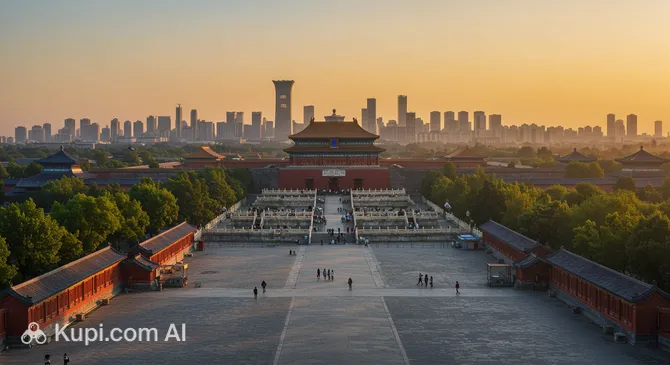
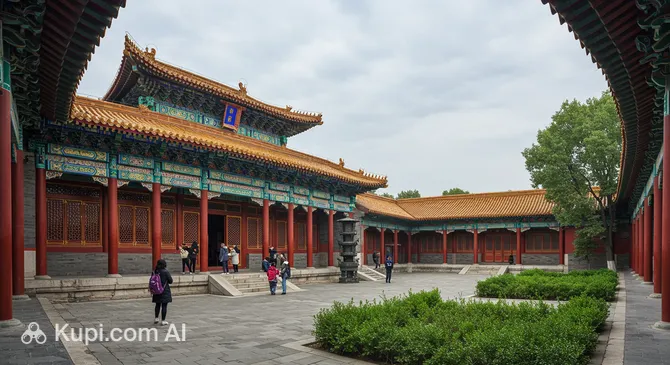
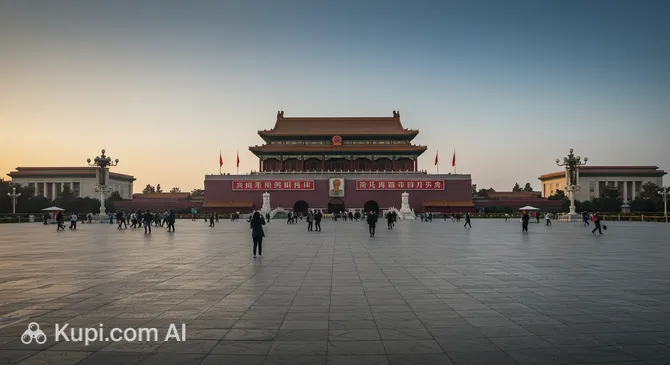
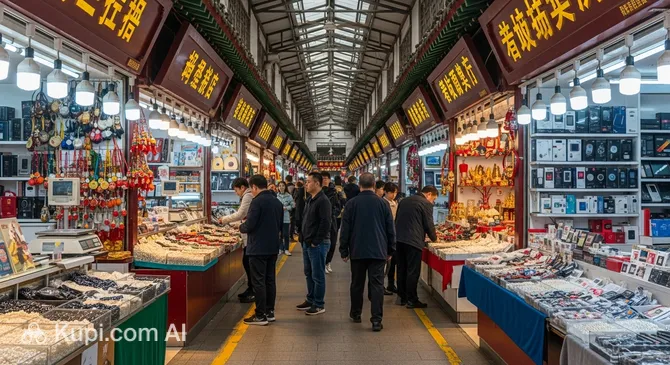
Beijing, the sprawling capital of China, is a city where millennia of tradition seamlessly blend with rapid modernization. As the nation's political, cultural, and educational center, it offers a travel experience that is both grand in scale and deeply atmospheric. From its ancient alleyways to its futuristic skyline, the city pulses with an energy that reflects its status as a global metropolis.
Located in the northern part of the country, this vast municipality is home to over 18 million people, making it one of the most populous cities in the world. The climate here is characterized by four distinct seasons, with hot, humid summers and cold, dry winters, offering different perspectives of the city throughout the year.
Beijing. Illustration.
Source: Kupi.com AI
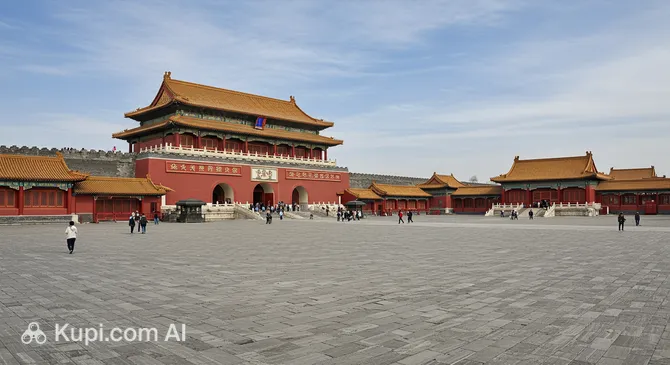
The history of Beijing stretches back over three thousand years, having served as the seat of power for the Ming and Qing dynasties. This rich heritage is preserved in its magnificent landmarks. Visitors can explore the immense imperial complex of the Forbidden City, walk the serene grounds of the Temple of Heaven, or venture just outside the city to witness the majesty of the Great Wall.
Whether you are wandering through traditional hutongs or admiring the architectural marvels of the Olympic Park, Beijing promises a journey full of discovery. It is a destination that invites you to witness the heart of Chinese civilization firsthand.
Weather Overview
Understanding the local climate is essential for planning your visit to the Chinese capital. The weather in Beijing is characterized by four distinct seasons, featuring significant temperature variations throughout the year. Generally, you can expect warm, humid summers with occasional rain and cold, dry winters.
Winter lasts from December to February and is typically freezing and crisp. January is the coldest month, with an average temperature of -3.2°C and lows dipping to -8.8°C. Precipitation is rare during this time, with almost zero rainfall recorded, ensuring clear but chilly days perfect for exploring indoor attractions.
In contrast, the summer months of June through August are hot. July sees average temperatures around 27.2°C, with maximums often exceeding 31°C. This season also brings the most moisture; July alone typically has about 14 wet days, so travelers should be prepared for both heat and potential showers.
Spring and autumn are transitional periods that offer some of the most comfortable conditions. May and September are particularly pleasant, with average temperatures hovering around 21°C, making them ideal months for walking tours and outdoor activities.
Average monthly temperature
Average monthly precipitation
Interesting Facts
Beyond the majestic palaces and bustling avenues, Beijing holds many fascinating secrets that reveal the depth of its cultural heritage. These lesser-known details offer a glimpse into the city's architectural ingenuity and historical quirks, often surprising even the most seasoned travelers.
Forbidden City. Illustration.
Source: Kupi.com AI
Traveler photos:
Legend has it that the Forbidden City contains exactly 9,999 and a half rooms. This specific number was chosen because the Emperor of Heaven was believed to have 10,000 rooms in his celestial palace, and the earthly Emperor, showing humility, built just slightly fewer to avoid offending the heavens.
The Temple of Heaven features a curious acoustic phenomenon known as the Echo Wall. The smooth, circular perimeter allows a whisper spoken at one end to travel clearly to the opposite side, over 60 meters away, demonstrating the advanced architectural knowledge of the Ming Dynasty.
Inside the Yonghe Temple (Lama Temple), visitors can marvel at the world's largest statue carved from a single piece of sandalwood. The towering Maitreya Buddha stands 18 meters high above the ground, with an additional 8 meters buried underneath to anchor it securely against earthquakes.
The trendy 798 Art Zone occupies what was once a state-owned electronics factory complex built in the 1950s. The area retains its unique Bauhaus-style architecture and original Maoist slogans painted on the arched ceilings, creating a striking contrast with the modern art galleries now housed within.
How to Get There
As the capital of China, Beijing is a major transportation hub accessible from all corners of the globe. Whether you are arriving for business or leisure, there are multiple entry points to the city. You can find all ways to reach the city and plan your journey in detail. The metropolis is primarily served by two massive aviation facilities that handle a significant portion of international and domestic traffic.
Beijing Capital International Airport (PEK) is the historic main gateway, located approximately 25 km from the city center. It is a large international airport that connects Beijing to virtually every major city in the world. The travel time to the downtown area is roughly 57 minutes by taxi or shuttle bus, depending on traffic conditions. The newer Beijing Daxing International Airport (PKX) is another architectural masterpiece serving the municipality, situated about 44 km south of the center. A trip from here to the heart of the city takes around 1 hour and 26 minutes. Additionally, travelers can fly into Tianjin Binhai International Airport (TSN) in the neighboring city of Tianjin, which is about 118 km away from Beijing.
For clarity, here is a summary of the main airports:
While Beijing is the central node of China's high-speed rail network, travelers exploring the wider region may also utilize major transport hubs in nearby cities. Baoding Railway Station (BVQ) is located in the city of Baoding, approximately 141 km from Beijing. If you were to travel by road from this station to the capital, the journey would take about 3 hours and 50 minutes. Another significant regional hub is Shijiazhuang Railway Station (QSJ) in Shijiazhuang, situated roughly 266 km away, which handles a large volume of passenger traffic.
Below is a list of railway stations in the region:
No visit to the capital would be complete without stepping onto Tiananmen Square. Located in the very heart of the city, this immense public plaza is one of the largest in the world and serves as a symbolic focal point for the nation. Surrounded by monumental Soviet-style buildings and historic city gates, it is a place of great significance where tourists can witness the daily flag-raising ceremony and visit the Mausoleum of Mao Zedong.
Just to the east of the square lies the National Museum of China, a premier cultural institution that houses a staggering collection of over one million artifacts. It offers a comprehensive journey through the country's long history, from ancient prehistoric times to the end of the imperial era. For history buffs, this museum provides an essential context to understanding the rich tapestry of Chinese civilization.
Summer Palace. Illustration.
Source: Kupi.com AI
Traveler photos:
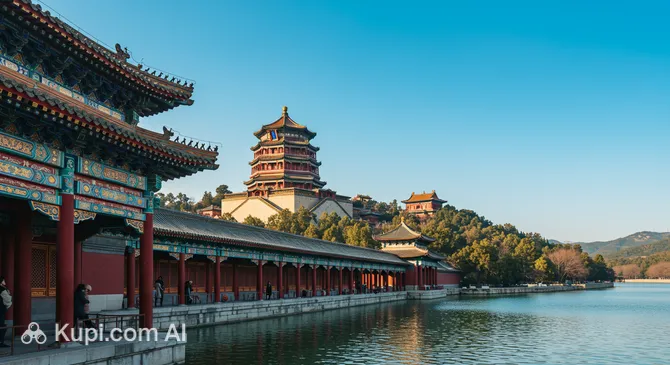
For a serene escape from the urban energy, the Summer Palace is a masterpiece of Chinese landscape garden design. This UNESCO World Heritage site was once a royal retreat and features the stunning Kunming Lake and Longevity Hill. Visitors can wander through the intricate Long Corridor, admire the painted pavilions, or take a relaxing boat ride to fully appreciate the harmonious blend of nature and architecture.
Showcasing the modern face of the metropolis is the Beijing National Stadium, widely known as the "Bird's Nest" due to its unique steel lattice design. Built as the centerpiece for the 2008 Summer Olympics, it remains an architectural icon. It is a fantastic spot for photography, especially in the evening when the structure is illuminated in spectacular colors, symbolizing the city's rapid development and future ambitions.
Beihai Park. Illustration.
Source: Kupi.com AI
Traveler photos:
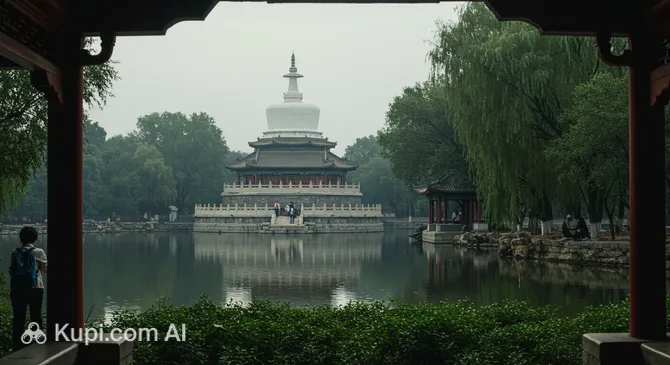
Another historical gem worth exploring is Beihai Park, one of the oldest and best-preserved imperial gardens in China. Centered around a large lake and dominated by the white stupa on Jade Flowery Islet, the park offers a picturesque setting for a leisurely stroll. It is also a great place to observe local life, as residents often gather here to practice Tai Chi, write water calligraphy, or simply enjoy the peaceful atmosphere.
Local Cuisine
Beijing's culinary landscape is as grand and storied as its history, offering a distinctive flavor profile known as Jing cuisine. This style originated from the Emperor's kitchen and has filtered down to the streets, characterized by savory sauces, hearty wheat-based staples, and a love for strong flavors. Food here is not just sustenance; it is a cultural event, often enjoyed in bustling, communal settings.
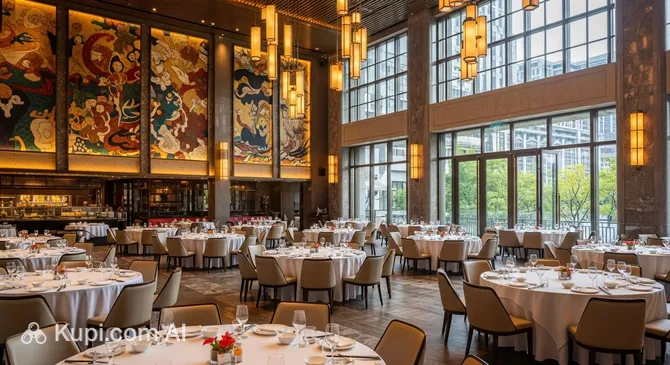
The undisputed king of the local table is Peking Duck. This world-famous dish consists of roast duck known for its thin, crisp skin, usually eaten with scallions, cucumber, and sweet bean sauce wrapped in a soft pancake. For a premium experience, travelers often visit renowned establishments like Da Dong Roast Duck, celebrated for its modern technique and "super-lean" skin. Alternatively, Li Qun Roast Duck Restaurant offers a more rustic, traditional atmosphere set in a courtyard house, where the duck is roasted in open ovens.
Da Dong Roast Duck. Illustration.
Source: Kupi.com AI
Traveler photos:
Another staple that defines the city's comfort food is Zhajiangmian (noodles with soybean paste). This dish features thick, hand-pulled wheat noodles topped with a rich, savory sauce made from stir-fried pork and fermented soybean paste, garnished with fresh vegetables like cucumber and radish. It is a humble yet deeply satisfying meal found in small eateries throughout the city. Hot pot, particularly the copper vessel style with thinly sliced mutton, is also a favorite, especially during the cold winter months.
When it comes to beverages, the locals have distinct preferences. Baijiu, a potent clear grain liquor, is the traditional alcoholic choice, with the local variety Erguotou being particularly famous for its strength and affordability. For a non-alcoholic option, the adventurous can try Douzhi, a fermented mung bean milk with a sour taste that is unique to Beijing. More universally palatable is the city's jasmine tea, which is consumed throughout the day and accompanies most meals.
Wangfujing Pedestrian Street. Illustration.
Source: Kupi.com AI
Traveler photos:
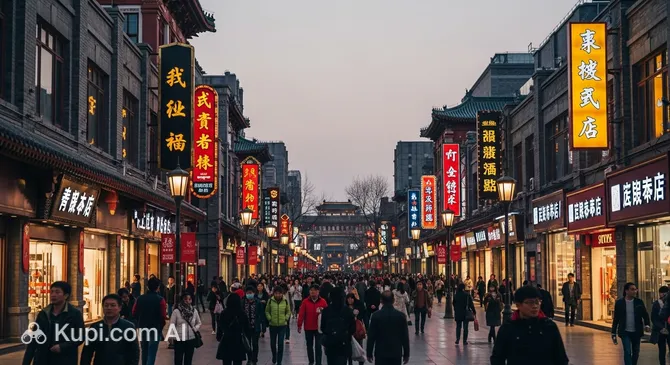
To truly understand the local food culture, a visit to a food street is essential. Wangfujing Pedestrian Street is perhaps the most famous, offering a sensory overload where you can find everything from candied hawthorn sticks (Tanghulu) to more exotic snacks on skewers. While it attracts many tourists, it provides a vivid snapshot of the variety and energy that define Beijing's gastronomic scene.
Travel Tips
Visiting Beijing is an exhilarating experience, but the sheer size and unique digital ecosystem of the Chinese capital can be daunting for first-time visitors. To help you navigate this bustling metropolis with confidence and ease, we have compiled a list of essential practical advice covering everything from payments to cultural norms.
Clothing and Gear: Beijing has a continental climate with extreme seasonal differences. In summer, pack light, breathable fabrics to handle the heat and humidity, while winter requires heavy coats, thermal layers, and gloves to combat freezing temperatures. Regardless of the season, bring your most comfortable walking shoes; attractions like the Forbidden City and the Summer Palace involve kilometers of walking on hard pavement. If you plan to hike the Great Wall, sturdy footwear with good grip is non-negotiable.
Transportation: The Beijing Subway is the most efficient way to bypass the city's notorious traffic jams. It is inexpensive, clean, and features signs and announcements in English. For greater comfort, ride-hailing apps are widely used; since international platforms like Uber do not work here, download the English version of the local equivalent (DiDi) or use the mini-apps within Alipay. Taxis are available, but ensure the driver uses the meter and have your destination written in Chinese characters.
Finances: China has largely moved to a cashless society, and Beijing is no exception. While cash (Renminbi/CNY) is legally accepted, many vendors may not have change. The most convenient method is to set up Alipay or WeChat Pay on your phone before arrival; both now allow you to link international credit cards. It is still wise to carry a small amount of cash for emergencies, but rely primarily on mobile payments. Tipping is not part of the local culture and is generally not expected.
Health and Safety: Beijing is a very safe city for tourists, with low crime rates. However, tap water is not safe for drinking; always buy bottled water or use boiled water provided in hotels. Pharmacies are marked with a green cross, but English-speaking staff may be rare, so having a translation app is helpful. While air quality has improved significantly, sensitive travelers might still want to pack high-quality masks for days with higher pollution levels.
Communication: Mandarin is the official language. English proficiency varies; it is common in major hotels and tourist sites but limited elsewhere. A translation app that works offline or with image recognition is an absolute lifesaver for reading menus and signs. Crucially, many western apps and websites are inaccessible due to internet restrictions. To stay connected to your usual services, purchase a travel eSIM or set up a roaming plan before you enter the country.
Local Etiquette: Politeness is valued, though personal space may be smaller than what you are used to in queues or crowded subways. When handing over money, a business card, or a gift, use two hands as a sign of respect. Avoid leaving your chopsticks sticking vertically into a bowl of rice, as this resembles incense burning for the dead and is considered bad luck. Public displays of anger or shouting cause a "loss of face" and will not help resolve problems.
What to Avoid: Be wary of the infamous "Tea House Scam" around Tiananmen Square and Wangfujing. Overly friendly "students" may approach you wanting to practice English and invite you to a tea ceremony, leaving you with an exorbitant bill. Politely decline such invitations. Also, avoid visiting major attractions during Chinese national holidays (especially the first weeks of May and October), as the crowds can be overwhelming.
Additional Tip: Spontaneity is difficult when visiting Beijing's top sights. Tickets for the Forbidden City and the National Museum are released days in advance and often sell out within minutes. You must book these tickets online through their official platforms or WeChat mini-programs well before your trip. Do not expect to buy tickets at the gate.
By preparing for these unique local aspects, you can focus less on logistics and more on the incredible history and culture that Beijing has to offer. With your mobile payments set up and your comfortable shoes laced, you are ready to explore the wonders of the Northern Capital.
Entertainment & Nightlife
As the sun sets over the ancient capital, Beijing transforms into a vibrant metropolis of neon lights and bustling energy. The city's nightlife scene has evolved rapidly, offering everything from thumping electronic dance clubs to sophisticated rooftop cocktail lounges and traditional teahouses. Whether you are looking to dance until dawn or enjoy a quiet drink by a moonlit lake, the city caters to every nocturnal preference.
For those seeking a high-energy atmosphere, the Sanlitun district is the undisputed heart of Beijing's modern nightlife. Popular with both the expat community and trendy locals, this area is packed with multi-story clubs, chic bars, and western-style restaurants. The dress code here tends to be smart casual, and the party often starts late, with venues filling up after 10:00 PM. It is the perfect place to experience the cosmopolitan side of the city, where international DJs often spin the latest tracks.
In contrast, the Houhai (Shichahai) area offers a more scenic and relaxed vibe. Located around three man-made lakes, this district is famous for its dense row of bars featuring live singers and bands. While it can be quite touristy, sitting on a rooftop terrace overlooking the dark water, with the glow of red lanterns reflecting on the surface, creates a memorable atmosphere. It is an ideal spot for a casual beer and listening to acoustic covers of pop songs.
Beyond the bars, the city offers spectacular evening attractions. Happy Valley Beijing is a massive amusement park that often hosts night festivals and evening operations, allowing thrill-seekers to enjoy roller coasters under the stars. The lighting effects and evening parades make it a fantastic destination for entertainment outside the city center.
Beijing National Aquatics Center. Illustration.
Source: Kupi.com AI
Traveler photos:
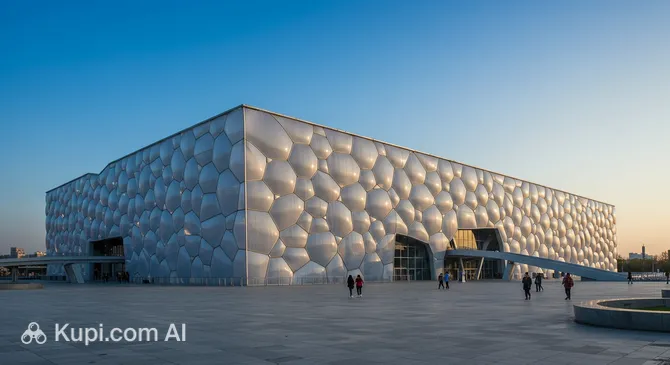
Sightseeing does not have to end when the museums close. The Olympic Park becomes a dazzling spectacle at night. The Beijing National Aquatics Center, also known as the Water Cube, is particularly stunning when its bubble-like facade is illuminated in shifting shades of blue and purple. It stands as a glowing counterpoint to the nearby Bird's Nest, making the area a favorite for night photography and evening strolls.
For practical planning, it is important to note that the Beijing Subway generally shuts down between 11:00 PM and midnight. If you plan to stay out late, you will need to rely on taxis or ride-hailing apps like DiDi. The city is generally very safe for night walks, even in the early hours of the morning, but it is always wise to have your destination address written in Chinese for drivers.
During the daytime, the entertainment landscape offers diverse options for all ages. Families traveling with children can visit the Children's Paradise at Temple of Heaven Park, a dedicated amusement area designed for play and recreation within the serene park grounds. For those seeking cultural immersion, the city is famous for its breathtaking acrobatic shows and classic Peking Opera performances at historic theaters. From the adrenaline of theme parks to the artistry of the stage, Beijing ensures that every hour of your visit is filled with discovery.
Parks & Museums
Beijing offers a remarkable array of green spaces and cultural institutions that go far beyond the well-trodden path of the main tourist squares. The city's parks are not merely places for relaxation but are deeply embedded in imperial history, while its museums provide intimate glimpses into the lives of scholars, princes, and emperors.
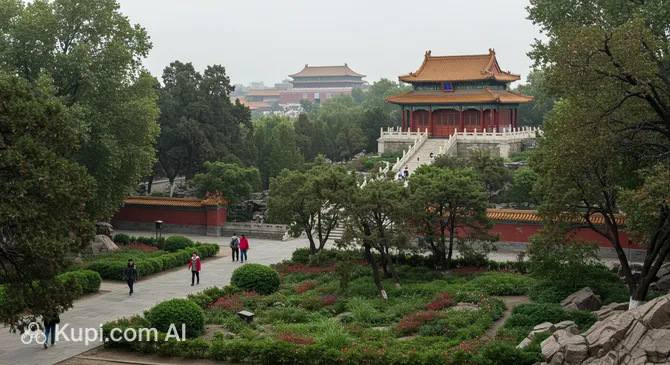
For the best panoramic view in the city, a visit to Jingshan Park is essential. Located directly across from the northern exit of the Forbidden City, this park features an artificial hill created from the earth excavated to dig the palace moats. A climb to the top of the Wanchun Pavilion rewards visitors with a breathtaking, unobstructed view of the golden rooftops of the imperial palace stretching to the south, a sight that is particularly magical at sunset.
Jingshan Park. Illustration.
Source: Kupi.com AI
Traveler photos:
Another site of immense historical significance is the Old Summer Palace (Yuanmingyuan). Unlike its well-preserved counterpart, this vast complex is famous for its atmospheric ruins of European-style stone palaces and extensive water gardens. It serves as an open-air museum of landscape art, where visitors can wander through quiet trails, lotus-filled lakes, and the remnants of what was once known as the "Garden of Gardens," offering a poignant reflection on history.
Delving into the lifestyle of the Qing Dynasty aristocracy, Prince Gong Mansion stands as the most dazzling and best-preserved princely residence in Beijing. The expansive compound combines elegant courtyard housing with a sophisticated private garden featuring artificial hills, rockeries, and a grand opera house. It provides a more intimate scale of luxury compared to the Forbidden City, allowing tourists to imagine the daily lives of China's elite.
Prince Gong Mansion. Illustration.
Source: Kupi.com AI
Traveler photos:
For those interested in the scholarly traditions of ancient China, the Imperial College (Guozijian) offers a fascinating educational journey. As the highest institute of learning during the Yuan, Ming, and Qing dynasties, it features the magnificent Biyong Hall, surrounded by a circular moat, where emperors would lecture. The serene atmosphere and ancient cypress trees make it a quiet haven for culture lovers.
Insider Tip: To experience the true heartbeat of the city, visit any of these parks shortly after sunrise. You will find them teeming with local residents practicing Tai Chi, singing opera, playing traditional instruments, or writing calligraphy with water on the pavement—a genuine slice of Beijing life that disappears by mid-morning.
Getting Around
Navigating Beijing is surprisingly convenient for such a massive metropolis, thanks to one of the world's largest and most efficient public transportation networks. The backbone of the system is the Beijing Subway, which boasts over 20 lines covering virtually every corner of the city and its suburbs. It is the fastest way to travel, allowing you to bypass surface traffic jams. The stations are modern, clean, and tourist-friendly, featuring clear signage and announcements in English, making it easy for international visitors to find their way around.
For destinations not directly served by the subway, the city offers an extensive bus network, including Bus Rapid Transit (BRT) lines and electric trolleybuses. While buses are incredibly affordable, they can be challenging for non-Chinese speakers due to the lack of English route maps at some stops. A unique feature worth experiencing is the historic "Dangdang" tram, a sightseeing tramway that runs through the Qianmen area south of Tiananmen Square, offering a nostalgic ride through one of the city's oldest commercial districts.
Paying for transport is seamless. The most practical option for tourists is to purchase a Yikatong (Beijing Transportation Smart Card) at any subway station service center or the airport. This rechargeable card can be used on the subway, buses, and even some taxis. A deposit is required, which is refundable upon returning the card. Alternatively, if you have set up Alipay or WeChat Pay on your smartphone, you can activate the "Transport" QR code within these apps to scan directly at subway turnstiles and on buses, eliminating the need for a physical card. Fares are distance-based, typically starting at a very low price (around 3 RMB for the subway) and increasing with mileage.
Taxis and ride-hailing services provide a comfortable alternative. Official taxis are distinctively colored (often yellow and maroon) and strictly use meters. However, few drivers speak English, so it is essential to have your destination written in Chinese characters. A more convenient option is DiDi, the local equivalent of Uber. The DiDi app is available in English and allows you to input your destination and pay automatically, bridging the language gap effectively.
For short distances, Beijing is a fantastic city for cycling, with wide, dedicated bike lanes on most major avenues. The streets are lined with shared bicycles (usually blue or yellow) that can be unlocked by scanning a QR code with Alipay or WeChat. This is often the quickest way to travel between a subway station and your final destination, offering a local's perspective of the city's neighborhoods.
Travelers should be aware that the subway operates roughly from 5:00 AM to 11:00 PM; it does not run 24 hours. Be prepared for mandatory security checks at the entrance of every subway station, where bags must be X-rayed. To ensure a comfortable journey, try to avoid the morning (7:30 AM – 9:00 AM) and evening (5:00 PM – 7:00 PM) rush hours, when the trains can become incredibly crowded.
Accommodation
Where to Stay:
Beijing offers a vast spectrum of accommodation options that cater to every type of traveler, from backpackers to luxury seekers. The city's lodging landscape ranges from high-end international hotel chains with skyline views to budget-friendly hostels. A unique feature of the capital is the opportunity to stay in a traditional courtyard hotel (Siheyuan). These converted historic homes, often found in the ancient alleyways (hutongs), provide a culturally immersive experience that blends old-world charm with modern comforts.
For first-time visitors, the most convenient area to stay is in the Dongcheng District, particularly near Wangfujing Pedestrian Street. This location places you right in the heart of the city, within walking distance of major landmarks like Tiananmen Square and the Forbidden City. It is a bustling hub with easy access to shopping, dining, and the subway, making it an excellent base for sightseeing.
Tiananmen Square. Illustration.
Source: Kupi.com AI
Traveler photos:
Travelers looking for a more modern and cosmopolitan vibe should consider the Chaoyang District, specifically around the Central Business District (CBD) or Sanlitun. This area is home to many of the city's 5-star hotels, trendy bars, and upscale shopping malls. It is also close to the 798 Art Zone and offers a vibrant nightlife scene. Alternatively, for a quieter and more atmospheric stay, the neighborhoods around the Drum and Bell Towers offer numerous boutique courtyard guesthouses tucked away in the hutongs.
Booking Tip: It is highly recommended to book your accommodation well in advance, especially if you are visiting during Chinese national holidays like the Spring Festival (January/February) or the Golden Week in October. Additionally, as a foreign tourist, ensure that your chosen hotel is licensed to accept foreign guests, as not all budget properties in residential areas have this authorization.
Prices in Beijing are generally reasonable compared to Western capitals but vary significantly by location and season. Budget travelers can find hostel beds or basic rooms for $20–$50 USD per night. Mid-range hotels typically cost between $60 and $120 USD, offering good amenities and reliable service. Luxury options start from $150 USD and can go much higher. For the smoothest experience, use major international booking platforms or reliable Asian travel apps like Trip.com, which are widely accepted and user-friendly for non-Chinese speakers.
Nearby Cities
For those looking to explore the surroundings, Beijing serves as an excellent base for day trips to several interesting nearby locations. While the capital itself is vast, the neighboring regions in Hebei province offer a change of pace with their own unique historical and cultural sites.
Zhuozhou is a destination rich in history, particularly celebrated for its connection to the Romance of the Three Kingdoms. It is traditionally considered the place where the legendary figures Liu Bei, Guan Yu, and Zhang Fei swore their oath of brotherhood. Visitors can explore the historic Zhuozhou Twin Pagodas, which have stood for over a thousand years, or visit the extensive film and television studios located in the area.
Located roughly halfway between Beijing and Tianjin, Langfang is another accessible option. It is perhaps best known for the Grand Epoch City, a sprawling architectural complex that replicates the old city walls and streetscapes of imperial Beijing. This attraction allows travelers to walk through a recreation of the capital as it might have looked centuries ago, complete with temples and traditional courtyards.
These nearby destinations offer a glimpse into the diverse culture and landscapes of the region, providing worthwhile excursions for those with extra time in their itinerary.
Shopping & Souvenirs
Shopping in Beijing is an adventure that spans from ultra-modern luxury malls to bustling traditional markets. The city serves as a commercial hub where centuries-old craftsmanship meets contemporary fashion, offering visitors a chance to purchase everything from high-end electronics to exquisite handmade crafts. Whether you are looking for international brands or unique local treasures, the Chinese capital provides a diverse retail landscape to explore.
The most iconic shopping destination in the city is Wangfujing Pedestrian Street. This historic thoroughfare has been a center of commerce for hundreds of years and is now lined with massive department stores, souvenir shops, and time-honored brands. It is a pedestrian-friendly zone where you can find traditional goods like tea and silk alongside modern fashion retailers, making it a perfect starting point for any shopping itinerary.
For those interested in a more specialized market experience, Hongqiao Market is a must-visit destination. Famous worldwide as the "Pearl Market," it attracts everyone from tourists to visiting dignitaries seeking high-quality freshwater and seawater pearls. Beyond jewelry, the market is a treasure trove of electronics, clothing, and traditional crafts, all available across its multiple floors.
Hongqiao Market. Illustration.
Source: Kupi.com AI
Traveler photos:
Travelers seeking artistic and design-focused items should head to the 798 Art Zone. While primarily known for its galleries, this district is filled with trendy boutiques, design stores, and bookshops selling unique home decor, fashion accessories, and creative souvenirs that you won't find in standard tourist shops. It offers a more relaxed, bohemian shopping atmosphere compared to the busy city center.
When it comes to souvenirs, Beijing offers several signature products that make for perfect gifts. Cloisonné, an intricate metalwork technique using colored enamels, is a local specialty often found in the form of vases and jewelry. Jasmine tea is another classic choice, with many historic tea shops offering tastings. Additionally, high-quality silk products, calligraphy brushes, and paper cuttings are widely available and represent the rich cultural heritage of the region.
Most large shopping malls and department stores operate from 10:00 AM to 10:00 PM daily. While major international credit cards are accepted in high-end establishments, the local shopping ecosystem is dominated by mobile payments. Apps like Alipay and WeChat Pay are used almost exclusively by locals, even in small stalls. It is highly recommended to set these up on your phone. In markets, bargaining is expected and is part of the fun; always negotiate with a smile to get a fair price.
International tourists visiting Beijing can also take advantage of the Tax Refund for Tourists scheme. Designated stores, often marked with "Tax Free" signage, allow visitors who spend a certain amount (usually over 500 RMB) to claim a refund on the Value Added Tax (VAT) upon departure. Be sure to carry your passport while shopping and ask for the tax refund form at the checkout counter.