Support

Tangshan Sannuhe Airport

About the Airport

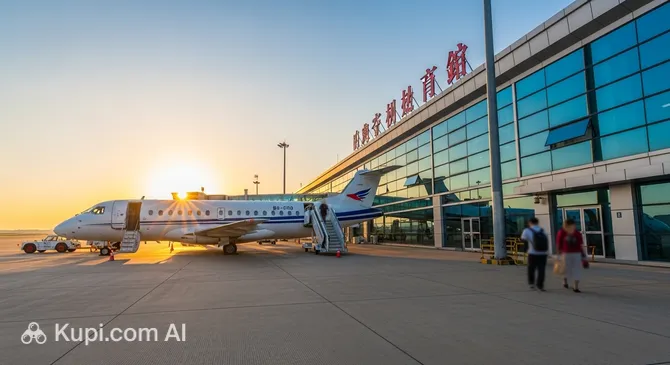
Tangshan Sannuhe Airport. Source: Kupi.com Binoculars

Sannuhe Airport serves as the modern aerial gateway to the city of Tangshan, located in Hebei Province, China. Opened on July 13, 2010, it operates as a dual-purpose facility, serving both civil and military aviation. Despite its relatively young age and compact size, the airport plays a vital role in the region's transport system, connecting Tangshan with key cities across the country. Its name, derived from the nearby village of Sannühe, adds a distinct local flavour to this location.

IATA Code TVS
ICAO Code ZBTS
City Tangshan
Distance to Centre About 20 km.
Status Domestic, joint civil-military base.
Annual Passengers 700,503 (based on 2019 data).
Popular Airlines Shanghai Airlines, Hainan Airlines, Tianjin Airlines.
Schedule Online Flight Board "Sannuhe Airport (Tangshan)"

Although Sannuhe is considered a relatively small airport, it offers passengers all the necessary amenities for a comfortable journey. Inside the terminal, you will find several dining establishments where you can have a snack before your flight, as well as shops and cosy waiting lounges. Transport connections to the centre of Tangshan are well-established: the city can be quickly reached by taxi or public transport available near the terminal. Thanks to its efficient operations and convenient location, Sannuhe Airport is an excellent starting point for exploring this industrial and cultural hub of China.

Contact Information

Below is the essential contact information for Sannuhe Airport (TVS). Please note that the most reliable way to get up-to-date flight details is to contact your airline directly.

  • Official Website: Sannuhe Airport does not have a dedicated official website for passengers. We recommend checking all information regarding schedules, check-in, and services on the official website of your airline.
  • Information Desk Phone: To obtain the most accurate and current information regarding your flight, it is best to use the phone number listed on your ticket or the carrier's website.
  • Address: Tangshan Sannühe Airport, Fengrun District, Tangshan, Hebei, China.
  • Email: An official email address for general passenger inquiries is not published. It is recommended to use your airline's support channels for communication.
  • Social Media: The airport does not maintain official pages on international social media platforms.
  • Lost & Found Information: For all issues related to lost or damaged luggage, you should contact the representative of the airline you flew with directly. Counters are located in the arrivals hall.
  • Passenger Support Service: Key support regarding flights, schedule changes, and other topics is provided by airline representatives at check-in counters and boarding gates.

How to Get to the Airport

Getting from Sannuhe Airport (TVS) to the city centre of Tangshan and back is quite simple, thanks to several convenient transport options. The most popular and budget-friendly option for tourists is the special shuttle buses. They run on fixed routes, connecting the airport with key points in the city, such as the central railway station and major hotels. A trip on such a bus takes about 50–60 minutes. There is no direct metro or train connection to the airport, so the bus remains the primary mode of public transport.

For maximum comfort, especially if you are travelling with family or heavy luggage, a taxi is your best choice. Official taxi stands are located right outside the arrivals terminal exit. The journey to the city centre will be significantly faster than by bus, taking about 30-40 minutes depending on traffic conditions. Furthermore, ride-hailing apps (such as DiDi) are very popular in China, which can be a convenient and sometimes more cost-effective alternative. For complete peace of mind, you can pre-book a private transfer — the driver will meet you with a name sign in the arrivals hall.

Car rental offers complete freedom of movement, which is particularly relevant if you plan to explore not only the city but also its scenic surroundings. Rental company counters can be found at the airport. However, it is important to remember that foreign nationals typically require a Chinese driving licence to drive in China. An International Driving Permit is usually not sufficient. For those arriving at the airport in their own or a rented vehicle, there is convenient parking with zones for short-term and long-term stays.

In summary, the choice of transport depends on your budget and priorities. For budget-conscious travellers, the shuttle bus is the best choice. If you value speed and comfort, choose a taxi or a pre-booked transfer. Remember that planning your route in advance will save time and make your journey more pleasant.

Terminals and Map

Sannuhe Airport (TVS), serving the city of Tangshan, is a modern and compact aviation hub. Its structure is simple and straightforward, making navigation maximally convenient for passengers. The airport operates one passenger terminal, which handles all domestic and international flights. Thanks to this, you will not have to worry about transferring between different buildings.

The terminal layout is logical and intuitive. Typically, the departure zone with check-in counters is located on one level, while the arrival zone with baggage claim is on another. The space is clearly divided into several key areas:

  • Departure Zone: Here you will find airline check-in counters, security checkpoints, and the waiting lounge with boarding gates.
  • Arrival Zone: Includes baggage claim belts, customs control (for international flights), and the exit to the city where you can find taxis or other transport.

One of the main advantages of Sannuhe Airport is the speed of completing all formalities. Due to its small size and efficient organisation, flight check-in and security screening usually take significantly less time than in large international hubs. Nevertheless, it is recommended to arrive at the airport 1.5-2 hours before the departure of a domestic flight to go through all procedures without rushing.

To navigate the terminal, simply follow the signs, which are generally duplicated in English. The compactness of the airport means that getting lost here is practically impossible. All major services — from information desks to cafes and shops — are easily accessible, making your stay at the airport a comfortable and carefree start to your journey across China.

Airport History

The history of Sannuhe Airport in Tangshan is an example of how a military airfield can transform into a modern civil aviation hub playing a significant role in the regional economy. Originally established as an airbase for the Air Force of China, it has journeyed from a closed facility to a gateway for one of the country's largest industrial centres.

A key moment in the airport's history was the year **2010**. It was on **July 13, 2010**, that Sannuhe Airport was officially opened for civil flights. This event was the result of massive reconstruction and the construction of new infrastructure, including a modern passenger terminal, a control tower, and runway upgrades to accommodate medium-haul aircraft such as the Boeing 737 and Airbus A320. The opening of civil connections gave a powerful boost to the development of tourism and business ties in Tangshan.

Although the airport's civil history is relatively short, its military past is inextricably linked to one of the most tragic events in the city's history. During the devastating **Tangshan Earthquake of 1976**, the military airfield became a vital centre for rescue operations. It was here that humanitarian aid was delivered from all over the country and from where the injured were evacuated, making it a symbol of hope and salvation for many residents.

Since opening to civil aviation, the airport has been constantly developing. New routes have been launched, linking Tangshan with major Chinese cities such as Shanghai, Guangzhou, and Xi'an. The modernisation of navigation equipment and the expansion of the terminal have allowed for increased passenger traffic and improved service quality. Interestingly, the very name of the airport — **Sannuhe** — translates as "River of Three Girls," which refers to local toponymy and legends, adding a touch of cultural distinctiveness to this modern transport hub.

Services and Amenities

Sannuhe Airport (TVS), serving the city of Tangshan, offers passengers all the necessary amenities for a comfortable wait before departure. Despite its relatively small size, the airport possesses a range of services capable of satisfying the basic needs of travellers.

In the terminal, you will find several cafes and eateries where you can have a snack or a coffee, as well as small shops offering travel essentials, drinks, and local souvenirs. For a comfortable wait, VIP lounges are available for an additional fee or for business class passengers. Free Wi-Fi is provided throughout the airport building; however, as in many airports in China, a local phone number may be required to receive a verification code for connection. There are also charging stations for mobile devices.

For passenger convenience, ATMs operate within the airport. Currency exchange points may not always be available, so it is recommended to arrange currency exchange in advance. There is a medical point on the premises for first aid. Travellers with children can make use of the mother and child room. The airport is also equipped for the needs of passengers with reduced mobility: there are ramps, special restrooms, and an escort service provided upon prior request.

Although there are no hotels directly on the airport grounds, many accommodation options to suit any taste and budget can be found in the immediate vicinity and in the city itself. There are no specialised business centres or conference rooms in the airport, so for business meetings, it is better to utilise the infrastructure of city hotels.

Where to Eat

Sannuhe Airport in Tangshan offers passengers a basic but functional selection of establishments where one can refresh oneself before a flight. Dining options are mainly concentrated in the main terminal and focus on local and general Chinese cuisine.

In the airport building, you will find small restaurants and cafes in a diner style. This is a good opportunity to try popular dishes of northern China, such as beef noodles, dumplings (jiaozi), or steamed buns (baozi). For those in a hurry, there are fast food points offering standard sets of rice with chicken and vegetables.

Most establishments are located in the general area before security control (landside), where the selection is slightly wider. Here you can have a full lunch while waiting for your flight. In the sterile area, after security (airside), the choice is more modest — usually a small cafe and vending machines with drinks and snacks. This is a convenient option for a quick snack right before boarding.

Passengers with strict dietary requirements (vegan, gluten-free, Halal) should note that specialised menus are likely absent at the airport. In this case, it is more reliable to bring food with you. Vegetarians may find it easier — you can ask for noodles or rice prepared only with vegetables.

Prices in airport establishments are higher than in the city but remain moderate compared to large international hubs. The opening hours of cafes and restaurants are usually tied to the flight schedule, so they may be closed late in the evening or at night if no departures are scheduled.

Tips for Travellers

To ensure your journey through Sannuhe Airport (Tangshan) goes as smoothly as possible, take advantage of these tips. Planning and knowing certain nuances will help save time, money, and stress, making the start or end of your trip more pleasant.

Arrival Time and Check-in: For domestic flights within China, it is recommended to arrive at the airport 2-3 hours before departure. This time is usually sufficient to complete all formalities without rushing. To save time, use online check-in if your airline provides this option. However, remember that luggage must still be dropped off at the designated counter.

Security Control: Be prepared for a thorough screening. Keep your passport and boarding pass handy. China has strict rules regarding the carriage of external batteries (power banks) — they can only be carried in hand luggage, and the capacity marking must be clearly visible on the casing. Lighters and matches are prohibited. Liquids are allowed in containers up to 100 ml, packed in a transparent bag.

Seat Selection and Transfers: When choosing a seat on the plane, be guided by your preferences: a window seat offers beautiful views during takeoff and landing, while an aisle seat allows you to stand up freely without disturbing neighbours. If you have a connecting flight, check in advance whether you need to collect and re-check your luggage at the intermediate airport. Immediately upon arrival, find information on the board about your next flight and the gate number.

Customs Control: For international flights, you must complete a declaration if you are carrying goods subject to declaration or large amounts of cash. Be honest and accurate when filling out documents to avoid delays and misunderstandings with the customs service.

Savings and Unforeseen Situations: To save money, you can eat before arriving at the airport, as prices in local cafes and restaurants are usually higher. Bring an empty water bottle with you, which can be filled at drinking fountains after passing security control. In case of a flight delay, first contact your airline representative for information. Depending on the length of the delay, you may be provided with vouchers for meals or even hotel accommodation.

Reached the end of the page?

That means the route is fully explored