Support

Beijing Capital International Airport

About the Airport

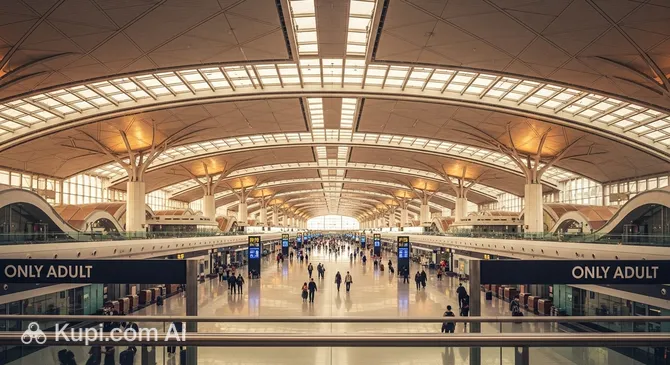
Beijing Capital International Airport. Source: Kupi.com Binoculars

Beijing Capital International Airport, also known as Shoudu, is not merely the main aerial gateway to China, but also one of the most massive and historically significant aviation hubs in the world. Opened in 1958, it became the country's first civil airport and has since undergone colossal modernization, transforming into an ultra-modern complex. Its famous Terminal 3, resembling a soaring dragon, was built for the 2008 Olympics and still captures the imagination with its size and architecture. Today, Shoudu is a veritable city within a city, where technology and comfort serve a single purpose: to make the start of your journey as pleasant as possible.

IATA Code PEK
ICAO Code ZBAA
City Beijing
Distance to Centre About 32 km
Status International
Annual Passengers About 52.9 million (2023)
Popular Airlines Air China, Hainan Airlines, China Southern Airlines
Schedule "Beijing Capital International Airport" online board

Airport Features and Advantages

Beijing Capital is the main hub for the national carrier Air China, as well as a key node for Hainan Airlines and China Southern Airlines. This ensures a vast route network connecting Beijing with hundreds of cities worldwide. The airport consists of three terminals, with free shuttles operating between them for passenger convenience. Navigation within the complex is intuitive, despite its gigantic proportions.

Terminal 3 deserves special mention. It is one of the largest terminals in the world, divided into three sections (T3C, T3D, and T3E) to service domestic and international flights. An automated mini-train transports passengers between zones; the ride itself becomes a small adventure offering views of an underground garden. Inside the terminals, you will find a vast retail area with shops to suit every taste, numerous restaurants offering both Chinese and international cuisine, comfortable lounges, and all necessary services for travellers.

Contact Information

  • Official Website: en.bcia.com.cn
  • 24-Hour Information Service: +86-10-96158
  • Address: Airport Road, Shunyi District, Beijing, P.R. China
  • Email: To contact the airport, it is recommended to use the feedback form on the official website or the telephone. A direct email for general enquiries is not published.
  • Social Media: Current links to the airport's official accounts are usually posted on their website.
  • Lost and Found: If you have lost items within the terminal, please contact the Lost and Found service at +86-10-96158. In case of lost checked baggage, you should immediately contact your airline representative.
  • Customer Service Contacts: All enquiries can be directed to the unified information service number +86-10-96158.

How to Get to the Airport

You can reach Beijing Capital International Airport (PEK) from the centre of Beijing in several ways, each with its own advantages regarding speed, cost, and comfort. The transport system of China's capital is excellently developed, allowing tourists to easily plan their route to the airport.

Airport Express Train — this is arguably the fastest and most reliable method. The express line connects Terminals 2 and 3 with two stations in the city: Dongzhimen (transfer to subway lines 2 and 13) and Sanyuanqiao (transfer to line 10). The journey from Dongzhimen to Terminal 3 takes about 25-30 minutes. The ticket price is fixed at 25 RMB. This is the ideal option to avoid city traffic jams, especially during peak hours.

Shuttle Buses offer a more economical, albeit slower, alternative. An extensive network of routes connects the airport with key districts of Beijing, including railway stations, major hotels, and business centres. Travel time can vary significantly from 1 to 1.5 hours depending on traffic conditions and your departure point. The fare is usually between 20 and 30 RMB. This is a good choice for travellers who are not in a rush and are on a budget.

Taxi or Pre-booked Transfer ensures maximum comfort, delivering you "door to door". A trip from the city centre to the airport without traffic will take about 40-60 minutes. The cost of an official taxi ride will be approximately 100-150 RMB; toll road fees may be added to this amount. Always use official taxis with a meter or verified ride-hailing apps (such as DiDi) to avoid overcharging. Besides the Capital Airport, the metropolis is also served by the newer Beijing Daxing International Airport, so when hailing a taxi, always clearly specify the airport you need — PEK.

Car Rental is an option for those planning to travel around the outskirts of Beijing. However, for a trip solely to the airport, this method is not the most convenient due to complex traffic, language barriers, and the requirement to hold a Chinese driving licence. There are both short-term and long-term parking lots at all terminals if you do decide to drive your own or a rented vehicle.

Terminals and Map

Beijing Capital International Airport (PEK) is one of the busiest and most modern aviation hubs in the world. It consists of three main terminals: T1, T2, and T3, each with its own specialisation and features. Orienting yourself here is not difficult thanks to well-thought-out signage, but due to the airport's immense size, it is important to understand its structure in advance.

Terminal 1 (T1) — the oldest and most compact. It primarily serves domestic flights for HNA Group airlines, including Hainan Airlines. Everything here is located close together, so completing formalities usually takes less time. T1 is connected by a covered walkway to Terminal 2, allowing for travel between them on foot.

Terminal 2 (T2) handles both domestic and international flights. Historically, it was the main international terminal before the construction of T3. Today, SkyTeam alliance airlines (e.g., China Eastern, Delta) and several other carriers are based here. The structure of T2 is classic: departure and arrival zones are located on different levels, and navigation is intuitive. Despite its age, the terminal is well-equipped and convenient for passengers.

Terminal 3 (T3) — is a true city within a city and the airport's main hub, being one of the largest terminals in the world. It serves the majority of international flights and is also the base for Air China and other Star Alliance airlines. T3 consists of several parts:

  • T3C: The main building for check-in for domestic and international flights, security screening, and domestic departures/arrivals.
  • T3E: A separate international satellite concourse connected to T3C by an automated people mover (APM) train. The train journey takes a few minutes. This is where the gates for international departures and the passport control area for arrivals are located.
  • T3D: Used mainly for charter flights.

Transfer between terminals is facilitated by free shuttle buses, which operate around the clock at short intervals. The journey from T1/T2 to T3 takes about 10-15 minutes. Inside the gigantic Terminal 3, the main means of transport between the main section (T3C) and the international section (T3E) is the express train.

Your Actions and Timing: Always check the terminal number on your ticket. Due to the scale of the airport, especially T3, allocate sufficient time for all procedures. Check-in, baggage drop, passport control, and security screening can be lengthy. It is recommended to arrive at the airport at least 2 hours before a domestic flight and 3-4 hours before an international one. Signs in English and Chinese, as well as numerous information desks, will help you find your way.

Airport History

The history of Beijing Capital International Airport (PEK) is a reflection of the rapid development of Beijing itself and all of China. The airport was opened on March 2, 1958, and initially represented a modest airfield with one small terminal, which mainly served charter flights and government delegations. In the first decades of its existence, it was the capital's only aerial gateway, symbolising the gradual opening of the country to the world.

The first significant phase of expansion began on the threshold of a new era in the country's history. On January 1, 1980, the new Terminal 1 was opened, which was significantly larger and more modern than its predecessor. The next important step was the construction of Terminal 2, completed at the end of 1999. This modernisation coincided with the 50th anniversary of the PRC and was necessary to service the growing flow of passengers.

The most grandiose transformation in the airport's history occurred as part of the preparations for the 2008 Summer Olympic Games. Specifically for this event, the gigantic Terminal 3 was built, which at the time of opening was considered the largest airport terminal building in the world. Designed by the famous architect Norman Foster, its roof resembles a dragon — an important symbol of Chinese culture. Simultaneously, a third runway was put into operation, allowing the airport to significantly increase its capacity.

Thanks to these massive expansions, Beijing Capital Airport became the busiest airport in Asia and the second busiest in the world by passenger traffic for many years, second only to Atlanta Airport. It transformed into a key international hub linking Asia, Europe, and the Americas. Interestingly, even after the opening of the ultra-modern Daxing Airport in 2019, PEK continues to play a vital role in the country's transport system, serving tens of millions of passengers annually.

Services and Amenities

Beijing Capital International Airport (PEK) offers passengers a wide range of services and amenities to make waiting for a flight as comfortable as possible. In its spacious terminals, you will find everything necessary — from diverse restaurants to business services.

Restaurants and Shops: The airport features a huge selection of establishments for every taste and budget. There are global fast-food chains as well as cafes offering traditional Chinese cuisine. Travellers can enjoy a cup of coffee before departure or have a full dinner. Duty-Free zones and numerous boutiques offer a wide assortment of goods: from cosmetics and perfumes to electronics and souvenirs.

Lounges and Wi-Fi: For a more comfortable rest, you can use the services of business lounges, which offer complimentary snacks and beverages, shower cabins, and convenient work zones. Free Wi-Fi is available throughout the airport. Connecting may require scanning your passport at a special kiosk or receiving a code via SMS. Numerous charging stations for electronic devices are located throughout the airport.

Financial and Medical Services: The terminals house bank branches, ATMs, and currency exchange points where you can easily perform necessary financial operations. In case of unforeseen situations, medical points operate 24/7 at the airport, ready to provide first aid.

Services for Passengers with Children and Reduced Mobility: For family travellers, special nursing rooms are equipped, as well as play areas where young passengers can have a fun time. The airport is fully adapted for people with disabilities: there are ramps, elevators, and specially equipped washrooms. An escort service can also be requested.

Hotels and Business Centres: If you have a long layover, you can stay at one of the hotels located directly on the airport grounds or in the immediate vicinity. For business travellers, business centres are available where you can use office equipment and rent a conference room for meetings.

Dining Options

At Beijing Capital International Airport (PEK), travellers are greeted with a huge variety of establishments for every taste and budget. Whether you are looking for a quick snack before departure or wish to enjoy a full meal, you will easily find a suitable option in one of the terminals.

The majority of restaurants and cafes are concentrated in Terminal 3 (T3), the largest and most modern one. Here, both in the public area (landside) and after security control (airside), dozens of establishments are located. Special attention should be paid to the "Global Kitchen" food court area on the second floor in the departure zone of T3-E, where cuisines from different countries of the world are presented. Here you can find world-famous chains like Starbucks, Costa Coffee, and McDonald's, as well as restaurants offering authentic Chinese dishes. Terminal 2 (T2) also offers a good selection: from Burger King to cafes with Asian noodles and dumplings. In Terminal 1 (T1), which serves mainly domestic flights, the choice is more modest and represented primarily by fast-food outlets and coffee shops.

While in Beijing, it is worth taking the opportunity to try local cuisine. Many airport restaurants serve adapted versions of hits such as Peking Duck, steamed dim sum dumplings, and traditional noodle soups. This is a great chance to get acquainted with the gastronomy of China, even if you do not have time to visit the city.

For passengers with special dietary needs, there are several options. Vegetarian dishes (in Chinese — `素食`, sùshí) can be found in most Chinese restaurants — usually vegetables, tofu, or rice. Finding gluten-free or Halal options can be more challenging, so it is safer to visit major international chains where standards are more predictable. It is recommended to carry a card describing your dietary restrictions in Chinese.

Prices at the airport are expectedly higher than in the city. A quick snack at a fast-food outlet or coffee with pastries will cost an average amount by airport standards, while dinner at a full-service restaurant will be significantly more expensive. Most cafes and restaurants operate from early morning until late evening (approximately from 6:00 to 22:00-23:00), and some fast-food points in Terminal 3 are open 24/7, which is especially convenient for passengers on night flights.

Travel Tips

Beijing Capital International Airport (PEK) is one of the busiest aviation hubs in the world. To ensure your journey through it goes smoothly, make use of these tips.

Arrival Time at the Airport. For international flights, it is recommended to arrive 3-4 hours before departure, and for domestic flights — 2-3 hours. The airport is huge, and queues for check-in and security screening can be long, especially during peak morning and evening hours.

Check-in and Security. To save time, complete online check-in for your flight if your airline provides this option. Be prepared for several stages of security checks, especially on international routes. Keep your passport, visa, and boarding pass handy, as they may be checked multiple times.

Choosing a Seat on the Plane. When choosing a seat, be guided by your preferences: a window seat will offer beautiful views during takeoff and landing, while an aisle seat will allow you to stand up freely and stretch your legs during the flight. Seats at emergency exits usually offer more legroom but may require an extra fee.

Hand Luggage. Standard rules for carrying liquids (containers up to 100 ml in a transparent bag) apply here as well. Pay special attention to portable chargers (power banks): their capacity must be clearly indicated on the casing, and they are permitted only in hand luggage. It is strictly prohibited to carry any types of lighters and matches in the cabin or checked baggage — they will be confiscated at the security check.

Passengers with Connections. If you have a transfer in Beijing, check in advance which terminals (T1, T2, or T3) your flights are in. A free shuttle or automated train runs between terminals. Allow sufficient time for the transfer, as you may need to go through passport control and security screening again, even if you are flying in transit.

Customs Control. For most tourists, customs control is quick. If you are not carrying goods subject to declaration, feel free to go through the "Green Channel". Be prepared for possible random baggage checks, so it is better to have receipts for expensive purchases with you.

Saving Time and Money. Bring an empty water bottle with you — there are many free dispensers with hot and cold drinking water in the terminals. Food prices at the airport are high, so having a snack beforehand will be more economical. Free Wi-Fi is available at the airport to help you stay connected.

In Case of Flight Delay. If your flight is delayed or cancelled, first contact your airline's representative counter. They will provide current information and, depending on the length of the delay, may offer vouchers for food, drinks, or hotel accommodation. To pass the time, you can stroll through the numerous shops, relax in the lounge zone, or even admire the small winter garden in Terminal 3.

Reached the end of the page?

That means the route is fully explored