Support

Beijing Nanyuan Airport

About the Airport

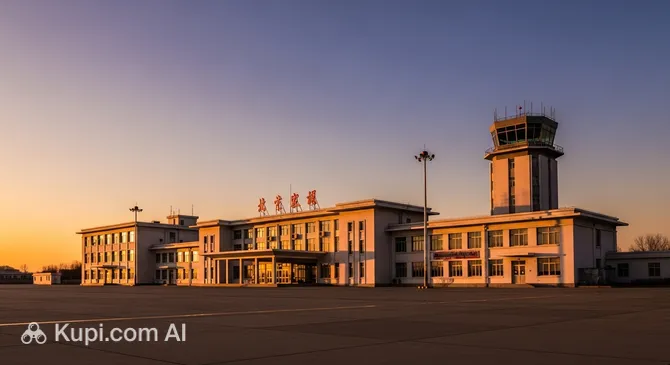
Beijing Nanyuan Airport. Source: Kupi.com Binoculars

Nanyuan Airport is not merely a former transport hub, but a true legend, permanently inscribed in the history of aviation in the Celestial Empire. Opened back in the twilight of the Qing Dynasty, it welcomed and saw off travelers for over a hundred years, remaining the oldest airfield in China right up until its closure in 2019. Today, the roar of turbines here has been replaced by silence, and the airport itself has passed the baton to the ultramodern giant Daxing, becoming a symbolic monument to a bygone era.

IATA Code NAY
ICAO Code ZBNY
City Beijing
Distance to center 13 km
Status Closed for civil flights
Passengers per year ~6.5 million (at the time of closure in 2018)
Schedule Flights transferred to Daxing Airport (PKX)

Features and Historical Significance of the Airport:

  • Historical Record Holder: Nanyuan was opened in 1910 and held the title of the oldest operating airport in China for 109 years. It was here that Chinese aviation was born.
  • Unique Location: The airport was located significantly closer to the center of Beijing (only 13 km from Tiananmen Square) than the modern Capital and Daxing airports, making it extremely convenient for quick trips despite its aging infrastructure.
  • Home to China United Airlines: Until its last day of operation, Nanyuan served as the exclusive hub for China United Airlines, which used it as a base for civil transport against the backdrop of the airfield's military past.
  • End of an Era: On September 25, 2019, the day the new mega-airport Daxing opened, the last symbolic flight departed from Nanyuan. The entire fleet and personnel were relocated to the new air harbor, and the IATA code NAY passed into history.

Contact Information

Important information for travelers: Nanyuan Airport (NAY) completely ceased servicing civil flights on September 25, 2019. All passenger air transport operations were transferred to the new Beijing Daxing International Airport (PKX).

Consequently, providing current contact details for passengers is not possible, as the airport no longer functions as a civil facility.

  • Official Website, Phone, and Other Contacts: All public contacts for Nanyuan Airport, including the website, information services, and email for passengers, are no longer valid.
  • Address: The airport is located in the Fengtai District; however, it is closed to tourist visits.
  • Lost Luggage and Passenger Support: These services are not operational at Nanyuan Airport. For all inquiries, please contact the specific airport in Beijing where your flight actually arrived or is departing from (PEK or PKX).

Please always check your flight ticket when planning your trip to clarify which of the operating airports in Beijing you are arriving at: Beijing Capital (PEK) or Beijing Daxing (PKX).

How to Get to the Airport

Important Note: Nanyuan Airport (NAY) ceased servicing commercial flights in September 2019. All passenger transport was transferred to the new Beijing Daxing International Airport (PKX). Being the oldest airport in China, Nanyuan now holds historical significance and is not used for civil aviation.

For travelers arriving in or departing from Beijing, the main air hubs are Beijing Capital International Airport (PEK) and Daxing International Airport (PKX). These are the airports you should focus on when planning your trip.

Both operating airports are excellently integrated into the city's transport system. You can reach them from the center in several ways:

  • Metro and Express Trains: The fastest and most reliable way to avoid traffic jams. The Airport Express line connects the city center with PEK airport, while the Daxing Airport Express line connects to PKX airport. Travel time ranges from 20 to 40 minutes.
  • Shuttle Buses: A budget-friendly option connecting the airports with various districts of Beijing and neighboring cities. The route network is very extensive.
  • Taxi and Transfers: A comfortable "door-to-door" way to travel. The cost of the trip depends on the distance and time of day. It is recommended to use official taxis or trusted ride-hailing apps.
  • Car Rental: Counters for international and local rental companies are present at both airports. This option is suitable for those planning independent trips around the region.

Thus, although a trip to Nanyuan Airport is no longer possible, travelers have plenty of convenient alternatives to reach Beijing's modern airports.

Terminals and Map

Important information for travelers: Nanyuan Airport (NAY) completely ceased servicing civil flights as of September 2019. For over a hundred years, it was the oldest airport in China, but with the opening of the new Daxing International Airport (PKX), all passenger transport was moved there.

In this regard, information about terminal structure, navigation, and procedures at Nanyuan Airport is no longer relevant for tourists. The airport does not receive or dispatch commercial flights, and access to its territory as a passenger is not possible. All flights previously serviced at Nanyuan, particularly those of China United Airlines, are now operated from Daxing Airport.

If you are planning a trip to Beijing, you should search for tickets and orient yourself towards the capital's two operating airports: Beijing Capital International Airport (PEK) and Beijing Daxing International Airport (PKX). It is these airports that today handle all domestic and international air transport for the city.

Airport History

The history of Nanyuan Airport is, in essence, the history of all aviation in China. Opened in 1910, it bore the proud title of the country's oldest airport. Its story began even earlier, in 1904, when two French aircraft landed on a former imperial training ground for Qing Dynasty troops. This event marked the beginning of this location's transformation into a fully-fledged airfield, which for over a hundred years witnessed key moments in the life of the country.

Initially and for most of its existence, Nanyuan was a military airfield. It served as a base for the air forces of various governments that ruled the country in the 20th century. Front lines passed through it; it saw changes in eras and technologies. Only in 1986 did the airport begin servicing civil flights as well, becoming the base for China United Airlines. This made it a unique facility where military and civil aviation coexisted side by side.

Ahead of the 2008 Olympic Games in Beijing, the airport underwent renovation to cope with increased passenger traffic, but its capacity remained limited. The main development of the capital's aviation hub was focused on the Capital Airport (Shoudu).

The most interesting and simultaneously final stage in Nanyuan's history arrived on September 25, 2019. On this day, with the opening of the ultramodern Daxing International Airport, Nanyuan completely ceased its operations. All flights were transferred to the new air harbor, and the century-long history of China's oldest airport came to its conclusion. Today, it remains a monument to aviation history, and its territory awaits repurposing within the framework of urban development.

Services and Amenities

Please note: Nanyuan Airport (NAY) completely ceased servicing civil aviation flights in September 2019. All commercial operations and passenger routes were transferred to the new Beijing Daxing International Airport (PKX).

Due to the closure for passenger transport, Nanyuan Airport no longer provides any services for travelers. Terminals, waiting lounges, shops, currency exchange points, and other amenities previously available to passengers have ceased operations.

Beijing Nanyuan Airport. Source: Kupi.com Binoculars

Nanyuan, which was the oldest airport in China, had a rich history and for a long time combined the functions of a military and civil airfield. Currently, it is used exclusively for military aviation needs.

If you are planning a trip to Beijing, all necessary information regarding flights and available services should be sought on the pages of the capital's operating airports: Beijing Capital International Airport (PEK) and Beijing Daxing International Airport (PKX).

Where to Eat

It is important to note that Nanyuan Airport (NAY) ceased servicing civil flights in the autumn of 2019. All passenger air transport was completely transferred to Beijing's new international airport, Daxing (PKX). Consequently, there are currently no operating restaurants, cafes, or other dining points for travelers at Nanyuan Airport.

If you are planning a journey to China via Beijing, your point of departure or arrival will likely be either Beijing Daxing International Airport (PKX) or Beijing Capital International Airport (PEK). Both of these major aviation hubs offer a vast selection of dining establishments to suit every taste and budget.

At Daxing and Capital airports, you will easily find:

  • Restaurants serving traditional Chinese cuisine, where you can try Peking duck, dim sum, or noodle soup.
  • Popular international fast-food chains for a quick bite.
  • Cozy coffee shops with fresh pastries and desserts.
  • Specialized establishments offering vegetarian, vegan, and other dietary options.
  • Lounges where you can relax before your flight.

Dining points are conveniently located both in the public area (before security control) and in the "clean" departure zone, allowing you to comfortably have lunch or a snack while waiting for your flight.

Tips for Travelers

Important: Nanyuan Airport (NAY) has been closed for commercial passenger flights since 2019. All civil air transport operations were moved to the two other aviation hubs of China's capital: Beijing Capital International Airport (PEK) and the new Beijing Daxing International Airport (PKX). Be sure to check your ticket to see which airport your flight departs from. The tips below are relevant for travel through major airports in Beijing.

We recommend arriving at the airport well in advance: 3-4 hours before an international flight and 2-2.5 hours before a domestic one. Beijing's airports are vast, and queues for check-in and security control can be long. It is better to have extra time to find your boarding gate without rushing.

To save time, use online check-in for your flight. At security control, be prepared to remove all electronics from your carry-on luggage: laptops, tablets, and power banks. China enforces very strict rules regarding the transport of batteries — their power rating must be clearly marked on the casing, and they may only be carried in hand luggage.

When choosing a seat on the plane, be guided by your preferences: window seats will offer you views of the city during takeoff and landing, while aisle seats provide easy access to the restrooms and the chance to stretch your legs. Seats in the front of the cabin will allow you to disembark among the first upon arrival.

You may carry liquids in your hand luggage in containers not exceeding 100 ml, packed in a transparent bag. Please note that carrying lighters and matches in both hand luggage and checked baggage is generally completely prohibited. Always check the current rules on your airline's website.

If you have a layover in Beijing, allow at least 2-3 hours for it, especially if you need to transfer between different terminals. Follow the signs for "Transfers/Connections". Clarify in advance whether you need to collect and re-check your luggage, and if a transit visa is required.

At customs, use the "green channel" if you have no goods to declare. If you are carrying large amounts of cash (over 5,000 USD or equivalent) or valuable items not intended for personal use, you should pass through the "red channel".

To save money, travel to the airport using public transport — the Airport Express or metro will cost significantly less than a taxi. Also, bring an empty reusable bottle with you: after security checks, there are water dispensers with free drinking water in the terminals.

In case of a flight delay, do not panic. Find your airline's counter or ask airport staff for assistance. Depending on the duration of the delay, the airline is obliged to provide you with drinks, meals, and for long waits, hotel accommodation. Keep all documents and receipts for potential compensation claims.

Reached the end of the page?

That means the route is fully explored