Support

Qinhuangdao

About

Qinhuangdao is a captivating coastal metropolis known for its unique blend of historical significance and seaside charm. As a major port city and a beloved summer retreat, it offers a refreshing atmosphere where the gentle breeze of the Bohai Sea meets ancient legends. With a population of over 3 million residents, the city buzzes with energy while maintaining a relaxed resort vibe that attracts travelers from all over the world.

Located in the northeastern part of the Hebei province in China, Qinhuangdao enjoys a strategic position along the coast. Its climate is heavily influenced by the ocean, resulting in mild summers and cool winters, making it an ideal escape from the inland heat. The city is famously named after Qin Shi Huang, the first emperor of China, who is said to have visited the area in search of the elixir of immortality.

Qinhuangdao. Source: Kupi.Binoculars

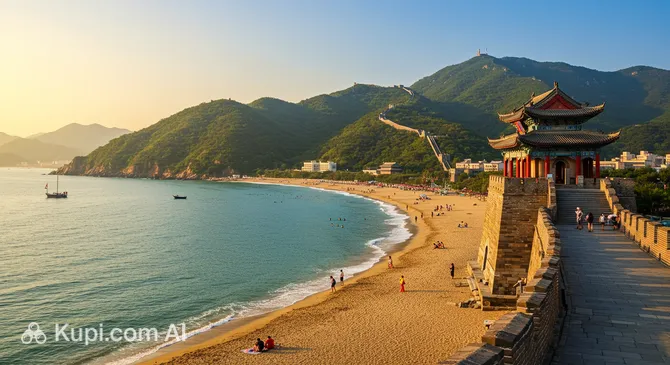
Delving into the history of Qinhuangdao reveals its critical role in the country's defense and culture. It is the only city in the country named after an emperor, and it serves as a gateway to some of the most impressive sections of the Great Wall. Visitors are often awestruck by the Shanhaiguan Pass, known as the "First Pass Under Heaven," and the spectacular Laolongtou (Old Dragon's Head), where the Great Wall dramatically meets the sea.

Beyond its historical fortifications, the city is renowned for the Beidaihe District, a scenic coastal resort area famous for its golden beaches and lush greenery. Whether you are a history enthusiast eager to walk the ancient ramparts or a traveler looking to relax by the ocean, Qinhuangdao welcomes you to experience its rich heritage and natural beauty.

Weather Overview

The climate in this coastal city is influenced by the monsoon, creating four distinct seasons that offer different experiences for travelers. To plan the perfect time for your visit, it is helpful to check the weather in Qinhuangdao before you go. Generally, the city enjoys a milder climate than many inland areas, thanks to the regulating effect of the Bohai Sea.

Summers are the warmest time of year, with July seeing average temperatures around 25.5°C and highs reaching nearly 29°C. This season also brings the most moisture, with July and August experiencing about 13 to 14 wet days each. In contrast, winters are cold and very dry; January is typically the coldest month with an average temperature of -4.5°C and lows dipping to -9.1°C. Spring and autumn serve as pleasant transition periods, offering moderate temperatures that are often ideal for outdoor sightseeing.

Overall, you can expect warm summers with occasional rain and cold, dry winters. Whether you prefer the lively beach atmosphere of the warmer months or the quiet, frosty beauty of winter, the city maintains a unique charm year-round.

Interesting Facts

Beyond the main attractions, Qinhuangdao holds many fascinating secrets that reveal its depth as a cultural and industrial hub. While many know it for its seaside resorts, few realize the city's significant role in global ecology, sports history, and Chinese folklore.

  • A Global Birdwatching Haven: The Beidaihe district is not just for swimming; it is recognized worldwide as a mecca for birdwatchers. Situated on a major migratory flyway, it hosts over 400 species of birds passing through annually, making it one of the best places in East Asia to observe rare avian life.

  • The Legend of Tears: Just near the Shanhaiguan Pass lies a temple dedicated to Meng Jiangnu, the protagonist of one of China’s most enduring folk tales. Legend says she wept so bitterly over her husband's death during the construction of the Great Wall that a massive section of the wall collapsed, revealing his remains.

  • The Glass City: Qinhuangdao is often hailed as the "Cradle of the Chinese Glass Industry." It produced the country's first piece of machine-made glass and remains a major center for glass production and research, influencing architecture across the nation.

  • An Olympic Host: While Beijing took center stage, Qinhuangdao played a crucial supporting role during the 2008 Summer Olympics. The city’s Olympic Sports Center Stadium served as a venue for football preliminaries, marking it as one of the few cities outside the capital to host Olympic events.

How to Get There

Reaching this coastal destination is convenient due to its well-connected transport network. Whether you prefer flying or taking a train, there are several options to suit your itinerary. For a detailed breakdown of all routes and travel tips, you can read more about how to get to Qinhuangdao to help plan your journey.

If you are arriving by air, the most direct option is Qinhuangdao Beidaihe Airport (BPE). It is located in the town of Yejituo, approximately 55 km from the city center. While it is a smaller regional hub, it serves as the primary gateway for travelers heading directly to the seaside resorts. The journey from the airport to downtown Qinhuangdao by taxi or bus typically takes around 1 hour and 45 minutes.

For international travelers or those looking for more flight connections, Dalian Zhoushuizi International Airport (DLC) is a significant alternative. Situated in Dalian, about 199 km from Qinhuangdao, this large airport handles a high volume of passengers and offers a wider range of routes. However, be prepared for a longer transfer; a drive from Dalian to Qinhuangdao can take roughly 5 hours and 20 minutes.

For clarity, here is a summary of the main airports:

Airport Name City Passenger Traffic Km from City
Dalian Zhoushuizi International Airport Dalian Large 198.6
Tangshan Sannuhe Airport Tangshan Medium 139.6
Jinzhou Airport Jinzhou Small 180.4
Qinhuangdao Beidaihe Airport Yejituo Small 55.4
Caledonia Airport Chengde Small 184.6

Regarding rail travel, it is important to note that the major railway stations listed in the vicinity are located in neighboring cities rather than in Qinhuangdao itself. One of the most significant nearby hubs is Dalian North Railway Station (DBL). Located in Dalian, roughly 200 km away, it is a major transit point with high passenger traffic. If you arrive here, you will need to arrange further transport, such as a taxi or bus, which can take approximately 5 hours and 20 minutes to reach Qinhuangdao.

Below is a list of the nearest major railway stations listed for the region:

Station City Passenger Traffic Km to Center
Dalian North Railway Station Dalian Large 200.4
Fuxin Railway Station Fuxin Medium 285.3
Bayuquan Railway Station Yingkou 214.3
Yingkou East Railway Station Yingkou 252.0

Main Attractions

Qinhuangdao offers a remarkable array of sights where the grandeur of ancient Chinese history meets the tranquility of the seaside. From the eastern terminus of the Great Wall to lush parks perfect for birdwatching, the city's landmarks provide a diverse itinerary for every type of traveler.

Shanhaiguan Pass is arguably the most historically significant site in the region. Known as the "First Pass Under Heaven," this formidable fortress served as a vital defensive stronghold during the Ming Dynasty. Visitors can climb the ancient city wall to admire the imposing Zhendong Tower and gaze out over the landscape that once separated the central plains from the frontier. It is a must-visit for history enthusiasts seeking to understand the scale and engineering prowess of China's past.

Located just a short distance south of Shanhaiguan is Laolongtou, or "Old Dragon's Head." This is the unique point where the Great Wall stretches into the waves of the Bohai Sea, resembling a dragon drinking water. The site features the Chenghai Tower and the Estuary Stone City, offering a rare combination of maritime views and military architecture. Walking along the stone ramparts with the sound of crashing waves below creates an unforgettable atmospheric experience.

For those seeking natural beauty and relaxation, the Beidaihe Scenic Area is a premier destination. Famous for its long coastline, soft sand, and mild waters, it has been a favored summer retreat for decades. Beyond swimming and sunbathing, the area is dotted with European-style villas and lush gardens, making it perfect for leisurely strolls and escaping the summer heat.

Within the Beidaihe district, Dove Nest Park (Yingjiao Stone Park) stands out as a scenic highlight. Perched on a cliff by the sea, it is renowned as one of the best spots in China to watch the sunrise. The park is named after a large rock that resembles a dove, and it offers panoramic views of the ocean and the wetlands, which are often teeming with migratory birds during the spring and autumn seasons.

Local Cuisine

The culinary landscape of Qinhuangdao is deeply defined by its location on the shores of the Bohai Sea. As a coastal city, the local cuisine places a heavy emphasis on fresh seafood, which is often prepared simply to highlight its natural sweetness. For food lovers, a visit here is an opportunity to feast on the ocean's bounty, ranging from succulent crabs to savory shellfish, all while enjoying the refreshing seaside atmosphere.

Among the main dishes you must try, Roasted Prawns stand out as a local favorite. These large, meaty prawns are typically grilled or baked with a savory sauce that complements their tender texture. Another delicacy is the Mantis Shrimp, often fried with salt and pepper, requiring a bit of work to peel but rewarding diners with delicious meat. If you prefer something steamed, the local crabs are famous for their rich roe and sweet flesh, especially during the autumn months when they are at their peak.

Beyond seafood, the city offers unique snacks rooted in its history. In the Shanhaiguan district, you can find Sitiao Baozi, a type of steamed bun known for its thin skin and generous filling, a tradition that has been popular for decades. Another historical treat is the Changcheng Bolo Cake, wrapped in the leaves of the Bolo tree. Legend says this snack was once a staple for soldiers guarding the Great Wall, adding a taste of history to your culinary journey. For those with a sweet tooth, the Green Bean Cake (Lvdougao) is a traditional Muslim pastry that is soft, sweet, and perfect with tea.

When it comes to drinks, Qinhuangdao holds a prestigious title as the "Bordeaux of China." The Changli county within the city is situated at the same latitude as the famous French wine region and is a premier producer of dry red wine. Visitors can sample high-quality Cabernets and Merlots produced in local vineyards, making it a fantastic destination for wine enthusiasts.

The food culture here is vibrant and accessible. For a sit-down meal, tourists often flock to the seafood restaurants lining the coast in the Beidaihe district, where you can choose your dinner live from large tanks. For a more casual and lively experience, explore the night markets, such as the bustling Qinhuang Alley or the Liuzhuang Night Market. Here, the air is filled with the aroma of grilled squid, roasted cold noodles, and other street food favorites, offering a true taste of the local lifestyle after the sun goes down.

Travel Tips

Embarking on a journey to Qinhuangdao promises a delightful mix of ancient history and seaside relaxation, but a little preparation goes a long way in ensuring a smooth trip. To help you navigate the local customs and logistics with ease, here are some essential practical tips for your visit.

  1. Clothing and Gear: Since Qinhuangdao is a coastal city, the wind can be strong even on sunny days. In summer (June to August), bring light, breathable clothing and swimwear for the beaches at Beidaihe, but pack a light jacket for cool evenings. If visiting in winter, heavy coats, gloves, and windbreakers are mandatory as temperatures drop significantly. Comfortable walking shoes are a must year-round, especially if you plan to climb the steps at Shanhaiguan Pass or explore the Great Wall at Laolongtou.

  2. Transportation: The city is spread out across three main districts: Haigang (city center), Beidaihe (resort area), and Shanhaiguan (historical area). Public buses connect these districts reliably, but distances can be long. For convenience, taxis and ride-hailing apps like DiDi are the best options. If you use a taxi, have your destination written in Chinese characters, as most drivers do not speak English.

  3. Finances: The local currency is the Chinese Yuan (CNY/RMB). While major hotels may accept international credit cards, daily life in Qinhuangdao runs on mobile payments. It is highly recommended to download Alipay or WeChat Pay and link your international card, as even small street vendors often do not accept cash. Tipping is not customary in restaurants or taxis.

  4. Health and Safety: Qinhuangdao is generally very safe for tourists. Pharmacies are easily identifiable by a green cross, but carry a translation app to describe your symptoms. Tap water is not potable; always drink bottled or boiled water. If you are dining on seafood, ensure it is fully cooked to avoid stomach issues, and consider packing basic digestive medicine just in case.

  5. Communication: Mandarin is the primary language, and English proficiency is limited outside of high-end hotels and major tourist information centers. A reliable translation app that works offline is indispensable. To stay connected, purchase a local SIM card upon arrival or set up an e-SIM beforehand. Be aware that many Western social media apps and search engines are not accessible without roaming data or specific software.

  6. Local Etiquette: Politeness is valued, but personal space in queues can be tighter than what you might be used to; hold your ground gently. When handing over money or a business card, use both hands as a sign of respect. At the beach, modesty is generally appreciated, so cover up when leaving the sand to enter shops or restaurants.

  7. What to Avoid: Avoid ordering seafood in restaurants without confirming the price first. Seafood is often sold by weight (usually per jin, which is 500g), and the final bill can be surprisingly high if you are not careful. Always ask for the price per unit or weight before the order is placed to avoid misunderstandings.

  8. Seasonal Planning: Beidaihe is an extremely popular summer retreat for domestic tourists, particularly in July and August. If you plan to visit during these months, book your accommodation weeks or even months in advance. For a quieter experience with pleasant weather, consider visiting in late spring or early autumn.

With these practical insights, you are well-equipped to enjoy everything Qinhuangdao has to offer, from its majestic dragon-head coastline to its vibrant culinary scene. Have a safe and memorable adventure exploring this unique corner of the Hebei province!

Entertainment & Nightlife

The nightlife in Qinhuangdao offers a distinct duality depending on the season and the district. During the peak summer months, the city transforms into a vibrant seaside playground, while the off-season offers a more subdued, local experience. The entertainment scene is primarily divided between the holiday atmosphere of the Beidaihe District and the urban pulse of the Haigang District (the city center).

For travelers seeking a lively holiday vibe, Beidaihe is the epicenter of evening activity. The area comes alive after sunset with open-air beer gardens, seafood stalls, and bustling streets. A standout venue here is the Biluota Bar Park. Unlike a traditional club, this is a unique entertainment complex located right by the sea. It combines the relaxed atmosphere of a park with the energy of a nightlife hub, featuring live bands, exotic dance performances, and rows of bars where you can enjoy a drink with the ocean breeze in your hair. The dress code here is casual and resort-style, making it a perfect spot to unwind after a day at the beach.

If you prefer a more local and bustling street experience, the Liuzhuang Night Market in Beidaihe is a must-visit. It is not just a place to eat but a center of evening entertainment where crowds gather to shop for souvenirs, pearls, and handicrafts. The atmosphere is chaotic but friendly, filled with the shouts of vendors and the smell of sizzling squid. For a more modern and upscale environment, you can head to the Qinhuang Alley (Qinhuang Xiaoxiang) in the Haigang District. This architectural complex mimics traditional style but houses contemporary restaurants and bars, offering a sophisticated setting for an evening stroll and a late dinner.

In the city center (Haigang), the nightlife resembles that of other modern Chinese metropolises. Here, the entertainment is dominated by KTVs (Karaoke TV), which are the most popular form of night out for locals. These venues range from opulent private suites to budget-friendly rooms, often open until the early hours of the morning. There are also several western-style pubs and clubs scattered around the commercial districts, catering to a younger crowd with DJ sets and dance floors.

Beyond the night, Qinhuangdao offers plenty of daytime entertainment options for families and thrill-seekers. The Nandaihe International Entertainment Center is a massive amusement park featuring grass skiing, sand sliding, and roller coasters. For a more educational experience, the Xin'ao Underwater World allows visitors to walk through a transparent tunnel surrounded by marine life, while the city's museums, such as the Glass Museum, offer fascinating insights into local industry and art.

Practical advice for a night out includes timing and transport. The best time to experience the nightlife, especially in Beidaihe, is from July to early September. In winter, many coastal venues close down. Prices are generally reasonable; a beer in a bar might cost between 25-50 CNY, while street food is very cheap. Getting around is easy with taxis or ride-hailing apps like DiDi, which are readily available at night.

regarding safety, Qinhuangdao is very safe for night walks, even in the late hours. Violent crime is rare, and the main tourist areas are well-lit and patrolled. However, always exercise standard caution: keep an eye on your belongings in crowded markets and ensure the taxi driver uses the meter. If you are drinking, avoid swimming in the sea at night, as currents can be unpredictable.

Parks & Museums

Qinhuangdao is not only a city of golden beaches and ancient walls but also a destination rich in lush green spaces and cultural institutions. For travelers looking to explore beyond the shoreline, the city offers a variety of parks that showcase its ecological diversity and museums that preserve its unique industrial and historical heritage.

Among the city's most refreshing natural escapes is Lianfeng Mountain Park in the Beidaihe district. This expansive park is a harmonious blend of dense forests, strange peaks, and historic architecture. The mountain, often shrouded in mist, offers hiking trails that lead to the Wanghai Ting (Seaside Pavilion) at the summit, providing a breathtaking panoramic view of the coastline and the red-roofed villas below. It is a perfect spot for those seeking tranquility and fresh air away from the bustling beach crowds.

For nature enthusiasts and birdwatchers, the Beidaihe National Wetland Park is an ecological treasure. As Qinhuangdao is a critical stopover on the East Asian-Australasian Flyway, this wetland serves as a sanctuary for thousands of migratory birds. Wooden boardwalks wind through the reeds and marshes, allowing visitors to observe diverse avian species in their natural habitat without disturbing the ecosystem. It is particularly spectacular during the migration seasons in spring and autumn.

To dive deeper into the region's history, a visit to the Shanhaiguan Great Wall Museum is essential. Located near the "First Pass Under Heaven," this is one of the most comprehensive museums dedicated to the Great Wall of China. The exhibits display a vast collection of cultural relics, including weapons, military uniforms, and architectural components used during the Ming Dynasty. Through detailed maps and models, visitors can grasp the immense scale of the wall's construction and its strategic importance in defending ancient China.

A more unique cultural venue is the Qinhuangdao Glass Museum. Housed in the renovated workshops of the former Yaohua Glass Factory, this museum celebrates the city's status as the cradle of China's glass industry. The architecture itself is a highlight, blending early 20th-century industrial style with modern design. Inside, you can explore the evolution of glassmaking technology and view exquisite glass art pieces, making it a fascinating stop for those interested in industrial heritage and design.

In terms of historical landmarks, the Qin Emperor Seeking Immortality Scenic Area stands out as a site of myth and legend. Located in the Haigang District, this park commemorates Emperor Qin Shi Huang's legendary expedition to find the elixir of life. The area features imposing statues, ancient-style architecture, and the Sacred Way, offering a tangible connection to the city's namesake and its imperial past.

For a truly authentic experience, consider visiting the Tanghe River Park. Known for its "Red Ribbon" — a 500-meter-long red steel bench that winds through the natural vegetation — this park is a masterpiece of modern landscape architecture. It is a favorite among locals for evening strolls and offers a quiet, artistic contrast to the more tourist-heavy sites.

Getting Around

Navigating Qinhuangdao is relatively straightforward, with a public transport system primarily relying on an extensive bus network. Unlike some of China's larger metropolises, the city does not currently have an operational metro system. Instead, buses serve as the main arteries connecting the three major districts: Haigang (the city center), Beidaihe (the seaside resort area), and Shanhaiguan (the historical hub). For tourists, this means that while travel between districts can take a bit of time due to distances, the routes are scenic and cover all major attractions.

The bus system is efficient and budget-friendly. Most routes operate from early morning, around 6:00 AM, until early evening, typically closing between 7:00 PM and 8:00 PM. However, during the peak summer tourist season (July and August), popular lines often extend their hours to accommodate late-night sightseers. A highlight for visitors is Bus No. 34, a famous coastal route that runs along the shoreline connecting the city center to Beidaihe. It offers wonderful sea views and stops at major beaches and parks, making it a convenient "sightseeing" line for the price of a regular ticket.

Paying for transport is modern and convenient. The standard fare for most bus rides is very low, typically 1 or 2 CNY, regardless of distance on urban lines. While you can still pay with cash, you must have the exact change in coins or small notes to drop into the fare box, as drivers do not carry change. For a smoother experience, most travelers use mobile payment apps like Alipay or WeChat Pay. You simply need to activate the "Transport Code" within the app and scan the QR code reader as you board. Physical "IC Cards" (transport smart cards) are available at bus hubs, but they are generally less practical for short-term visitors compared to mobile options.

If you prefer more direct and comfortable travel, taxis are abundant and affordable. They can be hailed on the street or booked via ride-hailing apps like DiDi (the local equivalent of Uber). Taxis are strictly metered, and it is advisable to ensure the driver turns the meter on when you start your journey. For inter-district travel, such as going from the airport or Beidaihe to Shanhaiguan, a taxi is often the fastest option, saving you from multiple bus transfers.

For a more leisurely pace, cycling is a fantastic alternative, especially in the Beidaihe district where the roads are leafy and traffic is often restricted. Shared bicycles, such as HelloBike or Meituan Bikes, are scattered throughout the city. You can unlock them using the respective apps (often integrated into Alipay or WeChat) for a small fee. Riding along the coastal boardwalks offers a refreshing way to explore the seaside scenery at your own rhythm.

An interesting feature of the local transport landscape is the use of the high-speed railway for "intra-city" travel. Since the distances between the main districts are significant—Shanhaiguan and Beidaihe are about 35 kilometers apart—many locals and savvy tourists take the high-speed train between Qinhuangdao Station, Beidaihe Station, and Shanhaiguan Station. This turns a potentially hour-long bus ride into a quick 15-minute hop, acting somewhat like a rapid commuter rail system.

Accommodation

Accommodation in Qinhuangdao is as diverse as its landscape, catering to everyone from budget backpackers to luxury travelers seeking a seaside escape. The city offers a wide spectrum of lodging options, including high-end international hotels, charming coastal resorts, practical business inns, and traditional guesthouses. Whether you are here for the beaches, the Great Wall, or a business trip, finding the right place to stay largely depends on which district suits your itinerary best.

The most sought-after area for tourists is undoubtedly the Beidaihe District. Known as a premier summer resort, this area is famous for its garden-style hotels, sanatoriums, and historic villas, many of which date back to the early 20th century. Staying here puts you within walking distance of the sandy beaches and lush parks. However, because of its popularity, accommodation in Beidaihe can be quite expensive and in high demand during the peak summer months.

For travelers prioritizing convenience and transport links, the Haigang District (the city center) is the most practical choice. This area hosts a high concentration of mid-range and business hotels. It is generally more affordable than the resort areas and offers easy access to shopping malls, restaurants, and the main Qinhuangdao Railway Station. It serves as an excellent base if you plan to explore different parts of the city using public transport.

If your primary focus is history and the Great Wall, you might consider staying in the Shanhaiguan District. While the options here are fewer compared to the city center, you can find smaller hotels and traditional courtyards (guesthouses) located near the ancient city walls. This atmosphere is perfect for those who want to immerse themselves in the region's heritage and beat the crowds to the monuments in the early morning.

A crucial tip for booking accommodation in Qinhuangdao is to plan well ahead if you are visiting in summer. July and August are the absolute peak season, drawing millions of domestic tourists. During this time, room rates can triple, and the best hotels sell out weeks in advance. Conversely, if you visit in the off-season (late autumn or winter), you can enjoy luxury stays at a fraction of the cost, though some seasonal resort hotels may be closed.

Regarding prices and booking methods, the range is significant. Budget travelers can find hostels and guesthouses for under 200 CNY per night, while luxury seaside resorts in summer can easily exceed 1,500 CNY. Most bookings can be made via major online platforms. However, international travelers should double-check that their chosen hotel is licensed to accept foreign guests, as regulations can vary for smaller, local inns.

Nearby Cities

For those looking to explore the surroundings, Qinhuangdao serves as an excellent base for day trips to several interesting nearby locations:

City Population Distance (km)
Tangshan 3,399,231 126
Huludao 2,623,541 136
Xingcheng 993,000 124
Zunhua 737,011 156
Qian'an 728,160 77

Xingcheng is a standout destination for history enthusiasts and beach lovers alike. It is renowned for possessing one of the best-preserved ancient city walls in China, dating back to the Ming Dynasty. Visitors can walk along the ramparts to get a sense of the city's strategic past. Additionally, the area is famous for its natural hot springs and the Xingcheng Seaside, offering a perfect combination of cultural sightseeing and relaxation.

Located a bit further inland, Zunhua offers a profound journey into China's imperial history. It is the site of the Eastern Qing Tombs, a UNESCO World Heritage site and one of the largest and best-preserved imperial mausoleum complexes in the country. Here, travelers can explore the grand resting places of emperors, empresses, and concubines set against a backdrop of mountains and forests, providing a serene and educational experience.

For those interested in modern history and urban resilience, Tangshan provides a unique perspective. Known as the "Phoenix City," it has remarkably rebuilt itself following the devastating 1976 earthquake. The Tangshan Earthquake Memorial Park is a moving site dedicated to memory and recovery, while the sprawling South Lake (Nanhu) Eco-park showcases the city's transformation from an industrial hub to a green metropolis.

These nearby destinations offer a glimpse into the diverse culture and landscapes of the region.

Shopping & Souvenirs

Shopping in Qinhuangdao offers a delightful mix of modern convenience and coastal charm. While it may not rival the luxury fashion scenes of the country's largest metropolises, the city provides a unique retail experience centered around its seaside heritage. Visitors can explore bustling pedestrian streets, expansive modern malls, and vibrant local markets filled with ocean treasures, making it an excellent destination for finding unique gifts and local specialties.

In the city center (Haigang District), the area around Sun City (Taiyang Cheng) serves as the commercial heart, bustling with department stores, boutiques, and restaurants. For a more tourist-centric experience, Baishi Road in the Beidaihe District is a must-visit. This lively street comes alive particularly in the evenings, lined with vendors selling handicrafts and souvenirs, creating a festive atmosphere that is perfect for a leisurely stroll after dinner.

For a one-stop shopping experience, the Wanda Plaza in the Haigang District is a popular destination, offering international brands, dining, and entertainment under one roof. Another notable spot is the Modern Shopping Plaza, where travelers can find a wide range of clothing, cosmetics, and electronics in a comfortable, air-conditioned environment.

Markets are where the local culture truly shines. The Shitang Road Market in Beidaihe is famous for its vast array of shell carvings and pearl jewelry. It is a large specialized market that attracts buyers from all over, making it a great place to find bargains if you are willing to negotiate. Additionally, the various seafood markets offer an impressive selection of dried fish, shrimp, and scallops, which are popular gifts among visitors who want to share the flavors of the coast with friends back home.

When hunting for keepsakes, pearls and shell crafts are the quintessential Qinhuangdao souvenirs. From intricate necklaces to decorative lamps made of shells, the craftsmanship is unique to the region. Food items like dried seafood and locally produced red wine from the Changli region are also excellent choices. Another local favorite is the traditional Great Wall cake, a sweet pastry that pays homage to the city's historical landmarks.

Most large shopping malls and department stores operate daily from around 10:00 AM to 9:30 PM. Street markets often stay open later, especially during the summer tourist season. As with most of China, mobile payments via Alipay or WeChat Pay are the primary method of transaction everywhere, from high-end stores to small street stalls. While cash is accepted, carrying a smartphone with a linked payment method is highly recommended for convenience.

Regarding tax refunds, services for international tourists are generally limited in Qinhuangdao compared to major hubs like Beijing or Shanghai. While some large department stores may offer tax-free shopping for eligible visitors, it is not widespread. It is advisable to check with the customer service desk at major malls beforehand to see if they participate in the tax refund scheme.

Reached the end of the page?

That means the route is fully explored