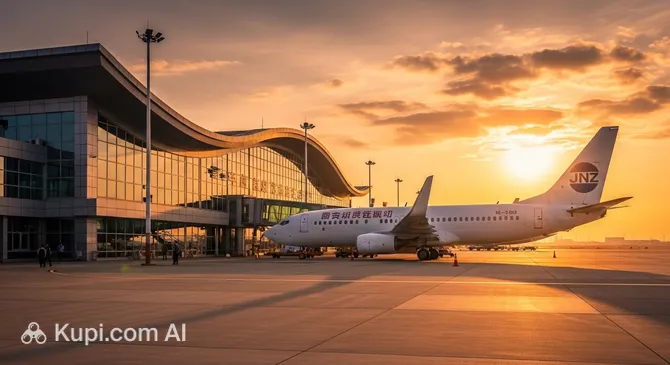
Jinzhou Bay Airport serves as the modern aerial gateway to the "West Liaoning Corridor," opening the way for travellers to the region's rich historical heritage and coastline. Constructed on reclaimed land in the bay area, this aviation hub replaced the previous cramped facility, offering passengers a new level of spaciousness and technology. Since its opening in late 2015, the airport has become a symbol of the city's transport renewal, combining high capacity with a cosy atmosphere free from the hustle and bustle typical of giant international hubs.
| Characteristic | Value |
|---|---|
| IATA code | JNZ |
| ICAO code | ZYJZ |
| City | Jinzhou |
| Country | China |
| Time zone | Asia/Shanghai |
| Popular airlines | China Eastern, Xiamen Airlines |
| Schedule | Online timetable |
Features and Advantages of the Airport
Jinzhou Bay Airport compares favourably with its predecessor and many regional counterparts due to its well-thought-out infrastructure. Its main advantage is the compactness of the terminal, which allows passengers to complete all formalities — from check-in to boarding — in a matter of minutes. It is practically impossible to get lost here thanks to intuitive navigation and short distances between service areas.
The terminal building is equipped with modern climate control systems and telescopic aerobridges, ensuring comfort during boarding and disembarking in any weather, which is particularly important given Liaoning's changeable climate. Furthermore, the airport's location away from dense urban development minimises noise pollution for residents and ensures picturesque views of the bay during takeoff and landing.
Despite its status as a regional hub, the airport maintains high standards of safety and service. The parking area is designed for a sufficient number of vehicles, and access roads are integrated into the road network connecting the airport not only with Jinzhou but also with neighbouring cities such as Panjin and Huludao.