Support

Huzhou (Deqing Moganshan Gen.)

About the Airport

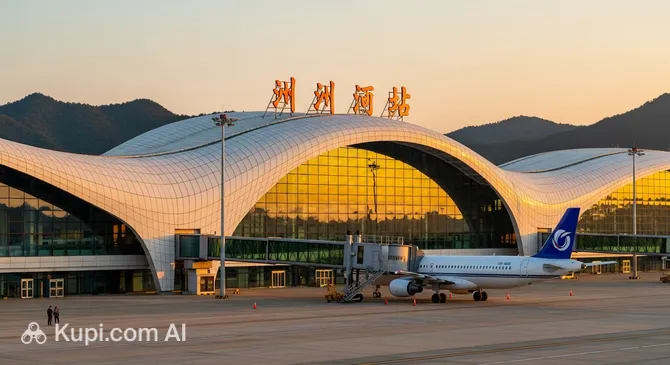
Huzhou Deqing Moganshan Airport. Source: Kupi.com Binoculars

Huzhou Deqing Moganshan Airport (Huzhou) is not merely a transport hub, but a true starting point for exclusive journeys through the picturesque Zhejiang region. This modern general aviation airport specializes in private flights, breathtaking helicopter excursions, and professional pilot training, offering a unique bird's-eye view of the famous Moganshan mountains. Here, you will not find the hustle and bustle of giant international terminals; instead, you can immerse yourself in an atmosphere of aviation romance and enjoy premium services for business jets and light aircraft.

IATA Code DEQ
ICAO Code None
City Huzhou (Deqing County)
Distance to Center ~46 km
Status General Aviation Airport
Annual Passengers No scheduled passenger flights
Schedule Online board

Airport Features and Highlights:

Deqing Moganshan holds the status of an A1 class airport, making it one of the key centers for light aviation in East China. The main "highlight" of this air harbour is the opportunity to book an aerial tour over the Moganshan National Park, enjoying views of bamboo forests and misty peaks from the cockpit of a helicopter or light aircraft.

The airport also serves as an important base for pilot training and test flights. For owners of private aircraft, spacious hangars and a full range of technical maintenance services are provided. Its convenient location allows tourists to travel from the aircraft steps to elite mountain resorts and hotels in just 20–30 minutes by car.

Contact Information

Given the specific nature of Huzhou Deqing Moganshan Airport (DEQ) as a General Aviation facility, the standard infrastructure for mass passenger flow is absent here. Communication regarding flights, excursions, and training is conducted directly through private airlines and operators based at the airfield.

  • Official Airport Website: There is no single public website for tourists. Information about flights and services is posted on the resources of the management company or on the platforms of local tour operators in the Huzhou region.
  • Airport Address: General Aviation Industry Park, Leidian Town, Deqing County, Huzhou, Zhejiang Province, China.
  • Help Desk Phone: A unified hotline for tourists is not provided. To book aerial tours or private transfers, you must contact the specific air carrier operating the flight.
  • Email: There is no public e-mail for general inquiries.
  • Social Media: News and event announcements are often published on local Chinese social networks (WeChat) in the official accounts of the Deqing High-tech Zone.
  • Lost & Found Information: There is no centralized Lost & Found service. In case of lost items, you should contact the representative of the company that organized your flight or the hangar administrator immediately after landing.
  • Passenger Support Contacts: Support is provided individually through concierge services or managers of aviation clubs based at the airport.

How to Get to the Airport

Since Huzhou Deqing Moganshan Airport is a hub for light aviation and does not accept scheduled commercial flights from major airlines, the arrival process here differs from a typical visit to a large terminal. Visitors usually arrive by car or taxi to transfer to a private helicopter, begin pilot training, or embark on an aerial tour. Nevertheless, the transport accessibility of the location is excellent thanks to the developed infrastructure of the Yangtze River Delta region.

For most tourists, the journey begins with arrival at one of the major international hubs nearby. The closest and most convenient option is Hangzhou Xiaoshan International Airport, located approximately 45–60 minutes away by road. It is also convenient to travel via Shanghai Hongqiao International Airport, from where you can quickly arrive by high-speed train.

If you are considering alternative arrival routes to the region, you can use flights to Sunan Shuofang International Airport (Wuxi city), Ningbo Lishe International Airport, or the smaller Yiwu Airport, although the journey from these will take more time.

Taxi and Private Transfer

This is the most popular and comfortable way to reach the airfield. The airport is located in Leidian Town, which is geographically even closer to the northern suburbs of Hangzhou than to the center of Huzhou.

  • How to book: It is recommended to use Chinese ride-hailing apps (DiDi) or ask for assistance at your hotel reception. In the app, it is best to enter the destination in Chinese: 德清莫干山机场 (Deqing Moganshan Airport).
  • Cost and Time: A trip from Huzhou city center (about 45–50 km) will take approximately 50–60 minutes and cost roughly 130–160 RMB. From Hangzhou center, the journey takes about 40–50 minutes.
  • Transfer: If you have booked a helicopter tour, be sure to check with the operator regarding the availability of a complimentary shuttle service from the nearest railway station or hotel.

Railway Transport and Buses

There is no direct metro or city bus service directly to the airfield hangars, but the "Train + Taxi" combined route is very popular among tourists.

  • High-Speed Train: The nearest major station is Deqing Railway Station (德清站). High-speed trains from Shanghai, Hangzhou, and Nanjing arrive here regularly. From the station to the airfield is only about 15–20 km, which takes 25 minutes by taxi.
  • Public Bus: There are local bus routes connecting Deqing city with Leidian Town, but they are rarely used by foreign tourists due to navigation difficulties and the lack of English timetables. This option is suitable only for those familiar with the area.

Car Rental and Parking

Traveling by rental car is an excellent choice for those planning to explore the Moganshan mountains on their own. The roads in Zhejiang province are of excellent quality.

  • Important to know: To drive in China, foreigners require a temporary Chinese driving license; an International Driving Permit (IDP) is not directly valid here. Most often, tourists rent a car with a driver for the whole day.
  • Parking: A parking zone for visitors is provided at Huzhou Deqing Moganshan Airport. Since passenger traffic here is low, there are usually no issues finding free spaces. Parking is generally free for clients of aviation clubs, but it is better to clarify this point when booking a flight.

Recommendations for Travellers:

Plan your trip in advance. Since this is a light aviation facility, there are no waiting halls with Duty Free shops or restaurants. Arrive 20–30 minutes before your scheduled departure time or the start of the tour. If you are traveling from Shanghai, allow extra time for potential traffic when exiting the metropolis, or prefer the high-speed train to Deqing station to avoid road congestion.

Terminals and Map

The structure of Huzhou Deqing Moganshan Airport (DEQ) differs fundamentally from typical giant aviation hubs. Since it is a General Aviation airfield, there is no confusing system of multiple terminals, underground passages, and endless gates. The entire complex is designed on the principle of maximum compactness and convenience for the client, whether it is a tourist arriving for an excursion or a private aircraft owner.

Number of Terminals and Complex Layout

The airport operates a single multifunctional service centre, which acts as the passenger terminal. It is a modern low-rise building located in immediate proximity to the runway and hangars. The internal space is organized intuitively and includes:

  • Reception Zone: Here, guests are welcomed, documents are checked, and flight registration takes place.
  • Briefing Rooms: Special rooms where instructors conduct mandatory safety briefings before helicopter tours or training flights.
  • Lounge Zone: A comfortable space for waiting for departure with panoramic windows overlooking the airfield.
  • Administrative Premises: Airline offices and dispatch services.

Navigation and Transfers

Navigation at Deqing Moganshan is extremely simple: it is impossible to get lost here. A "sterile zone" as such is absent in the traditional sense of mass transport. The entire path of the passenger from the building entrance to the helicopter or aircraft steps is a short straight line.

Transfers between zones are done on foot. The distance from the waiting area to the aircraft parking stand (apron) is only a few dozen meters. Bus transfers across the airfield are not required — passengers are usually escorted by an aviation club staff member or the pilot personally.

Departure and Arrival Zones

Unlike large airports where flows of departing and arriving passengers are strictly separated by different floors, at DEQ everything happens in a unified space, creating a more homely and club-like atmosphere.

  • Departure: The process resembles a visit to a private club. You arrive at the appointed time, pass through quick formalities, and proceed to the aircraft.
  • Arrival: After landing and taxiing, the pilot drops passengers off directly at the service centre building. Exiting to the "city" takes no more than 2–3 minutes.

Check-in and Security Procedures

The main advantage of this airport is the absence of queues. The time for completing all formalities is kept to a minimum:

  • Check-in: Takes about 5–10 minutes. You need to present your passport and sign necessary documents (e.g., flight consent).
  • Security Check: Security screening is conducted individually and discreetly, without the need to remove shoes or belts as in large terminals. However, aviation safety rules are strictly observed: carrying dangerous items on board is prohibited.
  • Total Time: It is recommended to arrive at the airport 20–30 minutes before departure. This time is sufficient for paperwork, briefing, and a cup of coffee before the flight.

Navigation Recommendations

Upon arrival at the complex, follow the signs to the main entrance (often marked as Service Center or with aviation company logos). If you have booked a specific service (such as skydiving or a helicopter tour), a company representative will likely meet you in the parking lot or lobby. The main tip is to keep your manager's or pilot's contact details handy, as there are no electronic flight schedule boards here.

Airport History

The history of Huzhou Deqing Moganshan Airport (DEQ) is not a chronicle of past centuries, but a record of the rapid technological development of modern China. Unlike ancient air harbours, this airfield represents the newest chapter in aviation: it was created as part of an ambitious state plan to develop the "low-altitude economy" and general aviation.

Foundation and Opening

The airport is a very young infrastructure facility. A key milestone in its history was October 2018, when the East China Civil Aviation Administration officially issued the airport a license to use the airfield as Class A1. This event marked the full launch of operations: from this moment, Deqing gained the right to accept aircraft for commercial transport, flight training, and tourist excursions. In fact, the airport was built "from scratch" in record time to become the heart of the new "Deqing General Aviation Town".

Stages of Development

The life of the airport is inextricably linked with the development of the high-tech zone of Deqing County. Immediately after opening, it became not just a transport hub, but a testing ground and base for the industry.

  • 2016–2017: Design and active phase of construction of the runway and hangar complexes.
  • 2018: Certification and official opening. The airport became one of the first in Zhejiang province to receive such high status for light aviation.
  • 2019–2020: Expansion of services. The airport began actively cooperating with tourism companies, launching regular helicopter tours over the Moganshan mountains, transforming it into an important tourist point in the region.

Significant Events and Regional Role

Despite its youth, Deqing Moganshan Airport has managed to play an important role in international events. In 2018, when the United Nations World Geospatial Information Congress was held in Deqing, the airfield and surrounding infrastructure were used to demonstrate advanced technologies in mapping and unmanned aerial vehicles (UAVs).

Furthermore, the airport has become a key base for emergency response services. Rescue helicopters are stationed here, ensuring safety in the mountainous region and on the province's highways, significantly reducing the time for aid to reach inaccessible areas.

Modernization and Future Prospects

Since the facility is new, large-scale renovations of old infrastructure have not been conducted. However, there is a constant process of modernization and expansion. The initially designed 600-meter runway is being optimized to accept more diverse types of light aircraft. Development plans include extending the runway and building additional hangars for business jets, as the demand for private flights in the wealthy Yangtze Delta region is constantly growing.

Interesting Facts

  • Strategic Location: The airport is located in the center of the so-called "half-hour flight circle," allowing flights to Shanghai, Hangzhou, or Suzhou in less than 30–40 minutes.
  • Educational Hub: Deqing Moganshan has become a popular venue for Chinese bloggers and aviation enthusiasts, as open days and air shows demonstrating aerobatics are often held here.
  • Eco-friendliness: Strict environmental standards were considered during the airport's design, as it is located in close proximity to the national park and Moganshan resort area. Sightseeing flight routes are planned to minimize noise impact on recreation zones.

Services and Amenities

The infrastructure and service at Huzhou Deqing Moganshan Airport (DEQ) differ significantly from what passengers of major commercial aviation hubs are accustomed to. Since this is a general aviation airport focused on private flights and aerial excursions, there are no shopping arcades, food courts, or endless rows of seats. Instead, the emphasis is on personalized service, speed, and exclusivity.

Dining and Shopping

There are no full-service restaurants, cafes, or Duty Free shops in the terminal (service centre).

  • Dining: Guests are usually offered tea, coffee, water, and light snacks (biscuits, treats) in the waiting area before departure. If you plan a long stay, it is recommended to have lunch beforehand in the city or bring food with you.
  • Shops: The only things available for purchase on-site are aviation-related souvenirs (aircraft models, caps, t-shirts), sometimes offered by aviation clubs or the pilot school. The nearest supermarkets are located in Leidian Town, outside the airfield.

Lounge Zones and VIP Service

In effect, the entire passenger terminal represents one large VIP lounge. The airport concept implies a high level of comfort for every guest.

  • Rest Area: A spacious hall with soft sofas, air conditioning, and panoramic glazing allowing you to watch helicopter take-offs and landings.
  • Privacy: The noise level and bustle here are minimal, creating the atmosphere of a private club.

Connectivity and Finance

  • Wi-Fi and Device Charging: Free wireless internet is available within the service centre. Sockets for charging phones and laptops are usually located near the soft seating areas.
  • Banks and Currency Exchange: There are no ATMs or currency exchange points at the airport. Payment for airline services (excursions, training) is usually made via Chinese mobile payment systems (WeChat Pay, Alipay) or bank cards. It is best to withdraw cash in advance at banks in Huzhou or Hangzhou.

Medical Services and Safety

There is no specialized medical centre or pharmacy in the building. However, given the nature of the activities (flying), airport staff and instructors are trained in first aid skills. First aid kits are available in the building for emergencies. The nearest full-service hospitals are in Deqing County (about 15–20 minutes drive).

Services for Passengers with Children

Families often visit the airport for sightseeing tours, but there are no specialized children's playrooms or nursing rooms here. Nevertheless, the staff is very welcoming to young travellers. Children are often allowed to take photos next to helicopters under adult supervision, which delights them.

Accessibility

The compactness of the building is an advantage for passengers with reduced mobility. The terminal is single-story, eliminating the need for elevators or escalators. Entrances are equipped with ramps, and the absence of jet bridges means that boarding the helicopter or plane takes place from the ground with the direct assistance of the pilot or an assistant.

Business Services and Conferences

For business travellers and corporate clients, the airport offers:

  • Briefing Rooms: Small, well-equipped rooms used for pre-flight briefings, which can also serve as meeting rooms for short discussions.
  • Presentations: Airport hangars are sometimes rented for new car model presentations or private events due to the unique surroundings.

Hotels and Accommodation

There are no hotels directly on the airport grounds, as there are no transit passengers with overnight layovers here. However, the Moganshan region is famous for its unique eco-hotels and world-class resorts ("minsu"), located in the mountains just 20–30 minutes' drive from the runway.

  • Mountain Resorts: The famous Naked Stables or Naked Castle are ideal choices for those arriving here for leisure. These are premium complexes offering unity with nature.
  • Business Hotels: If you need to stay closer to civilization, the center of Deqing County (Wukang) has many hotels from international and Chinese chains (e.g., Crowne Plaza Deqing or Atour Hotel), which can be reached by taxi in half an hour.
Where to Eat

Dining at the Airport: What You Need to Know

Travellers planning a departure from Huzhou Deqing Moganshan Airport (DEQ) should adjust their gastronomic expectations in advance. Since the airport is a General Aviation hub and does not serve scheduled commercial flights, the usual public catering infrastructure is completely absent here. In the single service building of the airport, there are no restaurants, cafes, bars, or chain eateries. The concept of this place is a quick and comfortable transit to a private aircraft, not a long wait.

Available Options On-Site

Despite the lack of a food court, guests are usually not left hungry. Passenger service is built on the business lounge principle. In the waiting area (reception or airline lounge), you will typically be offered:

  • Beverages: Hot tea (often local Zhejiang varieties), freshly brewed coffee, or bottled water.
  • Light Snacks: Biscuits, crackers, nuts, or fruit.

These treats are usually included in the cost of your flight or excursion service and are provided free of charge. However, it is impossible to have a full lunch or find hot meals directly in the airport building.

Recommendations for Snacks and Lunch

If your schedule requires a substantial meal, we recommend the following options:

  • Quick Snack: The best solution is to bring food with you. If you follow a specific diet (Halal, vegan, gluten-free), please arrange a lunch box in advance, as there is nowhere to buy specialized products at the airfield.
  • Full Lunch Before Departure: We recommend eating in Leidian Town, where the airport is located, or in Deqing city on the way. Within a 10–15 minute drive from the airfield, you can find local Chinese restaurants offering authentic Zhejiang cuisine.
  • Gastronomic Experience After Arrival: Most tourists head to the resorts of Mount Moganshan. It is there, in restaurants at hotels and eco-lodges, that a true gastronomic paradise awaits you.

Local Regional Delicacies

Although they are not served in the airport itself, the Huzhou and Deqing region is famous for its cuisine, which is worth trying in nearby establishments:

  • Mogan Mountain Bamboo Shoots: This is the main specialty of the area. Young bamboo is braised, fried, or dried; it is distinguished by incredible tenderness.
  • Lake Lamb: A traditional Huzhou dish — braised lamb in soy sauce, often served with noodles. (Please verify Halal status at individual restaurants).
  • Mogan Huangya Tea: Famous yellow tea grown on the slopes of local mountains.

Dining Summary

Huzhou Deqing Moganshan Airport is a place for flying, not for dining. There is no division into "clean" and "public" zones with restaurants, no menus, and no cash registers. Plan your visit so that lunchtime falls during your stay at the hotel or in the city, and come to the airport to enjoy the sky and private aviation service.

Tips for Travellers

Traveling through a light aviation airport such as Huzhou Deqing Moganshan Airport differs radically from the experience of flying through major international hubs. There are no crowds, haste, or complex logistics here, but there are unique rules and etiquette, knowledge of which will make your visit as comfortable as possible. Here are some useful tips for tourists planning an aerial excursion or private flight.

Optimal Arrival Time

Forget the standard rule of "arriving 3 hours early." In General Aviation conditions, processes are optimized to save the client's time.

  • Recommended Time: Arrive 20–30 minutes before the scheduled departure time. This is quite sufficient to calmly pass registration, meet the pilot, and listen to the mandatory safety briefing.
  • Do Not Be Late: Private flights and excursion tours often have strict time slots (air traffic slots). Being late even by 10 minutes can lead to flight cancellation, especially if the weather is unstable or another group is next in line.

Registration and Security Control

Procedures here take place in a relaxed, almost home-like atmosphere, but security requirements remain strict.

  • Documents: Always have your original passport with you. Even for a 15-minute excursion over the mountains, identification is required for entry into the flight manifest.
  • Screening: Checking of personal belongings is conducted quickly and individually. You will not be asked to remove shoes, but you will be asked to remove all metal objects.
  • Prohibited Items: As in commercial aviation, explosives, weapons, and flammable liquids are strictly prohibited here. It is better to leave lighters at the hotel or in the car.

Seat Selection and On-Board Rules

In helicopters and light aircraft (e.g., Cessna or Bell), passenger seating is determined not by your desire, but by the aircraft weight and balance.

  • Weight Balance: The pilot distributes passengers across seats based on their weight to ensure the safe balance of the machine. Treat this with understanding and do not argue with the instructor.
  • Best View: If weight permits, ask to be seated next to the pilot (co-pilot seat). This seat provides the most breathtaking panoramic view, as if you are flying the helicopter yourself.
  • Photography: Wear dark-coloured clothing to avoid reflections in the cockpit glass in photos.

Hand Luggage: What to Take

There is very little space in the cabin of a light aircraft, so overhead bins are absent.

  • Minimum Belongings: Leave backpacks, bags, and suitcases in the airport storage or in the transfer vehicle. Take only your phone, camera, and sunglasses with you.
  • Securing Items: Everything you hold in your hands must be securely fastened. Cameras and phones should have wrist or neck straps so that they do not fall under the pilot's control pedals during turbulence.
  • Headwear: It is better to remove caps and hats before boarding the helicopter so they are not blown away by the airflow from the rotors.

Customs and Transfers

Since the airport serves domestic flights and excursions, customs and passport control in the international sense are absent here. If you are using Deqing as part of a complex itinerary:

  • Transit: There are no direct transfers to airline flights here. Factor in transfer time to Hangzhou (HGH) or Shanghai (SHA/PVG) airports — allow at least 1.5–2 hours by car for the road.
  • Luggage Logistics: If you arrived on a private jet, your luggage will be unloaded directly into the waiting car. You do not need to wait at a baggage claim belt.

Tips for Saving and Planning

  • Booking: Book excursion flights in advance via online platforms or hotel representatives in Moganshan. "Walk-in" prices on the day of departure may be higher.
  • Group Rates: Helicopter tours are often sold by the aircraft (e.g., for 3 seats). It is more cost-effective to fly as a group of three, splitting the cost, than to pay for an individual flight.
  • Transport: To avoid overpaying for a taxi from Hangzhou, take the high-speed train to Deqing station, and from there take a local taxi to the airfield — this will save both time and money.

What to Do in Case of Flight Delay

Light aviation is critically dependent on weather conditions. Wind, low clouds, or fog in the mountains can cause flight rescheduling, even if the weather seems fine on the ground.

  • Be Flexible: Plan your flight for the first half of the day. In case of bad weather, you will have a buffer of time to reschedule the flight for the afternoon.
  • Alternatives: If the flight is cancelled definitively, ask the operator to replace it with a ground tour of the hangars or a lesson on a flight simulator, if available at the airport training centre.
  • Waiting: Since there are no restaurants at the airport, bring a book or a downloaded movie on a tablet to pass the time in the lounge zone until the weather improves.

Reached the end of the page?

That means the route is fully explored