Support

Baotu Spring (West Gate)

About

Imagine a place where three crystal-clear streams of water burst from the depths of the earth with a powerful roar, creating a spectacle of incredible strength and beauty. We are talking about Baotu Spring—a true symbol of the city of Jinan. This unique artesian karst spring is officially recognized as the "First Spring under Heaven," and for centuries it has remained the premier natural attraction that every visitor to China strives to see.
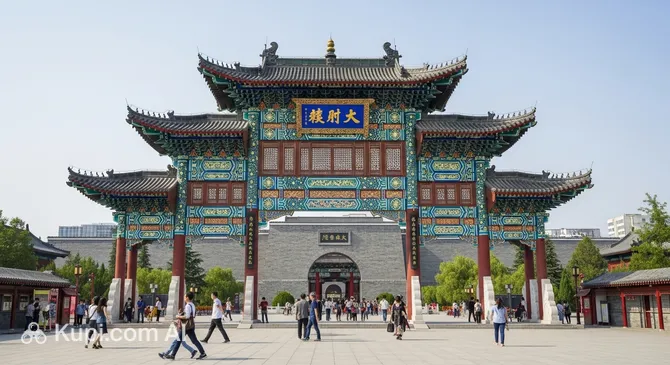
Baotu Spring (West Gate). Illustration.
Source: Kupi.com AI

Traveler photos:

The site is not just a gushing spring, but an entire park ensemble that harmoniously combines features of traditional northern and southern Chinese gardens. Across its vast territory, you will find historic buildings, elegant pavilions, and bridges spanning transparent ponds. The water in the spring gushes from three openings, rising to a height of several meters, resembling spinning wheels—this very sight gave the place its name ("Baotu" translates to "jumping" or "bubbling").

The spring is fed by a deep karst aquifer, and the volume of water discharged can reach 1.6 m³/s, making it one of the most powerful in the region. Besides the natural wonder, the park is famous for its Bamboo Garden, numerous steles with ancient calligraphy, and memorials dedicated to famous Chinese artists. This is a place where nature and centuries-old culture merge, creating a unique atmosphere of serenity.

Contacts

For those planning a visit to the West Entrance of this famous park, here is the location information. The site is situated in a bustling area of the city, making it easily accessible for travelers.

How to contactContact
Address91 Luo Yuan Da Jie, Li Xia Qu, Ji Nan Shi, Shan Dong Sheng, Китай, 250012

What to Do

The main spectacle that makes the spring worth visiting is watching the powerful jets of water gushing from the three openings in the center of the pond. This is especially impressive during periods of high groundwater levels, when the roar of the streams can be heard from afar. Be sure to stop by the Guanlan Pavilion—it is considered to offer the best and most classic view of the spring for memorable photographs.

Stroll through the Bamboo Garden (Wanzhu Garden), which consists of 13 picturesque courtyards, and explore the "Garden of a Hundred Flowers." History buffs will be interested in seeing the Turtle Stone—a massive 8-ton monolith—as well as Luoyuan Hall, where architectural elements from the Song Dynasty are preserved. Weeping willows grow along the ponds, creating ideal conditions for quiet relaxation and meditation by the water.

Don't miss the chance to experience the local culture: Peking Opera performances are regularly held within the park. Another essential tradition is tea tasting in one of the local gazebos. It is said that tea brewed with the soft water from Baotu Spring has a very special flavor. Also, pay attention to the collection of stone steles with calligraphy and the exhibitions of elegant Chinese lanterns that decorate the park.

Getting There

Baotu Spring is located southwest of the historical city center, at the western end of the popular Quancheng Road. Key landmarks for tourists are the old city moat and the Lixia district. If you prefer modern transport, the metro is the most convenient option: Lines 1 or 3 will take you to Baotu Spring Station (趵突泉站), which is just a 5–10 minute leisurely walk from the west gate.

For those using surface public transport, bus routes 3, 19, 66, and K51 stop in the immediate vicinity of the park entrance. A taxi ride from Jinan Yaoqiang International Airport takes about 30–40 minutes and costs approximately 100–150 yuan, depending on traffic.

If you are arriving in the city by high-speed train from Beijing or Shanghai, you can reach the park from the railway station by metro or bus in just 20–30 minutes. For active travelers, renting a bike from the central city blocks is an excellent option.

Nearest city: Jinan

History & Facts

The history of this site dates back to ancient times, spanning over 3,500 years. The first official mention of the spring is found in the famous "Spring and Autumn Annals" (7th century BC), which recorded a meeting between the Dukes of the Lu and Qi states by the Luo River, which was fed by Baotu. Ancient texts described this natural wonder as a "surging wheel," marveling at the untameable energy of the water.

Over the centuries, eras and dynasties have come and gone. During the Song Dynasty, the majestic Luoyuan Hall was built, and the Guanlan Pavilion appeared during the Ming Dynasty (1461). The spring gained particular fame under Emperor Qianlong of the Qing Dynasty: after tasting tea brewed with this water, he proclaimed Baotu the "First Spring under Heaven," praising its exceptional softness and flavor.

The history of the garden and park ensembles is equally fascinating. For example, the Bamboo Garden once served as the residence of the Governor of Shandong Province, and later passed into the hands of famous poets and military commanders, gradually expanding into a masterpiece of landscape art. The park's modern appearance began to take shape in 1956, when city authorities decided to merge the disparate gardens into a single cultural complex.

Today, Baotu is the heart of the "City of Springs" and tops the list of the city's 72 famous springs. Remarkably, after a period of drought at the end of the 20th century, thanks to environmental protection measures, the spring has been flowing steadily for over 20 consecutive years, symbolizing the eternal rebirth of nature.

Time Needed

To leisurely explore the main spring pool, walk along the park's winding paths, and visit several pavilions, it usually takes 2 to 4 hours. This is enough time to take beautiful photos and enjoy the atmosphere of tranquility away from the city noise.

If you plan to attend a tea ceremony or watch a Peking Opera performance, which frequently take place in the gardens, you should set aside half a day for your visit. Keep in mind that the park area is quite extensive and includes many cozy courtyards and memorial halls where it is easy to lose track of time.

Working Hours

Baotu Spring Park usually opens its doors to visitors early in the morning, around 6:00 or 7:00, and welcomes guests until 18:00–22:00 in the evening. Operating hours may change depending on the season: in the summer months, the park often stays open longer, allowing visitors to enjoy the evening lighting, while in winter it closes earlier.

The entrance fee is approximately 40 yuan. Since the exact schedule may be adjusted by the park administration, we recommend that tourists check the current operating hours on the official website or directly at the entrance before visiting.

Nearby

Its central location makes this site an excellent starting point for further exploration of the local culture. A walk through the surrounding area will allow you to see not only modern entertainment centers but also quiet corners hidden from the eyes of the mass tourist.

Exploring nearby sites will help you better feel the atmosphere of the city, where history is closely intertwined with the modern rhythm of life.

Reached the end of the page?

That means the route is fully explored