Support

Jinan

About

Jinan, the capital of Shandong Province, is a captivating destination located in Eastern China. Often celebrated as the "City of Springs," it is renowned for the numerous artesian springs that bubble up within the city limits, giving it a unique and refreshing atmosphere unlike any other metropolis in the region. With a population of approximately 5.6 million people, Jinan serves as a bustling economic and cultural hub that perfectly balances modern urban life with scenic natural beauty.

Jinan. Source: Kupi.Binoculars

The city boasts a heritage that spans thousands of years, offering a fascinating glimpse into the past. Travelers exploring the history of Jinan will discover a place where ancient culture and legends come to life. Among its most famous attractions is the Baotu Spring, revered as the finest spring under heaven, and the picturesque Daming Lake, known for its lotus flowers and weeping willows. For a panoramic view of the city, a hike up Thousand Buddha Mountain reveals breathtaking scenery and historic rock carvings.

Whether you are drawn by its crystal-clear waters, its rich culinary traditions, or its welcoming locals, Jinan offers a memorable experience for every visitor. It is an essential stop for anyone wishing to explore the authentic charm and natural wonders of the province.

Weather Overview

Jinan experiences a temperate climate with four distinct seasons, ranging from cold, dry winters to hot, humid summers. Understanding these seasonal variations is key to planning a comfortable trip, so travelers are encouraged to consult the detailed weather in Jinan before departure.

Winters are generally cold, with January being the coldest month, featuring average temperatures around -0.3°C and lows dipping to -5.0°C. Precipitation is scarce during this period, often resulting in crisp, clear days. Conversely, the summer months of June through August are warm, with average highs reaching up to 32.1°C. This is also the wettest time of year, particularly in July, which typically sees about 14 days of rain.

The transitional seasons of spring and autumn are often considered the best times to visit. April and May bring pleasant warmth with average temperatures climbing from 15.4°C to 21.4°C. Similarly, September and October offer mild conditions, with averages dropping from 22.5°C to 15.1°C, making these months ideal for exploring the city's famous springs and parks.

Interesting Facts

Beyond the main attractions, Jinan holds many fascinating secrets that reveal the depth of its culture and geography. From ancient culinary traditions to engineering challenges posed by nature, here are some intriguing facts about this unique city.

  • Jinan was one of the last major provincial capitals in China to build a subway system, but for a very noble reason. Construction was delayed for decades to carefully map and protect the complex underground network of artesian waterways, ensuring the city's beloved springs would not be disrupted by the tunnels.

  • While historically celebrated for its "72 Famous Springs," the city actually boasts over 800 natural springs bubbling up throughout the urban area. The most iconic is Baotu Spring (West Gate), where the water maintains a constant temperature of 18°C (64.4°F) year-round, creating a mystical steam over the pool during freezing winter days.

  • The city is considered the cradle of Lu Cuisine, which is the only Northern style among China's "Eight Great Cuisines" and heavily influenced the imperial food served in Beijing. A signature dish is the Sweet and Sour Carp, traditionally fried in a curved shape to resemble a dragon leaping over a gate.

  • A famous historic couplet perfectly captures the city's romantic landscape: "Lotus flowers on four sides, willows on three; mountains surrounding half the city, the lake the other half." This poetic description is frequently cited by locals to describe the harmonious blend of flora, water, and hills that defines Jinan.

Baotu Spring (West Gate). Source: Kupi.Binoculars

How to Get There

Reaching this bustling capital of Shandong Province is straightforward, thanks to its status as a major transportation hub in Eastern China. Whether you are arriving by air or exploring the region by train, there are several convenient options available. For a detailed overview of all routes and transport modes, you can read more about how to get to Jinan.

The most direct way to arrive is via Jinan Yaoqiang International Airport (TNA), located approximately 24.3 km from the city center. As a key international gateway, it serves a large number of passengers annually. A trip from the airport to downtown Jinan typically takes about 60 minutes by taxi or shuttle bus. If flights to Jinan are unavailable, you might consider Jining Airport (JNG) in the city of Jining. It is situated about 166.6 km away, and the transfer to Jinan takes roughly 4 hours and 30 minutes. Another regional option is Dongying Airport (DOY) in Dongying, located 176.1 km from Jinan, with a travel time of approximately 4 hours and 45 minutes.

For clarity, here is a summary of the main airports:

Airport Name City Passenger Traffic Km from City
Jinan Yaoqiang International Airport Jinan Large 24.3
Jining Airport Jining Medium 166.6
Dongying Airport Dongying Medium 176.1
Mudan Heze Small 202.6
Weifang Airport Weifang Small 178.7

For travelers moving through the wider region by train, there are several major railway hubs in neighboring cities. Xingtai Railway Station (HXN) is located in the city of Xingtai, approximately 239.4 km from Jinan. A transfer from there by road takes about 6 hours and 20 minutes. Alternatively, you can arrive at Shijiazhuang Railway Station (QSJ) in Shijiazhuang, which is about 280.3 km away. The journey from this large station to Jinan takes around 7 hours and 20 minutes.

Below is a list of these regional railway stations:

Station City Passenger Traffic Km to Center
Shijiazhuang Railway Station Shijiazhuang Large 280.3
Baoding Railway Station Baoding Large 285.0
Xingtai Railway Station Xingtai Medium 239.4

Main Attractions

Jinan is a city defined by its relationship with water, earning it the nickname "City of Springs." Its unique geological structure creates a landscape where artesian water bubbles up throughout the urban center, feeding into rivers and lakes that serve as the heart of public life. Beyond the springs, the city offers a mix of historic mountain sites, ancient streets, and lush parks that make it a delightful stop for travelers in Shandong Province.

Undoubtedly the most famous landmark is Baotu Spring (West Gate), often hailed as the "Number One Spring under Heaven." This site is the crown jewel of Jinan's 72 famous springs. Visitors are mesmerized by the three main water spouts that surge continuously from the underground limestone, creating a roaring sound that has been celebrated in literature for centuries. The water maintains a constant temperature of 18°C (64.4°F), which creates a misty, ethereal atmosphere in winter. The surrounding park is filled with pavilions, stone tablets, and gardens, making it a perfect place to soak in local culture.

Baotu Spring (West Gate). Source: Kupi.Binoculars

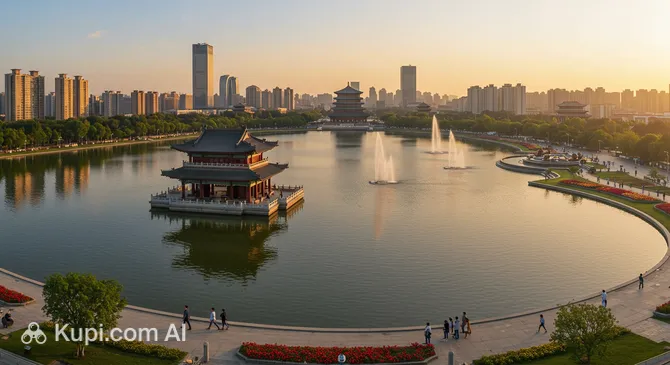
Just a short distance away lies Daming Lake, a natural jewel formed by the converging waters of the city's many springs. It is renowned for its classic beauty, characterized by weeping willows swaying along the banks and vast fields of lotus flowers that bloom in summer. A boat ride across the lake offers a peaceful escape from the city noise, allowing tourists to admire the traditional temples and islands scattered across the water. It is a scenic spot that has inspired countless poets and painters throughout Chinese history.

For those looking to stretch their legs and enjoy a panoramic view, Thousand Buddha Mountain (Qianfoshan) is a must-visit. Located south of the city center, this hill is dotted with Buddhist statues and temples carved into the rock face, some dating back to the Sui Dynasty. The climb to the summit is rewarding; on a clear day, you can see the entire layout of Jinan and even catch a glimpse of the Yellow River winding in the distance. It serves as a natural screen protecting the city and adds a spiritual dimension to the landscape.

To experience the vibrant local atmosphere, a walk through Furong Ancient Street is highly recommended. Located near the springs, this bustling pedestrian lane is lined with traditional architecture and offers a treasure trove of Shandong snacks. From stinky tofu to oil-tea, it is the best place to taste authentic street food and buy local handicrafts. The street preserves the charm of old Jinan, with its flagstone pavement and historical buildings standing in contrast to the modern shopping districts nearby.

Local Cuisine

Jinan is proudly recognized as the cradle of Shandong Cuisine, also known as Lu Cuisine, which is one of the Eight Great Cuisines of China. Renowned for its fresh ingredients, emphasis on soups, and mastery of heat control, the local food scene offers a rich tapestry of flavors that are generally salty, savory, and crisp. For food lovers, the city presents an exciting mix of refined imperial-style dishes and hearty, flavorful street snacks that reflect the region's agricultural abundance.

One dish that simply cannot be missed is the Sweet and Sour Carp. Traditionally made using carp from the Yellow River, the fish is expertly cut and deep-fried so that the head and tail lift up, resembling a dragon leaping over a gate. The result is a masterpiece that is crispy on the outside and tender on the inside, coated in a vibrant sweet and sour sauce. Another culinary icon is Nine-Turn Large Intestine (Jiuzhuan Dachang). This dish requires meticulous preparation, involving boiling, frying, and stewing to create a complex flavor profile that combines sour, sweet, bitter, and spicy notes in a soft, chewy texture.

For a more casual dining experience, locals flock to small eateries for Bazi Rou, which consists of thick chunks of pork belly braised to perfection in a secret sauce until they melt in your mouth. It is typically served with rice and is a beloved comfort food in the city. Breakfast or snack time calls for Youxuan, a spiral-shaped scallion pancake that is fried until golden and crispy. It is often paired with Tianmo, a savory millet porridge filled with peanuts, tofu skin, and vegetables, which, despite its name meaning "sweet foam," is delightfully salty.

The city's unique geography also influences its drinking culture. As the "City of Springs," Jinan has a deep-rooted tradition of brewing tea with fresh artesian water. Locals and visitors alike enjoy sipping tea in pavilions near the water's edge, particularly around the famous Baotu Spring (West Gate), where the purity of the spring water enhances the flavor of the tea leaves. In the evenings, the atmosphere shifts as friends gather to enjoy locally produced beers, a staple in Shandong province, often accompanying barbecue skewers at night markets.

To truly immerse yourself in the local food culture, a visit to Furong Street or the bustling Kuanhou Li area is essential. These pedestrian zones are packed with vendors selling everything from stinky tofu to candied hawthorn, offering a sensory overload of sights and smells. Whether you are dining in a high-end restaurant sampling classic Lu dishes or grabbing a hot snack on a lively street corner, Jinan promises a memorable gastronomic journey.

Travel Tips

Visiting Jinan, the "City of Springs," is a delightful experience that combines natural beauty with deep cultural roots, but a little preparation goes a long way in ensuring a smooth journey. To help you navigate the local customs and logistics with ease, here are some practical tips designed to make your stay in this charming capital of Shandong Province as enjoyable as possible.

  1. Clothing and Gear: Jinan has four distinct seasons, so pack accordingly. Summers are hot and humid, requiring light, breathable fabrics and a raincoat or umbrella for frequent showers. Winters can be quite cold and dry, so bring a heavy coat, thermal layers, and a hat. Since exploring attractions like Baotu Spring and Thousand Buddha Mountain involves a fair amount of walking, a pair of sturdy, comfortable walking shoes is essential.
  2. Transportation: The city has a developing metro system that is clean and efficient, connecting major train stations and attractions. However, the bus network is even more extensive and very affordable. For convenience, taxis and ride-hailing apps like DiDi (accessible via Alipay) are widely used and relatively inexpensive. Avoid renting a car unless you are familiar with Chinese traffic laws and have a valid local license.
  3. Finances: The local currency is the Renminbi (RMB). While cash is accepted, China is a nearly cashless society. It is highly recommended to set up Alipay or WeChat Pay on your phone before arrival and link your international credit card, as even small street vendors prefer digital payments. International credit cards are rarely accepted directly at local shops or restaurants, though ATMs for withdrawing cash are easy to find. Tipping is not customary and is generally not expected.
  4. Health and Safety: Jinan is a very safe city for tourists. Pharmacies are widespread and usually marked with a green cross, though carrying a translation of your specific medication names is wise. Tap water is not safe to drink directly; stick to bottled water. However, many locals collect fresh spring water from designated public spots—if you want to try it, make sure to boil it first or drink it at a tea house where it has been properly prepared.
  5. Communication: Mandarin is the primary language, and the local Jinan dialect is common among older residents. English proficiency is limited outside of high-end hotels and major tourist centers. It is crucial to download a translation app that works offline and a map app (like Baidu Maps or Amap) before you arrive. A local SIM card or an eSIM with data is necessary to stay connected and use navigation tools.
  6. Local Etiquette: Politeness is highly valued. When handing over a business card, money, or a gift, use both hands as a sign of respect. In public parks, you will often see locals exercising or singing opera; feel free to watch and smile, but ask for permission before taking close-up photos of individuals. Dining is often a communal affair, so wait for the host or the eldest person to start eating before you begin.
  7. What to Avoid: Avoid leaving your chopsticks sticking vertically into a bowl of rice, as this resembles incense burning for the deceased and is considered bad luck. Also, try to avoid traveling during major Chinese holidays like the Spring Festival (Chinese New Year) or the first week of October, as popular sites like Daming Lake become extremely crowded.
  8. Local Insight: To truly experience the city's rhythm, wake up early and visit the parks around the springs between 6:00 and 7:00 AM. This is when the city comes alive with locals practicing Tai Chi, playing traditional instruments, and collecting spring water—a unique cultural spectacle that you won't find in guidebooks.

By keeping these tips in mind, you will be well-equipped to embrace the local lifestyle and navigate the city with confidence. Jinan is a welcoming place where modern life flows harmoniously alongside ancient traditions, and being prepared will allow you to focus on the stunning scenery and delicious food that await you.

Entertainment & Nightlife

Jinan offers a diverse range of entertainment options that extend far beyond its famous springs. As the sun sets, the city's energy shifts from tranquil nature walks to a vibrant urban rhythm. Visitors can immerse themselves in a mix of modern shopping, traditional cultural performances, and lively night markets that showcase the authentic lifestyle of Shandong Province.

For those who enjoy shopping and city lights, Quancheng Road is the place to be. This pedestrian-friendly thoroughfare is the commercial heart of the city, lined with large shopping malls, trendy boutiques, and souvenir shops. It connects several major attractions, making it a perfect spot for an evening stroll. Just off this main road, the historic alleyways come alive with locals and tourists alike, offering a chance to buy traditional handicrafts such as dough figurines and Lu embroidery, which make for unique keepsakes.

Cultural enthusiasts should not miss the opportunity to experience Shandong Opera, also known as Lu Opera. This traditional art form, characterized by its unique vocal style and accompaniment by the zhuiqin (a two-stringed instrument), can often be enjoyed in local teahouses or theaters. Another spectacular display of local culture is the Minghu Light Show at Daming Lake. This dazzling water and light performance combines modern technology with traditional stories, illuminating the lake's surface and creating a magical atmosphere after dark.

Festivals play a significant role in the city's entertainment calendar. The Lantern Festival, held around February, transforms the area around Baotu Spring (West Gate) into a wonderland of glowing artistic lanterns, attracting crowds from all over the region. In the summer, the Lotus Festival celebrates the blooming flowers with art exhibits, food stalls, and boat races, offering a cheerful and colorful way to experience the city's natural beauty.

Parks & Museums

Jinan offers a wealth of green sanctuaries and cultural institutions that perfectly complement its famous springs. Beyond the bustling city streets, visitors will find tranquil gardens ideal for relaxation and impressive museums that safeguard the rich heritage of Shandong Province. Whether you are seeking a quiet stroll among willow trees or a deep dive into ancient history, the city’s public spaces provide a rewarding experience.

One of the most atmospheric open spaces is the area surrounding Black Tiger Spring (Heihu Spring). Unlike some gated attractions, this spring group is located along the city moat and is open to the public free of charge. It is a favorite spot for locals who come to collect fresh spring water and practice morning exercises. The park features three stone tiger heads roaring with water, and a walk along the riverside offers picturesque views of traditional pavilions and weeping willows. Nearby, you will find the Five Dragon Pool (Wulong Tan), a serene park located just north of the famous Baotu Spring (West Gate). This garden is known for its deep, crystal-clear pool fed by underground springs and is often quieter than its more famous neighbor, making it a peaceful retreat for admiring the architecture and feeding the koi fish.

For those interested in the region's vast history, the Shandong Museum is an essential stop. As one of the largest and most modern museums in China, its architecture is inspired by a massive bronze vessel, symbolizing the province's ancient culture. Inside, visitors can explore extensive collections ranging from dinosaur fossils found in the region to exquisite Buddhist statues and oracle bones. Another cultural highlight is the Shandong Art Museum, located nearby. It focuses on fine arts, showcasing both traditional Chinese calligraphy and contemporary works, providing a comprehensive look at the artistic evolution of the province.

A significant historical landmark that also offers excellent views is the Liberation Pavilion (Jiefangge). Built on the site of the former city wall where the People's Liberation Army breached the defenses in 1948, this imposing stone structure serves as a monument to the city's modern history. Visitors can climb to the top for a panoramic view of the Black Tiger Spring area and the old city moat, blending historical education with sightseeing.

For a truly authentic experience, try visiting the Huancheng Park, which encircles the old city center along the moat, early in the morning. You will witness the city waking up with vibrant energy as residents practice Tai Chi, play traditional instruments, and sing opera by the water's edge, offering a genuine glimpse into the local lifestyle that few tourists see.

Getting Around

Navigating Jinan is relatively easy and convenient, thanks to a rapidly modernizing public transportation network that caters to both locals and visitors. The system is a mix of a burgeoning metro service, an extensive bus network, and unique water-based travel options that reflect the city's character. Whether you are heading to the business district or exploring historic sites, you will find reliable ways to get around.

The Jinan Metro (Jinan Rail Transit) is the newest addition to the city's infrastructure. While the network is still expanding, the current lines connect key areas, including major railway stations and suburban districts. The subway system is modern, clean, and bilingual, with signs and announcements in English. Due to the city's unique underground springs, the metro took a long time to plan and construct to ensure the water table remained undisturbed, making it a feat of engineering as much as a transport tool.

For most tourists, the bus system remains the most comprehensive way to explore the city center. Jinan is famous for its well-developed Bus Rapid Transit (BRT) network. These buses run in dedicated lanes, allowing them to bypass traffic congestion during rush hours. In addition to the BRT, there are hundreds of regular bus lines and trolleybuses. The stops are usually well-marked, though having a translation app is helpful as route information is predominantly in Chinese.

A truly unique feature of Jinan's transport is the sightseeing boat system that operates along the city moat and waterways. These boats serve as a scenic shuttle connecting major attractions like Baotu Spring, Black Tiger Spring, and Daming Lake. Taking a boat is not just a way to travel; it is an immersive experience that allows you to see the "City of Springs" from its most famous element—water. It is a relaxing alternative to road transport, especially when moving between the main scenic parks.

Paying for transport has become increasingly digital. While you can still use cash (coins or small bills) for buses, exact change is required, and no change is given. The most convenient method for tourists is to use mobile payment apps like Alipay or WeChat Pay. Both apps have a "Transport" or "Ride Code" feature that generates a QR code, which you simply scan upon boarding a bus or entering a metro gate. Physical transportation cards are available but are less practical for short-term visitors compared to the ease of mobile scanning.

If you prefer a more direct route, taxis are plentiful and reasonably priced. You can hail them on the street, but during peak times or bad weather, it is much easier to use ride-hailing apps like DiDi (often integrated into Alipay with an English interface). For short distances, shared bicycles are everywhere. You can unlock blue or yellow bikes using the same mobile payment apps, offering a flexible way to travel between nearby points of interest while enjoying the street-level atmosphere.

Travelers should be aware that public transport operates roughly from 6:00 AM to 9:00 PM or 10:00 PM, depending on the line. The metro typically runs a bit later. Morning and evening rush hours (7:30–9:00 AM and 5:00–7:00 PM) can be very crowded, so it is advisable to plan your travel outside these windows if possible. Always have your phone battery charged for payments and navigation, as this will make your journey through the city seamless.

Accommodation

As a major provincial capital and a popular tourist destination, Jinan offers a wide spectrum of accommodation options to suit every budget and travel style. Visitors can choose from internationally recognized luxury chains that provide top-tier amenities, comfortable mid-range business hotels perfect for short stays, and budget-friendly hostels or guesthouses. Recently, there has also been a rise in boutique hotels that incorporate traditional Chinese aesthetics, offering a more immersive cultural experience.

For most tourists, the most convenient area to stay is the Lixia District, particularly the neighborhoods surrounding the city center. Staying here places you within walking distance of the city's top attractions, including the famous Baotu Spring (West Gate) and Quancheng Square. This area is vibrant, safe, and filled with dining and shopping options. Another practical location is near the Jinan Railway Station, which is ideal for travelers with early morning trains or those using the city as a base to explore the wider Shandong region.

Prices in Jinan are generally reasonable compared to China's mega-cities like Beijing or Shanghai. Budget travelers can find clean and basic rooms or hostel beds ranging from 100 to 250 RMB per night. Mid-range hotels, which often include breakfast and modern facilities, typically cost between 300 and 600 RMB. For a luxury experience at a 5-star hotel, expect to pay anywhere from 700 RMB upwards. Booking is best done through major international platforms or popular Chinese travel apps to ensure the property is licensed to host foreign guests.

Booking Tip: While it is usually easy to find a room, it is highly recommended to book your accommodation well in advance if you plan to visit during major Chinese holidays, such as the Spring Festival or the National Day holiday in October. During these peak times, prices can double, and the best locations sell out quickly. Additionally, always carry your passport for check-in, as it is a strict requirement for registration in China.

Nearby Cities

For those looking to explore the surroundings, Jinan serves as an excellent base for day trips to several interesting nearby locations:

One of the most compelling destinations is Tai'an, located just south of the provincial capital. It is famous worldwide as the home of Mount Tai (Taishan), the most sacred of the Five Great Mountains of China. Visitors flock here to hike the ancient stone steps, visit historic temples, and witness the stunning sunrise from the summit. The city's proximity makes it a perfect choice for a day filled with cultural and natural wonders.

To the east lies Zibo, a city steeped in history as the former capital of the ancient Qi State. It is renowned as the "Ceramic Capital" of China, offering fascinating insights into the history of pottery and glass. Travelers can explore the Zhoucun Ancient Commercial Town, known as the "Number One Village in the World," to see well-preserved traditional architecture and experience the atmosphere of a bustling ancient marketplace.

Another notable option is Liaocheng, often referred to as the "Water City North of the Yangtze." The city is centered around the beautiful Dongchang Lake, which is significantly larger than Jinan's Daming Lake. Liaocheng is also rich in literary history, being a key setting in the classic Chinese novel Water Margin, making it an intriguing spot for those interested in culture and scenic boat rides.

City Population Distance (km)
Liaocheng 5,952,128 104
Dezhou 5,611,194 110
Tai'an 5,494,207 50
Binzhou 3,928,568 111
Zibo 2,631,647 85

These nearby destinations offer a glimpse into the diverse culture and landscapes of the region.

Shopping & Souvenirs

Shopping:

Shopping in Jinan offers a delightful mix of modern luxury and traditional charm, reflecting the city's status as a bustling provincial capital. Visitors can explore everything from high-end commercial complexes and sprawling pedestrian streets to quaint antique markets hidden in the corners of the city. Whether you are looking for the latest international fashion or seeking out unique local handicrafts that represent the rich culture of Shandong, the city provides a diverse retail experience to suit every taste and budget.

The undisputed heart of the city's retail scene is Quancheng Road. Often referred to as the "Golden Street" of Jinan, this vibrant thoroughfare stretches through the city center, connecting major attractions like Quancheng Square and Baotu Spring (West Gate). It is lined with flagship stores, department centers, and boutiques. For a more historical atmosphere, Kuanhou Li is a beautifully reconstructed commercial block that mimics traditional architecture. Here, tourists can wander through stone-paved alleys filled with trendy shops, teahouses, and souvenir stalls, making it a perfect spot for both shopping and sightseeing.

For those who prefer a comprehensive modern shopping experience, Parc 66 (Henglong Plaza) on Quancheng Road is the premier destination. It is a massive, architecturally striking mall that houses a vast array of international brands, dining options, and a cinema. Another notable location is the Silver Plaza (Yinzuo), a prominent local department store chain found in several locations, including a major complex near the city center, known for offering high-quality goods and a wide selection of cosmetics and apparel.

Travelers interested in local culture and curiosities should not miss the Hero Mountain Cultural Market (Yingxiong Shan). This bustling weekend market is a treasure trove for collectors and souvenir hunters. It specializes in antiques, second-hand books, traditional calligraphy supplies, and intricate wood carvings. The atmosphere is lively and authentic, often filled with locals browsing for jade, stamps, or exotic birds and flowers in the adjacent pet market section.

When it comes to souvenirs, Jinan has several distinctive specialties. The most famous local product is Ejiao, a traditional donkey-hide gelatin used in Chinese medicine, which is highly valued for its health benefits. Longshan Black Pottery is another excellent choice; these delicate, eggshell-thin ceramics date back to neolithic times and are a source of great local pride. Additionally, Lu Embroidery, known for its intricate designs and vibrant colors, makes for a beautiful and lightweight gift to bring home.

Most large shopping malls and department stores in Jinan operate from 10:00 AM to 10:00 PM daily. Smaller independent shops and market stalls may open earlier and close around dusk or stay open late into the evening, especially in busy pedestrian zones. Digital payment methods, specifically Alipay and WeChat Pay, are the standard everywhere, from luxury boutiques to street vendors. While cash is accepted, it is becoming less common, and international credit cards are typically only usable in major malls and hotels.

Tax-free shopping is available for international tourists at select designated large department stores in the city. If you see a "Tax Free" sign, you may be eligible for a VAT refund on purchases exceeding a certain amount (usually 500 RMB). Be sure to carry your passport and ask the service desk for the necessary forms and instructions to claim your refund at the airport or designated refund points upon departure.
Reached the end of the page?

That means the route is fully explored