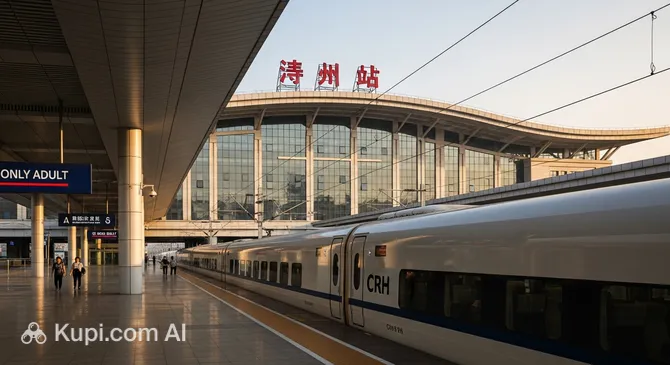
Jingzhou Railway Station is a major transport hub in Hubei Province, connecting the ancient city with China's largest metropolises. The station building, opened to passengers in 2012, features modern architecture with elements of the traditional Chu Kingdom style, highlighting the region's rich history. The station serves both high-speed and regular trains, ensuring convenient connections on the Hankou–Yichang line.
It is important for passengers to know that the station features clear signage in both Chinese and English. The building consists of two main floors: the ground floor houses ticket offices and exits, while the upper floor contains a spacious waiting hall and platform gates. To enter the boarding area, you will need to undergo ticket and document checks, as well as luggage screening, so navigating inside is quite simple thanks to intuitive signs.
Contact Information
Official Website: www.12306.cn (China's unified railway portal)
Inquiry Service Phone: +86 12306 (General hotline, English support may be limited)
Address: Jingzhou District, Jingzhou, Hubei Province, China (northern part of the city)
Opening Hours: Daily, approximately from 06:00 to 23:00 (depending on the train schedule)
Luggage Storage: Available in the waiting hall or near the ticket offices (paid service)
Accessibility: The station is equipped with lifts and escalators for passengers with reduced mobility, and dedicated washrooms are available.
How to Get There
You can reach Jingzhou station in several ways, as it is integrated into the city's transport network. The most popular option is public buses. Many routes (for example, Nos. 15, 21, 25, 49) connect the station with the historic city centre and other districts. The bus stop is located on the station square, and the journey from the centre takes about 30–40 minutes.
For those who value comfort, taxis are available. The taxi rank is located right outside the arrivals exit. A trip from the ancient city walls to the station is affordable and takes approximately 20–25 minutes, depending on traffic. Drivers usually use the meter, but it is recommended to have your destination address written in Chinese characters.
Walking from the city centre is not recommended due to the significant distance, as the station is situated some way from the main tourist attractions.
Services and Amenities
Jingzhou Railway Station offers a standard range of services for a comfortable wait. The main building houses a large waiting hall with ample seating. A separate comfort zone is often provided for business class passengers. The hall is air-conditioned in summer and heated in winter.
Among the amenities, it is worth noting the presence of free hot water dispensers (boiling water), which is traditional for Chinese stations; therefore, many travellers bring thermos flasks or instant noodles. Clean washrooms, mobile device charging stations (which may be paid), and ticket counters where foreigners can print tickets or change bookings are also available. Wi-Fi is usually accessible, but a Chinese phone number may be required to connect.
Where to Eat
There are several dining options within the station premises and in the immediate vicinity. Inside the building, there are typically small shops selling snacks, drinks, and souvenirs. Chain fast-food outlets such as Dico's or KFC are also commonly found, where you can grab a quick meal before your train departs.
If you have time, it is worth visiting the cafes on the station square. There you can find small local restaurants offering traditional beef noodles or rice dishes. Prices here will be lower than inside the waiting area. The average bill for a substantial lunch will be around 20–40 RMB. For those in a hurry, ready-made sandwiches or pastries from 24-hour convenience stores are an optimal choice.
Station History
The history of rail transport in Jingzhou took a new turn with the opening of the current station on July 1, 2012. This event coincided with the launch of the Hankou–Yichang railway (part of the Shanghai–Wuhan–Chengdu high-speed line). Until that moment, the city, despite its significance, experienced a deficit in rapid rail connections.
The construction of the station was an important stage in the modernisation of Hubei Province's transport infrastructure. The architectural design of the building was carefully thought out: designers sought to reflect the grandeur of the ancient Chu culture, using characteristic roof and façade elements. Today, the station plays a key role in the region's tourism development, making Jingzhou's famous landmarks accessible to millions of travellers.
Passenger Tips
When planning a trip via Jingzhou station, it is recommended to arrive at least 45–60 minutes before your train departs. This time is necessary for passing through security control and document checks. International tourists should remember that automatic gates often accept only Chinese ID cards, so to pass with a passport, you must use the Manual Lane, where a staff member will verify your documents.
Boarding closes 5 minutes before departure, so do not linger in the waiting hall. Keep a close eye on the information screens for your train number and platform gate (Gate). If you have heavy luggage, please use the lifts, as escalators can be busy. Also, do not forget that carrying knives, aerosols, and flammable items is strictly prohibited.