Support

Lijiang Airport

About the Airport

Lijiang Sanyi International Airport is not merely a gateway, but a true introduction to the wonders of the ancient city of Lijiang and the picturesque Yunnan Province in China. From the very first moments after landing, passengers are greeted by majestic mountain landscapes, creating the feeling that a journey into a fairy tale has already begun. The airport serves as a key transport hub for tourists eager to experience the unique culture of the Naxi people, see snow-capped peaks, and visit the legendary attractions of one of the country's most beautiful regions.
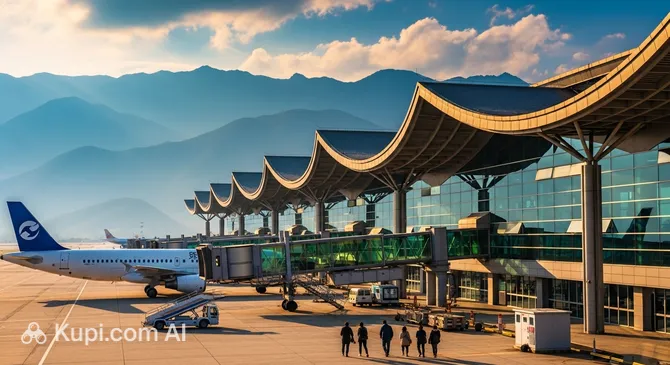
Lijiang Airport. Source: Kupi.com Binoculars
IATA Code LJG
ICAO Code ZPLJ
City Lijiang
Distance to city centre approx. 28 km
Status International
Annual Passengers over 7.4 million (2023)
Popular Airlines China Eastern Airlines, Sichuan Airlines, Air China
Schedule Online Board "Lijiang Airport"

One of the main features of Lijiang Airport is its architecture, which blends harmoniously with the surrounding landscape, alongside its modern infrastructure. Despite the growing passenger flow, the terminal remains compact and easy to navigate. The airport provides excellent connections to China's major cities, including Beijing, Shanghai, and Guangzhou, and also operates flights to Southeast Asian countries, making it accessible to travellers from all over the world. Passengers can enjoy cafés serving local cuisine, shops with unique souvenirs such as Pu-erh tea, and convenient transfers to the city, allowing them to start exploring this amazing region without delay.

Contact Information

For your convenience, we have compiled the essential contact information for Lijiang Sanyi International Airport (LJG).

  • Official Website: You can find flight schedules, terminal maps, and other useful information on the airport's official website www.lijiang-airport.com. The site is available in Chinese.
  • Inquiry Service Phone: For up-to-date information on flights, services, and airport operations, please call: +86 888 517 3081.
  • Airport Address: Lijiang Sanyi International Airport, Gucheng District, Lijiang, Yunnan, China.
  • Email: The airport does not provide a public email address for general inquiries. It is recommended to use the telephone for communication.
  • Lost & Found: If you have lost your belongings within the airport, please contact the baggage tracing service at: +86 888 517 3088.
  • Passenger Support Service: For all questions related to passenger services, please contact the main information desk at the airport.

How to Get to the Airport

Lijiang Sanyi Airport (LJG) is located approximately 28 kilometres south of the ancient city of Lijiang, and there are several ways to reach it. Choosing the best option depends on your budget, time, and comfort preferences.

Public Transport: The most popular and economical method is the specialised shuttle buses. They run between the airport and several key points in the city, including the Old Town area. A trip on such a bus takes about 40–60 minutes depending on traffic conditions and the route. The ticket price is usually around 20-30 RMB. This is an excellent option for solo travellers and those wishing to save money.

Taxi or Transfer: For greater convenience, especially if you have a lot of luggage or are travelling in a group, you can use a taxi. A taxi ride from the city centre to the airport will take approximately 30-40 minutes. The metered fare will be roughly 80–120 RMB. It is recommended to use official taxis and ensure the driver switches on the meter. You can also book a private transfer in advance, which guarantees a fixed price and a meet-and-greet service at the designated location.

Car Rental: If you plan to actively travel around Yunnan Province, renting a car might be a good solution. Several rental company representatives operate at the airport. However, it is worth remembering that to drive a car in China, foreign nationals generally require a Chinese driving licence. International driving permits are most often not accepted. The airport provides paid parking where you can leave a car for both short and long periods.

When planning routes around the region, it is also useful to know about other nearby airports. For example, for trips around the northern part of Yunnan, you might consider flights via Diqing Shangri-La Airport or Dali Airport, which could expand your logistical possibilities.

Terminals and Layout

Lijiang Airport (LJG) is distinguished by a structure that is simple and clear for passengers. Currently, one main passenger terminal operates here, serving both domestic and international flights. This significantly simplifies navigation and eliminates the need to move between different buildings, which is particularly convenient for first-time visitors.

The terminal has a standard two-level layout. The departure zone with check-in counters and security checkpoints is located on the upper floor, while the arrival zone with baggage claim belts and the exit to the city is on the lower floor. Inside, the building is nominally divided into a sector for domestic flights and an international sector. Signs in Chinese and English help to easily orient yourself and find the necessary section.

Registration and security procedures at Lijiang Airport are organised quite efficiently. On average, completing all formalities takes from 40 minutes to 1.5 hours. However, during peak tourist seasons, such as national holidays, the airport can be heavily congested. Therefore, it is recommended to arrive in advance: at least 2 hours before a domestic flight departure and 3 hours before an international one.

Navigation through the terminal is intuitive. After check-in and passing security control, you will enter the general departure lounge with boarding gates. For arriving passengers, the path is even simpler: follow the signs to the baggage claim area. If you have any questions, you can always approach the information desks located in the central parts of the departure and arrival halls.

Airport History

The history of Lijiang Sanyi International Airport is closely tied to the transformation of this region of China into one of the country's main tourist hubs. The official opening of the aviation hub took place in July 1995. Its construction was dictated by the need to ensure convenient access to the ancient city of Lijiang and the picturesque landscapes of Yunnan Province, which were rapidly gaining popularity among travellers.

Just a year after opening, in 1996, the airport played a key role during tragic events. A powerful earthquake caused serious damage to the region, and it was the airport that became a vital centre for coordinating rescue operations, delivering humanitarian aid, and evacuating the injured. This moment in history demonstrated the strategic importance of the air harbour not only for tourism but also for ensuring the safety of the entire region.

Since the late 1990s, especially after the inclusion of the Old Town of Lijiang in the UNESCO World Heritage list, a true tourism boom began. Passenger traffic grew exponentially, which required significant expansion of the infrastructure. An important milestone was the airport being granted international status in 2011. This allowed for the launch of direct flights from other Asian countries, further increasing its significance on the global tourism map.

To cope with the constantly increasing load, Lijiang Airport underwent several stages of large-scale modernisation. Key reconstruction was completed in the mid-2010s and included the construction of a new, more spacious terminal, as well as the extension of the runway. These improvements allowed it to accept a greater number of flights and serve millions of passengers annually at a modern standard.

One interesting fact about Lijiang Airport is its location at an altitude of about 2240 metres above sea level, making it one of the highest airports in China. Such altitude imposes special requirements on aircraft operation and pilot training. Today, the airport continues to be not just a transport node, but a symbol of Lijiang's amazing transformation from a remote corner into a thriving international resort.

Services and Amenities

Lijiang Airport (LJG) is a modern and convenient complex where all conditions for a comfortable wait for your flight have been created. A wide range of services is available to passengers, allowing them to resolve any issues, rest, and have a snack before flying.

For those feeling hungry, several restaurants and cafés operate within the terminal. Here you can quickly grab a cup of coffee or have a full meal, choosing from local Yunnan dishes or more familiar European cuisine. In the airport shops, you can purchase souvenirs, travel essentials, and locally produced goods to take a piece of the colourful culture of China home with you.

Free Wi-Fi is available throughout the airport, and numerous stands and sockets are provided for charging electronic devices. For passengers who value enhanced comfort, premium lounges and VIP halls are available, where one can relax in a quieter atmosphere. There are also ATMs and currency exchange points in the terminal for handling financial matters.

The airport cares for all categories of travellers. In case of necessity, you can visit the medical centre for first aid. Families with children will appreciate the presence of nursing rooms, and for passengers with reduced mobility, a barrier-free environment has been created: ramps, special restrooms, and the ability to request staff assistance. Although there are no hotels directly on the airport grounds, several hotels of varying comfort levels are located in the immediate vicinity. Business travellers may have access to business centre services or conference rooms.

Where to Eat

Lijiang Sanyi Airport (LJG) offers passengers diverse dining options, allowing for both a quick snack before departure and a substantial meal while waiting for a flight. You can find establishments here to suit every taste and budget, from familiar fast food to restaurants serving authentic regional cuisine.

Most cafés and restaurants are concentrated in the departure area, after passing passport control and security (airside). However, there are a few establishments in the public zone (landside) where you can drink coffee or have a snack while seeing off friends and family. The opening hours of most food outlets are tied to the flight schedule: they open with the first morning departures and close after the last plane has left.

Once at the airport, do not miss the last opportunity to enjoy the unique flavours of Yunnan Province. Many establishments specialise in local cuisine. Look out for dishes with yak meat, wild mushroom soups, or the famous "Mixian" rice noodles. Even in an airport setting, these dishes can be a pleasant conclusion to your journey through China. For a quick bite, steamed baozi buns or noodle shops, where orders are prepared in minutes, are ideal.

Regarding special dietary needs, there are some nuances. Vegetarians will find it quite simple to find suitable dishes, as Chinese cuisine is rich in vegetables, tofu, and mushrooms — simply ask for the dish to be prepared without meat. For those looking for Halal food, it is worth looking for signs with the inscription "清真" (qīngzhēn). Gluten-free and vegan options may be more difficult to find due to the widespread use of soy sauce and other additives. The best choice would be simple dishes like steamed rice and fresh vegetables.

The price range at LJG airport, as in most aviation hubs, is higher than in the city. A cup of coffee or a light snack will cost approximately 30-50 RMB, while the cost of a full lunch in a restaurant starts from 80-100 RMB. We recommend allowing a little time to calmly choose a suitable place and enjoy your food without rushing before boarding the plane.

Tips for Travellers

Travelling through the airport in the picturesque city of Lijiang will be easier and more pleasant if you prepare for some features in advance. These tips will help you save time, stress, and money, making the start or end of your journey through China as comfortable as possible.

Arrival Time and Check-in. It is recommended to arrive at the airport at least 2-3 hours before domestic flights and 3-4 hours before international ones. This time is sufficient to calmly check in, drop off luggage, and pass security control without rushing. To save time, use online check-in if your airline provides this option. Keep your passport, visa (if required), and ticket ready.

Seat Selection and Hand Luggage. If it is possible to choose a seat during check-in, remember that window seats will offer you stunning views of the mountain landscapes of Yunnan Province during take-off and landing. Aisle seats are convenient if you plan to get up often. Regarding hand luggage, the rules are standard: liquids up to 100 ml in a transparent bag, no sharp objects. Important point: power banks are allowed only in hand luggage, and their capacity must be clearly marked.

Passing Control. At security control, be prepared to remove all electronics from your hand luggage, including laptops, tablets, and power banks. Customs control for international flights is standard: declare goods if their value exceeds established limits. Keep receipts for large purchases to avoid misunderstandings.

Passengers with Transfers. If you have a connecting flight in Lijiang, check with your airline in advance whether you need to collect your luggage and check it in again. At the airport, follow the "Transfers" signs to quickly find the necessary gate or counter for transit passengers.

In Case of Flight Delay. If your flight is delayed, the first thing to do is find a representative of your airline. They will provide current information on the flight status and explain your rights to drinks, meals, or hotel accommodation depending on the length of the delay. Keep all receipts for forced expenses to request compensation later.

Saving Time and Money. To save money, bring an empty water bottle and fill it at the drinking water dispensers after passing security control. Study transport options to and from the airport in advance: shuttle buses often prove to be significantly cheaper than taxis. Free Wi-Fi at the airport will help you stay connected and pass the waiting time.

Reached the end of the page?

That means the route is fully explored