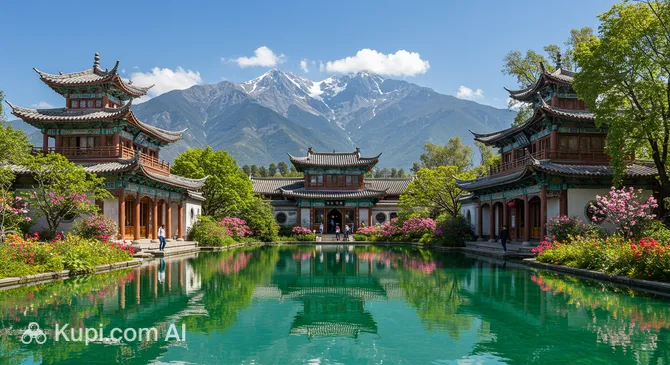
Lijiang offers a seamless integration of natural beauty and cultural depth, where manicured gardens blend with wild alpine backdrops and museums preserve the unique heritage of the Naxi people. Beyond the bustling streets of the ancient town, visitors can find serenity in lush parks and gain profound insights into local history through well-curated exhibitions.
The city's most celebrated green space is the Black Dragon Pool (Heilongtan). While famous for its iconic view of the snow-capped mountains, the park itself is a masterpiece of classical Chinese gardening mixed with Naxi architectural styles. Visitors can stroll under ancient chestnut trees and weeping willows, crossing marble bridges that span the crystal-clear waters. The park is also home to the Five-Phoenix Tower, a stunning architectural gem originally built during the Ming Dynasty, which features a complex structure of flying eaves that look like spreading wings from every angle.
For those seeking panoramic views and a breath of fresh air within the city limits, Lion Hill Park is an excellent choice. Located just behind the Old Town of Lijiang, this hill resembles a sleeping lion protecting the city. The park is crowned by the Wangu Pavilion, a five-story wooden pagoda that stands 33 meters tall. Climbing to the top rewards travelers with a spectacular 360-degree view of the gray tiled roofs of the old town below and the majestic mountains in the distance. The hillside is covered in ancient cypress trees, some of which are centuries old, providing a cool, shaded retreat on sunny days.
Another unique site that functions as both a scenic area and a cultural showcase is the Jade Water Village. Situated at the foot of the mountain, this park is designed to demonstrate the Naxi people's reverence for nature. It features a sacred spring that feeds a system of three tiered pools, each with a specific purpose, illustrating the harmony between human life and water. The grounds are adorned with monumental statues of Dongba gods and traditional temples, making it an open-air museum of spirituality set amidst waterfalls and lush greenery.
To truly understand the region's intellectual history, a visit to the Dongba Culture Museum is essential. Often located near the northern entrance of the Black Dragon Pool, this museum houses thousands of cultural relics. Its main focus is the mysterious Dongba script, the only living hieroglyphic writing system in the world. Exhibits display ancient manuscripts, ritual items, and costumes, explaining the complex religious ceremonies and the role of the Dongba (shamans) in Naxi society. It provides crucial context that enriches the experience of seeing the symbols throughout the city.
History enthusiasts should not miss Mu’s Residence (Mufu Palace). Often described as a miniature Forbidden City, this sprawling complex was the administrative center and home of the Mu clan, the Tusi (chieftains) who ruled Lijiang for centuries. The architecture is a grand fusion of Han Chinese palace style and Naxi craftsmanship. Walking through the imposing gates, courtyards, and meeting halls offers a glimpse into the power and opulence of the region's historical rulers.
For a rare look at religious art, the Baisha Murals in the nearby Baisha Village are a significant historical treasure. Painted during the Ming and Qing dynasties, these frescoes are unique because they depict figures from Buddhism, Taoism, and Naxi Dongba religion in the same scene, reflecting the region's religious tolerance and cultural exchange. The artistic style blends Tibetan, Naxi, and Han influences, noted for their fine lines and vivid colors.
Insider Tip: If you want to escape the crowds of the main parks, head to Qingxi Reservoir. It is a favorite spot among locals for evening walks and offers one of the clearest reflections of Jade Dragon Snow Mountain without the entrance fee of the major tourist parks.