Support

Dali Airport

About the Airport

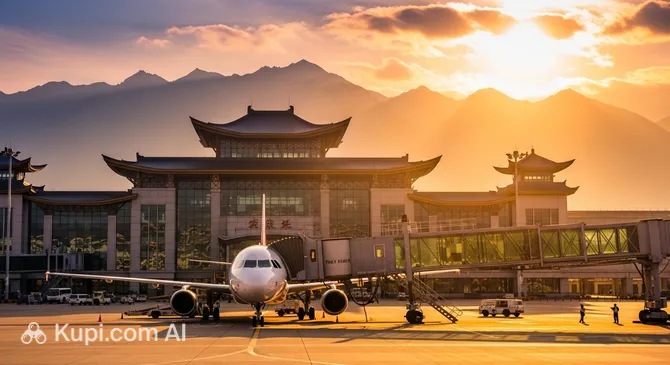
Dali Airport. Source: Kupi.com Binoculars

Dali Airport (Dali Fengyi Airport) is not just a transit point, but a picturesque aerial gateway to the world of "wind, flowers, snow, and moon," for which this region of Yunnan Province is famous. Landing here turns into a breathtaking excursion: the aircraft descends against the backdrop of the majestic Cangshan Mountains, flying over the mirror-like surface of Erhai Lake. The small but cosy terminal, featuring elements of traditional Bai ethnic architecture, allows travellers to instantly feel the unique local atmosphere the moment they step on the ground.

IATA Code DLU
ICAO Code ZPDL
City Dali
Distance to Centre ~13 km (to Xiaguan District)
Status Domestic
Annual Passengers Over 2.3 million
Schedule Available online

Features and Advantages of the Airport:

  • Scenic Location: The airport is situated on elevated ground, offering a panoramic view of Erhai Lake, making take-offs and landings incredibly beautiful.
  • Authentic Architecture: The terminal building is designed using the region's characteristic "flying" roofs, reminiscent of the traditional dwellings of local residents.
  • Compactness and Speed: Thanks to its small size, navigation inside is intuitive, and passing through pre-flight formalities takes minimal time.

Contact Information

If you need to contact representatives of Dali Airport (DLU), please use the official contact details. The most reliable and fastest way to get a consultation is by phone, as processing email requests may take time.

  • Official Website: All current information regarding flight schedules, services, and passenger regulations is generally posted on the Yunnan Airport Group portal: www.ynairport.com/dla/
  • Information Desk Phone: For general enquiries, you can call the number: +86 872 242 8923.
  • Airport Address: Jichang Road, Dali City, Yunnan Province, China.
  • Email: An official email address for general enquiries is not publicised. We recommend using the phone or contact forms on the website if available.
  • Lost & Found Information: For issues related to lost or damaged luggage, you should first contact your airline's representative at the airport. Additional information can be clarified with the airport's Lost & Found service by phone: +86 872 242 8929.

How to Get to the Airport

Dali Airport (DLU) is conveniently located approximately 15 kilometres from the historic centre of Dali, making the journey there quick and straightforward. Travellers can choose from several modes of transport to get from the airport to the city or vice versa, depending on their comfort preferences and budget for travelling around China.

The most economical option is the specialised shuttle buses (Airport Express), which connect the airport with major areas of the city, including the new city of Xiaguan and the Dali Ancient City. A bus journey usually takes between 40 to 60 minutes, depending on traffic conditions and your final destination. This is an excellent choice for budget-conscious tourists and those travelling light.

For those who value comfort and time, the ideal solution would be a taxi or private transfer. A car journey to the city centre will take about 30-40 minutes. The cost will be higher than public transport, but this is compensated by the speed and convenience of being dropped off directly at your hotel, which is particularly relevant if you have bulky luggage. It is strongly recommended to have your hotel address written in Chinese to simplify communication with the driver. Mobile apps for booking taxis are also widely used in the region.

If you plan to independently explore the scenic surroundings of Erhai Lake and other beauties of Yunnan Province, you might consider car rental. Rental company counters are located directly within the airport building. For travellers arriving by private transport, the airport grounds feature convenient parking, where vehicles can be left for both short and long periods.

When planning your route, it is also worth considering the availability of other air hubs in the region. For example, as an alternative, you can consider the airport in Lijiang, located 113 km away, or Baoshan Airport at a distance of about 133 km. This can be useful for compiling complex and rich travel itineraries.

Terminals and Map

Dali Airport (DLU) is a modern and compact airport complex serving domestic flights within China. Its structure is designed for maximum passenger convenience, making navigation intuitive even for first-time visitors.

Structure and Terminals

The airport consists of one main terminal that handles both departing and arriving flights. The absence of multiple terminals significantly simplifies orientation: you do not have to worry about transfers between buildings or searching for the right hall. All infrastructure is concentrated in one place.

Layout and Navigation

The terminal has a simple and logical two-level structure:

  • Departure Zone is located on the second floor. Here you will find airline check-in counters, security checkpoints, and the main waiting hall with boarding gates.
  • Arrival Zone is located on the ground floor. Passengers arrive here after landing. This area houses baggage claim belts, customs control (if necessary), and the exit to the city where taxis or other transport can be found.

Processing Time

One of the main advantages of Dali Airport is its compactness. Thanks to this, passing through check-in and security usually takes significantly less time than in major international hubs. On average, you should allocate about 30-45 minutes for all pre-flight formalities. However, during peak seasons and holidays, it is recommended to arrive a little earlier.

Navigation Recommendations

Orienting yourself in the airport is very easy. There are clear signs in Chinese and English everywhere. Since all key zones — from check-in to boarding gates — are within one large hall on the second floor, getting lost is practically impossible. Simply follow the "Departures" signs upon entering the terminal, and you will quickly find everything you need.

Airport History

The history of Dali Airport (DLU) is inextricably linked to the transformation of this ancient city into a popular tourist centre. Although Dali itself has a centuries-old history, the modern airport appeared here only at the end of the 20th century. The decision to build it was made to develop the region's tourism potential. Work began in 1992, and on 28 November 1995, the airport received its first flights, opening the picturesque landscapes of Yunnan to travellers from all over China and the world.

The initial infrastructure was designed for a modest passenger flow, but the rapid growth in popularity of Dali required expansion. The first major stage of modernisation took place from 2007 to 2009. During this period, a new passenger terminal was built and the runway was extended. This allowed the airport to receive more flights and service larger types of aircraft, responding to the growing tourist demand.

The development of the airport did not stop there. In subsequent years, it underwent several more stages of reconstruction and expansion to match the status of one of the province's key transport hubs. Modernisation was aimed at increasing throughput capacity, improving passenger comfort, and implementing modern technologies. Each reconstruction reflected the steady growth of interest in the region's unique culture and nature.

Among the interesting facts about Dali Airport is its impressive location. It is situated in a valley between the Cangshan Mountains and Erhai Lake, allowing passengers to enjoy breathtaking views even before landing. The airport's main achievement is not just passenger numbers, but its key role in the economic and cultural development of the region, making it accessible and attractive to travellers from around the globe.

Services and Facilities

Dali Airport (DLU) offers its guests all necessary amenities to ensure that waiting for a flight is as comfortable and carefree as possible. Regardless of the purpose of your trip, you will find quality service here that meets modern standards.

For those feeling hungry, the terminal features cafes and restaurants where you can have a quick sandwich or a full meal, trying local Yunnan dishes. In the airport shops, you can purchase souvenirs, famous Pu'er tea, as well as travel essentials.

Free Wi-Fi is available throughout the airport, allowing you to stay connected or work while waiting for departure. Special stations and sockets are provided for charging gadgets. Passengers preferring enhanced comfort can utilise the services of VIP lounges, offering a secluded atmosphere, snacks, and beverages.

The terminal building houses ATMs and currency exchange points where financial matters can be resolved. In case of unforeseen health situations, a medical post operates 24/7 at the airport, ready to provide first aid.

The airport is well-equipped for travellers with children: special mother and child rooms are open for them, where you can feed and change a baby in a quiet environment. For passengers with reduced mobility, a barrier-free environment has been created, including ramps, elevators, and specially equipped restrooms. Escort services can also be requested.

Although there are no hotels directly within the terminal building, several hotels to suit any taste and budget are located in the immediate vicinity of the airport. For business travellers, basic business services may be available to help resolve work issues right before departure.

Where to Eat

Dali Airport (DLU) offers passengers several convenient options for a snack or a full meal. Although the selection here is not as extensive as in major international hubs, travellers can find everything necessary for a comfortable wait. Most catering establishments are concentrated in the main terminal building.

The main food outlets are located both in the public area (before security control) and in the "clean" departure zone. In the general area, you can usually find a few cafes and a small restaurant where it is convenient to sit with those seeing you off. After passing security control, in the waiting area near the boarding gates, coffee shops and fast-food outlets offering sandwiches, pastries, beverages, and light snacks are available to passengers.

Being in Yunnan Province, be sure to look out for local cuisine. In some airport cafes, you can find the famous Yunnan rice noodles "Mixian" (米线) — this is a great chance to enjoy the authentic taste of China before departure. Coffee shops are ideal for a quick snack, while one of the à la carte restaurants is better for a more substantial lunch.

Regarding special dietary needs, such as vegetarian, vegan, or gluten-free dishes, the choice at Dali Airport may be limited. It is recommended to carefully study the menu or check the ingredients with the staff. For passengers with strict dietary restrictions or Halal preferences, it may be useful to carry a small supply of familiar snacks.

Prices in airport establishments are generally higher than the city average. The opening hours of cafes and restaurants are oriented towards the flight schedule: they open early in the morning and serve passengers until the last flight departs. This ensures that you can grab a bite at any time while the airport is receiving or dispatching aircraft.

Travel Tips

To ensure your journey through Dali City Airport goes smoothly, it is worth considering a few points in advance. Planning will help save time, nerves, and even money, making the start or end of your trip around China as comfortable as possible.

Arrival Time and Check-in. For domestic flights, which make up the bulk of Dali Airport's schedule, it is recommended to arrive 2–2.5 hours before departure. This time is sufficient to check in, drop off luggage, and pass security without rushing. If possible, complete online check-in in advance — this will save you queuing at the airline counter.

Security Control. Screening procedures at Chinese airports can be quite thorough. Ensure there are no prohibited items in your hand luggage. This especially applies to liquids (over 100 ml) and portable chargers (power banks). Power banks must be carried only in hand luggage and must have clear markings indicating their capacity. When choosing a seat on the plane, if possible, opt for a window seat — during take-off and landing, stunning views of the mountains and Erhai Lake open up.

Customs Control and Transfers. Dali Airport mainly serves domestic flights, so customs control is relevant only for rare international charters. If you have a connecting flight, clarify with the airline in advance whether you will need to collect and re-check your luggage at the intermediate airport. Allow at least 2-3 hours between connecting flights to avoid unpleasant surprises.

Economy and Unforeseen Situations. To save money, pack your luggage compactly to avoid paying for excess weight. Take an empty reusable water bottle with you — after passing security, it can be filled at drinking fountains. In case of a flight delay, first contact your airline representative. They will provide current information and, depending on the length of the delay, may offer vouchers for food or water. During this time, you can explore the small shops and cafes in the terminal.

Reached the end of the page?

That means the route is fully explored