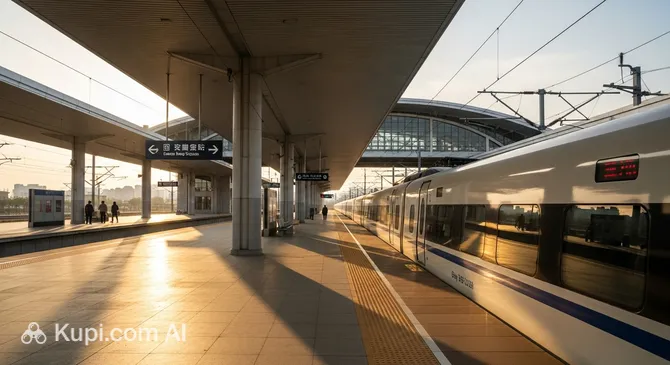
Siping Railway Station is a vital transport hub in Jilin Province, playing a key role in the railway connection of Northeast China. Located at the intersection of strategic main lines, this station serves thousands of passengers traveling between major cities in the region daily. The station building combines functionality and modern amenities, ensuring a comfortable start or end to your journey.
It is important for passengers to know that navigation at the station is intuitive, though it can get quite crowded during peak hours. Entrances are divided into security check zones and ticket offices, so it is recommended to follow the signs carefully. Electronic display boards in the main hall will help you quickly find the right platform and check the current train schedule.
Contact Information
Official website: www.12306.cn (China Railway unified portal)
Helpline: +86 12306 (hotline)
Address: Tiexi District, Siping City, Jilin Province, China
Opening hours: 24 hours (ticket offices may have technical breaks)
Luggage storage information: Available within the station building; cost depends on luggage size and storage duration
Accessibility information: The station is equipped with ramps, elevators, and special restrooms for passengers with reduced mobility
How to Get There
Getting to Siping Station is straightforward, as it is located within the city limits and is well-integrated into the transport network. Most city bus routes have stops at the station square or in its immediate vicinity, making the bus the most budget-friendly transport option.
For those who value comfort and time, a taxi is the best choice. A trip from the city center or major hotels usually takes 15–20 minutes, depending on traffic conditions. Walking is possible if you are staying in the Tiexi District; however, carrying heavy luggage can be tiring, so we recommend planning your route in advance.
Services and Amenities
The station's infrastructure offers passengers a wide range of services for a comfortable wait. The building features spacious waiting halls, including separate zones for business class passengers with soft seating. For purchasing and exchanging travel documents, both traditional counters with operators and modern self-service kiosks are available (many have an English interface).
Free restrooms and taps with hot drinking water (boiling water) are available on the station premises, which is traditional for Chinese stations. Travelers can make use of luggage storage facilities, and in some areas, there is access to Wi-Fi and power outlets for charging mobile devices.
Dining Options
It is hard to go hungry at Siping Station. Inside the building and on the station square, there are small shops where you can buy snacks, beverages, and famous instant noodles. For a full meal, it is worth visiting fast-food cafes offering Chinese cuisine: rice with toppings, dumplings, or hot soups.
If you have time before your train departs, we recommend going out to the station square, where the choice of establishments is significantly wider. There you can find both chain fast food and local eateries with affordable prices. The average bill for a hearty lunch usually does not exceed 30–50 RMB. Coffee is best sought in chain stores or brought along in a thermos, as European-style coffee shops are less common.
Station History
The history of railway connections in Siping is inextricably linked with the development of the city itself, often called the "City of Heroes" due to its strategic importance. As an important hub at the intersection of historical main lines, the station has always played a key role in the region's logistics. Since its foundation, the station has undergone several stages of large-scale renovations to meet the growing passenger flow and modern safety standards.
Today, Siping Station is a vital link in China's railway network. It connects Jilin Province with the country's major economic centers, such as Beijing, Harbin, and Dalian. The architecture of the modern building reflects a commitment to technology and comfort while maintaining its status as one of the main transport hubs in the Northeast.
Travel Tips
For a stress-free journey, we recommend arriving at the station at least 40–60 minutes before your train departs. This time is necessary to pass the mandatory luggage security check and document verification at the entrance, which are conducted very thoroughly in China and can create queues.
It is important for international tourists to always have their passport with them, as it is required at all stages: from entering the building to boarding the carriage. Paper tickets are often not needed—scanning your passport is sufficient to pass through the turnstile. If you have a transfer planned, watch closely for "Transfer" signs to avoid leaving the secure zone. Waiting halls can be cool at night, so it is worth having a warm jacket with you.
Reached the bottom of the page?
Looks like you know this route inside out
We use cookies and services to collect user information. This is essential for the functioning of the site and for marketing purposes. You can find out more in .
Other popular routes
Where travelers fly most — pick a route and check prices