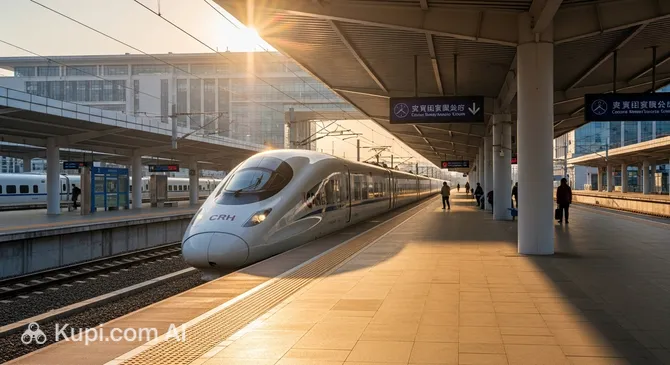
Tieling Railway Station is a vital transport hub in Liaoning Province, connecting the city with major metropolises across China. The station handles both passenger and freight traffic, playing a key role in the region's logistics. The station building combines functionality with elements of traditional architecture, creating a comfortable atmosphere for travellers. For tourists, it serves as the main gateway to exploring the culture and nature of northern China.
It is important for passengers to know that navigation within the station is intuitive, though English signage may be partial. Entrance to the building is through a security checkpoint, so please keep your documents and tickets handy. Waiting halls are located on the first and second floors, and gates to the platforms open 10–15 minutes before the train's arrival. Electronic display boards will help you navigate the schedule and find the correct track.
Contact Information
Official Website: It is recommended to use the national China Railway portal (12306.cn) to check schedules and purchase tickets.
Helpline: +86 12306 (unified hotline for China Railways).
Address: Yinzhou District, Tieling City, Liaoning Province, China.
Opening Hours: The station is open 24 hours a day, however, ticket counters may have technical breaks during night hours.
Baggage Storage: A Left Luggage service is available in the main hall; the cost depends on the size of the luggage.
Accessibility: The station is equipped with ramps and special waiting zones for passengers with reduced mobility.
How to Get There
You can reach Tieling Railway Station in several ways, depending on your location in the city.
Public Transport: Numerous city bus routes serve the station square. This is the most economical way to travel, with the fare usually being a nominal amount (around 1–2 Yuan). Bus stops are located in the immediate vicinity of the main entrance.
Taxi: This is the most convenient option for tourists with luggage. A trip from the city centre will take 10–15 minutes. It is recommended to have the station's address written in Chinese characters to show the driver.
On Foot: If you are staying in the central Yinzhou district, you can walk to the station in 20–30 minutes, enjoying views of the city, although this may be tiring with heavy suitcases.
Services and Amenities
At Tieling Station, passengers are provided with a wide range of services for a comfortable wait for their train.
Waiting Halls: Spacious halls are equipped with seats; there is a separate VIP lounge (often paid) with softer armchairs. In general areas, dispensers with free hot water are usually available — an essential attribute of Chinese stations, so many travellers bring thermos flasks or instant noodles.
Tickets and Navigation: Both traditional counters with operators and automatic terminals are in operation (most machines accept only Chinese ID cards, so international visitors are advised to go to the counter). Wi-Fi is available, but a Chinese phone number may be required to connect.
Facilities: There are clean restrooms, small kiosks with newspapers, and charging stations for mobile devices (fees may apply). For citizens with reduced mobility, elevators or escalators are provided for descent to the platforms.
Dining Options
If you are hungry before your journey, there are several options for a snack at Tieling Station and in its vicinity.
On Station Premises: Inside the building, there are usually small shops where you can buy snacks, drinks, vacuum-packed treats, and noodles. There may not be full-service restaurants inside, but you will always find a spot for hot drinks.
Near the Station: On the station square and adjacent streets, there are many local cafes. Here it is worth trying local dumplings or beef noodles. This is a quick and inexpensive option: the average bill will be 20–40 Yuan. Fast food chains operating from early morning until late at night are also often found nearby.
Station History
The history of Tieling Railway Station is closely intertwined with the development of the railway network in Northeast China. The station was founded in the early 20th century, becoming an important point on the historic Chinese Eastern Railway and the South Manchuria Railway branch.
Over the past decades, the station has undergone several stages of large-scale reconstruction. From a small station, it has transformed into a modern transport hub capable of handling increasing passenger traffic. These changes reflect the general economic growth of the region and the desire to improve the city's transport accessibility. Today, the station retains its significance, connecting the past and future of Tieling's transport system.
Passenger Tips
To ensure your journey through Tieling Station goes smoothly, follow a few simple tips.
Arrival Time: Arrive at the station at least 40–60 minutes before your train departs. In China, thorough luggage screening and document checks are conducted at the entrance, which can create queues, especially during public holidays.
Tickets and Documents: International tourists must carry their original passport. Even if you have an electronic ticket, identity verification at the counter is sometimes required.
Luggage and Safety: Do not leave your belongings unattended. It is prohibited to carry flammable items, knives, and certain types of aerosols. If you have a night transfer, please note that waiting halls may be closed for cleaning late at night, so it is better to clarify this with staff in advance.
Reached the bottom of the page?
Looks like you know this route inside out
Popular routes
Where travelers fly most — pick a route and check prices