Support

Yushu Batang Airport

About the Airport

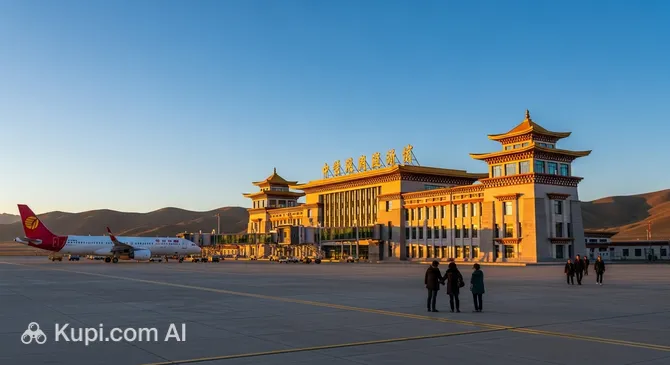
Yushu Batang Airport. Source: Kupi.com Binoculars

Yushu Batang Airport is not merely a transport hub, but a true "gateway to the sky" on the Qinghai-Tibet Plateau, situated at an impressive altitude of approximately 3,900 metres above sea level. Landing here resembles a thrilling experience: the aircraft descends amidst majestic mountain peaks, revealing panoramic views of the harsh yet beautiful nature of Qinghai Province to passengers. This airport serves as a vital artery connecting this remote and mysterious region with major metropolises, immersing travellers in the unique atmosphere of the highlands from their very first minutes.

IATA Code YUS
ICAO Code ZLYS
City Yushu
Distance to Centre ~18 km
Status Domestic, High-altitude
Annual Passengers Approx. 375,000 (2021 data)
Schedule Check airline websites

Airport Features and Highlights

Yushu Batang Airport boasts a unique set of characteristics dictated by its extreme location and the cultural context of the region:

  • Extreme Altitude: Being the second-highest civilian airport in Qinghai Province, it requires special preparation from both pilots and passengers. The runway here has an extended length (3,800 metres) to compensate for the thin air during aircraft take-offs.
  • Oxygen Support: Passenger health is the top priority here. The terminal is equipped with special oxygen supply equipment, and in the waiting halls, travellers can find zones to alleviate symptoms of altitude sickness ("high-altitude hypoxia") immediately after arrival.
  • Tibetan Architecture: The single terminal building is designed in a traditional Tibetan style. Vibrant ornaments, characteristic roof shapes, and the use of local decorative elements turn the air terminal into a cultural landmark in its own right, introducing guests to the region's flavour before they even step into the city.
  • Heroic History: The airport played a key role during the recovery efforts following the 2010 earthquake. It became the main channel for delivering aid and rescue teams, proving its strategic importance and reliability in critical situations.

Contact Information

  • Official Website: Currently, Yushu Batang Airport (YUS) does not have a separate official website. It is recommended to check up-to-date information on flight schedules and services on the websites of airlines flying to Yushu, or on major travel portals.
  • Inquiry Service Phone: +86 976 882 3114. Please note that the number may change, so it is also recommended to contact your airline for accurate information.
  • Address: Batang Township, Yushu City, Yushu Tibetan Autonomous Prefecture, Qinghai, China, 815000.
  • Email: An official public email address for the airport is not provided. It is recommended to use the telephone for communication.
  • Social Media: The airport does not have official pages on popular social networks. News and updates are usually published on the resources of airlines or travel agencies.
  • Lost Luggage Information: For all issues related to lost or damaged luggage, please contact the representative of the airline you flew with directly. Airport staff can provide contact details but do not conduct searches directly.
  • Passenger Support Contacts: For general information, you can use the inquiry service phone. For questions related to tickets, flight check-in, and travel rules, you must contact your airline's support service.

How to Get to the Airport

Yushu Batang Airport (YUS) is located approximately 18 kilometres from the city centre of Yushu. You can get to or from the airport in several ways, each with its own cost and convenience considerations. On average, the trip from the centre to the terminal takes about 20-30 minutes, but the time may vary depending on the chosen transport and traffic conditions.

The most economical way to get to the airport is to use the special shuttle bus. These buses run between the airport and key points in the city of Yushu. Their schedule is usually coordinated with flight arrivals and departures, making them a convenient option for most passengers. It is best to verify information about the exact route and departure times on-site, at the airport, or at your hotel. There is no direct rail or metro connection to the airport.

For those who value comfort and speed, a taxi is the optimal choice. Cars can easily be found at the exit of the arrival terminal as well as in any part of the city. A taxi ride will take about 20 minutes. The cost will be significantly higher than the bus, but this is compensated by convenience, especially if you have a lot of luggage. It is recommended to agree on the price with the driver in advance or ensure the taximeter is switched on. You can also book a private transfer in advance through online services or your hotel, which is particularly convenient for groups.

If you plan to actively travel around the surroundings, you might consider car rental. Several companies may offer their services; however, keep in mind that foreigners may require special permits to drive in China. Given the high-altitude and remote nature of the region, this option is suitable only for experienced drivers. For those arriving at the airport in their own or a rented car, parking is provided where vehicles can be left for both short and long terms.

Terminals and Map

Yushu Batang Airport (YUS) is a modern and compact aviation hub serving the Yushu region. Its structure is extremely simple and clear for travellers, as the airport consists of one passenger terminal. This terminal receives and dispatches all domestic flights, eliminating the need for complex transfers and saving passengers time.

The terminal layout is intuitive. The building is designed so that the flows of arriving and departing passengers are separated but remain within a single complex. Navigation presents no difficulties: all zones are clearly marked with signs in Chinese and English. Immediately after entering the terminal, you find yourself in the check-in area, followed by the security checkpoint. The departure zone with waiting lounges and boarding gates is located after screening, while the arrival zone with baggage claim belts and the exit to the city is in another part of the building.

Since the airport has only one terminal, moving between any of its parts takes mere minutes. All procedures — from check-in to boarding — take place in one building. This is particularly convenient for passengers with children or a large amount of luggage. On average, passing through check-in and security screening takes no more than 30-40 minutes even during peak hours, as passenger traffic here is moderate. Nevertheless, it is recommended to arrive at the airport 1.5–2 hours before departure to complete all formalities without rushing.

The main advice for navigating Yushu Batang Airport is simply to follow the standard layout of any airport. Thanks to its compact size, getting lost here is practically impossible. You will easily find your airline's check-in counters, and after passing security control, the correct boarding gate. Airport staff are always ready to help if you have any questions.

Airport History

The history of Yushu Batang Airport (YUS) is not just a story about constructing a runway, but a true saga of resilience and rebirth. The airport, located in the picturesque Qinghai Province in China, began operations relatively recently. Construction started in May 2007, and on 1 August 2009, the airport officially opened for flights, becoming one of the highest airports in the world. It sits at an altitude of about 3,890 metres above sea level, which in itself is an outstanding engineering achievement and a significant factor in its operation.

The most dramatic and significant event in the airport's history was the devastating earthquake that occurred in Yushu on 14 April 2010. At that critical moment, Batang Airport turned into a true lifeline for the entire region. Since land routes were severely damaged, the air harbour became the main hub for delivering rescue teams, humanitarian aid, and medicines, and for evacuating the injured. Without its uninterrupted operation, the scale of the tragedy could have been much greater. This rescue operation forever inscribed the airport into the history of the city and the country.

The tragedy of 2010 highlighted the strategic importance of the airport, leading to its massive reconstruction and modernisation as part of the region's recovery programme. The expansion project included extending the runway to 4,200 metres to accommodate larger aircraft, building a new, modern terminal to replace the temporary one, and expanding the apron for aircraft parking. These improvements significantly increased the airport's capacity and its readiness for any future challenges.

Interesting fact: operating at such an altitude imposes special requirements not only on pilots and equipment but also on passengers, who are advised to be prepared for symptoms of altitude sickness. Aircraft require a longer run for take-off due to the thin air. Today, Yushu Batang Airport is not only an important transport hub connecting the remote region with the rest of China, but also a symbol of hope and the indomitable human spirit.

Services and Amenities

Yushu Batang Airport (YUS) is a modern high-altitude airport that, despite its compact size, offers passengers all necessary services for a comfortable wait for their flight. Conditions have been created here so that travellers feel confident before flying in this unique region.

In the terminal, you will find several small cafes and eateries where you can taste local and Chinese cuisine, as well as drink hot tea or coffee. Shops offer souvenirs, essential goods, snacks, and drinks for the road. The selection is not as extensive as in major metropolises, but sufficient to satisfy basic needs.

For a more comfortable wait, the airport provides waiting lounges, including a VIP zone for business class passengers. Free Wi-Fi is available throughout the terminal, and charging stations for electronic devices are installed in the waiting areas so you can always stay connected.

There are ATMs in the terminal building; however, currency exchange points may be absent or have limited operating hours. It is recommended to exchange money in advance in larger cities. Given that this is one of the highest high-altitude airports in the world, special attention is paid to passenger health: a medical point operates here, where you can receive assistance for symptoms of altitude sickness and, if necessary, use oxygen.

Mother and child rooms are equipped for passengers with children. Travellers with reduced mobility can count on staff assistance, and the airport infrastructure, including ramps and specially equipped restrooms, ensures a barrier-free environment.

There are no hotels within the airport grounds. The nearest hotels are located in the city of Yushu, which can be reached by taxi or bus. Specialized conference rooms or business centres are absent at the airport, as it is primarily oriented towards serving passenger flights.

Where to Eat

Yushu Batang Airport (YUS) is a small regional aviation hub, so the choice of catering establishments here is limited but sufficient for a snack before departure or after arrival. The main food outlets are located in the main and only terminal, generally in the public area before security control (landside).

The main feature of the airport in Yushu is the opportunity to try local Tibetan cuisine. Do not miss the chance to get acquainted with the gastronomy of this unique region of China. In local cafes, you can often find hearty noodle soups, dishes with yak meat, or traditional Tibetan flatbreads. This is an excellent opportunity for a full lunch and immersion in local culture right at the airport.

For those in a hurry, options for a quick snack are available: kiosks with packaged snacks, drinks, and instant noodles. After passing security control (airside), the selection is usually even more limited and may be reduced to vending machines with drinks and snacks. The opening hours of catering establishments are usually synchronised with the flight schedule, so they are open during departure and arrival times.

Prices at the airport are expectedly higher than in the city itself. Regarding special dietary needs, finding certified Halal, vegan, or gluten-free dishes here will be extremely difficult. Vegetarians may have access to noodle soup with vegetables or rice-based dishes, but it is recommended to check the ingredients with the staff. Travellers with strict dietary restrictions are strongly recommended to carry their own snacks.

Travel Tips

To ensure your journey through Yushu Batang Airport goes as smoothly as possible, make use of these proven tips. The airport is located in a picturesque region of China, and proper preparation will allow you to enjoy the trip without unnecessary stress.

Arrival Time and Check-in: We recommend arriving at the airport at least 2 hours before the departure of a domestic flight. Although the airport in Yushu is not the largest, queues are possible during peak seasons. Complete online check-in in advance if your airline provides this option. Keep your passport and boarding pass ready for a quick check.

Seat Selection: Want to enjoy stunning views of the Tibetan Plateau during take-off and landing? Choose a window seat. If freedom of movement and a quick exit after landing are more important to you, an aisle seat is better suited. Seats in the front of the cabin are usually the quietest, and those at emergency exits offer extra legroom.

Hand Luggage: Strict security rules apply in China. All liquids must be in containers up to 100 ml and packed in a transparent bag. Sharp objects, lighters, and flammable substances are prohibited. Pay special attention to portable chargers (power banks) — they can only be carried in hand luggage, and their capacity must not exceed the limits set by the airline.

For Transfer Passengers: If you have a connecting flight, follow the "Transfer" signs immediately after arrival. Check with airline staff whether you need to collect and re-check your luggage. Verify the gate number for your next flight in advance, as it may change.

Saving Time and Money: To save money, bring an empty water bottle and fill it after passing security control. Prices for food and drinks at the airport can be inflated. It is also useful to book a transfer to the city in advance to avoid overpaying taxi drivers on the spot.

In Case of Flight Delay: In the event of a flight delay or cancellation, contact your airline representative first. Find out about your rights: depending on the length of the delay, you may be provided with meals, drinks, or even hotel accommodation. Have a book or a charged tablet with you to pass the waiting time.

Airports in nearby cities

Reached the end of the page?

That means the route is fully explored