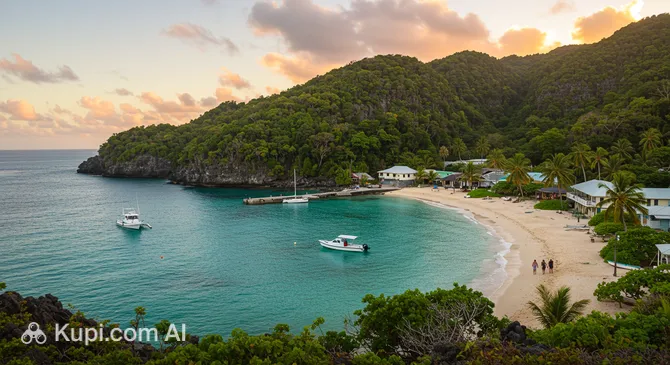
While Flying Fish Cove is small, it serves as the gateway to some of the world's most impressive natural landscapes and holds a surprising depth of history. The settlement does not feature sprawling urban parklands or massive museum complexes; instead, the entire town feels like a living heritage site surrounded by lush jungle. Cultural discovery here is intimate, often woven directly into the fabric of daily life and the surrounding environment.
The Foreshore Park
The grassy verge along the waterfront, known simply as the Foreshore, acts as the town's "village green" and primary recreational space. Shaded by swaying coconut palms and mature trees, this area is the community's living room. It is equipped with picnic tables and barbecue facilities, making it the perfect spot for a relaxed afternoon lunch while looking out over the Indian Ocean. In the evenings, locals gather here to watch the sunset, and it serves as the venue for many of the island's cultural festivals and outdoor events.
Smith Point
Located just a short drive or a scenic walk from the main settlement, Smith Point offers a blend of natural beauty and history. This headland provides a park-like setting with commanding views of the cove and the open ocean. It is an excellent location for spotting seabirds, including the endemic Golden Bosunbird, and for watching waves crash against the rugged coastline. The area is maintained to allow visitors to explore the historical remnants located there while enjoying the fresh sea breeze.
Tai Jin House Museum
Perched on the hill overlooking the cove, Tai Jin House is the island's most significant cultural building. Formerly the residence of the British Administrator, the upper floor has been converted into a museum that chronicles the island's fascinating history. Exhibits cover the discovery of the island, the phosphate mining era, and the diverse social history of the Malay and Chinese indentured laborers. Walking through the airy, colonial-style rooms offers a poignant glimpse into the lives of those who shaped the settlement over the last century.
Christmas Island Visitor Centre
While primarily an information hub, the Visitor Centre in the settlement functions as a cultural gallery. It features interpretive displays that explain the island's unique ecology, including the life cycle of the red crabs and the diversity of birdlife. Additionally, it often showcases works by local artists and photographers, providing a space where visitors can appreciate the creative output of the island's small but vibrant community.
WWII Gun Emplacement
Situated at Smith Point, this site is a stark reminder of the island's strategic importance during World War II. The preserved 6-inch gun installation stands as a silent sentinel over the ocean. Visitors can explore the concrete bunkers and ammunition stores, which offer a tangible connection to the turbulent events of the 1940s, including the Japanese occupation. The site is well-signposted, providing historical context to the military architecture.
The Malay Kampong
For a look at living history, a walk through the Kampong district is essential. This area was historically the home of the Malay marine workers and retains a distinct architectural character different from the rest of the settlement. The mosque and the traditional layout of the housing blocks reflect the strong cultural heritage that has been maintained for generations. It is a vibrant neighborhood where the island's multicultural spirit is most visible.
Insider Tip: For a unique "open-air museum" experience, look for the old industrial infrastructure scattered around the cove. The massive cantilever structures at the port, used for loading phosphate, are iconic symbols of the island's economy. While you cannot climb them, viewing these rusting giants against the backdrop of the turquoise water provides a dramatic photo opportunity that captures the essence of Flying Fish Cove's industrial past.