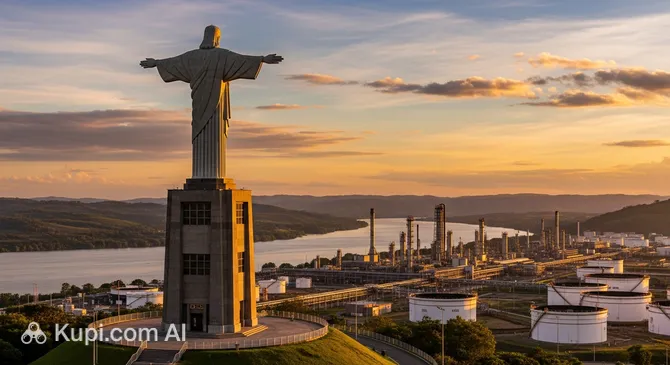
In the heart of the oil industry for which Barrancabermeja is famous, lies one of the region's most unusual monuments — Cristo Petrolero (the Oil Christ). This majestic iron sculpture towers over the Ciénaga Miramar swamp, representing a unique blend of religious symbolism and industrial heritage that Colombia is so proud of.
Cristo Petrolero. Illustration.
Source: Kupi.com AI
Traveler photos:
The monument was created in 1995 by workers from the Ecopetrol oil company using recycled industrial materials. The figure of Christ with raised arms seems to bless the city and enliven the surrounding landscape, serving as a reminder of the close bond between the residents' faith and their daily work for the benefit of the country.
Due to its location opposite the largest oil refinery, Cristo Petrolero has become more than just a religious site; it is a significant tourist landmark demonstrating a creative approach to repurposing industrial materials.
Contacts
To plan a visit to the Cristo Petrolero monument, travelers may find this reference information helpful. You can always contact local tourist information centers or the Ecopetrol S.A. office for more details.
A visit to Cristo Petrolero offers guests the chance to see a unique symbol that harmoniously blends Christian traditions with an industrial spirit. The sculpture is one of the city's most popular photo spots, looking especially striking in the rays of the setting sun.
Beyond seeing the monument itself, visitors can enjoy the peaceful atmosphere on the banks of the Ciénaga Miramar. It is an excellent place for contemplation and reflection, allowing for a better understanding of how the local community integrates its history and faith into the modern urban landscape.
Getting There
The attraction is conveniently located in the city of Barrancabermeja, in the department of Santander, on the picturesque banks of the Magdalena River. The monument is situated by the Ciénaga Miramar, right next to the site of the country's largest oil refinery, making it an easily recognizable landmark.
The easiest way to reach Cristo Petrolero is by taxi from the city center — the trip takes very little time. You can also use local public transport or book a guided sightseeing tour, which will definitely include a visit to this iconic regional symbol.
Nearest city: Barrancabermeja
History & Facts
The history of this unusual monument began in 1995 at the initiative of the national oil company, Ecopetrol S.A. The sculpture was a gesture of gratitude to the city, whose prosperity is inextricably linked to the extraction of "black gold."
The project was designed by the sculptor Fernando Fernández. In his work, he embodied the image of the Risen Christ, with figures of the twelve apostles situated at the base. This composition emphasizes the spiritual significance of the site for local residents.
The material used for the monument deserves special attention. The statue was assembled from recycled metal rods taken directly from the plant. This creative decision turned industrial scrap into a cultural symbol reflecting Barrancabermeja's history as the country's main oil refining hub.
Time Needed
Typically, tourists need about 1 to 2 hours to fully explore the monument and the surrounding area. This time is sufficient to study the details of the iron sculpture, take commemorative photos, and enjoy the views of the Ciénaga Miramar.
If you are not in a hurry, you can stay longer to watch the life of the port or simply stroll along the embankment, soaking in the city's unique industrial atmosphere.
Working Hours
Since Cristo Petrolero is located outdoors in a public space, it can be viewed 24/7, any day of the week. This makes the site extremely convenient to visit both in the early morning and in the evening.
No special tickets are required for the visit; however, tourists are advised to check official city tourism portals in advance for information regarding possible holiday events or landscaping work in the area.
Open 24 hours
Nearby
A walk around the area of Cristo Petrolero will allow you to see Barrancabermeja from different perspectives — from its administrative center to its cozy parks and cultural venues. Exploring nearby sites will help provide a more complete picture of life in this energetic Colombian city.