Support

Bolivar Stone

About

In the heart of the colonial city of Mompós lies an iconic historical site — the Bolivar Stone (Piedra de Bolívar). This landmark is a memorial dedicated to Simón Bolívar, the great national hero and liberator, whose name is inextricably linked to the history of Colombia's struggle for independence.
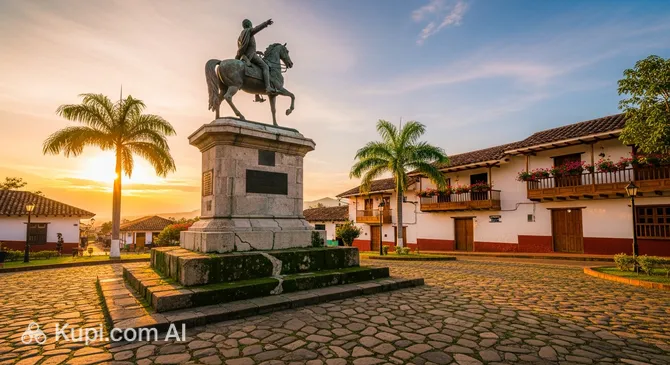
Bolívar Stone
Bolívar Stone. Иллюстрация. Источник: Kupi.com AI

As an important symbol in the Bolívar Department, this site attracts those who appreciate the historical heritage of Latin America. The monument itself is simple, yet it carries immense emotional weight, recalling the days of the liberation movement and the region's role in the formation of modern statehood.

Visiting this site allows tourists to touch the era of conquistadors and revolutionaries. Mompós, founded in 1537, has preserved its authentic atmosphere and magnificent architecture, making a walk to the Bolivar Stone a true journey through time along the banks of the great Magdalena River.

Contacts

For more details about your visit or to get information on tourist routes, you can contact the local tourist office or the administration of regional hotels.

How to contactContact
AddressFaltriquera, Bolívar, Santa Cruz de Mompox, Mompós, Bolívar, Колумбия
Phone+57 605 6840260

What to Do

Visiting the Bolivar Stone is, first and foremost, an opportunity to come into contact with living history. It is customary to pause during your walk to read the commemorative inscriptions and reflect on the events that changed the face of an entire continent. The location is perfect for a themed photoshoot against the backdrop of authentic colonial walls and cobbled streets.

After seeing the monument, be sure to take a walk through the historical center of Mompós. The city is famous for its Spanish colonial architecture: you can see majestic churches, old mansions with wrought-iron grilles, and quiet courtyards. It is also recommended to head to the Magdalena River waterfront to enjoy the river scenery and observe the life of the local port.

To complete the experience, we suggest stopping by local shops where artisans offer filigree silver jewelry — a traditional craft of the region. This combination of historical insight and local lifestyle will make your visit truly memorable.

Getting There

The famous Bolivar Stone is located in the historical center of the city of Mompós, in the Bolívar Department. The main transport hub for travelers is the city of Cartagena, home to the nearest international airport. The journey from Cartagena to Mompós by car or bus takes approximately 4–5 hours, passing through the picturesque landscapes of northwestern Colombia.

Upon arrival in the city, you won't need complex logistics: Mompós features a compact historical center that is perfect for walking. If you are staying on the outskirts, you can use local taxis or colorful motor rickshaws that will quickly take you to the address: Faltriquera, Bolívar, Santa Cruz de Mompox.

For those who prefer organized trips, local guides often include a visit to the stone in city sightseeing tours. Transfers can also be arranged directly from Cartagena airport through travel agencies or hotels.

Ближайший город: Mompos

History & Facts

The history of this site is inextricably linked with Simón Bolívar — the legendary general and national hero whose name became a symbol of freedom for all of South America. Bolívar, known as "The Liberator" (El Libertador), played a decisive role in the fall of Spanish colonial rule, leading the struggle for independence in territories that today comprise Colombia, Venezuela, Ecuador, Panama, Peru, and Bolivia.

Mompós itself, founded in 1537 by the conquistador Alonso de Heredia, always held a strategic position on the Magdalena River. The city was an important commercial and political center, and it was here that the ideas of independence found fervent support. Bolívar visited this region several times, and the Bolivar Stone serves as a tangible reminder of the great commander's deep connection with the residents of this city.

Interestingly, in 1813, the National Congress officially granted Bolívar the title of Liberator, and between 1819 and 1830, he served as the president of Gran Colombia. Monuments and memorials in his honor can be found in almost every corner of the continent, but it is in places like Mompós that the scale of his influence on the fate of Latin America is best felt.

Time Needed

To view the Bolivar Stone, read the informational plaques, and take commemorative photos, 30–60 minutes is usually sufficient. It is a small but historically significant location that doesn't require much time for a basic visit.

However, if you want to truly soak up the atmosphere of old Mompós, we recommend dedicating 2 to 4 hours for a stroll through the historical quarter. This will allow you to combine your visit to the stone with seeing nearby churches, colonial mansions, and a leisurely break on the Magdalena River waterfront.

Working Hours

The Bolivar Stone is an open-air site and is accessible 24 hours a day, 7 days a week. This gives travelers complete freedom: you can visit early in the morning to avoid the midday heat, or in the evening when the memorial looks particularly solemn under the city lights.

Despite the free access, it is recommended to periodically check current information on the city's official tourist portals in case of restoration work or city festival events in the adjacent square.

Круглосуточно

Nearby

The city of Mompós is an open-air museum in its own right, and visiting the Bolivar Stone is just the beginning of your journey through its rich cultural heritage. Exploring the colonial streets and squares surrounding the memorial will allow you to deeper experience the spirit of the era of Spanish rule and the fight for liberation.

Below are interesting sites located within walking distance of the attraction:

NameDistance
Crónicas Restaurant Bar0.1 km
Hotel Nieto Mompox Riverfront0.1 km
Ambrosía Restaurant Bar0.3 km
Pueblito Mágico Hostel Bar0.5 km
Santa Bárbara Church0.5 km
Santa Bárbara Square0.5 km

Reached the end of the page?

That means the route is fully explored