Support

Mompos

About

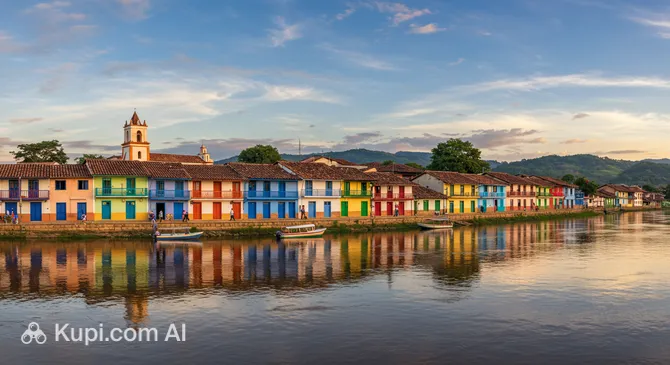
Mompox (or Santa Cruz de Mompox) is a city where time seems to have slowed down, giving way to legends and colonial charm. Located in the Bolivar department, this corner of the world is steeped in the atmosphere of "magical realism," so characteristic of the region's literary imagery. It is one of the most unique and architecturally rich locations that Colombia is famous for.

Mompos. Illustration.
Source: Kupi.com AI

Geographically, the city is unique because it is situated on an island in the middle of the majestic Magdalena River. The climate here is tropical, hot, and humid, which sets a leisurely pace of life for the local population of about 49,000 people. The amazing history of Mompox and its relative isolation have allowed it to preserve its appearance virtually unchanged for centuries.

Travelers are drawn here by its status as a UNESCO World Heritage site and its magnificent Andalusian-style architecture. Strolling through the streets, it's worth noting the famous churches, such as Santa Barbara with its unique tower, and making sure to stop by the workshops of local jewelers. Mompox is widely known for its art of filigree — the creation of exquisite jewelry from the finest gold and silver wire.

A visit to Mompox is an opportunity to immerse yourself in authentic culture and enjoy the silence far from noisy metropolises. This city is the perfect discovery for those seeking inspiration in antiquity and the beauty of river landscapes.

Weather Overview

The climate in this region is typically tropical, hot, and humid, characteristic of cities located in the lowlands by the Magdalena River. The temperature regime is remarkably constant: average figures fluctuate between 28–30°C throughout the year. The hottest months are February and March, when the daytime maximum often reaches 35°C, and the nighttime cool brings only slight relief, as the temperature rarely drops below 25°C.

The main difference between the seasons lies in the amount of precipitation. January and February are the most favorable times for those who prefer clear skies: the number of rainy days during this period is minimal (about 4–5 per month). In March, the weather in Mompox begins to change: the number of days with precipitation increases to 11, foreshadowing the imminent start of the wet season. At other times, especially from April to November, rain can occur almost daily, refreshing the scorched air.

Expect consistently hot weather all year round. When planning your trip, keep in mind that a distinct dry season only occurs at the beginning of the year, while most of the calendar is characterized by high humidity and frequent tropical downpours.

Average monthly temperature

Average monthly precipitation

Interesting Facts

In addition to the main attractions, Mompox holds many fascinating secrets that set it apart even from other historical sites in Colombia. This city is a true treasure trove of stories where literature, religion, and a heroic past intertwine.

  • The Cradle of Absolute Independence. Mompox became the first city in New Granada to proclaim full and unconditional independence from the Spanish Crown on August 6, 1810. It was here that the famous motto was born: "Ser Libres o Morir" ("To be free or die").

  • Indebted for Glory. Simon Bolivar, the great Liberator, had a deep connection with this place. He is credited with the historical phrase: "If to Caracas I owe my life, then to Mompox I owe my glory." It was here that he recruited about 400 volunteers who formed the core of his army for the victorious campaign to Caracas.

  • The City That Does Not Exist. Gabriel García Márquez, whose life and work are closely linked to the region, immortalized the mystical aura of the city in his novel "The General in His Labyrinth." He wrote: "Mompox does not exist, sometimes we dream of it, but when we wake up, Mompox is gone." This quote became the city's unofficial slogan, emphasizing its isolation and frozen time.

  • Unique Rhythm of Holy Week. Religious processions in Mompox are different from any others in the world. Participants (Nazarenos) carry heavy platforms with saints, taking two steps forward and one step back. This special rhythm symbolizes Christ's difficult journey to Golgotha and turns the procession into a mesmerizing dance.

How to Get There

A journey to Mompox is an immersion into the heartland that Colombia is famous for, as the city is located on an island in a branch of the Magdalena River and is somewhat remote from the main highways. To plan the perfect route, we recommend learning more about how to get to Mompox using various modes of transport.

Since Mompox itself does not have a large commercial airport, travelers usually fly into nearby regional centers and cover the rest of the way by land. One of the most popular hubs is Rafael Núñez International Airport (CTG), located in the city of Cartagena. This is the largest transport hub in the region, receiving many international flights. It is located about 179 km from Mompox, and the journey by taxi or bus takes about 4 hours and 50 minutes.

If you are looking for the closest option, consider Corozal Airport (CZU), which is in the city of Corozal, only 95 km from your destination. This is a small regional airport, but the trip from there to Mompox takes significantly less time — about 2 hours and 45 minutes. Also, a convenient alternative could be Los Garzones Airport (MTR) in the city of Montería (161 km), from which the transfer will last approximately 4 hours and 20 minutes.

For clarity, here is a summary of the main airports through which you can reach the city:

AirportPassenger trafficDistance
Corozal Airport26 41995 km
Tolu Airport110 000131 km
Los Garzones Airport1.5 mln161 km
Rafael Nunez International Airport7.2 mln179 km
Monte Libano5 000179 km

Regarding rail service, it is virtually non-existent in this region. There are no active passenger railway stations in Mompox or its surroundings, so trains are not considered by tourists as a way to get here. The main burden of passenger transport falls on road and river transport.

Main Attractions

Mompox is often called a museum-city because its historical center has remained virtually in its original form since colonial times. A walk through its streets is a real journey into the past, where every building tells its own story. The city's architectural ensemble is so unique that it was included in the UNESCO World Heritage list.

The undisputed symbol of the city is the Church of Santa Barbara (Iglesia de Santa Bárbara). Built in 1613, it is famous for its unusual octagonal Baroque tower decorated with a balcony. This architectural solution is unique to Colombia and makes the temple one of the most photographed sights in the region. Tourists come here to admire the elegant details of the facade and feel the spirit of antiquity that literally permeates these walls.

Another place that leaves a lasting impression is the Municipal Cemetery (Cementerio Municipal). Unlike many other necropolises, this place is perceived more like a quiet and bright park. Snow-white tombs and mausoleums, surrounded by greenery and flowers, create an atmosphere of peace. Locals often come here just for a walk, and the cemetery has gained special fame for the cats living here, who have become peculiar guardians of the peace.

For evening walks, La Albarrada is perfect — a picturesque promenade stretching along the Magdalena River. On one side of the street, there are magnificent colonial mansions where wealthy merchants once lived, while the other side offers a view of the majestic river. It is the best place in town to watch the sunset while enjoying the fresh river breeze and the slow pace of Mompox life.

The Church of the Immaculate Conception (Iglesia de la Inmaculada Concepción) is also worth a visit. This temple, distinguished by its impressive size and austere beauty, is considered the city's cathedral. Its history is closely linked to the founding of Mompox, and the interior is striking in its solemnity. The building has been restored several times but has retained its colonial charm and grandeur.

Local Cuisine

The gastronomy of Mompox is a delightful combination of Caribbean traditions and the culinary heritage of the Magdalena River. The local cuisine is famous for its authenticity, and many recipes are passed down through generations here, preserving the taste of the colonial era that Colombia is proud of.

The main gastronomic symbol of the city, which every tourist must try, is Queso de Capas (layered cheese). This is a fresh, soft cheese that is handmade using ancient techniques and literally pulls apart into thin elastic layers. It is often sold by street vendors and serves as an excellent snack during walks. Another meat delicacy is butifarra, a small smoked sausage prepared here with a special set of spices that distinguishes it from versions in other Caribbean cities.

Since the city stands on the banks of a great river, the basis of the main menu is freshwater fish. The king of the table here is bocachico and catfish (bagre). The fish is most often served fried (frito) with a side of coconut rice and patacones (fried green plantain fritters) or as a rich stew known as "viuda de pescado" (fish widow). These dishes are known for their rich flavor and heartiness.

Speaking of drinks, one cannot fail to mention the famous Corozo Wine (Vino de Corozo). This is a sweet, low-alcohol dark burgundy drink, reminiscent of port, made from the fruits of a local palm tree. It has a pleasant tart taste and is served chilled, ideally saving you from the midday heat. Dessert lovers should also seek out dulce de limón — a traditional lemon sweet that is a signature of local confectioners.

The food culture in Mompox encourages slowness. Tourists and locals prefer to dine in restaurants located in old colonial mansions with cozy courtyards full of greenery. In the evening, the promenade becomes the epicenter of life, where you can enjoy dinner with a river view, feeling the breath of history in every stone of this amazing city.

Travel Tips

A journey to Mompox is a visit to a city frozen in time in the middle of the Magdalena River. To ensure your trip to this remote and hot corner, which Colombia is proud of, is as comfortable and safe as possible, we have prepared a list of important practical recommendations.

  1. Clothing and Essentials: Given the hot tropical climate, bring loose-fitting clothes made of natural breathable fabrics (linen, cotton) in light colors. Be sure to pack comfortable flat shoes for walking on old cobblestones. For visiting active temples, modest clothing covering shoulders and knees will be required. Also, don't forget a plug adapter (American standard, type A or B).

  2. Transport: The historical center of the city is compact, and it's best to explore it on foot to enjoy the architecture. For trips with luggage or to the outskirts, use motocarros (three-wheeled motorcycle taxis) — they are the most popular and cheapest form of transport. Apps like Uber don't exist here, and the cost of a ride is best negotiated with the driver before boarding.

  3. Finance: In Mompox, cash is "king." Cards are accepted only in a few hotels and expensive restaurants, so always have a supply of Colombian pesos in small bills. There are ATMs in the city (mainly on the main square), but they may not work or may run out of cash, so it's better to withdraw money in larger cities beforehand.

  4. Health and Safety: The city is surrounded by water, so mosquitoes are common, especially at sunset; be sure to bring a strong repellent. Mompox is considered a very safe place where you can walk even in the evening, but basic vigilance should not be lost. Drink only bottled water to avoid digestive problems.

  5. Communication: English is practically not used outside of a couple of travel agencies. Download an offline translator or learn basic phrases in Spanish — locals will appreciate your effort. Wi-Fi is available in most hotels, but mobile internet can be unstable inside the thick walls of colonial buildings.

  6. Local Etiquette: Residents of Mompox (Momposinos) are famous for their friendliness and calmness. It is customary to greet people when entering shops or elevators (a simple "Buenas" is appropriate). People here don't like to rush, so don't hurry the waiters — service can be slow, but it's part of the local "tranquilo" culture.

  7. What to Avoid: Don't plan active walks in the middle of the day (from 12:00 PM to 3:00 PM). The sun here is very aggressive, and attempting to see the sights at noon can lead to heatstroke. Also, avoid loud conversations and flash photography inside churches, especially if a service is in progress.

  8. Extra Tip: Adapt to the siesta schedule. In the middle of the day, life in the city comes to a standstill: shops and workshops close, and the streets empty. Use this time to relax in a hammock or have lunch in a shady patio, and go for a walk in the early morning or after 4:00 PM, when the heat subsides and the city comes alive.

By following these simple tips, you can immerse yourself in the unique atmosphere of Mompox without extra worries. May your journey be filled with peace, historical discoveries, and the warmth of local hospitality.

Entertainment & Nightlife

Nightlife in Mompox is fundamentally different from the noisy parties in major metropolises that Colombia is known for. Here, you won't find huge discos with techno music or overcrowded clubs. Evenings in this city are filled with romance, tranquility, and a bohemian atmosphere. The main entertainment after sunset is leisurely walks, live music, and long conversations over a glass of wine or local beer under the starry sky.

The epicenter of evening activity is the famous promenade — La Albarrada Street (Calle de la Albarrada). It is here, along the Magdalena River, that most of the bars and restaurants are concentrated. People come here to enjoy the cool river breeze, which brings relief after the heat of the day. The atmosphere here is incredibly relaxed: locals play chess in the squares, while tourists take tables on the open terraces of colonial mansions.

Among the specific venues worthy of attention, the restaurant-bar Crónicas stands out. This place is popular for its cultural program: live jazz, Cuban son, or bolero are often played here, which perfectly complements the historical surroundings of the city. Another interesting spot is El Fuerte, located in an old building, where you can try excellent pizza and cocktails in an authentic inner courtyard. The crowd in these places is mixed — from local intellectuals to European travelers, and the dress code is purely casual ("smart casual" would be an excellent choice).

If you want to plan the perfect evening, head out for a walk around 6:00 PM to catch the sunset over the river. Prices in Mompox establishments are noticeably lower than in Cartagena: a cocktail or beer is quite budget-friendly. Nightlife here quiets down fairly early, with most places closing by midnight or 1:00 AM, except on weekends during festivals.

In terms of safety, Mompox is considered one of the calmest cities in the region. The historical center is well-lit, and walking here at night is comfortable. However, if your hotel is on the outskirts, it is better to use the services of a motocarro (local motorcycle taxi) for your return. They are easy to catch in the main squares, but you should agree on the price in advance.

During the day, entertainment in the city is more educational. Be sure to visit the filigree workshops to see how masters create the finest patterns from gold and silver. It's also worth stopping by the Museum of Religious Art (Museo de Arte Religioso), which houses an impressive collection of gold items and religious objects that tell the story of this unique city's rich past.

Parks & Museums

While Mompox is often perceived as an architectural gem, its charm is not limited to stone walls. The city and its surroundings offer tourists the opportunity to come into contact with rich tropical nature and deep cultural heritage, carefully preserved in local museums. Here, green zones flow seamlessly into historical quarters, creating a unique space for relaxation and learning.

Among the natural areas, Albarrada del Campillo holds a special place. This is not just a promenade, but a real green corridor stretching along the Magdalena River. Here, in the shade of ancient trees, you can take shelter from the midday heat and observe the local fauna — iguanas and squirrels can often be spotted in the branches, and a fresh breeze blows from the river. This is an ideal place for morning jogs or meditative contemplation of the majestic river, which is the lifeblood of the region.

For wildlife lovers, a trip to Ciénaga de Pijiño should be a mandatory part of the program. Although this lake system is located a bit away from the city, it is considered an integral part of Mompox's natural wealth. A boat trip through the waters of the ciénaga allows you to see exotic birds, caimans, and the lush vegetation of the mangroves. Swimming in the lake's waters at sunset is one of the most memorable experiences Colombia can offer in this region.

The cultural heart of the city beats in its museums. The main guardian of treasures is the Museum of Religious Art (Museo de Arte Religioso). Located in a beautiful colonial mansion, it houses one of the most impressive collections of sacred art in the country. Unique items made of gold and silver, created by local master jewelers of past centuries, as well as ancient statues and paintings, are presented here. The exhibition clearly demonstrates the city's wealth during the era of Spanish rule.

Another important cultural center is the House of Culture (Casa de la Cultura). This institution plays the role of a living museum, where not only archaeological finds and historical documents are exhibited, but exhibitions by contemporary local artists are also regularly held. The building itself is of historical value, and its inner courtyard often becomes a venue for literary readings and musical evenings, reflecting the creative spirit of the Momposinos.

Insider tip: don't miss the opportunity to look into the Mompox Botanical Garden (Jardín Botánico). This is a quiet and less known place for tourists, which houses a collection of medicinal plants and flora typical of the Magdalena River region. A walk here will allow you to learn more about the traditional use of herbs by local residents and enjoy the silence away from the central streets.

Getting Around

The transport system of Mompox is fundamentally different from what residents of megacities are used to. Due to the city's small size (population of about 49,000) and narrow colonial streets, there are absolutely no subways, trams, or even the usual large city buses. Public transport here is intimate, informal, and an integral part of the local flavor.

The most popular and convenient means of transportation is the motocarro — a covered three-wheeled motorcycle with a sidecar, reminiscent of an Asian tuk-tuk. These nimble machines are ideally suited for the local climate and roads. They protect passengers from the scorching sun or sudden tropical rain while providing natural ventilation. A motocarro can hold up to three passengers (though it's more comfortable for two with luggage) and can take you anywhere in the city, including remote areas.

For solo travelers wanting to save time and money, there is the mototaxi — a ride on the back seat of a regular motorcycle. This is the fastest way to get around, but it requires some skill and readiness for a more extreme ride. Mototaxi drivers often wear vests or helmets with numbers, but this doesn't always guarantee official status, as this type of activity is often spontaneous.

The payment system in Mompox is extremely simple and conservative: cash rules here. There are no transport cards, passes, or validators. Payment is made directly to the driver at the end of the trip. It is crucial to have small bills (denominations of 2,000, 5,000, or 10,000 pesos), as drivers often don't have change for large banknotes.

Important advice for tourists: always agree on the price before getting in. There are no meters in motocarros and taxis. Although there are unspoken standard rates for trips around the center, the price may be slightly higher for foreigners. Check with your hotel staff for the average fare to your destination to get an idea of the prices. Usually, a trip within the city is very inexpensive.

Usual international ride-hailing apps (Uber, Cabify, and similar) do not work in Mompox. You can catch transport simply by raising your hand on the street — free drivers often beep at passers-by themselves, offering their services. At night (after 10:00 PM), the amount of transport on the streets decreases sharply, so if you're planning a late dinner, it's better to arrange with a driver in advance to pick you up or ask the restaurant staff to call a trusted motocarro.

Since the city is located on an island, a specific type of "public transport" is river boats — chalupas and ferries. They are not used for travel within the city but are vital for connecting with the "mainland" and neighboring settlements on the banks of the Magdalena River. The pier is within walking distance of the historical center.

Don't forget the best alternative to transport — walking. The historical center of Mompox is quite compact, and most attractions, hotels, and restaurants are within a 15–20 minute walk of each other. Walking allows you to best see the architectural details you might miss from the window of a moving vehicle.
Accommodation

Accommodation in Mompox is not just a place to sleep, but a full immersion into the atmosphere of the colonial era. Here, you won't find giant resort chains or skyscrapers made of glass and concrete. The foundation of the city's hotel stock consists of boutique hotels and family guesthouses located in restored old mansions. High ceilings, cool courtyards with fountains, and antique furniture create a unique ambiance that many travel to this region for.

The range of housing varies from budget options to exclusive offers. For budget travelers and backpackers, cozy hostels are available where you can rent a bed or a simple room with a fan. The mid-range and high-end segments are represented by hotels occupying historical buildings. In such places, guests are offered rooms with air conditioning (which is extremely important in the local climate), swimming pools in inner patios, and personalized service.

As for choosing an area, the recommendation is clear: try to stay within the Historical Center (Centro Histórico). This is the heart of the city, where all the main attractions, the best restaurants, and jewelry workshops are concentrated. Hotels located on La Albarrada (along the river) or in the adjacent blocks are particularly valued. Staying here will allow you to enjoy views of the Magdalena River and walk everywhere without needing transportation.

The price range in Mompox can be described as moderate, especially compared to popular Cartagena. Budget accommodation is available at very affordable prices, while the cost of a night in the city's best boutique hotels remains reasonable for the level of comfort and historical value provided.

Booking Tip: Mompox is a small city, and the number of quality rooms is limited. If your trip falls during Holy Week (Semana Santa) or the October Jazz Festival, it is necessary to book accommodation several months in advance. During these periods, the city is overcrowded with tourists, and finding a free room upon arrival is almost impossible. Large international online platforms are convenient for booking, but many small family-run hotels also willingly accept bookings through social networks or messengers.

Nearby Cities

For those looking to explore the surrounding area, Mompox serves as an excellent starting point for day trips to several interesting nearby locations:

One of the key destinations is Magangué — a bustling port city often called the "capital of rivers." In contrast to the quiet and museum-like Mompox, the region's actual commercial life is in full swing here. This is a great opportunity to see the modern daily life of the residents of the Bolivar department, visit colorful local markets, and feel the energy of the main transport hub on the Magdalena River.

Culture and folklore enthusiasts should look into El Banco, known as the "Empire of Cumbia." This city is considered the cradle of Colombia's most famous musical rhythm and dance. Here, you can stroll along the picturesque waterfront, see monuments dedicated to composer José Barros, and immerse yourself in the festive atmosphere for which this place is famous.

For those seeking communion with nature, a trip toward Chimichagua is an interesting option. The city is located on the shores of Ciénaga de Zapatosa — one of the largest freshwater bodies in the country. This is an ideal location for ecotourism, bird watching, and quiet boat trips across the glassy surface of the water, which is especially beautiful at sunset.

CityPopulationDistance
San Zenon9 1078 km
San Sebastian de Buenavista18 8658 km
San Fernando9 77610 km
Talaigua Nuevo11 35017 km
Santa Ana25 93818 km

These nearby destinations allow for a more complete picture of the region's diverse cultures and landscapes that extend beyond the colonial center.

Shopping & Souvenirs

Shopping in Mompox is fundamentally different from the usual shopping trips in large metropolises. Here, you won't find the shining windows of global brands or huge entertainment complexes. Trade in this city is an immersion into the world of traditional crafts and art, which Colombia is rightfully proud of. The purchasing process here is slow, like life on the island itself, and is often accompanied by a pleasant conversation with the master right at his workplace.

The heart of commercial life is the Historical Center. The main shops and workshops are concentrated along the famous La Albarrada promenade and on the main street, Calle Real del Medio. Strolling here, it's worth looking into the open doors of colonial mansions: often behind them are hidden not just living quarters, but family ateliers where the secrets of craftsmanship have been passed down for centuries.

Since Mompox is a city with deep historical roots and a small population, there are no modern shopping malls. All trade is conducted in a street retail format: small boutiques, souvenir shops, and workshops. This gives shopping a special charm of exclusivity, as many items exist in a single copy.

If you want to feel the real local flavor, you can stop by the Public Market (Mercado Público), located by the river. This is not a tourist spot, but a center of daily life for the townspeople. It is noisy and chaotic, but this is exactly where you can buy the freshest tropical fruits, local fish, or simply observe the daily life of the "Momposinos." There are few souvenirs here, but the atmosphere is one hundred percent authentic.

The main goal of any tourist in Mompox is filigree jewelry (filigrana). The city is famous for its masters who weave the finest lace from gold and silver wire. Earrings, pendants, bracelets, and rings in the filigree technique are known worldwide. It is best to buy them directly in the workshops (talleres), where you can verify the quality of the metal and the delicacy of the work. Also popular as souvenirs are local furniture, especially rocking chairs (mecedoras), and gastronomic gifts: the famous Corozo wine and sweets, such as the lemon dessert.

When planning your shopping, be sure to take the siesta schedule into account. Most shops and workshops close for a lunch break from approximately 12:30 PM to 2:30 PM or even 3:00 PM. In the evening, trade continues until 7:00 PM – 8:00 PM. As for payment, cash rules in Mompox. Card terminals are only found in large jewelry stores, so always have a supply of Colombian pesos with you.

The Tax Free system (tax refund) is practically non-applicable in Mompox. Most local traders and artisans work under simplified schemes and do not issue the documents necessary for a VAT refund. Expect that the price you see (or agree upon) is final.

Reached the end of the page?

That means the route is fully explored