Support

Paipa

About

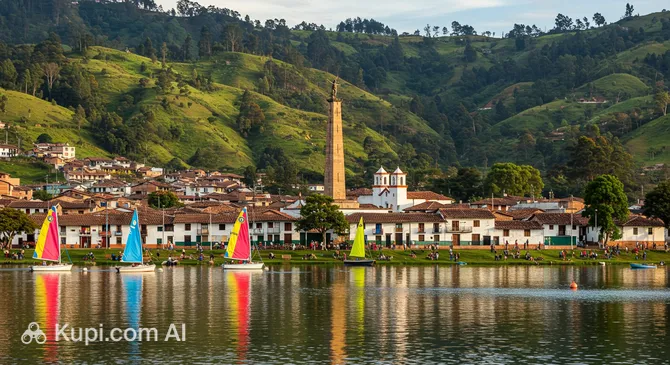
Paipa is a true gem of the Colombian Andes, nestled in the picturesque department of Boyacá. Located at an altitude of approximately 2,525 meters above sea level, this city attracts travelers with its peaceful atmosphere, green hills, and pristine mountain air. As a key tourist center in Colombia, Paipa harmoniously combines the tranquility of provincial life with a developed infrastructure for a comfortable holiday.

Paipa. Illustration.
Source: Kupi.com AI

The heart of the city is the scenic Sochagota Lake, whose shores are the center of resort life. Here, you can enjoy leisurely walks along the promenade and visit the famous thermal springs, which are the main draw for many tourists. With a population of about 32,000, the city maintains a cozy atmosphere where locals are always happy to share their cultural traditions with guests.

A trip here would be incomplete without diving into the cultural context: the fascinating history of Paipa will help you better understand the character of this region and its significance as an administrative hub. This is an ideal destination for those seeking a balance between active educational tourism and a relaxed holiday in the lap of nature.

Weather Overview

The climate in this region is remarkably consistent, making trip planning quite predictable at any time of year. Thanks to its location in the Andes, an atmosphere of a cool "eternal spring" prevails here, without sweltering heat or severe frosts.

The average air temperature remains steady at +14°C. During the day, the air usually warms up to a comfortable +18°C... +20°C, which is ideal for outdoor activities; however, the nights always bring a chill, with temperatures dropping to +9°C... +10°C. Expect moderately warm days and fairly cool evenings, so a warm sweater in your luggage will not be out of place.

A characteristic feature of the local climate is the high frequency of precipitation. Rain is a frequent guest here: the number of rainy days varies from 17 in January to 30 in May and October. Nevertheless, the total volume of precipitation remains low, often manifesting as light drizzle or mists that give the landscapes a special atmosphere. To choose the perfect dates for your visit, we recommend checking what weather in Paipa is expected during your vacation.

Average monthly temperature

Average monthly precipitation

Interesting Facts

Beyond its main attractions, Paipa holds many fascinating secrets that make a visit truly memorable. The city wonderfully combines a heroic past, mystical legends, and vibrant cultural traditions.

  • Record-Breaking Monument. Near the city, on the Pantano de Vargas field, stands the Lanceros monument, which is considered the largest equestrian statue in the world. This grand memorial commemorates the decisive 1819 battle for Colombia's independence.

  • Legends of Sochagota Lake. The waters of this scenic lake are shrouded in the secrets of the Muisca indigenous people who once inhabited these lands. According to local beliefs, ancient golden idols are hidden at the bottom, and the lake itself is a place of power that still inspires mystical stories.

  • Thermal Water Festival. The healing springs are so revered here that a separate festival is held in their honor. During these days, Paipa transforms into one large fair, where bathing in mineral pools is accompanied by folk festivities, songs, and dances.

  • Musical Soul. The city is famous for its creative heritage and often serves as a venue for folk music festivals. It is believed that the unique atmosphere of Paipa has inspired many of the country's famous poets and musicians.

How to Get There

When planning a trip to this picturesque corner of the Boyacá department, it is important to think through your logistics in advance, as there is no direct air service to the city. You can study all ways to get to the city in more detail on a dedicated page, and below we will look at the main options for arriving through the nearest transport hubs.

Since there is no airport in Paipa itself, most travelers choose to fly into the country's capital. The main air gateway is El Dorado Airport (IATA: BOG), located in Bogotá. This is the largest international hub, receiving flights from all over the world. The distance to Paipa is about 165 km, so after landing, you will have a land journey ahead. A trip by taxi or transfer will take approximately 4 hours and 30 minutes, depending on traffic when leaving the capital.

An alternative option could be a flight to El Yopal Airport (IATA: EYP), located in the city of Yopal. Although this hub is much smaller than the capital's, it is closer — about 96 km from Paipa. Travel time by car from here is approximately 2 hours and 45 minutes. You can also consider Palonegro International Airport (IATA: BGA) in Bucaramanga (about 149 km), which is roughly a 4-hour drive away.

For clarity, here is summary information on the main airports through which you can build your route:

AirportPassenger trafficDistance
San Gil (Los Pozos)90 km
El Yopal Airport448 70096 km
Palonegro International Airport2.2 mln149 km
El Dorado International Airport45.8 mln165 km
La Vanguardia Airport471 134187 km

Railway communication in this region is practically non-existent for passenger transport, so after arriving in one of the neighboring cities, the main way to reach Paipa remains the road. The most popular route is from Bogotá: comfortable intercity buses depart regularly from the capital's terminal. Taking a bus is a great opportunity to enjoy the scenic views of the Andes and the colorful landscapes of the Boyacá department.

Main Attractions

Paipa is a city where history intertwines with natural beauty, offering tourists a unique itinerary ranging from colonial architecture to relaxing natural spas. Here are a few places you should definitely include in your visit.

Sochagota Lake. This picturesque body of water is the center of the city's tourist activity. The lake is perfect for water sports enthusiasts: you can go kayaking, water skiing, or simply take a boat ride while enjoying the views of the surrounding mountains. A well-maintained promenade stretches along the shore, becoming a favorite spot for morning jogs and romantic evening strolls. The atmosphere here is always lively yet conducive to relaxation.

Thermal Springs. Paipa's signature attraction, drawing travelers from all over the country. The local mineral waters are famous for their healing properties and rich composition. There is a large municipal complex in the city where visitors can enjoy pools with varying water temperatures, hydro-massage, and medicinal muds. It is the perfect place to recharge and relax after a busy day.

Pantano de Vargas. One of the most impressive historical memorials in Colombia, located just a few kilometers from the city. This site is dedicated to the famous battle of 1819, which played a key role in the struggle for independence. The complex's main highlight is the grand "Lanceros" sculpture composition, created by master Rodrigo Arenas Betancur. The scale of the monument and the beauty of the surrounding landscape leave a lasting impression on every guest.

Hacienda Salitre. A gem of colonial architecture recognized as a national monument. This magnificent mansion, built in the 18th century, has preserved the spirit of a bygone era with its elegant balconies, cozy courtyards, and ancient chapel. History says that Simón Bolívar himself stayed here. Today, the hacienda functions as a hotel, but its grounds and architecture attract all lovers of history and aesthetics.

Local Cuisine

The gastronomic culture of Paipa is a reflection of the generous nature of the Boyacá region. The local cuisine is famous for its naturalness: most dishes are prepared from the freshest products grown on nearby farms. There is a cult of hearty, "cozy" food here, which perfectly warms you up in the cool mountain climate of the Andes.

The undisputed favorite on the menu is trucha (rainbow trout). The fish is caught directly in Sochagota Lake, so its taste always remains delicate and rich. Local restaurants will offer you many variations of this dish: from classic grilled trout to exquisite options baked with aromatic herbs or served under a creamy garlic sauce. This dish is considered a true gastronomic hallmark of the city.

The famous Paipa Cheese (Queso Paipa) deserves special attention. It is a semi-hard cheese with a characteristic salty taste, produced according to ancient recipes. It is served not only as a standalone snack but is also used as a key ingredient in many traditional treats. Be sure to try the local arepas — corn cakes generously filled with this melted cheese or butter.

For a hearty lunch, locals often choose ajiaco — a thick and rich soup. It includes chicken, several types of potatoes, and corn, with a special aroma provided by the local guascas herb. This dish gives a sense of home warmth and satiety for a long time.

For those with a sweet tooth, Paipa offers its own unique combinations. The most famous local drink, which may surprise tourists, is hot chocolate with cheese. Pieces of salty cheese are placed directly into a cup of sweet cocoa, where they melt, creating an unusual but beloved Colombian contrast of flavors. The drink is often served with buñuelos (cheese fritters) or traditional boiled condensed milk — arequipe.

The food culture in the city is very democratic. You can enjoy haute cuisine in restaurants overlooking the lake or have a snack at colorful farmers' markets and street stalls selling freshly squeezed juices from exotic fruits. Furthermore, Paipa regularly hosts gastronomic festivals where talented chefs demonstrate their skills, turning food into a real celebration.

Travel Tips

Welcome to cozy Paipa! To ensure your journey to the thermal springs and Sochagota Lake is as comfortable and carefree as possible, we have prepared a list of useful recommendations to help you feel at home and avoid common tourist mistakes.

  1. Clothing and Essentials. Mountain weather is changeable, so dress in layers: a t-shirt, a sweater, and a light jacket. It can be warm during the day, but evenings are always cool. The most important items in your suitcase are a swimsuit and a swim cap, as you might not be allowed into some thermal pools without them. Also, bring comfortable shoes for walking on cobblestones and the promenade.
  2. Transport. Paipa is a compact city, and the historic center is pleasant to explore on foot. For trips to the lake or distant hotels, it is most convenient to use official yellow taxis — they are inexpensive and safe. Taxi apps here are not always stable, so it is more reliable to ask the hotel reception to call a car or find one at the stand near the main square.
  3. Finances. The national currency is the Colombian peso. Large hotels and restaurants accept cards, but you will need cash to buy the famous cheese, souvenirs at the market, or for small services. ATMs (cajeros automáticos) are concentrated in the city center. Tips are often included in the bill as "servicio voluntario," but if not, it is customary to leave about 10%.
  4. Health and Safety. The city is at a high altitude (over 2,500 meters), so on the first day, you might experience slight shortness of breath — don't overexert yourself and drink plenty of water. The mountain sun is very active: be sure to use sunscreen even in cloudy weather. Paipa is considered one of the safest cities in the region, but standard precautions (watching your bag, not showing large sums of cash) still apply.
  5. Communication. The primary language is Spanish. English is not understood everywhere, mostly only by staff at large resort hotels. We recommend downloading an offline translator and learning a few basic phrases. For connectivity, it is best to buy a SIM card from Claro or Movistar (do this in advance in Bogotá or a large city, as it's harder to find an office in small towns).
  6. Local Etiquette. Residents of the Boyacá department are known for their politeness and conservatism. It is customary to say hello (Buenos días/tardes) when entering a shop or an elevator. A unique feature of the region is the address "Sumercé" (a contraction of "su merced" — your mercy), used instead of "usted." Be friendly, and the locals will respond with sincere hospitality.
  7. What to Avoid. Don't go for an evening walk in light clothing (shorts and a tank top) — the temperature drops quickly, and you risk getting cold. Also, avoid showing impatience: the rhythm of life here in the Colombian countryside is steady and calm ("tranquilo"), so rushing and irritability may be perceived as rudeness.
  8. Tip for Foodies. When buying local "Queso Paipa," note that it comes in different degrees of aging. Don't hesitate to ask for a sample before buying at the market. Also, keep in mind that on Sundays and holidays, the city fills with tourists from other regions, so it is better to book tables in popular restaurants by the lake in advance.

We hope these tips help you plan the perfect holiday. Paipa is a place where time slows down, so relax, breathe in the fresh mountain air, and enjoy every minute of your stay in Colombia.

Entertainment & Nightlife

Nightlife in Paipa, much like the city itself, has its own unique, calm, yet soulful rhythm. You won't find massive techno clubs or noisy raves until dawn here. Evening leisure in this corner of Boyacá primarily consists of cozy bars, live "crossover" music (a mix of salsa, merengue, and vallenato), and warm gatherings with friends. A key feature of local recreation is the cool climate, which dictates its own rules: parties are often accompanied by warming drinks and warm clothing.

In the evenings, two main areas traditionally serve as hubs of activity. The first is the historic center around the main square (Parque Jaime Rook). Here, on Calle 25 and Carrera 19, you'll find small bars and cafes where locals like to unwind. The atmosphere is casual and authentic. The second area is the Sochagota Lake zone and the sector known as "Puerto Paipa." This is a more tourist-oriented spot with restaurants and bars overlooking the water, attracting a diverse crowd of resort guests.

Regarding specific venues, it's worth checking out establishments located near the promenade and major hotels. For instance, restaurants and bars in the Puerto Paipa area often feature live music on weekends and excellent cocktails. Another major attraction is the Concha Acústica Valentín García — an open-air concert venue that regularly hosts cultural events, festivals, and concerts that often last late into the evening.

The atmosphere in Paipa's venues is very friendly and relaxed. The dress code is casual almost everywhere, but with a nod to the weather: an elegant sweater or jacket will be much more appropriate than a light dress. In the bars, be sure to try the traditional warming drink of the Andes — canelazo. This is a hot cocktail based on sugarcane spirit (aguardiente), water, cinnamon, and sugar, perfect for the local cool nights. Local beer and, of course, Colombian rum are also popular.

Daytime entertainment in the city is more low-key and cultural. In addition to relaxing at the thermal springs, tourists can visit Casona El Salitre — a historic manor with magnificent architecture — or stroll through the well-kept alleys of Jaime Rook Park. For art lovers, small galleries in the center occasionally open their doors, and street musicians and theater groups often perform in the square.

Practical Tips and Safety:

  • Opening Hours: Most bars open around 6:00 PM and stay open until 1:00 AM or 2:00 AM, especially on Fridays and Saturdays. On weekdays, the city goes to sleep quite early.
  • Transport: It is best to travel between the city center and Sochagota Lake at night by taxi. A walk can take about 30–40 minutes along stretches of road that are not always well-lit. Taxis are inexpensive and easy to call via hotel reception or find at a stand in the center.
  • Safety: Paipa is a safe city, and walking around the center in the evening is quite comfortable. However, as with everywhere, exercise common sense: do not leave belongings unattended and avoid unlit outskirts alone.
  • Prices: The cost of leisure here is lower than in Bogotá or Cartagena. A cocktail or beer in a bar will be reasonably priced, making nightlife accessible to most travelers.

Parks & Museums

Paipa offers travelers a harmonious blend of natural beauty and deep historical heritage. Although the city is primarily famous for its thermal springs, its green zones and commemorative sites deserve the attention of anyone who wants to not just relax, but to touch the soul of the Boyacá region.

Jaime Rook Park (Parque Jaime Rook). The city's central square is not just an administrative center, but a true green oasis and the heart of social life. The park is named after the Irish colonel, a hero of the war for independence, whose statue adorns the site. It is pleasant to stroll in the shade of well-kept trees here, admiring the fountain and the majestic Cathedral of Saint Michael the Archangel. This is an ideal location to feel the steady rhythm of local life and enjoy the colonial atmosphere.

Sochagota Lake Green Zone. A vast natural area has formed around the city's main body of water, making it excellent for ecotourism. The promenade known as the "Jarillón" is particularly noteworthy, where you can take long walks or go cycling surrounded by mountain landscapes. The fresh air and views of the water make this one of the most peaceful corners in the area.

The cultural and historical heritage of Paipa is inextricably linked to the struggle for freedom, and local attractions serve as living witnesses to those events.

Pantano de Vargas Memorial. Although technically an open-air monument, its significance and scale surpass many museums. It is a grand complex dedicated to one of the bloodiest and most important battles for independence, which took place in 1819. Visitors can not only see the impressive "Lanceros" sculpture group but also explore the historical milestones of that period while walking through the extensive memorial grounds.

Casona El Salitre. This 18th-century architectural masterpiece is a national monument and a true portal into the colonial past. The building, with its authentic balconies, courtyards, and chapel, has been preserved in magnificent condition. History tells us that Simón Bolívar stayed here after the Battle of Pantano de Vargas. Although the hacienda now functions as a historic hotel, its architecture and atmosphere attract history enthusiasts as a museum-like site.

For those seeking less obvious routes, we recommend the Ranchería Natural Reserve (Reserva Natural Ranchería). This place is slightly off the main tourist paths and offers immersion in the ecosystem of the Andean high-mountain forest. Here you can see the unique flora of the region and enjoy silence broken only by birdsong — a great option for fans of trekking and solitude.

Getting Around

Since Paipa is a relatively small and compact city, there is no complex system of subways, trams, or trolleybuses. The primary means of transportation for both locals and tourists remains buses and shared taxis, which run along the main streets and connect the historic center with the resort zone by Sochagota Lake and surrounding neighborhoods.

Public transport is mainly represented by small buses, known here as "busetas" or "colectivos." They often do not have strictly fixed stops with shelters: to board a bus, you simply need to wave your hand to the driver on a safe stretch of road. On the vehicle's windshield, there are usually signs indicating key points on the route, such as "Termales" (Thermal Springs), "Lago" (Lake), or "Centro" (Center).

The fare payment system is as simple and conservative as it gets: there are no complex transport cards, passes, or mobile apps for validation. Payment is made exclusively in cash to the driver or conductor upon boarding. The fare is fixed and very affordable, so tourists are strongly advised to change large bills in advance and always carry small change in local currency.

The public transport schedule is generally geared toward daylight hours. Buses start running early in the morning, around 6:00 AM, and finish around 8:00 PM or 9:00 PM. Service intervals on popular routes are short, with waits rarely exceeding 15–20 minutes; however, transport may run less frequently on weekends and holidays. If you are planning a late dinner or a night walk, it is better not to rely on the bus for the return trip.

The most popular and comfortable alternative to public transport is the official yellow taxi. This is the most reliable way to reach distant attractions, such as the Pantano de Vargas monument, or to return to your hotel late at night. Vehicles are generally equipped with meters, but for trips outside the city, fixed rates often apply, which should be agreed upon with the driver before getting in. Taxis are easy to find at designated stands near the main square, or you can ask the hotel reception to call one for you.

Bicycle rentals are also gaining popularity in the city, especially around the Sochagota Lake promenade, where convenient paths have been laid out. This is a great option for those who want to combine travel with sightseeing in nature. Within the historic center itself, distances are so small that most tourists prefer to get around on foot, enjoying the architecture and atmosphere of the city without needing to use transport.

Accommodation

Paipa offers travelers a wide range of accommodation options to suit every taste and budget. The city's hotel infrastructure is well-developed due to its status as a popular thermal resort. Here you can find everything from affordable family hostels and cozy guesthouses to luxury spa resorts and historical haciendas converted into elite hotels.

When choosing accommodation, tourists usually focus on two main areas, each offering its own style of relaxation:

  • Sochagota Lake Zone (Zona Turística). This is the most prestigious and picturesque area, located along the shoreline. This is where large resort complexes and high-class hotels are concentrated. The main advantage of staying here is the stunning views of the water and mountains, as well as the presence of private thermal pools on the grounds of many hotels. This is an ideal choice for those seeking relaxation, spa treatments, and privacy.
  • Historic Center (El Centro). If you prefer to be in the heart of the action, closer to the main square, shops, and affordable restaurants, you should choose a hotel within the city limits. Budget hotels and hostels predominate here. Staying in the center is convenient for logistics: it's easy to get to the bus terminal, and prices are significantly more affordable than in the resort zone.

A special category of accommodation in Paipa is colonial hotels. The region has preserved old estates where you can live in an 18th-century atmosphere, enjoying architecture with courtyards and fountains, while still having modern comforts. Such places are often chosen for romantic trips or celebrations.

Booking Tip: Paipa is a favorite vacation spot for residents of the capital, so during weekends and public holidays ("puentes"), demand for accommodation rises sharply. To guarantee a room with a lake view or a room in a good hotel at a reasonable price, it is highly recommended to book your accommodation 2–3 weeks before your trip, especially if your visit falls during the high season (December–January, Easter week).

The price range varies from budget (economy options in the center) to high (luxury segment by the lake). Most large hotels and resorts are listed on international booking platforms where you can easily pay for your stay by card. However, for small family hotels in the city center, it is sometimes more profitable and reliable to contact them directly via messaging apps or by phone, and they may only accept cash payments.

Nearby Cities

For those who want to explore the surrounding area, Paipa serves as an excellent starting point for day trips to several interesting nearby locations:

CityPopulationDistance
Duitama126 67010 km
Tibasosa14 06313 km
Tuta9 67316 km
Santa Rosa de Viterbo11 32918 km
Nobsa16 27119 km

These nearby destinations provide insight into the diverse culture and landscapes of the region. Here are a few ideas for an exciting short trip:

Villa de Leyva. This town, located less than an hour's drive away, is considered one of the most beautiful colonial settlements in South America. The main attraction is the huge paved Plaza Mayor, surrounded by white-washed buildings with tiled roofs. People come here to immerse themselves in the atmosphere of the past, visit paleontological museums with ancient fossils, and enjoy exquisite gastronomy.

Tunja. The capital of the Boyacá department is only 37 km to the south. This is a city with deep historical roots, where the modern rhythms of student life coexist with majestic temples and 16th-century mansions. Tourists will find it interesting to visit the central Bolívar Square and the house of the city's founder to better understand the region's colonial heritage.

Duitama. Paipa's nearest neighbor, known as the "Pearl of Boyacá." The main tourist draw here is "Pueblito Boyacense" — a unique architectural complex where the most beautiful villages of the region are recreated in miniature. It is the perfect place for colorful photos and getting to know the architectural traditions of the department without having to travel across it entirely.

Shopping & Souvenirs

Shopping in Paipa is, first and foremost, a fascinating immersion into the traditions and crafts of the Boyacá region. Unlike large metropolises with their endless malls, this cozy city offers tourists a more soulful and authentic experience. People shop here not for brands, but for unique handmade items and gastronomic delicacies for which this part of Colombia is famous. Browsing the shops here feels like visiting old friends: the sellers are friendly, and the goods carry the warmth of human hands.

The city's main commercial life is concentrated in the historic center, around the main square and adjacent blocks. Strolling along Calle 25 and Carrera 19, you will find many small shops offering textiles, footwear, and souvenirs. Another important direction for shopping is the road leading to Sochagota Lake: here you'll often encounter shops with beach supplies for the thermal springs and kiosks with local sweets aimed at vacationers.

Although Paipa is not a center of the fashion industry, there are several small shopping complexes for convenient purchases. One of them is Centro Comercial Paipa Plaza. This is a compact shopping center where you can find clothing stores, pharmacies, ATMs, and small cafes. It is perfect for picking up travel essentials or just taking a break while walking through the city.

The true flavor of local commerce is revealed in the markets. The main city market (Plaza de Mercado) is a place that foodies must visit. It is especially lively on market days (usually weekends), when farmers from all around bring the freshest fruits, vegetables, and homemade products. This is the best location to try exotic Andean fruits and observe the daily life of the townspeople.

The choice of souvenirs in Paipa will delight those who appreciate quality and taste. The hallmark of the city is the famous Paipa Cheese (Queso Paipa), which has a protected designation of origin — you can buy it both at the market and in specialized stores. The region is also famous for its wool products: warm ruanas (Colombian ponchos), scarves, and hand-knitted hats will not only be a great gift but also a lifesaver on cool evenings. Those with a sweet tooth should bring home some arequipe (local boiled condensed milk) and traditional almojabanas cookies.

Most shops in the city center open around 9:00 AM and work until 7:00 PM or 8:00 PM. On Sundays and holidays, hours may be reduced. As for payment, credit cards are accepted without issues in supermarkets and hotels; however, in souvenir shops, at the market, and in small cafes, cash pesos are preferred. We recommend always having small bills with you, as sellers do not always have change for large banknotes.

The Tax Free system in Colombia is available for foreign tourists, but it is quite difficult to use in Paipa. Most local craft shops are small businesses and rarely participate in this program. If you plan on making major purchases with the hope of a VAT refund, it is better to do so in the large shopping centers of Bogotá or at official duty-free shops before departing the country.
Nearby cities

Reached the end of the page?

That means the route is fully explored