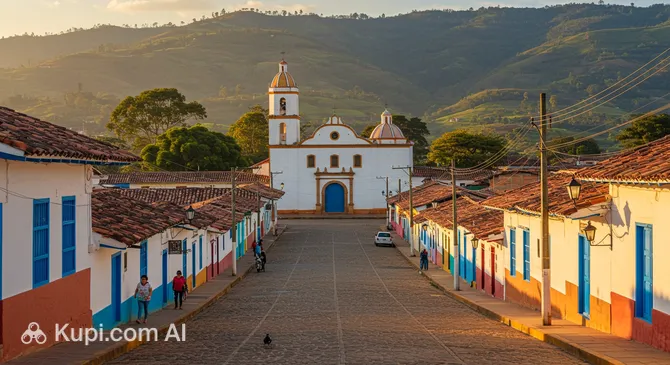
Located in the heart of the Huila department, Palermo is an authentic corner of Colombia where a traditional agrarian lifestyle is closely intertwined with industrial development. The town is permeated with an atmosphere of industriousness and tranquility typical of the country's southern regions. While some sources may show inflated population figures, the actual number of inhabitants is around 27,000 people, allowing the municipality to retain the charm of a cozy provincial town.
Geographically, the town occupies a favorable position in the Andean zone, sitting at an altitude of about 900 meters above sea level. This has largely defined its economic landscape: the history of Palermo is inseparable from the cultivation of fertile lands and the region's rich natural resources. The town is known as an important center for the production of rice and high-quality coffee, which is valued far beyond the department's borders.
Palermo. Illustration.
Source: Kupi.com AI
One of Palermo's main features is its rich deposits of marble, limestone, and dolomite, which have earned the municipality its status as a regional industrial leader. For tourists, the town is primarily interesting as a starting point for exploring coffee plantations and unique landscapes. We invite you to visit this hospitable place to see the real, non-touristic Colombia and enjoy its natural wealth.
Weather Overview
Palermo is located in a tropical climate zone, which, thanks to its altitude of about 900 meters above sea level, remains moderately warm and fairly stable throughout the year. The average air temperature here fluctuates around +23°C, creating comfortable conditions for both living and agriculture.
When planning a visit, consider the division into dry and wet seasons. The driest months are January, February, as well as July, August, and September. During this time, the weather in Palermo is most favorable for walking and exploring the surroundings, although the daytime heat can reach +28...+30°C. The most intense rains usually occur in April and November.
The nature of precipitation in the region is often torrential: short but heavy rains are followed by bright sunshine. The humidity here is typical of the Andean zone, which promotes lush greenery. Tourists are advised to always carry sunscreen and a light raincoat so that the whims of tropical nature do not catch them off guard.
Average monthly temperature
Average monthly precipitation
Interesting Facts
The town was founded on January 7, 1774, and originally bore the long name Santa Rosalía de Guagua, which was changed to the more familiar Palermo only in 1906.
The municipality holds the unofficial title of the "Marble Capital of Huila" due to the colossal reserves of marble, limestone, and dolomite in its subsoil.
Palermo emerged from large 17th-century colonial haciendas, which laid the foundation for the region's agrarian power in cattle ranching.
Despite its industrial status, the town is surrounded by fertile lands perfectly suited for growing elite varieties of Colombian coffee and rice.
The actual population is about 27,000 people, making the town compact and convenient for a quick introduction to the lifestyle of the department.
How to Get There
Palermo is located in the southwestern part of Colombia and is an important hub in the Huila department. The easiest way to get here is from the regional capital—the city of Neiva, which is located about 18 kilometers away. The main modes of transport connecting it to the outside world are intercity buses and private cars traveling along scenic roads through mountains and plantations.
For those planning a trip to Palermo by air, the nearest aviation hub is the airport in Neiva. From there, you can easily reach the town by taxi or regular bus. The journey from remote regions of the country can take 4 to 6 hours, depending on the state of the road infrastructure and traffic, which can be quite heavy due to the transport of agricultural goods and marble.
Railway communication in this area is poorly developed, so the main focus should be on road transport. Travelers are advised to check bus schedules in advance, especially if the trip is planned for weekends or holidays. Roads in the Huila department are famous for their views but require attentiveness due to the mountainous terrain.
Station
Passenger traffic
Distance
Usaquen station
1
253 km
Main Attractions
In Palermo, you won't find the standard set of tourist attractions, as the town lives to the rhythm of an industrial and agricultural hub. Nevertheless, a walk through its streets allows you to feel the true spirit of the Huila region. The center of social life is the main square, surrounded by administrative buildings and a local market where a lively trade in fresh produce takes place.
For those interested in geology and industry, the marble quarries can be of great interest. Palermo is deservedly considered the "marble capital" of the department, and the sight of these majestic excavations is impressive in its scale. Visiting such sites usually requires prior coordination with local companies, but it allows you to see the process of extracting the precious stone from the inside.
The surrounding countryside offers tourists a chance to immerse themselves in the world of coffee traditions. Numerous haciendas and farms specializing in coffee and rice cultivation reflect the foundation of the region's prosperity. A walk among the plantations is an excellent opportunity to learn about the coffee bean's journey from bush to cup and to enjoy the scenic views of the Andean foothills.
Local Cuisine
The local cuisine of Palermo is an ode to the traditions of Andean Colombia. The diet here is based on rice, corn, beans, and meat, prepared according to simple but hearty recipes. The main gastronomic symbol of the town is rightfully coffee. Thanks to the region's unique soils, the beans grown here have a rich flavor, and a cup of freshly brewed coffee in a local cafe will become a mandatory ritual of your morning.
Among the dishes worth trying are traditional arepas (corn cakes) and the famous Bandeja Paisa—a generous assortment of meat, rice, eggs, and avocado that will provide an energy boost for the whole day. Thick soups made from local vegetables are also popular in Palermo, often served for lunch in small restaurants where the locals themselves eat.
The dining culture here is without pretense: the best dishes can be found at the local market or in local eateries. Freshness of products and a home-cooked approach are highly valued here. As a souvenir from Palermo, you should definitely bring back a pack of local coffee or try sweets made from cane sugar (panela), which are loved by both children and adults.
Travel Tips
Preparing for a trip to Palermo requires a practical approach, as this town lives by its own special, hardworking rhythm. These tips will help you feel confident and get the most out of exploring the Huila region.
Clothing and gear: Choose light clothing made of natural fabrics, as warm weather prevails in the town. Be sure to bring comfortable closed-toe shoes for walking on uneven terrain and sunglasses.
Transport: The most popular way to get around is by moto-taxis. If you prefer comfort, order a regular taxi through the receptionist at your accommodation or use verified apps in neighboring Neiva.
Finances: Colombian pesos in cash are necessary in Palermo. Cards are only accepted in large stores, and ATMs may not always be available or may work intermittently.
Health and Safety: The town center is quite safe during the day. However, avoid walking on the outskirts and after dark. Always drink only bottled water.
Communication: English is practically non-existent here. Learn basic phrases in Spanish—this will significantly simplify communication with locals and win their favor.
Local Etiquette: In Colombia, it is customary to greet and say goodbye politely. A simple "Buenos días" (Good day) will open many doors and make communication more friendly.
What to avoid: Do not display expensive equipment or large sums of money in crowded places. It is also not recommended to discuss political topics or internal regional issues.
Additional tip: Be sure to visit a local coffee shop in the morning. This is the best way to start the day just like the residents of Palermo do.
May your journey to this authentic corner of Colombia be a discovery of a new, real, and very hospitable country!
Entertainment & Nightlife
Entertainment in Palermo is of a quiet and local nature, focused on the needs of the local population. There are no large nightclubs or noisy concert venues, making it an ideal destination for those seeking peace and authenticity. Evening life centers around small family cafes and bars in the center, where residents gather to discuss the news over a cup of coffee or a cold drink.
For those seeking a more active nightlife with dancing and modern restaurants, it is recommended to head to nearby cities such as Neiva. Most cultural events in Palermo itself are related to local festivals and fairs, which take place according to the agricultural calendar and are accompanied by traditional music.
Daytime activities are mostly centered around outdoor relaxation. On weekends, locals often head out to countryside farms or spend time in the squares, enjoying family company. Safety in the town during the day is at a good level; however, for night walks, it is better to choose well-lit central streets or use the services of verified taxi companies.
Parks & Museums
Greenery in Palermo is functional in nature: the town's main green zones are small, cozy squares and gardens near administrative buildings. The main place for residents to relax is the central square, where tall trees provide pleasant shade on hot days. This is the best place to observe the unhurried rhythm of local life.
While there are no major world-class museums in the town, its history is literally reflected in the surrounding architecture and landscape. For those who appreciate nature, the surrounding countryside becomes the main "open-air museum." Coffee plantations and panoramic mountain views replace classic exhibition halls, offering a first-hand look at the region's agrarian heritage.
Outdoor enthusiasts should head to the outskirts, where the natural landscapes of the Andean zone offer opportunities for light hikes. Despite its industrial leaning, Palermo is surrounded by picturesque valleys that are especially beautiful at dawn or sunset, when the sun paints the marble slopes of the mountains in soft tones.
Getting Around
The transport system in Palermo is characterized by the simplicity and specificity typical of small Colombian towns. The main means of transport within the town are moto-taxis. This is a fast and affordable way to get anywhere in the municipality; however, tourists should agree on the price of the trip in advance, as meters are usually not used here.
Public buses mainly connect Palermo with neighboring settlements such as Neiva and Garzón. Their regularity can vary, so it is better to plan trips for the first half of the day. Within the town itself, most points of interest are within walking distance, allowing for pleasant strolls through the central streets.
For more comfortable and safe trips around the region, travelers are recommended to rent a car or use official taxi services via mobile apps (if available in the region). Keep in mind that roads can be busy with heavy trucks carrying marble, so travel times may increase slightly during peak hours.
Accommodation
Since Palermo is not a mass tourist center, the accommodation infrastructure consists mainly of modest options. Guests can expect small guest houses, hostels, and private apartments, which are most often oriented toward visiting specialists and business travelers involved in the marble industry.
For a more comfortable stay, many travelers prefer to stay in neighboring cities like Neiva, where the choice of hotels is significantly wider—from budget options to mid-range chain hotels. Nevertheless, staying in Palermo itself provides an opportunity to fully immerse yourself in local life and feel the flavor of the Colombian province.
If you decide to stay in town, it is recommended to book your accommodation in advance by contacting owners directly or using international platforms. The price range here is very affordable, and the hospitality of the local hosts often compensates for the lack of fancy amenities. During peak harvest periods, hostel beds may be in high demand by seasonal workers.
Nearby Cities
Thanks to its location in the Magdalena River valley, Palermo serves as a convenient jumping-off point for exploring the surrounding settlements of the Huila department. Nearby towns offer a variety of experiences—from cultural leisure to visiting thermal springs and natural parks typical of the Andean landscape.
Just 18 kilometers away is Neiva—the bustling capital of the department, where you can find museums, large shopping centers, and excellent restaurants. Another interesting destination is Rivera, known for its hot springs, and the picturesque Teruel, which preserves the spirit of the colonial era. It is also worth noting Garzón, another significant agricultural center of the region.
We strongly recommend setting aside time to explore the surroundings of Palermo. Trips to nearby municipalities will allow you to see the diversity of Colombia's nature and get to know the hospitality of the Huila department residents, which is evident in every small town along your way.
Shopping & Souvenirs
Shopping in Palermo is primarily focused on practical needs and the purchase of local delicacies. You won't find huge shopping malls here, but you can enjoy the atmosphere of traditional Colombian markets. Small shops offering clothing, shoes, and household goods, which are in demand among locals, are located on the central commercial streets.
The main purchase in Palermo will undoubtedly be the local coffee. Beans grown on the Huila plantations are considered some of the best in the country. It is also worth paying attention to marble and stone products—local craftsmen create small souvenirs and interior items that will serve as a unique reminder of the "marble municipality."
For serious fashion shopping and branded items, it is better to head to nearby Neiva. In Palermo itself, focus on authentic goods: handicrafts, locally produced rice, and fresh fruit. Most shops are open from morning until early evening, and cash pesos are the most common form of payment.