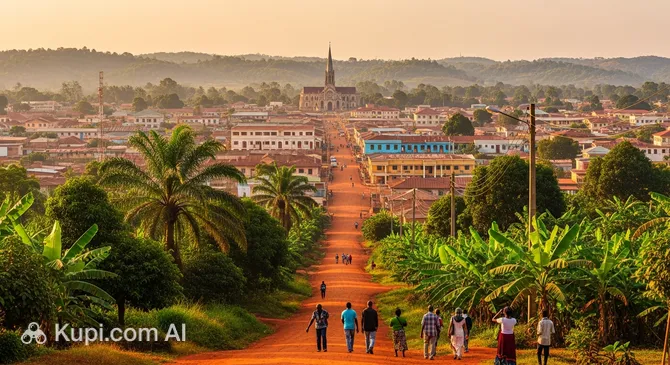
Kabinda is a vibrant city in the heart of the DR Congo, serving as the administrative center of the Lomami Province. Located in the south-central part of the country, this city is an important commercial and cultural hub for the entire region. Unlike large metropolises, Kabinda retains the atmosphere of a true African provincial town, where traditions are closely interwoven with daily life.
Kabinda. Illustration.
Source: Kupi.com AI
The city is located in a tropical savanna climate zone, which shapes its natural landscape and the rhythm of life for its population of approximately 244,000 people. Kabinda attracts the attention of researchers and travelers for its unique role in the historical development of the region, having grown from a small settlement into a significant center of provincial importance.
Among the city's key features is its educational and religious significance. It is home to important educational institutions and spiritual centers that shape the intellectual character of the province. Kabinda invites those who want to see the real life of the Congo, experience the hospitality of the local people, and explore corners of Africa untouched by mass tourism.
Weather Overview
The weather in Kabinda is typical of the tropical zone with clearly defined seasons. The typical climate of the region is characterized by consistently high temperatures throughout the year, usually ranging from 20°C at night to 32°C during the day. Its proximity to the equator provides the city with plenty of sunlight and high humidity.
The year is divided into a rainy season, lasting from October to April, and a dry season from May to September. Expect hot and humid summers with intense but often short tropical downpours, while the winter months bring long-awaited dryness and a slight drop in nighttime temperatures. The heaviest rainfall usually occurs in November and December, which should be taken into account when planning trips to the surrounding areas.
Average monthly temperature
Average monthly precipitation
Interesting Facts
Kabinda is the official capital of the Lomami Province, which was established as a separate administrative unit during the 2015 territorial reform.
The city is a major center for education in the region: it is home to the University of Kabinda (UNIKAB), which attracts students from all over the central part of the country.
The main language of communication in the city, besides the official French, is Tshiluba (Luba-Kasai) — one of the four national languages of the republic.
Kabinda holds the status of a Catholic diocese, making it an important religious center that unites many parishes in the surrounding areas.
How to Get There
The accessibility of Kabinda largely depends on air travel, which is the most reliable way to reach this part of the country. Detailed information on routes and travel options can be found on the page dedicated to how to get to Kabinda.
The city's main transport hub is Kabinda Airport (IATA: KBN). It serves domestic flights, connecting Lomami Province with Kinshasa and other major Congolese cities. The airport is located in close proximity to the city, allowing for a quick trip to the center by taxi or private transport.
Land transport in the region is less developed due to road conditions, but Kabinda is connected by a network of roads to neighboring economic centers. The nearest major railway station is in the city of Mwene-Ditu, from where passengers continue their journey to Kabinda by car. The railway plays an important role in freight transport, providing the city with necessary goods.
Main Attractions
Although Kabinda is primarily an administrative center, it offers several significant cultural and architectural sites for visitors. The main spiritual symbol of the city is the Kabinda Cathedral (Sé Catedral de Cabinda). This majestic structure in the city center serves not only as a place of prayer but also as an important landmark reflecting the architectural traditions and historical heritage of the region.
For those interested in the country's intellectual life, the University of Kabinda campus is a noteworthy site. This is the province's educational core, where you can sense the youth's drive for knowledge and development. A walk through the campus allows for a better understanding of modern Congolese society and its prospects.
The natural beauty surrounding the city is equally attractive. The outskirts of Kabinda feature picturesque landscapes of the Congo River basin with its rich flora. While the city is an industrial and transport hub, its proximity to tropical forests and river arteries makes it interesting for ecotourism enthusiasts wanting to see rare bird species and exotic plants in their natural habitat.
Local Cuisine
The gastronomy of Kabinda is a vivid reflection of the culinary traditions of the Luba people. The diet is based on hearty and nutritious dishes, led by fufu — a thick paste made from cassava or corn flour. Fufu is traditionally served with various sauces and stews, the most popular being those made with cassava leaves (mpunda) or peanut paste.
A must-try specialty of the region is poulet à la moambe (chicken moambe). It is simmered in a thick sauce made from the pulp of oil palm fruits with added spices, giving the meat a unique, rich flavor. Thanks to the proximity of rivers, fresh or dried fish often appears on the local menu, grilled over coals with local seasonings. Fried plantains are frequently served as a side dish.
Food culture in Kabinda is closely tied to street markets and small home restaurants. Locals prefer to eat with family or friends, and for tourists, a visit to a local establishment is a great way to experience authentic cuisine. Popular drinks include freshly squeezed tropical fruit juices and local beer, which perfectly complements the spicy and savory Congolese dishes.
Travel Tips
A trip to Kabinda promises to be an unforgettable adventure if you prepare in advance for the nuances of life in the Congolese hinterland. These practical tips will help you feel confident and safe during your journey.
Clothing and Essentials: Choose lightweight clothing made from natural fabrics, as the region is dominated by a hot and humid climate. Be sure to bring closed shoes for walking, sunglasses, and a wide-brimmed hat. A conservative dress code is recommended when visiting churches or official institutions.
Transport: To get around the city, it is best to use moto-taxis or book a car through your hotel's administration. Be prepared for bumpy roads, especially after rain.
Finances: The main currency is the Congolese franc, but US dollars are also widely accepted. It is recommended to carry cash in small denominations, as ATMs are rare in the city and bank cards are only accepted in the largest establishments.
Health and Safety: The Congo is a malaria risk zone, so be sure to use repellents and take preventive measures. Drink only bottled water. Observe standard precautions: do not display valuables and avoid walking in unfamiliar areas after dark.
Communication: The official language is French, but knowing a few phrases in Tshiluba (for example, the greeting "Moyo") will immediately win over the locals. English is not widely spoken, so it is useful to have an offline translator handy.
Local Etiquette: Greetings are very important in local culture. Always greet people before asking a question. Asking for permission before photographing people or their property is considered a sign of respect.
What to Avoid: Do not take photos of strategic objects (bridges, government buildings, the airport), as this may cause issues with the police. Avoid discussing political topics in public places.
Additional Tip: The best time to visit is the dry season (from May to September), when travel around the region is most comfortable and the risk of rain is minimal.
Kabinda is a city for those seeking sincerity and new discoveries. By listening to the advice of the locals and respecting their traditions, you will discover the wonderful world of central Congo.
Entertainment & Nightlife
Leisure in Kabinda is predominantly quiet and traditional, as the city is not a hub for vibrant nightlife in the classic sense. Most evening entertainment is concentrated in the center, where cozy local restaurants and bars are located. Here, you can spend time with the locals, enjoying live music in the style of Congolese rumba or soukous, which create a unique festive atmosphere.
Daytime activities often involve visiting local markets, which turn into true open-air cultural performances. Life here is bustling from early morning, and the bright colors of fabrics and the noise of trade immerse you in authentic daily life. For outdoor enthusiasts, trips to the riverbanks or walks through the picturesque surroundings where you can organize a picnic in nature are popular.
Safety in the city for evening walks is considered relatively stable, however, tourists are advised to use taxi services to move between venues after sunset. Entertainment in Kabinda is geared towards those who appreciate sincere communication, natural beauty, and the opportunity to see the everyday life of Central Africa without filters.
Parks & Museums
The natural heritage of the area surrounding Kabinda is the region's main pride. While there are no extensive landscaped parks in the city in the European sense, it is surrounded by the majestic nature of the Congo River basin. The picturesque banks of local rivers and the endless savannas serve as natural recreational zones where you can observe wildlife and enjoy the silence away from urban noise.
The cultural life of the city is focused on its architectural monuments. The Kabinda Cathedral acts not only as a religious center but also as a kind of open-air museum preserving the history of missionary work and the colonial past. Architecture of the cathedral and other old buildings in the city center allows you to trace the stages of urban development and the cultural influence of different eras.
For a deeper immersion into the region's history, it is worth visiting the lecture halls of the University of Kabinda, which often host cultural exhibitions and lectures dedicated to the traditions of the Luba people. Despite the absence of specialized state museums, the atmosphere of the city itself, its markets, and old quarters are living evidence of the rich history and identity of Lomami Province.
Getting Around
Public transport in Kabinda is primarily represented by the informal sector, which nevertheless works efficiently enough for the city's needs. The main means of transport for most residents and tourists are moto-taxis, known locally as "vewa". This is the fastest way to travel through narrow streets and between distant neighborhoods, especially in the absence of regular bus routes.
For longer distances within the city or to the nearest suburbs, minibuses and shared taxis are used. They do not have a strict schedule — departure occurs as the vehicle fills with passengers. This is a budget option that allows you to immerse yourself in local life, although the level of comfort in such transport remains minimal.
Fares are always paid in cash directly to the driver or conductor. Tourists are advised to confirm the cost of the trip in advance and carry small change. An alternative to public transport can be renting a car with a driver through a hotel — this is the safest and most comfortable way for foreign guests unfamiliar with local logistics to get around.
Accommodation
The hotel infrastructure in Kabinda is mainly geared toward business travelers, humanitarian mission staff, and government officials. There are no large international chain hotels, but there are decent local-level options. Most hotels and guesthouses are concentrated in the city center, which is convenient for accessing administrative offices and markets.
The price range for accommodation in the city varies from budget guesthouses to more comfortable hotels with basic amenities such as air conditioning and secure parking. Travelers are advised to book accommodation in advance, as the number of quality rooms is limited, especially during regional conferences or cultural events.
When choosing a place to stay, you should check for the presence of a private generator and water reserves, as temporary interruptions in the centralized supply are possible in the region. Personal interaction with the staff and the hospitality of small family hotel owners often become a pleasant addition to the trip, helping you get your bearings in the city.
Nearby Cities
Kabinda can serve as a starting point for exploring the central part of the republic, where each city possesses its own unique character and economic significance. Exploring the surroundings allows you to see a variety of landscapes — from dense forests to open savannas.
One of the most interesting destinations is Mbuji-Mayi, located approximately 99 kilometers away. This is one of the country's largest cities, known as the world capital of industrial diamond mining. It is also worth visiting Tshilenge and Mwene-Ditu, which is an important railway hub connecting the southern and central regions. These trips provide an opportunity to see the country's industrial and transport life from the inside.
Travel between these cities is usually done in SUVs or local buses. Although the roads in this part of the country can be challenging, such trips offer unforgettable impressions of African landscapes and the chance to get to know the life of small towns and villages in the Congo.
Shopping & Souvenirs
Shopping in Kabinda is primarily about experiencing traditional African markets. The most significant shopping destination is the Central Market, where the city's entire commercial life is focused. Here you can find almost everything: from fresh tropical fruits and exotic spices to bright African fabrics with unique patterns that make excellent souvenirs.
Special attention should be paid to the products of local artisans. Wood carving and weaving from natural fibers flourish in Kabinda and its surroundings. Tourists can purchase skillfully crafted masks, figurines made of ebony or sandalwood, as well as woven baskets and mats created using the ancient techniques of the Luba people. These handmade items carry deep symbolism and the cultural code of the region.
Shops in the city usually operate from early morning until sunset, and the most active trading in the markets occurs in the first half of the day. Payment is made predominantly in cash in the local currency (Congolese francs), so it is recommended to always have small bills on hand. The process of buying at the market often includes friendly bargaining, which is an integral part of the local communication culture.