Support

Kalemie Airport

About the Airport

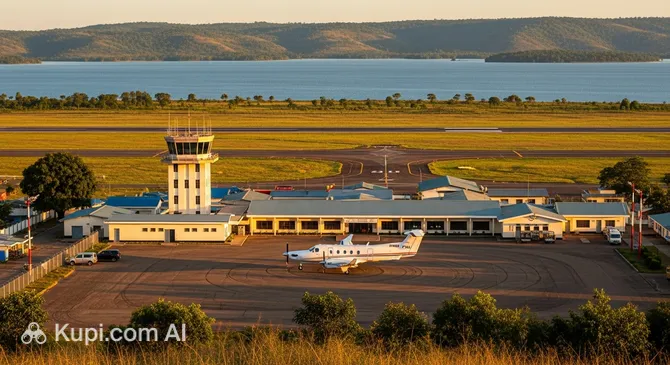
Kalemie Airport. Source: Kupi.com Binoculars

Kalemie Airport is not merely a transport hub, but a true aerial gateway to the majesty of Lake Tanganyika, one of the deepest and most picturesque bodies of water on the planet. Following a large-scale reconstruction, this harbour has become a symbol of the region's renewal, connecting the province with the country's major centres and opening a path for those seeking authentic African adventures. For the traveller, landing here marks the beginning of a fascinating immersion into the atmosphere of Eastern Congo, where wild nature exists alongside developing infrastructure.

IATA Code FMI
ICAO Code FZRF
City Kalemie
Distance to Centre ~5–7 km
Status Domestic / Regional
Annual Passengers No official data
Schedule Check official airline websites

Airport Features and Advantages

Kalemie Airport possesses a number of characteristics that make it important and convenient for travellers:

  • Strategic Location: The airport is located in immediate proximity to the city and Lake Tanganyika, ensuring not only breathtaking views during takeoff and landing but also a quick transfer to accommodation venues.
  • Updated Infrastructure: In recent years, the air harbour has undergone serious modernisation, including the extension of the runway and the renovation of technical facilities, which has increased the level of flight safety.
  • Compactness and Speed of Service: Thanks to the small size of the terminal, all pre-flight procedures, from check-in to security screening, are significantly faster and calmer than in large, congested hubs.
  • Key Regional Role: Given the complexity of ground transport in this part of the country, the airport is the most reliable and fastest way to reach Tanganyika Province from the capital Kinshasa or Lubumbashi.

Contact Information

Since Kalemie is a small regional airport, finding direct contact details can be challenging. Most flight-related issues are resolved through the airlines. Below is current information on how to obtain the necessary assistance.

  • Official Website: At present, Kalemie Airport (FMI) does not have its own official website. To clarify flight schedules and travel rules, it is recommended to refer directly to the websites of the airlines serving this airport.
  • Phone and Email: There are no direct public contacts for the airport information desk. For all questions regarding booking, check-in, or flight status, you should contact your airline's customer support service.
  • Airport Address: Kalemie Airport, Kalemie City, Tanganyika Province, Democratic Republic of the Congo.
  • Social Media: Official social media accounts for the airport are not maintained. News and updates are best tracked on the pages of air carriers.
  • Lost Luggage Information: In case of loss or damage to luggage, it is necessary to immediately contact the Lost & Found service of the airline you flew with. The carrier bears the responsibility for processing such requests.
  • Passenger Support Contacts: Assistance to passengers regarding tickets, special services, and other aspects of travel is provided directly by the airlines.

How to Get to the Airport

Getting to Kalemie Airport (FMI) from the city centre of Kalemie is quite simple thanks to its close proximity. The main modes of transport for the journey are taxis and moto-taxis, as the public transport system in the conventional sense is poorly developed here. When planning a trip, it is worth considering local specificities and agreeing on the cost in advance.

Taxi and Transfer

The most common and convenient way to reach the airport is to use taxi services. You can find a car in the city centre or ask hotel staff to assist with calling one. It is critically important to agree on the trip price with the driver before starting, as meters are rarely used. For greater comfort and safety, it is recommended to book a transfer through your hotel or a local travel agency. This is slightly more expensive but eliminates the need to haggle and guarantees the car arrives on time.

Another popular and more budget-friendly option is moto-taxis (known as "boda-boda" or "zemidjan"). This is a fast way to move around, suitable for solo travellers with light luggage. A trip on a moto-taxi will cost significantly less, but it is less comfortable and safe compared to a car.

Public Transport

There are no regular bus routes or trains connecting the city to Kalemie Airport. The role of public transport is partially fulfilled by collective taxis that ply specific routes and depart as they fill up; however, for tourists with luggage, this option can be extremely inconvenient.

Car Rental and Parking

In Kalemie, car rental services can be found, however, for trips around the city and to the airport, tourists are most often recommended to rent a car with a driver. This removes issues related to navigation in unfamiliar terrain, road conditions, and local traffic rules. If you still decide to travel by your own or rented vehicle, there is basic parking at the airport. It is suitable for short-term parking when meeting or seeing off passengers.

Travel Time and Cost

The airport is located just a few kilometres from the city centre, so the trip usually takes no more than 15-25 minutes depending on traffic conditions.

  • Taxi: The cost of the trip is negotiable. It is recommended to carry small denominations of Congolese Francs (CDF) or US Dollars for payment.
  • Moto-taxi: The cheapest option; the price is also discussed in advance.
  • Transfer: Fixed price, usually higher than a standard taxi.
For travellers exploring the Great African Lakes region, it is worth noting the presence of other airports in neighbouring countries, such as Kigoma Airport in Tanzania or Bujumbura International Airport in Burundi, which can serve as alternative hubs for flights across the eastern part of Congo (DRC) and adjacent territories.

Terminals and Map

Kalemie Airport (FMI) is a small regional airport serving the city and surrounding areas in the Democratic Republic of the Congo. Its infrastructure is simple and functional, which is typical for airports of this scale. There is one passenger terminal operating here, which handles all domestic flights — both departures and arrivals. Thanks to its compact dimensions, navigation through the airport is intuitive and causes no difficulties for travellers.

The terminal is a single or two-storey building divided into several key zones. Upon entering, passengers find themselves in a general hall where check-in counters are located. After receiving a boarding pass and checking in luggage, one must pass through the security screening point, which leads to a small waiting lounge for departing passengers. The arrivals area is even simpler: it consists of a room for baggage claim (often without an automated belt) and an exit to the city. Since there is only one terminal, there is no need for transfers between terminals.

Check-in and screening procedures at Kalemie Airport usually proceed quite quickly due to low passenger traffic. Nevertheless, it is recommended to arrive at the airport at least 1.5–2 hours before departure to complete all formalities without rushing, especially if you are travelling with luggage. Getting lost here is practically impossible — simply follow other passengers or ask any airport employee, who will readily point you in the right direction.

Airport History

The history of Kalemie Airport (FMI) is inextricably linked with the development of the eponymous city and the entire region on the shores of Lake Tanganyika. Although the exact founding date is not widely documented, it is believed that the first airfield on this site appeared during the colonial period, playing an important role in ensuring communication with the remote region. For decades, it functioned as a small regional airport, serving mainly local needs.

In the late 20th and early 21st centuries, during periods of instability, the airport was frequently used for military and humanitarian missions, including by UN forces. The infrastructure gradually fell into decay, and by the early 2010s, the runway and terminal were in critical condition, which limited opportunities for the development of civil aviation and the regional economy.

A key stage in the airport's history was the large-scale reconstruction completed in the mid-2010s. This ambitious project, implemented with the support of international partners, effectively gave the airport a second life. During the works, the runway was completely rebuilt and extended, a new modern passenger terminal was erected, and modern air navigation equipment was installed.

Today, Kalemie Airport is a modern aviation hub meeting international safety standards. Modernisation has allowed for the reception of larger aircraft, which has significantly improved the transport accessibility of Tanganyika Province, contributing to the growth of trade and tourism. The airport has become an important gateway connecting this picturesque corner of Congo (DRC) with the rest of the country and the world.

Services and Amenities

Kalemie Airport (FMI) is a small regional airport serving the city of Kalemie and its surroundings in Congo (DRC). Due to its size and status, the infrastructure and range of services for passengers here are quite basic. In the terminal, you will find only the most necessary amenities. Opportunities for shopping and dining are very limited: typically, there is a small kiosk where one can buy water, soft drinks, and light snacks. Full-service restaurants, cafes, or Duty Free shops are absent.

A general waiting hall is equipped for passengers. There are no specialised VIP halls or business lounges at the airport. Access to Wi-Fi is generally not provided, and the number of sockets for charging electronic devices is severely limited. It is strongly recommended to carry a portable power bank. Banking services, ATMs, and currency exchange points are absent within the terminal building, so it is best to handle all financial matters in advance in the city.

Passengers with special needs should note that the airport is not equipped with specialised infrastructure. There are no playrooms for children or separate mother-and-child rooms. Passengers with reduced mobility are advised to contact their airline in advance to organise assistance and accompaniment. Medical assistance is limited to first aid provision. There are no hotels in the airport or its immediate vicinity, nor are there conference halls or business centres. All accommodation options should be sought in the city of Kalemie.

Dining

When planning a flight from Kalemie Airport (FMI), it is important to consider that this is a small regional airport with a limited range of services. Dining options here are quite modest and not comparable to major international hubs, however, it is possible to find a snack for a short wait before a flight.

In the airport's single terminal, there is usually a small cafe or kiosk operating, located in the general area before security control. The assortment typically includes basic snacks: packaged biscuits, crisps, as well as bottled soft drinks such as water and soda. Sometimes simple pastries or sandwiches can be found, but one should not count on a full hot meal.

Specialised dietary dishes, such as vegetarian, vegan, or gluten-free options, are likely absent from the menu. If you have strict dietary restrictions, it is strongly recommended to bring food with you. The same applies to a full lunch or dinner — the best solution would be to eat at one of the establishments in Kalemie city before heading to the airport.

The operating hours of the local cafe depend directly on the flight schedule — usually, it opens a few hours before departure and closes shortly after the plane takes off. Prices may be somewhat higher than in the city, and for payment, it is better to have cash in local currency, as the possibility of cashless payment is not guaranteed.

Travel Tips

When planning a departure from Kalemie Airport (FMI), it is worth arriving in advance to avoid unnecessary rushing. For domestic flights, it is recommended to be at the airport 1.5–2 hours before departure. This time is usually sufficient to pass through check-in and security control, even considering that in small airports, processes may take longer than in large hubs.

Procedures at Kalemie Airport are standard but may have their own specificities. For travel within Congo (DRC), keep all necessary documents ready: identification and ticket (printed or electronic). Be prepared for manual luggage searches and follow staff instructions precisely — this will help get through all formalities faster.

When choosing a seat on the plane, be guided by your preferences: a window seat will offer beautiful views during takeoff and landing, while an aisle seat allows you to stand up and stretch your legs freely. Regarding hand luggage, remember the general rules: liquids are permitted in containers up to 100 ml, packed in a transparent bag. Sharp objects and flammable substances are prohibited. Always check baggage allowances with your airline.

Passengers transferring to another domestic flight should check with the airline in advance whether they need to collect their luggage and check in again. Always leave enough time between connecting flights to avoid rushing and missing the next plane.

To save time, check in for the flight online if possible. Saving money starts with buying tickets in advance and controlling luggage weight to avoid excess baggage fees. Note that in small airports, the choice of food and drinks may be limited and expensive, so it is wise to bring a light snack and an empty water bottle to fill after security control.

In case of flight delay or cancellation, first contact your airline representative for information and instructions. Find out about your rights regarding the provision of drinks, meals, or accommodation if the wait becomes prolonged. Keep all receipts for necessary expenses. Having a book, a charged power bank, and downloaded movies will help pass the waiting time.

Reached the end of the page?

That means the route is fully explored