Support

Punta Cana International Airport

About the Airport

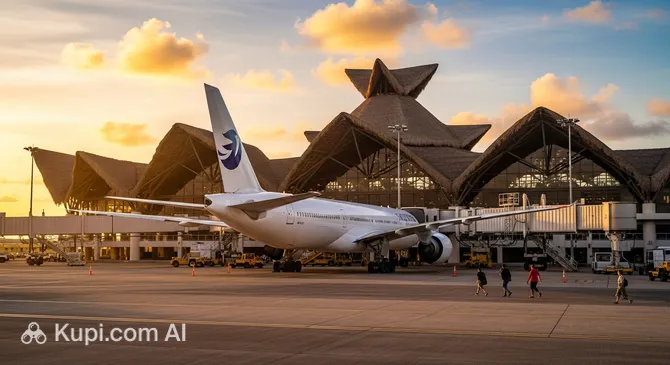
Punta Cana International Airport. Source: Kupi.com Binoculars

Welcome to Punta Cana International Airport (PUJ) — the main aerial gateway to the tropical paradise of the Dominican Republic. This is not merely a transport hub, but a true work of architectural art designed in a traditional Caribbean style. Terminals featuring palm-frond roofs and open-air galleries surrounded by lush greenery immerse you in an atmosphere of serene relaxation from your very first minutes. Built in 1983, it became the world's first privately owned international airport and is today one of the busiest in the Caribbean basin.

IATA Code PUJ
ICAO Code MDPC
City Punta Cana
Distance to centre About 7 km
Status International
Annual passengers Over 8 million
Popular Airlines American Airlines, Copa Airlines, Air Canada
Schedule online flight board "Punta Cana International Airport"

Punta Cana Airport is renowned not only for its unique architecture but also for its efficiency. It consists of several terminals, including the modern international Terminals A and B, a domestic flight terminal, and a separate VIP terminal for private aviation. Despite the immense passenger flow, which makes it the busiest in the country, the airport offers comfortable conditions for travellers. Passengers have access to Duty Free shops, restaurants, lounges, and convenient navigation. Thanks to direct air connections with dozens of cities in North and South America, as well as Europe, the airport serves as a key transport hub opening access to the best resorts of the Dominican Republic.

Contact Information

  • Official website: puntacanainternationalairport.com
  • Information desk phone: +1 (809) 959-2376
  • Address: Carr. Aeropuerto, Punta Cana 23000, Dominican Republic
  • Email: For general enquiries and feedback, it is recommended to use the contact form on the airport's official website.
  • Social media: Current information and news can be found on the official pages on Facebook (PuntaCanaAirport), Instagram (@puntacanaairport), and X (@puntacana_puj).
  • Lost luggage information: For issues regarding lost or damaged luggage, please contact your airline's representative directly. If you have left personal items within the terminal, contact the Lost and Found bureau via email: lostandfound@puntacana.com.
  • Passenger support contacts: For consultations, you may use the main information desk phone number or send a query via social media.

Getting to the Airport

Getting to Punta Cana International Airport (PUJ) from the resort zone is straightforward, as it is located quite close to most hotels. The choice of transport depends on your budget, amount of luggage, and comfort preferences. A trip from popular districts, such as Bavaro, usually takes from 15 to 40 minutes.

Taxis and transfers are the most common and convenient methods. Official tourist taxis can be found at any hotel. Their cost is generally fixed and depends on the distance to your hotel. It is recommended to confirm the price before the journey. An even more reliable option is a pre-booked transfer. This can be ordered online or through your hotel. In this case, the driver will meet you at the appointed time, and the price will be known in advance, eliminating unnecessary negotiations. In Punta Cana, ride-hailing services like Uber are also available, which may be slightly cheaper than official taxis.

Car rental provides maximum freedom of movement around the Dominican Republic. If you rented a car for your holiday, you can simply drive it to the airport and return it at your rental company's representative office — most of them are located directly on the airport premises. The airport offers both short-term and long-term parking if you need to leave personal transport for a period.

Public transport in the region is represented by local buses called "guaguas". This is undoubtedly the cheapest way to travel, but also the least comfortable for a tourist with suitcases. There are generally no direct routes from hotels to the terminal, and you will likely need to change buses. This option is suitable primarily for experienced and budget-conscious travellers without large luggage. It is important to remember that there are no metro or train systems in Punta Cana similar to those in major cities.

Terminals and Map

Punta Cana International Airport (PUJ) is distinguished by its unique and memorable structure, which immediately immerses you in the atmosphere of the Caribbean islands. The airport consists of two main international terminals — Terminal A and Terminal B, as well as separate terminals for domestic and private flights.

A key feature of the airport, especially Terminal A, is its open-air architecture with roofs covered in palm fronds. This creates a sense of airiness and allows you to enjoy the warm climate immediately upon arrival. Terminal B is a more modern and fully air-conditioned building, but it is also designed with elements of Caribbean style.

The structure and navigation within the airport are organised as follows:

  • Terminal A: Historically the first terminal, it serves many international flights. It is often described as more authentic. The arrival and departure zones here are compact, and navigation is intuitive.
  • Terminal B: A newer and larger terminal built to increase capacity. It serves flights of major global airlines and features more spacious waiting lounges and a greater number of shops and restaurants.

Movement between Terminals A and B is done on foot. They are located in immediate proximity to each other, and the walk takes just a few minutes. Signage within the airport territory is sufficiently clear, simplifying navigation between buildings, check-in zones, and boarding gates.

The process of completing formalities at Punta Cana Airport is standard but has its own nuances. During peak seasons, there may be queues at check-in counters, passport control, and security screening. It is recommended to allow at least 2.5-3 hours before departure to complete all procedures. Arrival zones lead passengers through immigration control to baggage claim belts and customs. Departure zones, after check-in and screening, open access to Duty Free shops and gates, many of which are also open-air, allowing you to enjoy the Dominican sun one last time before your flight.

Airport History

The history of Punta Cana International Airport (PUJ) is a unique example of how an infrastructure project can not merely serve a region but actually create it. The airport was built and opened in 1983 on the initiative of the private company Grupo Puntacana under the leadership of Frank Rainieri. At that time, Punta Cana was practically an isolated area with dense jungles and no roads, and the creation of the airport became a key step for the development of tourism in this part of the Dominican Republic.

From the very beginning, the airport stood out for its unusual design. Instead of standard glass and concrete structures, open-air terminals were erected with roofs covered in palm leaves. This architectural feature, inspired by traditional Taino culture, was intended to immerse arriving tourists in a holiday atmosphere from the very first minutes. This style is preserved and maintained even after numerous renovations.

The first international flight landed in Punta Cana from San Juan, Puerto Rico, and this event marked the beginning of rapid growth. As the popularity of the resort grew, the airport constantly expanded. New terminals were built, including Terminal B in 2014, as well as a second runway capable of receiving the world's largest passenger aircraft. Modernisation also affected navigation equipment, which significantly increased capacity.

Today, Punta Cana Airport is the busiest in the country and one of the leaders in passenger traffic in the Caribbean basin. It became the world's first privately owned international airport, and its successful development model is often cited as an example in the aviation industry. Despite its modern status and ability to serve millions of passengers a year, the airport retains its authentic and relaxing atmosphere, making it an integral part of a holiday in Punta Cana.

Services and Amenities

Punta Cana International Airport (PUJ), known for its unique architecture with palm-leaf roofs, offers passengers a full range of modern services for a comfortable wait for their flight. The terminals house numerous restaurants and cafes to suit every taste: from global fast-food chains to establishments where you can enjoy Caribbean cuisine and drink a cup of aromatic Dominican coffee. After passing security control, spacious Duty Free shops open up, offering a wide assortment of local specialities, souvenirs, cosmetics, and perfumes.

For those who value enhanced comfort and privacy, several VIP lounges operate at the airport. Guests are offered complimentary snacks and beverages, fresh press, and convenient work zones. This is an ideal place to relax before departure. Access to lounges can be obtained for a separate fee, via loyalty cards such as Priority Pass, or as a service for business class passengers.

Free Wi-Fi is available throughout the airport territory, allowing you to stay in touch with loved ones or attend to business matters. Numerous sockets and special stations are equipped for charging electronic devices. The terminals also contain ATMs and currency exchange points where necessary financial operations can be carried out. In case of unforeseen health situations, a first aid station is provided.

The airport cares for all categories of travellers. For families with small children, there are mother and child rooms. Passengers with reduced mobility are provided with all necessary support, including accompaniment and access to special amenities. It is strongly recommended to book assistance services in advance through your airline. Although there are no hotels within the transit zone itself, several hotels are located in the immediate vicinity of the airport, such as Four Points by Sheraton, many of which offer transfers for their guests.

Where to Eat

While waiting for your flight at Punta Cana International Airport (PUJ), you will easily find a place for a snack or a full meal. The airport offers diverse dining options, designed primarily for international travellers but with a light Caribbean accent.

The bulk of restaurants, cafes, and bars are located in the departure zones of Terminal A and Terminal B, after passing passport control and screening (airside). In the public zone (landside), the choice of establishments is much more modest, so it is better to plan your meal after checking in for your flight. Here you will encounter both famous international fast-food chains like Wendy's, Sbarro, or Nathan's Famous, as well as cosy coffee shops.

If you wish to have a quick snack, pay attention to the numerous food courts. Here you can get pizza, a burger, a sandwich, or a salad. For a more leisurely rest, full-service restaurants and lounges, such as Skybar, are suitable, where you can order drinks and hot dishes in a calm setting. Do not miss the opportunity to enjoy a cup of famous Dominican coffee or enjoy a refreshing local beverage in one of the lounges — this is a wonderful conclusion to your holiday in the Dominican Republic.

Prices at the airport are expectedly higher than in the city. A light snack with a drink will cost approximately 15-25 USD, while the cost of a full lunch in a restaurant may amount to 30-50 USD per person. Regarding dietary restrictions, vegetarian dishes (mostly salads and some types of sandwiches) are not difficult to find. However, if you require vegan, gluten-free, or Halal options, it is better to verify their availability and ingredients with the staff of the specific establishment in advance. Most food outlets operate in accordance with the flight schedule, opening early in the morning and closing after the departure of the last flight.

Travel Tips

To ensure your journey through Punta Cana Airport goes smoothly, several points are worth considering. For international flights, it is recommended to arrive 3-4 hours before departure, especially during the high tourist season. The airport is distinguished by its relaxed atmosphere and partially open architecture, but queues for check-in and security control may move leisurely. Fill out the electronic E-ticket form in advance to receive a QR code — it is mandatory for all arriving and departing passengers.

When passing through control, pay attention to the rules for carrying liquids in hand luggage (no more than 100 ml in one container). If you plan to take Dominican beverages or cigars home with you, check the customs limits of your destination country in advance. Most such goods must be checked in with your luggage. To save time, complete online check-in if your airline provides this possibility.

When choosing a seat on the plane, especially on daytime flights, give preference to a window seat — during take-off and landing, stunning views of the turquoise coast open up. If you have a connecting flight, be sure to clarify with the airline whether you need to collect and re-check your luggage in Punta Cana. Leave sufficient time between flights to avoid rushing.

Customs control upon arrival usually passes quickly if you have your E-ticket filled out. Be prepared to answer standard questions about the purpose of your visit and place of accommodation. To save money, you can book a transfer to the hotel online in advance — this often turns out cheaper than taking a taxi on the spot. Within the airport itself, there is free Wi-Fi, but prices in cafes and shops are quite high, so it is better to have a light snack with you.

In the event of a flight delay, first contact your airline representative for information about the new departure time and possible compensation (for example, food vouchers). Study your rights as a passenger. The airport has several VIP lounges, access to which can be paid for on the spot — this is a good option to spend time comfortably while waiting, especially during a long delay.

Reached the end of the page?

That means the route is fully explored