Support

Mariscal Lamar International Airport

About the Airport

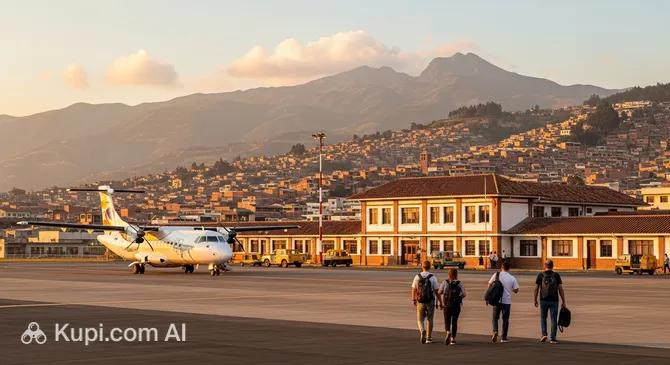
Mariscal Lamar International Airport. Source: Kupi.com Binoculars

Mariscal Lamar International Airport is not merely an air gateway to one of the most beautiful cities in Ecuador, but also a unique high-altitude aerodrome located right within the city limits of Cuenca. Named after the prominent military and political figure José de la Mar, a native of Cuenca, the airport is situated in a picturesque valley of the Andes at an altitude of over 2,500 metres above sea level. Its location offers travellers breathtaking views of mountain landscapes during take-off and landing, serving as an impressive introduction to this colonial treasure.

IATA Code CUE
ICAO Code SECU
City Cuenca
Distance to Centre Within city limits, approx. 3–5 km
Status Domestic (with international flight capability)
Passengers per Year Approx. 540,000 (2024 forecast)
Popular Airlines LATAM Airlines, Avianca
Schedule online flight board "Mariscal Lamar International Airport"

The main advantage of Mariscal Lamar Airport is its exceptional proximity to the historic centre of Cuenca, which is listed as a UNESCO World Heritage Site. The journey to a hotel or major attractions takes just a few minutes, which is incredibly convenient for tourists. You can get there by taxi, bus, or even via the modern tram, which has a stop right at the airport. Despite its compact size and short runway, necessitated by its high-altitude location, the airport is constantly being modernised. Works have been carried out to upgrade the runway surface, and modern ILS and GPS landing systems have been implemented, enhancing safety and flight regularity even in difficult weather conditions. For a comfortable wait, passengers can utilise the services of the VIP Lounge.

Contact Information

  • Official Website: Generally, up-to-date information can be found on the official website of the airport operator CORPAC (Corporación Aeroportuaria de Cuenca) — aeropuertocuenca.ec.
  • Information Desk Phone: +593 7 409 1176
  • Airport Address: Av. España y Elia Liut, Cuenca, Ecuador.
  • Email: For general enquiries, you can use the address info@corpac.ec.
  • Social Media: You can follow airport news on its official page on Facebook.
  • Lost Luggage Information: For issues related to lost or damaged luggage, please contact your airline's representative directly at the airport.
  • Passenger Support Contacts: For assistance and consultations, you can use the main information desk phone number.

How to Get to the Airport

Getting to Mariscal Lamar International Airport (CUE) from the city centre of Cuenca is very simple, as it is located just a few kilometres away. The trip usually takes between 10 to 20 minutes depending on traffic, making it one of the most accessible airports in Ecuador relative to the city it serves.

Public Transport is the most economical method. Several city bus routes (líneas) pass in the immediate vicinity of the terminal. The fare is very cheap, usually less than a dollar. This option is ideal for those travelling light, although it may not be very convenient if you have a lot of luggage.

Taxi and Transfer is the most popular and convenient option. Official yellow taxis are easy to find anywhere in the city. A trip from the historic centre to the airport will cost approximately $3-5. You can also use mobile apps to book a taxi. For your safety, it is recommended to use only official or registered taxi services.

If you plan to explore the surroundings of Cuenca, car rental can be a good solution. Rental desks are available both at the airport and in the city. For those arriving at the airport in their own or a rented vehicle, parking is provided. It offers spaces for both short-term parking (drop-off or pick-up) and long-term storage of the vehicle for the duration of your journey.

Terminals and Map

Mariscal Lamar International Airport (CUE) is a compact and convenient airport serving the city of Cuenca and its surroundings. Its structure is simple and intuitive, making navigation easy even for first-time visitors.

The airport operates one passenger terminal, which handles both domestic and the occasional international flights. Thanks to its small size, all zones are within walking distance of each other, and you won't have to worry about transferring between terminals. The building layout is very logical: check-in counters, security screening, the departure lounge, and boarding gates are on one level, as is the arrival area with the baggage claim belt.

Departure and arrival zones are clearly separated but located in the same building. After checking in for a flight, passengers pass through pre-flight security and enter a cosy waiting hall with several boarding gates. The arrival zone is located separately and includes immigration control counters for international flights and a baggage claim hall, from where travellers exit into the main airport lobby.

Completing all formalities usually does not take much time. Check-in and security checks generally proceed quite quickly, though small queues are possible during peak hours. It is recommended to arrive at the airport 1.5-2 hours before a domestic flight departure to complete all procedures without rushing. For navigation, simply follow the signs in Spanish and English, and if questions arise, you can always ask the airport staff for assistance.

Airport History

The history of Mariscal Lamar International Airport (CUE) is inextricably linked with the development of the city of Cuenca and the entire southern region of Ecuador. The airport was officially opened in 1952 and initially represented a modest airfield intended to improve transport connections with isolated mountain regions of the country. It received its name in honour of José de la Mar y Cortázar, a distinguished military and political figure born in Cuenca, who served as President of Peru and is known as "Mariscal Lamar".

Originally, the airport had a dirt runway and served mainly small aircraft. However, as Cuenca's economic and tourism significance grew, the need for modernisation arose. In subsequent decades, key expansion stages were carried out: the runway was paved and lengthened, and the passenger terminal was rebuilt several times to accommodate the growing passenger flow.

A significant stage in the airport's history was its modernisation in the 21st century. In 2016, a major reconstruction of the runway was conducted, which improved safety levels and allowed for the accommodation of more modern types of aircraft. Navigation and lighting systems were also updated, and the passenger terminal was expanded for greater traveller comfort.

Interesting fact: Mariscal Lamar Airport is one of the few in the world located practically in the city centre. This creates certain challenges for pilots due to the proximity of urban buildings and mountainous terrain, but at the same time makes it incredibly convenient for tourists. Despite its compactness and relatively short runway (about 1,900 metres), it effectively fulfils its task, serving as an important transport hub and air gateway to one of Ecuador's most beautiful cities.

Services and Amenities

Mariscal Lamar International Airport (CUE) offers passengers all necessary services for a comfortable and peaceful wait for their flight. Regardless of the purpose of your trip — be it tourism or a business meeting in Cuenca — you will find amenities here that meet modern standards.

Within the terminal, there are cafes and small restaurants where you can taste local cuisine or drink a cup of famous Ecuadorian coffee. Shops are also available where you can buy souvenirs, travel essentials, and fresh press. Free Wi-Fi will help you stay connected, and special stations are provided in waiting areas for charging electronic devices.

For those seeking greater comfort and privacy, the airport has a VIP Lounge (Sala VIP). Here, passengers can relax in a quiet atmosphere, enjoy complimentary snacks and beverages, and utilise a separate work area. This is a wonderful opportunity to unwind or focus on business away from the bustle of the main hall.

To handle financial matters, the airport has ATMs and currency exchange points. In case of necessity, passengers can turn to the medical point for first aid. Travellers with small children will appreciate the presence of specially equipped mother and child rooms.

The airport also cares for passengers with reduced mobility, providing ramps, accessible toilets, and staff assistance when moving through the terminal. It is recommended to inform your airline in advance about the need for special assistance to organise the most comfortable journey possible.

Although there are no hotels directly on the airport grounds, many hotels to suit any taste and budget are located just a few minutes' drive away. For business travellers, basic business services may be available to effectively use time before departure, although there are no large conference halls within the terminal.

Where to Eat

Although Mariscal Lamar International Airport in Cuenca is relatively small and serves primarily domestic flights, it offers passengers several options for a snack or a full meal before departure. The selection of establishments here is compact but sufficient to wait for your flight in comfort.

The majority of cafes and eateries are located in the general area (landside), accessible before passing security control. Here you will find several small cafes where you can order coffee, pastries, sandwiches, and soft drinks. After passing security (airside), in the departure zone, the choice is usually more limited and may be reduced to a small kiosk with beverages and packaged snacks. Opening hours generally align with the flight schedule: they open with the first morning departures and close after the last aircraft leaves.

This is an excellent opportunity to try some local dishes. Look out for Ecuadorian empanadas (especially "empanadas de viento" — filled with cheese and sprinkled with sugar) or humitas — tender steamed corn cakes. Of course, it is worth enjoying a cup of aromatic coffee made from local beans, for which Ecuador is famous. For a more substantial lunch, you can find establishments offering simple hot dishes, such as chicken soup or meat sandwiches.

Regarding prices, they are moderately higher than in the city, as in most airports around the world. A light snack with coffee will cost a few dollars, while a heavier lunch will cost more. Passengers with strict dietary restrictions (vegans, people with gluten intolerance) are advised to carry their own snacks, as a specialised menu may be absent in local cafes. However, vegetarians will easily find options for themselves, such as cheese pastries or vegetable sandwiches.

Travel Tips

Travelling through Mariscal Lamar International Airport in the city of Cuenca can be a simple and pleasant start to your adventure in Ecuador if you prepare in advance. The airport mainly serves domestic flights, making it less busy compared to capital city aviation hubs. Here are a few tips to help you orient yourself.

Arrival Time and Check-in: For domestic flights, it is recommended to arrive at the airport 1.5–2 hours before departure. This time is sufficient to calmly check in at the counter, drop off luggage, and pass security control. To save time, use online check-in on your airline's website if such an option is available.

Seat Selection and Hand Luggage: When choosing a seat on the plane, note that the windows offer picturesque views of the Andes — it is worth taking a window seat. If freedom of movement is more important to you, choose an aisle seat. In hand luggage, liquids are permitted in containers up to 100 ml, packed in a transparent bag. Sharp objects and flammable substances are prohibited. Be sure to keep documents, money, medication, and chargers with you.

Transfers and Customs Control: Mariscal Lamar International Airport mainly operates domestic flights. If you have an international flight with a transfer in Quito or Guayaquil, you will likely pass customs and passport control at the first airport of arrival in the country. Check at registration whether you need to collect and re-check your luggage at the transfer point.

Economy and Unforeseen Situations: To avoid extra costs, weigh your luggage at home and ensure it complies with the airline's standards. There are cafes at the airport, but prices may be higher than in the city. In case of a flight delay, first contact your airline representative for information on further actions. Keep all receipts for food or drinks — they may be needed to claim compensation.

Reached the end of the page?

That means the route is fully explored