Support

Ecuador

About the Country

Ecuador is a remarkable country whose name speaks for itself: it is located directly on the equator in South America. It is a land of incredible contrasts, where the majestic Andes, the mysterious Amazon rainforest, the scenic Pacific coast and, of course, the unique Galápagos Islands all coexist within a relatively small area. This geographical diversity endows Ecuador with a stunning wealth of flora and fauna, making it one of the most biodiverse places on the planet.
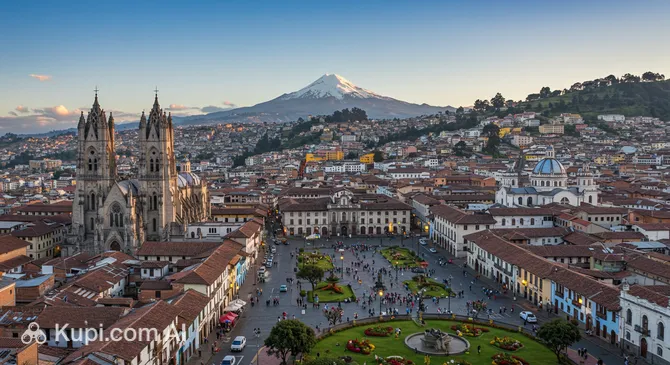
Quito. Source: Kupi.com Binoculars

Ecuador's culture is a vibrant mosaic woven from ancient indigenous traditions and Spanish colonial heritage. This is evident everywhere, from its colourful markets and festivals to the architecture of its historic centres. The nation's capital, Quito, nestled high in the Andes, captivates visitors with its well-preserved colonial quarters, which are recognised as a UNESCO World Heritage Site. A journey here is an immersion into a rich history and an opportunity to meet the hospitable local people.

Beyond the capital, Ecuador offers a wealth of other fascinating destinations. These include the bustling port city of Guayaquil, the country's economic hub, and the charming city of Cuenca, renowned for its colonial architecture and artisan crafts. Each region of Ecuador has its own unique atmosphere, offering travellers a wide spectrum of experiences: from active pursuits in the mountains and wildlife observation to relaxing on the beaches and discovering the local cuisine. Ecuador is a destination that inspires and creates unforgettable memories.
Currency

The official currency of Ecuador is the United States dollar (USD). The country switched to using the US dollar in 2000, abandoning its former national currency, the sucre. Standard United States banknotes and coins are in circulation. An interesting feature is that Ecuador also mints its own coins, called centavos, which are equivalent to US cents. These are used alongside American coins and share the same sizes and denominations.

For travellers from the UAE, this is particularly convenient as the UAE Dirham (AED) is pegged to the US dollar at a fixed rate of approximately 1 USD to 3.67 AED. You can exchange your money for US dollars at banks or official exchange offices (casas de cambio), which are available in major cities and airports. It is advisable to avoid exchanging currency with street money changers due to the risk of fraud or unfavourable rates. Credit cards, mainly Visa and Mastercard, are widely accepted in hotels, restaurants, and large shops, especially in tourist hubs like Quito. However, it is always useful to have some cash on hand for small expenses, purchases at local markets, or in smaller towns.

Visa Requirements

Are you planning a trip to Ecuador? Good news for UAE passport holders: a visa is not required for tourist trips for up to 90 days. The main requirement is to have a valid passport with at least six months of validity from your date of entry into the country.

Although a visa is not needed for short tourist visits, border officials may ask to see proof of your return or onward journey, confirmation of accommodation, and travel insurance. It is important to remember that visa policies can change. Therefore, before you travel, it is highly recommended to check the most current visa requirements on the official website of the Embassy or Consulate of Ecuador.

We'll tell you if you need a visa

Specify where you are going, or
Your citizenship
Destination

Time Zones

When planning a trip to Ecuador, it is important to consider the local time zones. The country operates on two time zones. For travellers from the UAE, it is useful to know that mainland Ecuador is 9 hours behind the UAE, while the Galápagos Islands are 10 hours behind.

The continental part of Ecuador, including the capital Quito, uses Ecuador Time (ECT), which is UTC-5. However, the famous Galápagos Islands have their own time zone – Galápagos Time (GALT), which is UTC-6.

Therefore, the time difference between mainland Ecuador and the Galápagos Islands is one hour. Tourists who plan to visit both the continent and the islands should take this into account when creating their itinerary and booking transfers or excursions.

How to Get There

There are several ways to get to Ecuador, with the best choice depending on your starting point and travel preferences. For those travelling from the UAE, the most common option is, without a doubt, air travel. There are no direct flights, so the journey will involve at least one stopover. Travellers can fly with major airlines connecting through hubs in Europe (such as Amsterdam or Madrid), the USA (like Miami or New York), or South America. The

Ecuador is a country of contrasts, where every traveller can find something to suit their taste. It has bustling metropolises, colourful colonial cities, magnificent Pacific resorts, and, of course, the unique Galapagos Islands.

Quito. Source: Kupi.com Binoculars

A great place to start your journey is the nation's capital, Quito. Situated at an altitude of over 2,800 metres above sea level, this city boasts an impressive historic centre, which was one of the first to be included on the UNESCO World Heritage list. In contrast, Guayaquil, Ecuador's largest city and main port, is dynamic and modern, featuring the beautiful Malecón 2000 waterfront promenade. For those who appreciate colonial architecture and a more relaxed pace of life, Cuenca, recognised as the cultural capital of Ecuador, is the ideal choice.

If you are seeking adventure and a connection with nature, head to Baños, a town at the foot of the Tungurahua volcano, known for its waterfalls, thermal springs, and opportunities for outdoor activities. For those who prefer to relax on the coast, the resort town of Salinas is a perfect fit, offering excellent beaches, water sports, and a vibrant evening scene. Each of these destinations will provide you with unique experiences and a deeper understanding of Ecuador's culture and nature.

Top Attractions

Ecuador is a country of rich culture and stunning nature, offering travellers a multitude of interesting places to explore. Among them are magnificent man-made landmarks and natural oases in the heart of its cities, which are definitely worth a visit.

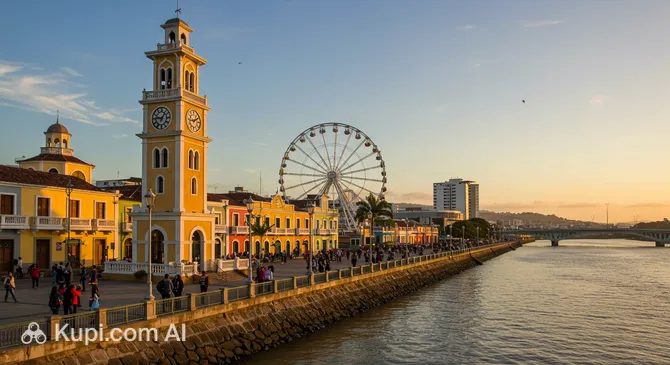
One of the most famous attractions is Malecón 2000 in Guayaquil. This modern waterfront promenade stretches along the Guayas River and has become a favourite spot for strolls, relaxation, and entertainment. It features gardens, museums, shops, and monuments, making it a true centre of attraction. With over 40 restaurants and cafes, visitors can enjoy a wide range of local and international cuisine; those seeking halal options are advised to check with individual establishments for their offerings.

Malecon 2000. Source: Kupi.com Binoculars

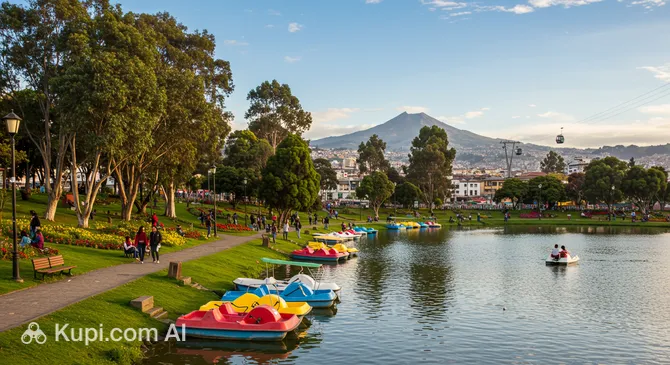
In the nation's capital, Quito, a visit to La Carolina Park is a must. This vast urban park serves as the "green lungs" of the city. Here you can find a botanical garden, a lake with paddleboats, sports grounds, and picnic areas, making it an ideal destination for family outings and active leisure.

La Carolina Park. Source: Kupi.com Binoculars

In the city of Cuenca, Calderón Park takes centre stage. This historic park is surrounded by the city's most important buildings, including the Old and New Cathedrals. It is not just a green space but the heart of Cuenca's social and cultural life, often hosting various events and gatherings for local residents. When visiting areas near places of worship, it is recommended to dress modestly out of respect for local customs.

Calderón Park. Source: Kupi.com Binoculars

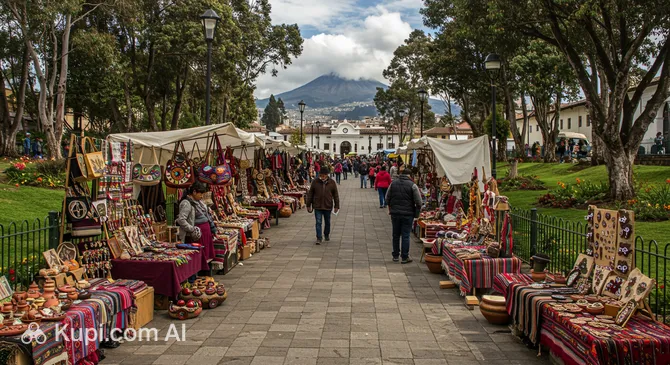
Another popular park in Quito is El Ejido Park. It is well-known for its craft markets, which open on weekends and offer tourists unique souvenirs, textiles, and handmade works of art. The park is also a popular spot for socialising and cultural exchange.

El Ejido Park. Source: Kupi.com Binoculars

Best Time to Visit

Ecuador is a country with an amazing diversity of climate zones, so the "best time" to visit depends heavily on which regions you plan to explore. Generally, there are two main seasons. The high season for visiting the Andes and the Galápagos Islands typically runs from June to September. During this time, the highlands (Sierra), including Quito, experience dry and sunny weather, which is ideal for trekking and sightseeing. On the Galápagos, this period coincides with the cool, dry "garúa" season, which is favourable for observing many animal species. For the coast (Costa), the high season is considered to be from December to April, when the weather is warm and sunny, perfect for a beach holiday in places like Salinas or Playas. The downsides of the high season are larger crowds of tourists and, consequently, higher prices for accommodation and services.

The low season, or shoulder season, in the Andes and the Galápagos lasts from approximately October to May. In the Sierra, this is the rainy season, although the rain typically falls in the afternoon, leaving the mornings sunny. In the Amazon (Oriente), it rains year-round, but from April to November, the intensity of the rainfall can decrease slightly. On the coast, the low season is from May to November, when the weather becomes cooler and more overcast. The advantages of the low season include fewer tourists, lower prices, and lush green scenery. However, you should be prepared for changeable weather. It is important to remember that Ecuador's climate is very regional: on the same day, it can be hot and humid in Guayaquil, cool in Cuenca, and raining in the Amazon. Therefore, it is always recommended to check the forecast for the specific places you are interested in visiting before your trip.

When planning your trip, it is also worth considering local festivals. For example, the colourful Inti Raymi festival (Festival of the Sun) is celebrated in June in many Andean communities, especially in the Otavalo area. The Mama Negra festival in Latacunga takes place in September and November. Carnival, which takes place before Lent (usually in February or March), is celebrated throughout the country, with particularly vibrant festivities in Ambato (Festival of Flowers and Fruits) and Baños. These events can make your journey even more enriching, but they can also affect the availability and price of accommodation.

Traditions

Ecuadorians are a hospitable and friendly people. Upon meeting, it is customary to shake hands, and direct eye contact is important. Using the formal 'you' (usted) with strangers or older people is the norm until you are invited to use the informal 'you' (tú). If you are invited to someone's home, a small souvenir or sweets are a thoughtful gesture, although not strictly required. In general, Ecuadorians value politeness and openness. Try not to speak too loudly and avoid excessive gestures, which could be misinterpreted. Punctuality is appreciated, but the concept of 'Ecuadorian time' (hora ecuatoriana) allows for slight delays for informal gatherings.

In daily life, Ecuadorians dress quite casually; however, when visiting churches and other religious sites, it is wise to choose modest clothing that covers the shoulders and knees. This is a sign of respect, similar to the customs for visiting mosques. In large cities like Quito, a more elegant outfit may be required for evening outings to restaurants or theatres. At the dinner table, there are no particularly strict rules, but it is considered polite to wait for the hosts to begin the meal. An interesting local custom is to point towards a direction or an object not with a finger, but by puckering one's lips forward. To avoid causing offence, try not to criticise local customs and always show respect for their way of life.

The culture of Ecuador is rich with vibrant festivals. One of the most significant is Inti Raymi (the Festival of the Sun), which has its roots in Inca traditions and is celebrated in June with colourful rituals and dances, especially in the Andean regions. Carnival, held before Lent, is also widely celebrated and is known for its street festivities, music, and the tradition of throwing water and foam—a fun event, but one that requires you to be prepared to get wet. Learning about these traditions will help you to better understand the soul of Ecuador and its multifaceted culture.

Entertainment

Ecuador offers an amazing variety of entertainment to suit every taste, from thrilling outdoor adventures to deep cultural immersion. Fans of active recreation will find endless opportunities here: trekking in the majestic Andes, climbing volcanoes, exploring the Amazon rainforest, as well as surfing and diving on the Pacific coast and, of course, visiting the unique Galapagos Islands. For those who prefer a more relaxed pace, leisurely walks through picturesque national parks are an excellent choice.

Ecuador's cultural life is centred in its cities. The historic centres of Quito and Cuenca, both UNESCO World Heritage sites, are captivating with their colonial architecture, numerous museums, churches, and art galleries. When visiting religious sites, it is advisable to dress modestly out of respect for local customs. In the evening, you can enjoy theatre performances or attend concerts. Don't miss the chance to visit colourful markets, such as the one in Otavalo, where you can not only buy handmade crafts but also experience local traditions. Shopping in Ecuador is an opportunity to bring home unique souvenirs: alpaca wool products, the famous Panama hats (which actually originate from Ecuador), vibrant textiles, carved balsa wood figures, as well as local coffee and chocolate.

As darkness falls, major cities like Quito and Guayaquil come alive, offering a variety of nightlife options, from sophisticated restaurants and cosy cafés with live music to elegant lounges. While halal-certified restaurants are uncommon, many establishments offer a wide range of seafood and vegetarian dishes; it is always a good idea to enquire with the staff about suitable options. For family holidays, there is also plenty to do: numerous parks, such as Parque La Carolina in Quito or Parque Samanes in Guayaquil, provide spaces for play and relaxation, while visits to zoos or botanical gardens will create lasting memories for both children and adults.

Currency rates

Planning a trip? Excellent! To ensure the financial aspects of your journey do not come as a surprise, it is important to remember that currency exchange rates are constantly changing. Therefore, we highly recommend tracking the latest rates both before you fly and throughout your trip. You can use the data provided below for this, as we monitor exchange rates 24/7 and strive to provide the most up-to-date information.

USD currency exchange rate as of 02.01.2026

3.69 AED
~ 1 USD
383.37 AMD
~ 1 USD
1.51 AUD
~ 1 USD
1.71 AZN
~ 1 USD
2.95 BYN
~ 1 USD
1.38 CAD
~ 1 USD
1 EUR
~ 1.17 USD
1 GBP
~ 1.34 USD
328.84 HUF
~ 1 USD
90.44 INR
~ 1 USD
87.88 KGS
~ 1 USD
1451.48 KRW
~ 1 USD
509.94 KZT
~ 1 USD
3.61 PLN
~ 1 USD
79.26 RUB
~ 1 USD
3.77 SAR
~ 1 USD
1.29 SGD
~ 1 USD
43.16 TRY
~ 1 USD
42.50 UAH
~ 1 USD
12073.27 UZS
~ 1 USD

Reached the end of the page?

That means the route is fully explored