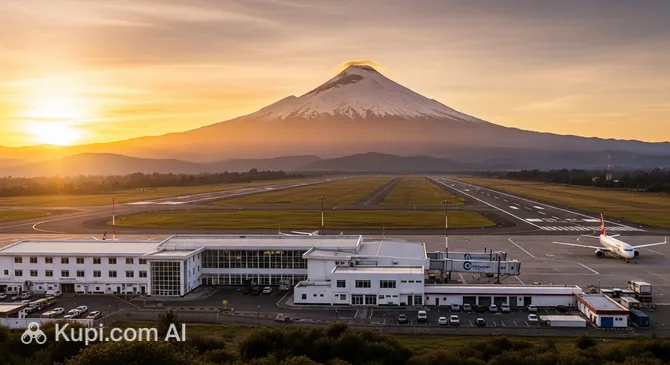
Cotopaxi International Airport is not merely a regional transport hub, but a true aerial gateway to the majestic peaks of the Andes. Located in immediate proximity to the famous "Avenue of Volcanoes," this airport offers travellers a unique atmosphere of tranquillity, contrasting sharply with the hustle and bustle of major capital hubs. Thanks to its strategic position, it serves as an ideal starting point for those planning climbs or wishing to begin their exploration of Ecuador from its high-altitude heart.
| Characteristic | Value |
|---|---|
| IATA code | LTX |
| ICAO code | SELT |
| City | Latacunga |
| Country | Ecuador |
| Time zone | America/Guayaquil |
| Schedule | Live departures board |
Airport Features and Advantages:
Cotopaxi Airport boasts a number of unique characteristics that distinguish it from other air harbours in the region. Despite modest passenger traffic, its infrastructure and location play a vital role in the country's logistics and tourism sectors.
- Record-breaking runway: The airport prides itself on having one of the longest runways in Ecuador (approximately 3,700 metres). This allows it to accommodate the largest types of aircraft, which is critically important in the thin high-altitude air.
- Strategic alternative to Quito: Being just an hour and a half drive from the capital, Cotopaxi is often considered a convenient alternative to Mariscal Sucre Airport. In cases of bad weather in Quito, planes are frequently diverted here.
- Proximity to natural attractions: For tourists, this is perhaps the most convenient arrival point if the goal is to visit Cotopaxi National Park or the Quilotoa Lagoon. You find yourself in the centre of the action immediately upon leaving the terminal.
- Tranquillity and speed: Thanks to the small size of the terminal and the low number of scheduled passenger flights, passing through all formalities — from check-in to baggage claim — takes mere minutes, eliminating long queues.
