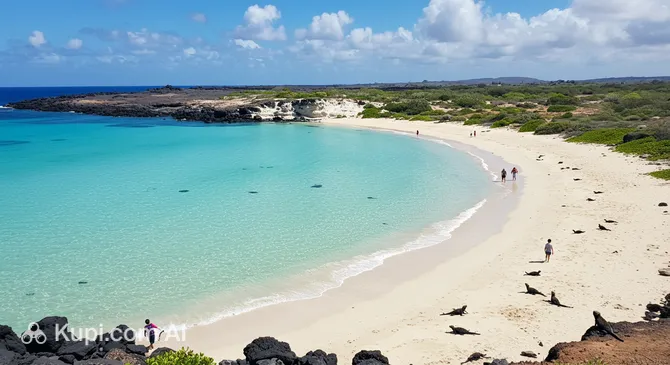
Imagine an endless stretch of dazzling white sand contrasting with the deep azure of the ocean—this is how Tortuga Bay greets its guests. This natural wonder is located on Santa Cruz Island near the town of Puerto Ayora and is considered one of the most beautiful spots Ecuador has to offer. Its name, meaning "Turtle Bay," comes from the marine inhabitants that frequently choose this site for resting and breeding.
Tortuga Bay. Illustration.
Source: Kupi.com AI
Traveler photos:
The site is divided into two distinct zones. The eastern part, known as Playa Brava, greets visitors with a powerful surf and is ideal for those seeking inspiration from the ocean's elements or those who enjoy surfing. The western part, Playa Mansa, is a calm lagoon surrounded by mangrove forests where the water is almost still, making it the perfect spot for peaceful swimming.
As part of a protected area, Tortuga Bay maintains its pristine atmosphere: there are no noisy bars or umbrellas here, only untouched nature. It is a magnet for ecotourism enthusiasts looking to see unique Galapagos marine iguanas and exotic birds in their natural habitat.
Contacts
For those planning a visit to this secluded shore, it is helpful to have the exact coordinates on hand. The beach is managed by the national park, so the official offices are located directly in the town.
Everyone will find something to their liking here, whether it’s active sports or passive contemplation. On the western end of the shore, in the quiet bay, snorkeling and kayaking are incredibly popular. The water here is so clear that you can easily see schools of bright fish and sometimes even small sharks, which are completely harmless to humans.
For wildlife lovers, the main attraction is observing marine iguanas. These unique reptiles often lie motionless on the hot sand or black volcanic rocks, allowing for stunning close-up photographs. You can also spot graceful pelicans, blue-footed boobies, and, of course, sea turtles, whose tracks in the sand are often visible in the mornings.
If you prefer to keep moving, be sure to walk along the entire coastline. The contrast between the roaring open ocean and the calm lagoon is breathtaking. A walk along the trail leading to the beach is an adventure in itself: you will pass through cactus forests and thickets of endemic shrubs while listening to the songs of tropical birds.
Getting There
The journey to this paradise begins in the western part of Puerto Ayora. The primary and most popular way to get there is a walk along a specially maintained, scenic trail approximately 2.5 kilometers long. The walk takes between 20 to 40 minutes depending on your pace and how often you stop to photograph the exotic vegetation and the iguanas that can sometimes be found right on the path.
Entrance to the trail is free, but visitors must register at the checkpoint at the start of the route. It is worth noting that there is no direct road access or public transport to the sand itself, which helps keep the area in pristine condition. If you prefer not to walk, you can take a water taxi from the town's main pier, which will drop you off directly in the calm part of the bay.
For those who prefer comfort within the town limits, you can take a standard city taxi to the start of the trail. However, keep in mind that once you step out of the car, you will still have to walk through the tropical forest, which is an integral part of the Tortuga Bay adventure.
Nearest city: Puerto Ayora
History & Facts
Although Tortuga Bay is a natural site and lacks the walls of ancient fortresses, its history is inextricably linked to the scientific heritage of the Galapagos Islands. The name, which translates to "Turtle Bay," was given to the area because of the black sea turtles that have chosen this coast as a nesting site for their eggs. This highlights the beach's status as a vital link in the unique ecosystem of Ecuador.
The inspiration Charles Darwin drew during his historic visit to the archipelago in 1835 largely shaped the modern attitude toward this location. While the scientist's journals do not contain a direct description of this specific beach, Tortuga Bay today serves as a living illustration of his theory of evolution, showcasing the remarkable coexistence of species in an isolated environment.
In the modern era, the beach has gained the status of a benchmark for ecotourism. Thanks to strict conservation rules established by the Charles Darwin Research Station, the coastline has remained virtually the same as it was seen by the islands' first explorers. This place serves as a reminder of the importance of maintaining a balance between tourist interest and the protection of fragile flora and fauna.
Time Needed
When planning your visit to Tortuga Bay, it is worth setting aside at least 4–6 hours. This will allow you to not only take a leisurely walk along the trail both ways but also fully enjoy both parts of the beach. Travelers often want to stay longer to watch the iguanas or have a picnic in the shade of the mangroves.
The best approach is to arrive early in the morning, right after opening. This gives you the advantage of cooler temperatures and the chance to enjoy absolute silence before the sun begins to heat up and other visitors arrive. Half a day is the perfect amount of time to combine active walking, swimming, and wildlife observation.
Working Hours
Access to the coastline is strictly regulated to preserve the ecosystem. The beach is open to visitors daily, from early morning until evening. It is important to remember that staying on the territory after sunset is prohibited for the safety of tourists and the peace of the local wildlife.
Operating Hours:
Monday — Sunday: 6:00 AM – 5:00 PM
It is recommended to start your walk back along the trail no later than 4:30 PM to ensure you leave the park area before the official closing time.
6:00 – 17:00
Nearby
After relaxing on the white sands of Tortuga Bay, you can continue exploring the local flavor in Puerto Ayora itself. Exploring the town's surroundings will allow you not only to sample the local cuisine but also to see Galapagos life from different perspectives—from cozy bars to cultural centers.