Support

Asmara International Airport

About the Airport

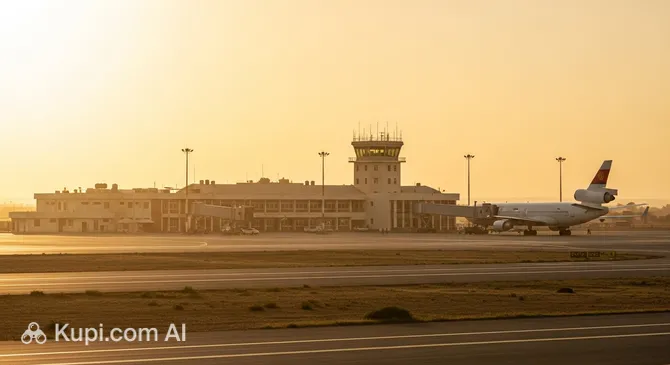
Asmara International Airport. Source: Kupi.com Binoculars

Asmara International Airport (ASM) is not merely the main air gateway to Eritrea, but a unique high-altitude aerodrome with a rich history. Located at an altitude of over 2,300 metres above sea level, it offers travellers breathtaking views during landing and take-off. Built back in 1922, today it remains the country's only international airport, which, despite its modest size, reliably connects Eritrea with key hubs in Africa and the Middle East.

IATA Code ASM
ICAO Code HHAS
City Asmara
Distance to Centre approx. 4 km
Status International
Annual Passengers Exact current data is unavailable. According to the last available estimate from 2004, passenger traffic was approximately 137,000 people.
Popular Airlines Turkish Airlines, flydubai, EgyptAir
Schedule "Asmara International Airport" online board

A key feature of the airport is its location at a high altitude, which imposes certain operational limitations. The runway is not designed to accommodate the largest long-haul aircraft, such as the Airbus A380 or Boeing 747. There is a single terminal here; it is compact and functional, although passing through formalities during peak hours may require some patience. It is important to remember that the airport has a dual purpose—civil and military—therefore, any photography or video recording on its premises is strictly prohibited.

Contact Information

Contact representatives of Asmara International Airport (ASM) using the information below. Please note that some data may be limited, and for specific issues, such as those related to baggage or tickets, it is best to contact your airline directly.

  • Official Website: At the moment, the airport does not have a consistently functioning official website. It is recommended to verify information through airlines operating flights to Asmara.
  • Inquiry Service Phone: +291 1 181 822
  • Airport Address: Airport Road, Asmara, Eritrea
  • Email: An official email address for general inquiries is not publicly provided.
  • Social Media: The airport does not have official pages on popular social networks.
  • Lost Baggage Information: For all questions related to lost or damaged baggage, you must contact your airline's Lost & Found service directly.
  • Passenger Support Contacts: For general information, you can use the inquiry service phone number. For questions regarding your flight, check-in, or special services, please contact your airline's representative office.

How to Get to the Airport

Asmara International Airport (ASM) is located just a few kilometres from the capital's centre, making the journey there quick and straightforward. Depending on your budget and preferences, you can choose one of several ways to reach the terminal.

Taxi and Transfer — the most popular and convenient option for tourists. A trip from the centre of Asmara to the airport will take just 10–15 minutes. The estimated cost of the trip is 150–250 Eritrean Nakfa (ERN), which is equivalent to approximately 10–15 US dollars, depending on the time of day and your negotiation skills. An important tip: since not all taxis are equipped with meters, always agree on the fare with the driver in advance to avoid misunderstandings. A pre-booked transfer can offer a fixed price and added convenience, especially if you have a lot of luggage.

Public Transport in Asmara is represented mainly by city buses. This is the most budget-friendly way to get to the airport — the fare usually does not exceed 5–10 Eritrean Nakfa. However, it may not be the most comfortable option, especially with suitcases. There is no dedicated express route to the airport, so you will have to use a regular city bus heading in that direction. Check the route number and schedule with locals or at your hotel. Please note that buses can be crowded, and schedules are not always precise. There is no metro or regular rail service to the airport in the city.

Car Rental offers maximum freedom of movement if you plan to explore not only the capital but also its surroundings. Local rental agencies operate in the city. By renting a car, you can drive to the airport at any time convenient for you. The airport has parking where you can leave a car for both short and long periods. To rent a car, you will likely need an International Driving Permit.

Regardless of the chosen method, leave for the airport well in advance. Despite the short distance, it is better to arrive 2–3 hours before an international flight departure to calmly go through all pre-flight formalities. To pay for a taxi or bus, it is recommended to have local currency — Eritrean Nakfa — with you, preferably in small denominations.

Terminals and Map

Asmara International Airport (ASM) is distinguished by a compact and clear structure, making it convenient for passengers. The airport consists of one passenger terminal, which serves both international and domestic flights. Such an organisation significantly simplifies navigation and eliminates the need to transfer between different buildings.

The terminal is functionally divided into two main zones: the Departure Zone and the Arrival Zone. The Departure Zone houses airline check-in counters, passport control, and security screening points. The Arrival Zone includes passport control for arriving passengers, baggage claim belts, and customs inspection. All these services are located within a single building a short distance from each other, eliminating the need for long walks.

Thanks to the airport's small size, all pre-flight formalities usually proceed quite quickly. Nevertheless, it is recommended to arrive at the airport at least 2-3 hours before an international flight departure. This will provide enough time for a calm check-in, passport control, and security screening, especially on days with high traffic.

Navigation through the terminal is intuitive. Signs in major languages will help you easily find the necessary zones — from check-in counters to boarding gates. Since all key points are located in one main hall, it is practically impossible to get lost here. For a comfortable journey, simply follow the standard sequence of procedures: flight check-in, baggage drop-off, security control, and waiting for boarding in the general departure area.

Airport History

The history of Asmara International Airport (ASM) is closely intertwined with the history of Eritrea itself. Its origins go back to the colonial era: the airport was founded in 1922 by Italian authorities. It was initially created as a military airfield, but soon began serving civil flights as well, connecting the capital with other cities in the region and with Italy. Its location on a high-altitude plateau made it a strategically important facility.

The main stage of development occurred in the 1930s when the airport, then known as Aeroporto di Asmara, became one of the key transport hubs in Italian East Africa. A modern runway for that time and a terminal were built. In the following decades, right up until the country gained independence, the airport played an important role in the region's transport system, although its infrastructure gradually aged.

After the proclamation of Eritrea's independence in 1993, the airport received its modern name and became the main air gateway of the new state. Significant reconstruction and modernisation were carried out: the runway was lengthened and strengthened to accommodate modern wide-body aircraft, and the terminal was expanded and updated. These works allowed the airport to meet international standards of safety and passenger service.

Interesting fact: thanks to its location at an altitude of over 2,300 metres above sea level, Asmara Airport is one of the highest international airports in the world. This creates certain challenges for pilots and requires aircraft to have specific characteristics for take-off and landing in thin air conditions. Today, it continues to serve as a vital link connecting Eritrea with the world and serves as the base for the national carrier, Eritrean Airlines.

Services and Amenities

Asmara International Airport (ASM) offers passengers a set of essential services and amenities to make waiting for a flight as comfortable as possible. Although the airport is not large, everything necessary for travellers is available here.

Within the terminal, you will find several cafés and snack bars where you can have a bite or drink coffee before your flight. There are also Duty Free shops where you can purchase souvenirs, local goods, perfumes, and confectionery. For those who value enhanced comfort, a VIP lounge is available with a quieter atmosphere, beverages, and snacks.

For passenger convenience, Wi-Fi access is provided at the airport, and there are zones for charging electronic devices. If you need to handle financial matters, currency exchange points and ATMs are at your service. In case of feeling unwell, a medical point operates in the terminal where first aid can be provided.

The airport also caters to passengers with special needs. Basic amenities are provided for travellers with children. Passengers with reduced mobility are offered assistance when moving through the terminal; however, to receive the full range of services, it is recommended to notify your airline in advance regarding the need for assistance.

There are no hotels within the airport building itself, but travellers can easily find accommodation options in the capital. Most hotels are located in Asmara, which can be quickly reached by taxi. For business travellers, basic business services may be available in the VIP lounge, but there are no specialised conference centres on the airport premises.

Where to Eat

At Asmara International Airport (ASM), passengers will find several options for a snack or a full meal while waiting for their flight. Although the choice of establishments may not be as extensive as in major global hubs, everything necessary for a comfortable stay is available here.

The main food outlets are located both in the public area (before security control) and in the departure area (airside). In the main hall, there is usually a café where you can drink coffee and meet with people seeing you off. After passport control in the departure lounge, there is a restaurant and lounge offering a wider range of dishes and beverages. This is the main place where passengers can have lunch before boarding the plane.

For those wishing to experience local cuisine, it is worth looking for traditional Eritrean dishes if they are presented on the restaurant menu. Sometimes you can order specialties such as zigni (spicy meat stew) with injera (local flatbread). Additionally, more familiar international options are always available: sandwiches, pastries, salads, and various snacks. Of course, one should not miss the opportunity to try the famous Eritrean coffee.

Regarding special dietary needs, the selection may be limited. Vegetarians generally find it easier to find suitable dishes (for example, vegetable snacks or side dishes), but for vegan or gluten-free options, it is better to verify information directly with the establishment's staff. Prices for food and drinks at the airport are moderate, comparable to city cafés. The opening hours of establishments, especially in the departure zone, are closely tied to the flight schedule and usually cover periods up to the last departing aircraft.

If you are short on time, the best choice would be a quick snack in the café — coffee with a croissant or a sandwich. For a more leisurely and full lunch or dinner, head to the restaurant in the departure zone, where you can take a table and enjoy a hot meal in a calm atmosphere.

Tips for Travellers

To ensure your journey through Asmara International Airport goes as smoothly and comfortably as possible, take advantage of our tips. By planning your actions in advance, you can avoid unnecessary stress and save time and nerves.

Arrival Time and Check-in. For international flights, it is recommended to arrive at the airport at least 3 hours before departure. This will give you a sufficient buffer of time in case of queues at check-in counters and security control. Keep all necessary documents ready: passport, printed or electronic ticket, and visa, if required for your trip.

Hand Luggage and Security Control. Rules for carrying hand luggage are generally standard. Liquids are permitted in containers with a volume of no more than 100 ml each, and all must be packed in a single transparent resealable bag. Ensure that there are no prohibited items in your bag: sharp objects, flammable substances, or weapons. Their discovery will lead to delays and possible fines.

Seat Selection and Transit. If the airline offers online check-in, take this opportunity to choose a comfortable seat. Window seats will allow you to enjoy the views during take-off and landing, while aisle seats allow for a quicker exit from the aircraft cabin. Passengers with a connection in Asmara should check with the air carrier in advance whether they need to collect luggage and check in for the next flight again.

Customs Control. When entering Eritrea, be prepared to pass through customs control. You may be required to fill out a declaration. Honestly declare all valuable items and cash being imported to avoid misunderstandings with local authorities.

Saving Time and Money. To save money, bring an empty reusable water bottle, which can be filled after passing security, as well as light snacks. Prices for food and drinks at the airport are typically higher. Use official taxi services or a pre-booked transfer to avoid overpaying for the trip to the city.

Actions in Case of Flight Delay. In the event of a delay or cancellation of your flight, first contact your airline's representative counter. Staff will provide current information and explain your rights (for example, to beverages, meals, or hotel accommodation during long waits). Having travel insurance that covers such risks is always a big plus.

Reached the end of the page?

That means the route is fully explored