Support

Asmara

About

Welcome to Asmara, the captivating capital of Eritrea. Often referred to as "Little Rome" or "Piccola Roma," this city is widely celebrated for its remarkably well-preserved modernist architecture and its relaxed, welcoming atmosphere. Unlike the bustling chaos typical of many capital cities, Asmara offers a serene environment where history and daily life blend seamlessly, making it a truly unique destination in the Horn of Africa.
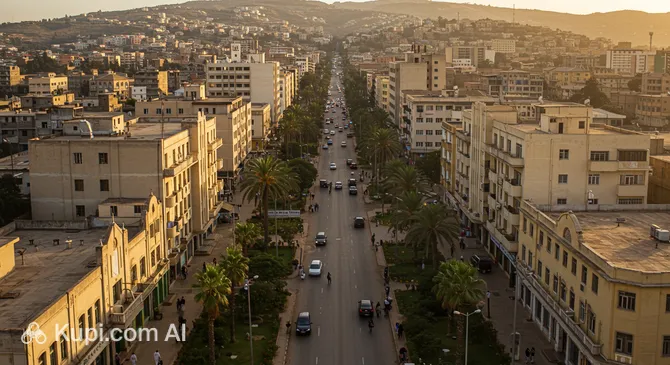
Asmara. Source: Kupi.Binoculars

Located on a high plateau at the tip of an escarpment, Asmara sits at an elevation of over 2,300 meters (about 7,500 feet). This unique geographical position gifts the city with a mild, temperate climate year-round, providing a refreshing escape from the heat of the surrounding African plains. With a population of approximately 963,000 people, it serves as the vibrant heart of the Maekel Region and the nation's cultural center.

The city is a designated UNESCO World Heritage site, recognized for having one of the highest concentrations of Art Deco and Futurist architecture in the world. Delving into the history of Asmara reveals how early 20th-century urban planning transformed the city into an open-air museum of modernist design. Visitors are often struck by iconic landmarks such as the airplane-shaped Fiat Tagliero Building and the imposing Romanesque-style Catholic Cathedral.

Beyond its architectural wonders, Asmara is famous for its thriving coffee culture. Strolling down the palm-lined Harnet Avenue, you can stop at a sidewalk café for a perfectly brewed macchiato and watch the world go by. Whether you are an architecture enthusiast or simply seeking a destination with genuine character and charm, Asmara invites you to explore its streets and discover its hidden treasures.

Weather Overview

Thanks to its high altitude, Asmara enjoys a uniquely mild climate that feels like perpetual spring. Average temperatures remain comfortable year-round, ranging from approximately 17.5°C in January to a peak of about 22.8°C in June. Even during the warmest months, the heat is rarely oppressive, with maximums generally staying below 29°C, while evenings offer a refreshing coolness with lows dipping to around 12°C in winter.

Precipitation is most frequent during the summer, particularly in July and August, which can see rain on up to 29 days of the month. However, the rest of the year, especially from November to March, is significantly drier with very few wet days. For travelers wanting to pack appropriately, checking the current weather in Asmara is recommended. Expect pleasant, warm days throughout the year with a higher chance of frequent, albeit often light, showers during the late summer season.

Interesting Facts

Beyond the celebrated architecture, Asmara holds many fascinating secrets that offer a glimpse into its unique soul. Exploring the city reveals living history and local traditions that are unlike anywhere else in the region.

  • Vintage Car Haven: The streets of the capital of Eritrea often look like a moving museum. Residents have lovingly maintained classic Italian Fiats and Volkswagen Beetles for decades, making these retro vehicles a common and charming sight in everyday traffic rather than just showpieces.

  • The Medebar Market: This open-air workshop is a hub of incredible resourcefulness. Local artisans at Medebar take scrap metal and repurposed materials to forge high-quality cooking utensils, tools, and ornaments, showcasing a culture of ingenuity where nothing goes to waste.

  • A Time-Capsule Bowling Alley: For a nostalgic evening, the Asmara Bowling Center offers a rare experience. Dating back to the 1950s, this facility has kept much of its original charm and vintage equipment, allowing visitors to play a game in a setting that feels untouched by the passage of time.

  • Cinema Density: In the mid-20th century, the city had one of the highest numbers of cinemas per capita in the world. Many of these grand theaters, such as the iconic Cinema Impero, still stand today as monumental reminders of the city's deep-rooted passion for the silver screen and social leisure.

How to Get There

Reaching the capital of Eritrea is an exciting start to your journey in the Horn of Africa. For travelers planning their itinerary, you can find more about how to get to Asmara and the specific transport options available. The city is well-connected to the region primarily by air, which remains the most practical method for international arrivals.

The most direct way to arrive is via Asmara International Airport (IATA: ASM). This facility is the main gateway to the country and is conveniently located in Asmara itself, just 4.9 km from the city center. Due to its close proximity, the journey by taxi or bus is quick, taking approximately 27 minutes. The airport handles a steady stream of travelers and serves as a significant regional hub.

Geographically, there are other airports in the wider region, although they are located across the border in neighboring Ethiopia. Axum Airport (IATA: AXU) is situated in the city of Aksum, about 132 km from Asmara. If traveling by road from this location, the trip would take roughly 3 hours and 40 minutes. Additionally, Makale Airport (IATA: MQX) is located in Mekelle, approximately 216 km away, with an estimated travel time of around 5 hours and 45 minutes. Please note that travel from these airports involves crossing international borders, so it is essential to check current entry requirements and road accessibility.

For clarity, here is a summary of the main airports:

Airport Name City Passenger Traffic Km from City
Asmara International Airport Asmara Medium 4.9
Makale Airport Mekelle Medium 216.3
Axum Airport Aksum Small 132.2
Indaselassie Shire 155.7

Main Attractions

Asmara is renowned for its architectural heritage, often described as an open-air museum of modernist design. Exploring the city offers a unique journey through time, where distinct styles blend harmoniously with the local culture. Here are some of the most significant places to visit.

Fiat Tagliero Building is perhaps the most iconic symbol of the city. Designed by Giuseppe Pettazzi and completed in 1938, this futuristic service station resembles an airplane poised for takeoff. Its most striking features are the massive cantilevered concrete wings, which stretch out over 15 meters without any supporting pillars. It remains a marvel of engineering and a must-see for anyone interested in Art Deco and Futurist architecture.

Enda Mariam Cathedral stands as a prominent spiritual center for the Eritrean Orthodox Tewahedo Church. The current structure, built in the late 1930s, showcases a fascinating fusion of rationalist Italian architecture and traditional Eritrean elements. Its distinctive square towers and the use of red brick layers, mimicking the local wood-and-stone construction technique known as "monkey head," make it a visually unique landmark and a vibrant hub of religious life.

Al Khulafa Al Rashidun Mosque, located near the city center, is a beautiful example of architectural harmony. Constructed in 1938, the mosque blends Rationalist, Classical, and Islamic styles. Visitors are often captivated by the ribbed dome, the impressive minaret, and the use of fine Carrara marble. The geometric designs and the peaceful public square in front of the mosque create a serene atmosphere amidst the city's activity.

Cinema Impero is a treat for culture and history enthusiasts, standing as one of the finest preserved Art Deco cinemas in the world. Since its opening in 1937, it has remained largely unchanged, retaining its original projection equipment and grand interior decor. The cinema's towering facade on Harnet Avenue, adorned with illuminated portholes, continues to be a favorite gathering spot and a testament to Asmara's long-standing love affair with film.

Local Cuisine

The culinary landscape of Asmara is a delightful reflection of its history, offering a unique fusion of traditional Eritrean flavors and distinct Italian influences. Visitors are often surprised to find that they can enjoy one of the best macchiatos outside of Italy while savoring authentic, spicy African stews in the same day. This gastronomic duality makes dining in the capital a memorable part of any trip.

At the heart of the local cuisine is Injera, a spongy, sour fermented flatbread made from teff flour. It serves as both the base of the meal and the utensil used to scoop up various stews. The most iconic accompaniment is Zigni, a rich and spicy beef stew slow-cooked with berbere, a complex blend of chili peppers and spices that defines the heat and flavor profile of many Eritrean dishes. For a lighter or vegetarian option, Shiro—a smooth, savory chickpea or broad bean stew—is a delicious staple found in almost every household and restaurant.

Due to the city's colonial past, Italian cuisine has been seamlessly integrated into the local food culture. Asmara is famous for its exceptional pasta and pizza, which are prepared with dedication and often feature fresh, local ingredients. Capretto (roast kid goat) is another delicacy that bridges the gap between the two culinary worlds, often served in a way that highlights the tenderness of the meat. It is not preserving a museum piece; these Italian dishes are a living, breathing part of the modern Asmarino diet.

The city's beverage culture is dominated by coffee, which is treated with near-religious reverence. The traditional Coffee Ceremony is a ritual of hospitality involving roasting green beans over hot coals, grinding them, and brewing the coffee in a clay pot called a jebena. Conversely, the city's sidewalk cafes serve quick, high-quality espresso and macchiatos, accompanied by fresh pastries and gelato, perfect for a sunny afternoon break on the bustling Harnet Avenue.

For those looking to sample local libations, Suwa is a home-brewed beer made from fermented grain, offering a cloudy appearance and a distinct, earthy taste. Mies, a honey wine similar to mead, provides a sweeter alternative. Dining in Asmara is traditionally a communal affair; meals are often shared from a single large plate placed in the center of the table, fostering a sense of community and connection among diners.

Travel Tips

Visiting Asmara is a unique experience that requires a bit of preparation to fully enjoy its retro charm and laid-back atmosphere. Here are some practical tips to ensure your trip to Eritrea’s capital is smooth, comfortable, and culturally respectful.

  1. Clothing and Gear: Due to the city's high altitude, the weather is mild but can get chilly in the evenings and early mornings. It is best to pack layers, such as light jackets or sweaters, alongside your summer clothes. Comfortable walking shoes are essential for exploring the architectural landmarks. If you plan to visit the Orthodox cathedrals or mosques, dress modestly by covering your shoulders and knees; women may also need a headscarf for entering churches.
  2. Transportation: The city center is compact and extremely walkable, which is the best way to admire the Art Deco buildings. For longer distances, yellow taxis are the most convenient option; they do not use meters, so negotiate the fare before getting in. Public buses are available and very cheap, but they can be crowded. Car rentals usually come with a driver, which is recommended for navigating local roads.
  3. Finances: Asmara is strictly a cash economy. International credit cards and ATMs are generally not functional for foreign travelers. You must bring enough hard currency (USD or EUR) for your entire trip and exchange it only at official "Himbol" exchange bureaus or at the airport. Be sure to declare all foreign currency upon arrival and keep your exchange receipts, as you may be asked for them when leaving the country.
  4. Health and Safety: Asmara is considered one of the safest capitals in Africa, and walking around is generally safe day and night. However, standard precautions like watching your belongings apply. Pharmacies are available, but stock can be limited, so bring a sufficient supply of any personal prescription medications. It is advisable to drink bottled water rather than tap water to avoid stomach issues.
  5. Communication: Tigrinya is the primary language, but English is widely spoken, especially in the service industry and among the educated population. Italian is also understood by many older residents. Be prepared for a "digital detox"; internet access is extremely slow, and Wi-Fi in hotels is often unreliable or non-existent. Buying a local SIM card can be a bureaucratic process, so rely on internet cafes if connectivity is urgent.
  6. Local Etiquette: Eritreans are very hospitable and polite. A handshake is the standard greeting, often accompanied by touching right shoulders. When eating traditional food like Injera, always use your right hand. The "Passeggiata"—an evening stroll along Harnet Avenue—is a major social ritual; joining in is a great way to respect and participate in local culture.
  7. What to Avoid: Strictly avoid taking photographs of government buildings, military personnel, or police stations. This is a serious offense and can lead to the confiscation of your camera or legal trouble. Always ask for permission before photographing local people.
  8. Photography Permit: To freely take photos of the city's famous modernist architecture, tourists are often required to obtain a photography permit from the Tourism Information Center located on Harnet Avenue. Getting this permit early in your trip will save you from potential hassles with authorities while capturing the city's beauty.

With these practicalities in mind, you are ready to immerse yourself in the "Dolce Vita" of Africa without worry. Embrace the slower pace of life, enjoy the world-class coffee, and let the timeless beauty of Asmara captivate you.

Entertainment & Nightlife

Entertainment in Asmara is defined by a relaxed, social atmosphere rather than the high-energy pulse of typical metropolis nightlife. As the sun sets, the city transforms into a welcoming space where the emphasis is on connection, conversation, and enjoying the cool evening air. The nightlife here is distinctly safe and laid-back, revolving heavily around the Italian tradition of the passeggiata, or evening stroll, where locals dress in their finest clothes to walk along the main avenues, greeting friends and enjoying the community vibe.

The heart of the action is undoubtedly Harnet Avenue and its surrounding streets. This is where the city comes alive after dark, with palm trees illuminated by streetlights and the buzz of chatter filling the air. Unlike cities with designated "party districts," Asmara’s entertainment is integrated into the city center. You will find a mix of historic bars, modern lounges, and hotel clubs where the crowd is a diverse blend of locals, expatriates, and travelers. The dress code is generally smart-casual; Eritreans take pride in their appearance, so avoiding overly scruffy attire will help you blend in.

For those looking to enjoy a drink and some music, Zara Bar is one of the most popular spots in town. Located near the sweeping steps of the Great Mosque, it offers a modern setting with a lively outdoor terrace. It is a great place to mingle, enjoy a cold beer or a cocktail, and listen to a mix of international and local hits. Another notable venue is the bar within the Cinema Roma complex. While the cinema itself is an architectural gem, the attached café-bar exudes a classic charm, making it a perfect spot for a sophisticated evening drink surrounded by marble and history.

If you are in the mood for dancing, the nightlife scene picks up later in the evening, usually after 10:00 PM. The Mask Place and Hydra are well-known among locals for offering a more club-like atmosphere where you can dance to local beats and Western pop. Prices in Asmara are generally very affordable compared to international standards. A beer or a glass of wine in a nice bar is reasonably priced, allowing for an enjoyable night out without breaking the bank.

Navigating the city at night is straightforward. Asmara is widely considered one of the safest capitals in Africa, and walking between venues in the city center is common and generally worry-free. However, for longer distances or late-night returns to your hotel, it is advisable to take a taxi. Taxis are usually available near major hotels and popular bars. Since they do not use meters, remember to agree on the fare with the driver before you start your journey.

While the nights are for socializing, daytime entertainment in Asmara offers a quiet dive into culture and history. The National Museum of Eritrea provides a fascinating look at the country's archaeological and cultural heritage. For theater lovers, the Asmara Opera House is a stunning architectural landmark that occasionally hosts performances, though simply visiting the building is a treat in itself. Whether day or night, the entertainment pace in Asmara invites you to slow down and savor the moment.

Parks & Museums

While Asmara is primarily celebrated for its architectural density, the city also offers pockets of greenery and profound cultural institutions that provide a deeper understanding of Eritrea. The capital's high altitude allows for distinct natural areas on its outskirts, while its museums serve as custodians of a rich and complex history, ranging from ancient archaeological finds to the legacy of the struggle for independence.

Mai Jah Jah is one of the city's most charming green spaces, functioning as a terraced garden that cascades down a slope near the city center. The name translates to "waterfall" or "splash," referencing the fountains that are central to its design. It is a peaceful spot where locals come to relax among the flower beds and trees, offering a refreshing break from the urban environment. The sound of running water and the well-maintained paths make it a pleasant location for a leisurely afternoon stroll.

For a more rugged natural experience, the Biet Ghiorghis Zoo and Park, located on the eastern edge of the city, offers a mix of wildlife and landscape. While the zoo facilities are modest, the surrounding area is part of the lush "Green Belt" escarpment. The park is situated on a hill that provides panoramic views of the city and the winding roads leading down toward the coast. It is a favorite weekend destination for families and hikers looking to enjoy the fresh mountain air and the unique flora of the highlands.

The National Museum of Eritrea is the premier cultural institution in the city. Relocated to a new facility to better house its growing collection, the museum offers a comprehensive look at the nation's history. Exhibits range from paleontological discoveries—including million-year-old hominid fossils found in the Danakil Depression—to artifacts from the ancient port city of Adulis. It also features ethnographic displays showcasing the diverse traditions, clothing, and tools of Eritrea's nine ethnic groups, making it an essential stop for anyone wanting to understand the country's cultural fabric.

Although not a traditional museum, the Tank Graveyard acts as a powerful open-air archive of the country's turbulent past. Located behind the chaotic logistics of the ornate scrap markets, this vast field is filled with piled-up military vehicles, tanks, and rusty hardware left over from decades of conflict. It is a hauntingly photogenic and surreal site that serves as a silent monument to history. Visitors usually need a permit to visit, which adds to the sense of entering a restricted, time-frozen zone.

Among the significant historical landmarks, the Governor's Palace (Gibbi) stands out for its grandeur. Built in the neoclassical style, it served as the seat of power during the Italian colonial period and later for the Ethiopian administration. While entry to the interior is often restricted due to its official use, the building's imposing facade and the surrounding well-kept grounds are impressive to view from the outside. Nearby, the Italian Cemetery offers a quiet, reflective atmosphere with elaborate tombstones and statues that narrate the stories of the Italian community that once lived here.

For a truly authentic experience, take a short trip to the edge of the city at Durfo. This area is not a formal park but a natural viewpoint at the precipice of the eastern escarpment. From here, you can watch the mist roll over the green valleys below, where the clouds often sit lower than the city itself. It is a spectacular spot for photography and provides a sense of the dramatic geography that defines this "city in the clouds."

Getting Around

Navigating the public transport system in Asmara is a relatively straightforward experience, though it differs significantly from the high-tech networks found in many other capital cities. The city does not have a metro, tram, or trolleybus system. Instead, the backbone of local transit relies heavily on a network of public buses and minibuses. The large red buses traverse the main arterial roads and connect the city center with the suburbs. They are the most affordable way to get around, though visitors should be prepared for them to be quite crowded, especially during peak rush hours.

For a slightly faster and more flexible option, white minibuses are a popular alternative used extensively by locals. These vehicles operate on fixed routes but can stop anywhere along the way to pick up or drop off passengers. While they are marginally more expensive than the large buses, they are generally quicker and more frequent. To hail one, you simply wave from the roadside, and the destination is usually shouted by the conductor or displayed in the window.

The payment system across all forms of public transport in the city is strictly cash-based. There are no travel cards, digital apps, or electronic passes available. When you board a bus or minibus, you will typically pay a conductor who moves through the vehicle collecting fares. Prices are extremely low by international standards, usually costing just a few Nakfa. It is highly advisable to carry small change, as conductors may not always have enough bills to break larger denominations.

For tourists, the most convenient alternative to buses is the fleet of yellow taxis. These can be found parked near major hotels, the central market, and along Harnet Avenue. It is important to note that taxis in the city do not use meters. You must negotiate and agree on the fare with the driver before getting into the car. While "shared taxis" are common among residents to split the cost, you can also hire a taxi for a private trip (contract taxi) for a higher rate. Ride-sharing apps like Uber or Bolt do not operate here, so flagging down a yellow cab or arranging one through your hotel is the standard practice.

Walking is often the best transport option for exploring the historic city center. The high concentration of Art Deco buildings and the compact nature of the downtown area make it a pedestrian’s paradise. However, if you are looking for a unique transport experience, you must check out the legendary steam train. While not a mode of daily commuter transport, the vintage railway offers charter trips on a century-old line that winds down the escarpment. It is a "living museum" piece and a highlight for any transport enthusiast visiting the region.

Public transport generally operates from early morning, around 6:00 AM, until the evening, winding down between 8:00 PM and 9:00 PM. Service becomes very scarce late at night, so if you plan to be out late, it is essential to pre-arrange a taxi pickup. Car rentals are available but almost exclusively come with a driver, which removes the stress of navigating unfamiliar roads. Cycling is also a beloved local sport, and while formal bike rental shops for tourists are rare, the bike-friendly culture means you will see many cyclists on the roads.

Accommodation

Finding accommodation in Asmara is an integral part of the travel experience, often feeling like a step back in time. The city offers a range of options that reflect its unique history, from grand colonial-era hotels to modest, functional guesthouses. Unlike many modern capitals filled with international chain hotels, the accommodation landscape here is dominated by locally run establishments, many of which are housed in beautifully preserved Art Deco or Neoclassical buildings. Visitors can choose between staying in atmospheric historic properties that exude old-world charm or opting for more modern, albeit often basic, facilities located slightly further from the center.

For the most convenient and culturally immersive stay, the city center is undoubtedly the best area to choose. Staying near Harnet Avenue places you within walking distance of the city's most famous cinemas, cathedrals, and cafes. This area allows you to step out of your hotel directly into the vibrant life of the passeggiata. The central district is compact and safe, making it easy to explore the architectural highlights on foot without the need for constant taxi rides.

One of the defining features of Asmara's hospitality scene is the opportunity to stay in "living museums." Several of the city's most renowned hotels date back to the Italian colonial period, featuring high ceilings, antique furniture, and marble staircases. While they may lack some contemporary amenities like high-speed Wi-Fi or digital room keys, they make up for it with character and nostalgia. For those seeking more standard luxury, there are a few larger hotels on the outskirts of the city that offer swimming pools and business facilities, often serving as the base for UN staff and diplomats.

When it comes to booking accommodation, travelers should be prepared for a more traditional approach. Online booking platforms are rarely used by local hotels, and many establishments do not have functional websites. The most reliable method is often to book via telephone or to arrange your stay through a local tour operator before you arrive. During peak travel times, such as the summer months or major holidays, it is advisable to secure your reservation well in advance, as the best rooms in the historic hotels fill up quickly.

The price range for lodging in Asmara is generally quite reasonable compared to international standards. Budget travelers can find clean and simple pensions for a very low cost, while mid-range historic hotels offer excellent value for the unique experience they provide. It is important to remember that credit cards are virtually useless in the country. You will need to pay for your accommodation in cash, usually in the local currency (Nakfa), so ensure you have exchanged enough money upon arrival to cover your stay.

Nearby Cities

Asmara serves as the perfect starting point for exploring the wider wonders of Eritrea. Located centrally in the Maekel Region, the capital is well-connected to several other significant towns and cities, each offering a distinct glimpse into the country's diverse landscapes and cultures. From the cool highlands to the warm coast of the Red Sea, many fascinating destinations are within reach.

One of the most popular trips from the capital is to Massawa. Known as the "Pearl of the Red Sea," this historic port city is famous for its unique Ottoman and Italian architecture and its warm, coastal atmosphere. Despite being only about 64 km away, the journey involves a dramatic descent from the highlands to sea level, offering spectacular views along the winding road.

To the northwest lies Keren, the second-largest city in the country. Situated approximately 71 km from Asmara, Keren is celebrated for its mild climate, vibrant markets, and historical significance, including several well-preserved colonial-era sites. It is a cultural hub that provides a different pace of life compared to the capital.

Heading south, travelers can visit Mendefera, the administrative capital of the Southern Region. Located about 51 km away, it is known for its beautiful surrounding scenery and historical importance. Even closer is the town of Debarwa, just 29 km from Asmara, which was historically a capital for local rulers and remains a key agricultural center.

For those willing to travel much further, Assab is a major port city located in the Southern Red Sea Region. It is significantly more distant, sitting about 484 km away, and serves as an important gateway for trade and commerce in the southern part of the nation.

Here is an overview of these nearby cities and their distance from Asmara:

City Population Distance (km)
Debarwa 25,000 29
Mendefera 28,492 51
Massawa 39,758 64
Keren 146,500 71
Assab 74,405 484

Shopping & Souvenirs

Shopping in Asmara is a delightful experience that feels refreshingly different from the commercialized retail culture found in many other capital cities. Instead of sprawling mega-malls and international chain stores, the city offers a nostalgic atmosphere where small, family-run boutiques and bustling open-air markets dominate. Visitors will find that shopping here is less about acquiring global brands and more about discovering unique local craftsmanship, traditional artifacts, and enjoying the personal interaction with friendly shopkeepers.

The primary destination for retail therapy is the iconic Harnet Avenue and its adjacent side streets. As the city's main thoroughfare, it is lined with a variety of shops housed in beautiful Art Deco buildings. Here, you can browse through stores selling fashion, high-quality leather shoes, and imported electronics. The avenue is also home to several photo studios and bookshops that offer a glimpse into the local culture. Walking down this palm-lined street is as much about soaking in the "Little Rome" vibe as it is about buying goods.

Travelers looking for large, Western-style shopping malls will not find them in Asmara. The city has preserved its historic urban fabric, meaning that retail is integrated into the streetscape rather than enclosed in massive complexes. However, there are several shopping arcades and smaller commercial centers scattered around the downtown area. These multi-story buildings typically host a mix of offices and specialized shops, offering everything from textiles to household goods in a more concentrated setting.

For a more authentic and sensory experience, the city's markets are unmissable. The Central Market (often referred to as the Shuq) is a vibrant hub of activity where locals buy fresh produce, grains, and spices. It is the perfect place to purchase Berbere, the famous fiery spice blend essential to Eritrean cuisine. Another unique spot is the Medebar Market, which functions as an open-air workshop. While it is famous for its artisans recycling metal into tools, you can also find interesting handcrafted items that showcase the incredible ingenuity of the local people.

When it comes to souvenirs, Asmara offers high-quality treasures that are worth the investment. The city is renowned for its gold and silver jewelry, with many smiths creating intricate designs that reflect traditional Eritrean patterns. Leather goods, such as jackets, bags, and shoes, are also popular and reasonably priced. For a smaller keepsake, consider buying a traditional clay coffee pot (jebena) or hand-woven baskets, which are both beautiful and functional symbols of Eritrean hospitality.

Understanding the local business hours is crucial for planning your shopping trips. Asmara strictly observes a long midday break, often referred to as a siesta. Shops typically open around 8:00 AM or 9:00 AM, close for lunch between 12:00 PM and 2:00 PM (or sometimes 3:00 PM), and then reopen until the evening, usually closing around 7:00 PM or 8:00 PM. Many shops are closed on Sundays.

Payment in Asmara is almost exclusively cash-based. Credit cards are rarely accepted in local shops or markets, and there is no tax-free shopping refund system for tourists. Transactions are conducted in the local currency, the Nakfa. It is advisable to carry enough cash in smaller denominations, especially when visiting markets, to make bargaining easier and transactions smoother.

Reached the end of the page?

That means the route is fully explored