Support

Aksum

About

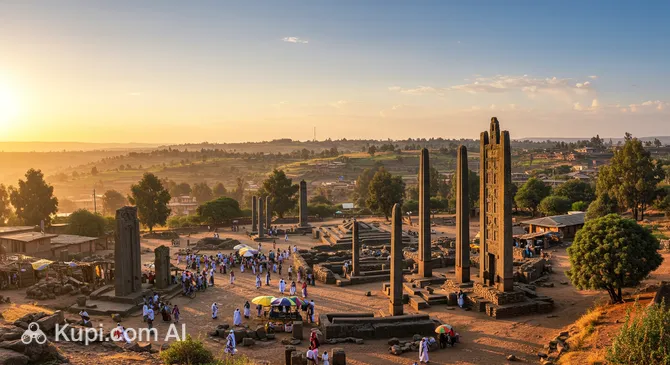
Aksum is a city shrouded in legend and mystery, often described as the spiritual heart of the country. Located in the northern highlands of Ethiopia, specifically in the Tigray Region, this ancient settlement offers visitors a profound connection to the past. With a population of approximately 66,800 inhabitants, it maintains a relatively small and intimate atmosphere despite its colossal historical significance.

Aksum. Source: Kupi.Binoculars

The city sits at an elevation of over 2,000 meters, providing a pleasant, temperate climate that makes exploring its archaeological wonders comfortable throughout much of the year. As the former capital of the powerful Aksumite Empire, the history of Aksum stretches back thousands of years, marking it as one of the oldest continuously inhabited places in Africa and a UNESCO World Heritage site.

Travelers are drawn here to witness the spectacular Northern Stelae Park, home to massive monolithic obelisks that serve as a testament to the engineering prowess of the ancient world. Another site of immense importance is the Church of Our Lady Mary of Zion, which is believed by many to house the biblical Ark of the Covenant. Exploring the ruins of the Queen of Sheba’s Palace (Dungur) further adds to the city's mythical allure.

Whether you are a history buff, a spiritual seeker, or simply an adventurer looking for unique destinations, Aksum promises an unforgettable journey. It is a place where the echoes of antiquity are still very much alive, inviting you to walk in the footsteps of ancient kings and queens.

Weather Overview

Due to its high elevation, the city enjoys a mild and temperate climate year-round, which is generally comfortable for exploration. The average temperatures remain relatively stable, typically fluctuating between 19°C and 24°C. The warmest period usually occurs in April and May, when daytime highs can reach up to 31°C, while the coolest nights are often found in December and January, with lows dropping to around 11°C.

Rainfall patterns play a significant role in the local seasons. The weather in Aksum is distinctly dry from October through March, seeing virtually no precipitation and clear skies. In contrast, July and August are characterized by a high frequency of wet days—up to 30 days in August—though the actual volume of rainfall is often light. Travelers visiting during these months should be prepared for daily damp conditions, whereas the rest of the year is predominantly dry and sunny.

Interesting Facts

Beyond the towering obelisks and ancient tombs, Aksum holds many fascinating secrets that reveal the depth of its civilization. These lesser-known details paint a vivid picture of a city that was once a superpower of the ancient world.

  • The city is home to the Ezana Stone, an ancient artifact often compared to the famous Rosetta Stone. Inscribed in three languages—Ge'ez, Sabaean, and Greek—this tablet was instrumental in helping historians decipher ancient scripts and understand the political and religious shifts of the empire in the 4th century.

  • Aksum was a true pioneer in economics, becoming the first African polity south of the Sahara to mint its own coinage. These coins, struck in gold, silver, and bronze, were used to facilitate trade with other major powers of the time, including Rome, Persia, and India.

  • According to steadfast local tradition, the biblical Ark of the Covenant is guarded by a single monk who is strictly forbidden from ever leaving the chapel grounds. This guardian is the only person on Earth permitted to see the Ark, and he serves for life before appointing his own successor.

  • The massive rock-hewn reservoir known as Mai Shum is steeped in local folklore, with many believing it served as the swimming pool for the legendary Queen of Sheba. While likely constructed in a later era, the site remains spiritually significant and is used for the annual Timkat (Epiphany) baptismal celebrations.

How to Get There

Reaching this historic destination in the northern highlands is an adventure in itself. While the terrain is rugged and mountainous, modern transport connections make the journey accessible for visitors. For detailed planning, you can read more about how to get to Aksum and the various travel options available.

The most direct way to arrive is via Axum Airport (IATA: AXU), which is conveniently located just 5.8 km from the city center. This facility primarily serves domestic flights and is the main gateway for tourists visiting the ancient stelae. A taxi or shuttle from here to the heart of the city takes approximately 30 minutes. With an annual passenger traffic of around 85,000, it is a small but essential hub for the region.

Alternatively, you can fly into Indaselassie (IATA: SHC), located in the city of Shire. This airport is about 49.1 km from Aksum. Travelers arriving here can expect a drive of roughly 1 hour and 35 minutes to reach their final destination. Another option for those exploring the wider Tigray Region is Makale Airport (IATA: MQX) in the city of Mekelle. Situated approximately 113.7 km away, the transfer by road from Mekelle takes about 3 hours and 10 minutes, offering a chance to see more of the Ethiopian landscape.

For clarity, here is a summary of the main airports:

Airport Name City Passenger Traffic Km from City
Gondar Airport Gonder Medium 225.9
Asmara International Airport Asmara Medium 130.8
Makale Airport Mekelle Medium 113.7
Axum Airport Aksum Small 5.8
Indaselassie Shire 49.1

The city of Aksum does not have a railway station, and there are no train services currently operating in this part of the country. Transportation within the region relies heavily on the road network. Visitors typically travel by bus or private car to navigate between towns and historical sites in the area.

Main Attractions

The Northern Stelae Park is undoubtedly the most famous landmark in the city and a UNESCO World Heritage site. This spectacular field is filled with massive monolithic obelisks that were erected as tomb markers for ancient rulers. The most impressive standing monument is the King Ezana’s Stele, which towers 23 meters above the ground. Visitors are often awestruck by the sheer scale of the fallen Great Stele, which, if standing, would have been the largest single block of stone ever quarried by humanity, weighing over 500 tons.

Another site of immense spiritual significance is the Church of Our Lady Mary of Zion. It is considered the holiest place in the country, as it is believed to house the biblical Ark of the Covenant in a dedicated chapel. The complex features both an old 17th-century church built by Emperor Fasilides and a grand modern cathedral. While the Ark itself is guarded and cannot be seen, the site attracts pilgrims and history enthusiasts from around the world who come to experience its profound religious atmosphere.

For those interested in ancient architecture and legends, the Dungur Palace, widely known as the Queen of Sheba’s Palace, is a must-visit. Although archaeological evidence suggests the structure dates to the 6th century AD—long after the legendary queen's time—the ruins are magnificent. The site consists of stone walls, rooms, and a central courtyard that provide a clear layout of an ancient noble residence, allowing imagination to reconstruct the grandeur of the Aksumite elite.

A short distance from the city center lies the Tombs of Kings Kaleb and Gebre Meskel. These twin tombs are celebrated for their exceptional stonemasonry and precision engineering. Visitors can descend into the underground chambers to view the granite sarcophagi and admire how the heavy stone blocks were fitted together without the use of mortar. The location also offers panoramic views of the surrounding mountains, adding a scenic element to the historical tour.

Finally, the Archaeological Museum of Aksum provides essential context for all the outdoor sites. It houses a valuable collection of artifacts unearthed in the region, including Sabaean inscriptions, ancient coins, pottery, and jewelry. A visit here helps piece together the story of the Aksumite Empire, offering a deeper understanding of the civilization that created the monumental structures seen throughout the city.

Local Cuisine

The culinary experience in Aksum is a vibrant reflection of the Tigray Region's rich heritage, characterized by bold spices, communal dining, and ancient traditions. The foundation of almost every meal is injera, a large, spongy sourdough flatbread made from teff flour. In this part of the country, the injera is often lighter in color and serves as both the plate and the utensil. Diners tear off pieces of the bread to scoop up various stews and sauces, traditionally eating with their right hand from a shared central platter.

Among the dishes you must try, Shiro holds a special place in northern cuisine. It is a smooth, spicy stew made from ground chickpeas or broad beans, often simmered with garlic and onions. While popular throughout the country, the Tigray variation is renowned for its depth of flavor. For a true regional specialty, look for Tihlo. This dish consists of small balls of barley dough that are dipped into a fiery meat sauce using a two-pronged wooden stick, offering a unique texture and taste that is distinct to this area. Meat lovers will also enjoy Tibs, chunks of beef or lamb sautéed with rosemary and peppers.

No meal in Aksum is complete without exploring the local beverages. The region is famous for Tej, a potent honey wine often served in flask-like glass vessels called berele. It has a sweet taste that masks its strength. For something lighter and more rustic, you can try Tella, a traditional home-brewed beer made from barley or teff. Non-alcoholic options are dominated by the traditional coffee ceremony. As the birthplace of coffee, the preparation involves roasting beans over charcoal and brewing them in a clay pot (jebena), a ritual that signifies hospitality and friendship.

The food culture here is deeply influenced by the Ethiopian Orthodox Church, meaning that "fasting" food (vegan cuisine) is widely available and delicious. On Wednesdays and Fridays, as well as during religious seasons like Lent, restaurants serve Yetsom Beyaynetu, a colorful platter of various vegetable stews, lentils, and collard greens. Visitors will find a mix of modest local eateries and hotel restaurants in the city center, where the atmosphere is laid-back and welcoming. Sharing a meal is considered an act of bonding, often accompanied by the gesture of "gursha," where friends feed each other a bite as a sign of respect.

Travel Tips

Visiting Aksum is a journey into the deep roots of Ethiopian civilization, but navigating this historic city requires a bit of preparation to ensure a smooth experience. These practical tips will help you respect local traditions and handle logistics with ease, allowing you to focus on the incredible heritage around you.

  1. Clothing and Gear: Since Aksum is located at a high altitude, the weather can be changeable. It is best to pack layers; days can be warm, but evenings often get quite chilly. Comfortable, sturdy walking shoes are essential for exploring the archaeological sites. Crucially, this is a deeply religious city, so modest dress is required. Both men and women should cover their shoulders and knees, especially when visiting churches. A lightweight scarf or shamma (traditional white shawl) is a very useful accessory to have on hand.
  2. Transportation: The city center is relatively compact and walkable, but for longer distances, the most popular mode of transport is the Bajaj (a three-wheeled auto-rickshaw). They are affordable and abundant, offering a convenient way to hop between the Stelae Park and the tombs. Taxis are available but less common. Car rental is generally not necessary unless you plan to drive extensively outside the city, in which case hiring a car with a driver is the standard practice.
  3. Finances: The local currency is the Ethiopian Birr (ETB). While some high-end hotels may accept international credit cards, cash is king in Aksum. ATMs are available but can be unreliable or out of service, so it is wise to carry enough cash or exchange foreign currency (USD or Euros) at a bank upon arrival. Small bills are very useful for tips and buying souvenirs. Tipping is appreciated in restaurants and for guides.
  4. Health and Safety: Aksum is generally safe for tourists, but standard precautions apply. Avoid walking alone in poorly lit areas at night. Due to the elevation, stay hydrated and wear high-SPF sunscreen. Drink only bottled water and avoid ice in drinks to prevent stomach issues. Pharmacies are available in the town center for basic supplies, but you should bring any specific prescription medications you need from home.
  5. Communication: The primary languages spoken are Tigrinya and Amharic. English is spoken by licensed tour guides and hotel receptionists, but less so by shopkeepers or taxi drivers. Learning a few words like "Selam" (Hello) and "Yekenyeley" (Thank you in Tigrinya) goes a long way. For internet access, Wi-Fi in hotels can be slow; buying a local SIM card from Ethio Telecom is recommended for better connectivity.
  6. Local Etiquette: Greetings are important and often involve a handshake and touching the right shoulder. When visiting churches, you strictly must remove your shoes before entering. If you are invited to share a meal, remember to eat with your right hand only, as the left is considered unclean. It is polite to accept a small portion if offered, even if you are not hungry.
  7. What to Avoid: Do not attempt to enter the chapel housing the Ark of the Covenant; it is strictly off-limits to everyone except the guardian monk, and trying to get too close can cause significant offense. Also, avoid taking photographs of people, especially priests or monks, without asking for their permission first. Public displays of affection should be minimized as the culture is conservative.
  8. Additional Tip: To truly understand the history of the stelae and ruins, hiring a local guide is highly recommended. The official guides association usually has an office near the Northern Stelae Park. They can provide context that guidebooks often miss and help navigate the specific entry rules for the various archaeological sites.

By keeping these practicalities in mind, you will be well-equipped to embrace the unique rhythm of life in Aksum. The locals are known for their hospitality and pride in their history, ensuring that respectful visitors are welcomed with open arms into this ancient highland city.

Entertainment & Nightlife

Entertainment and nightlife in Aksum reflect the city's spiritual and historical character rather than a modern party scene. Unlike the bustling nightclubs found in the capital, the evening atmosphere here is subdued, relaxed, and deeply rooted in tradition. The nightlife primarily revolves around hotel bars, local cultural restaurants, and the captivating sounds of traditional music. The main activity is concentrated along the city's central road and the area surrounding the Piazza, where locals and tourists gather to unwind after a day of exploration.

For visitors, the most authentic way to spend an evening is at a traditional Azmari Bet. These intimate venues feature local minstrels, known as Azmari, who play the one-stringed violin (masinqo) and improvise songs that are often witty and interactive. It is a fantastic opportunity to experience the region's musical heritage while enjoying local drinks like Tej (honey wine). The crowd is usually a mix of friendly locals and curious travelers, and the dress code is casual but respectful.

If you prefer a more conventional setting for a drink, the city's major hotels offer the most reliable options. The Yeha Hotel is a popular choice, famous for its terrace which offers stunning views over the Northern Stelae Park. It is an ideal spot to enjoy a cold beer or a glass of wine while watching the sunset. Another well-known venue is the Remhai Hotel, which provides a comfortable bar setting and often hosts guests looking for a quiet place to socialize. These venues typically stay open until around 10:00 PM or 11:00 PM.

When planning a night out, it is best to start early. Most social gatherings begin around 7:00 PM and wind down by midnight. Prices are generally very affordable compared to Western standards. For transportation, the three-wheeled Bajajs are the standard way to get around. However, they may stop running late at night, so it is advisable to arrange a ride in advance or ask your hotel reception to call a taxi for you. In terms of safety, Aksum is generally safe for evening walks near the main lit streets, but it is always recommended to stay in groups and avoid unlit back alleys.

During the daytime, entertainment in Aksum is synonymous with cultural discovery. While you won't find large amusement parks or modern shopping malls, the city offers profound educational experiences. The Archaeological Museum of Aksum is the premier destination for spending a few hours examining ancient artifacts. Additionally, simply walking through the open-air historical sites serves as the main leisure activity. For a change of pace, the local markets offer a lively atmosphere where you can observe daily trade and shop for traditional handicrafts and woven baskets.

Parks & Museums

While Aksum is primarily known for its archaeological ruins, the city and its surroundings function as a vast open-air museum set against the dramatic backdrop of the Tigrayan highlands. The concept of a "park" here blends seamlessly with historical preservation, where green spaces are often the custodians of ancient secrets. Visitors will find that exploring the natural side of the city often leads to discovering centuries-old carvings and sacred sites hidden among the hills.

Gobedra Hill is a significant natural landmark located roughly 5 kilometers from the city center, offering a rewarding experience for those who enjoy hiking and panoramic views. The hill is famous not only for its rugged terrain and fresh highland air but also for the Lioness of Gobedra, a remarkable 3-meter-long relief carved into a large boulder. The hike up the hill provides a peaceful escape from the town and rewards adventurers with sweeping vistas of the Adwa mountains, making it a perfect spot for photography and nature appreciation.

For a tranquil atmosphere closer to the main sites, the area surrounding Mai Shum (the Queen of Sheba’s Bath) serves as a scenic retreat. While the reservoir itself is historic, the perimeter is lined with eucalyptus and indigenous trees, creating a shaded environment where locals often relax. The stone steps leading down to the water and the surrounding rocky outcrops offer a cool, quiet place to sit and reflect on the history of the region while watching local birdlife.

In terms of cultural institutions, the Museum of the Cathedral of St. Mary of Zion (often referred to as the Church Treasury) is arguably the most impressive repository of religious art in the country. Distinct from the main archaeological museum, this facility houses a breathtaking collection of royal crowns, gold-embroidered robes, and processional crosses donated by Ethiopian emperors over the centuries. Tourists are often captivated by the illustrated parchment manuscripts (books) on display, which feature vibrant religious paintings that date back hundreds of years, offering a rare glimpse into the artistic heritage of the Ethiopian Orthodox Church.

The Archaeological Museum of Aksum serves as the definitive guide to the city's pre-Christian and early Christian history. While the outdoor stelae are massive, this museum provides the necessary intimate details of daily Aksumite life. The exhibits include an extensive array of minted coins—evidence of the empire's economic power—as well as delicate glassware, pottery, and jewelry imported from the Roman Empire and India. It is an essential stop for understanding the global connections this civilization maintained in antiquity.

For a truly authentic local experience, look for the massive Sycamore Fig Tree (known locally as Da'ero Ela) in the town center. This is not a park in the traditional sense, but a living community hub. For generations, the shade of this giant tree has served as a meeting place where elders gather, news is exchanged, and the pulse of the city can be felt. Standing beneath its sprawling branches offers a moment of connection with the living culture of Aksum, away from the stone monuments of the past.

Getting Around

The public transport system in Aksum is relatively simple and informal compared to large metropolises. Visitors should not expect to find a metro, tram, or extensive municipal bus network. Instead, the city relies on a fleet of smaller, more agile vehicles that navigate the streets efficiently. The compact nature of the city means that transportation is readily available but operates on a system that is unique to the region.

The undisputed king of the road in Aksum is the Bajaj, a three-wheeled auto-rickshaw that serves as the primary mode of transport for locals and tourists alike. These blue vehicles are everywhere and function in two distinct ways. You can use them as a "shared" service, where the driver picks up multiple passengers going in the same direction for a very low fixed fare. Alternatively, you can hire a Bajaj on a "contract" basis (private hire), which allows you to have the vehicle to yourself for a direct trip to a specific destination, such as a hotel or an archaeological site.

For travel to the outskirts or neighboring towns, minibuses are the standard option. These vans typically congregate at specific stations or transit hubs rather than following a strict timetable with marked stops throughout the city center. They wait until they are full before departing. While less relevant for short hops between city attractions, they are essential if you plan to visit sites located further afield in the surrounding province.

The payment system is exclusively cash-based. There are no travel cards, passes, or mobile apps for public transport here. Passengers must pay the driver directly, usually at the end of the trip for a Bajaj or upon boarding a minibus. It is crucial to carry small denominations of the local currency, as drivers often struggle to make change for large bills. Prices are generally very affordable, but fares for "contract" rides should be negotiated and agreed upon before you start your journey to avoid misunderstandings.

Walking is a highly practical alternative to motorized transport. Aksum is a walkable city, and many of the major historical sites, such as the Northern Stelae Park and the Church of Our Lady Mary of Zion, are located within close proximity to one another. For those who prefer more comfort, traditional taxis (often older sedan cars) are available, though they are less common than Bajajs. Car rentals are almost exclusively provided with a driver, which can be arranged through hotels or tour operators for day trips.

Tourists should be aware that public transport operates primarily during daylight hours. Bajajs and minibuses are abundant from early morning until sunset, but their availability drops significantly after dark. If you plan to be out late dining, it is advisable to arrange a ride in advance or have your restaurant call a specific taxi driver for you. There are no special historic trains or cable cars in the city; the experience of riding a breezy Bajaj through the ancient streets is the local equivalent of a scenic tour.

Accommodation

Accommodation in Aksum is characterized by its functional simplicity and traditional hospitality rather than high-end luxury. The city does not host major international hotel chains; instead, visitors will find a selection of locally owned establishments ranging from budget guesthouses to mid-range hotels. These properties are generally geared towards cultural tourists and pilgrims, offering a comfortable base for exploring the archaeological sites. While the amenities are often basic compared to Western standards, the service is typically warm and attentive.

The most convenient area to stay is along the main road that runs through the city center, particularly near the Northern Stelae Park and the Piazza. Choosing a hotel in this vicinity allows travelers to walk to the major landmarks, including the obelisks and the Church of Our Lady Mary of Zion. Some of the better-positioned hotels in this area even offer balconies or terraces with direct views of the ancient stelae, providing a magical backdrop for breakfast or an evening drink.

When planning your stay, it is important to manage expectations regarding infrastructure. Even in the "best" tourist-class hotels, utilities such as Wi-Fi connectivity and hot water can be intermittent due to regional power fluctuations. Many establishments are equipped with generators, but it is always wise to check recent reviews or ask about water availability upon arrival. The rooms are usually clean and furnished in a somewhat dated but cozy style, often decorated with local cultural motifs.

Booking in advance is highly recommended if you plan to visit during major religious festivals, particularly Timkat (Epiphany) in January or the Maryam Zion celebration in late November. During these peak times, the city floods with pilgrims, and every available room sells out months ahead. In terms of pricing, Aksum is a very affordable destination. Most accommodations fall into the budget to lower-mid-range price bracket. While some larger hotels appear on international booking platforms, many smaller guesthouses rely on direct contact or walk-ins, and payment is frequently expected in cash (Ethiopian Birr).

Nearby Cities

Nearby Cities:

For those looking to explore the surroundings, Aksum serves as an excellent base for day trips to several interesting nearby locations:

City Population Distance (km)
Gonder 323,900 218
Mekelle 323,700 107
Adigrat 116,193 81
Shire 95,491 48
Adwa 40,500 19

Adwa is the closest and perhaps most historically significant neighbor to Aksum. Located just a short drive away, nestled among the dramatic Solomonic Mountains, this town is famous across Africa as the site of the 1896 Battle of Adwa. Here, Ethiopian forces achieved a decisive victory against colonial troops, securing the nation's sovereignty. The rugged landscape surrounding the town is breathtaking, and it often serves as a stop for those visiting the nearby ancient Temple of Yeha.

Further east lies Mekelle, the capital of the Tigray Region. It is a vibrant hub that offers a contrast to the ancient atmosphere of Aksum. The city is known for its 19th-century architecture, most notably the palace of Emperor Yohannes IV, which has been converted into a fascinating museum. Mekelle also serves as a jumping-off point for visiting the rock-hewn churches of the Gheralta cluster, famous for their precarious positions on high sandstone cliffs.

Shire (also known as Indaselassie) is a bustling commercial center located to the west. While it is primarily known as a transit hub with a busy market, it offers a glimpse into the daily commercial life of the region. The road between Aksum and Shire provides scenic views of the highlands, making the journey itself an enjoyable part of the experience.

These nearby destinations offer a glimpse into the diverse culture and landscapes of the region.

Shopping & Souvenirs

Shopping in Aksum is a unique cultural experience that contrasts sharply with the commercialized retail therapy found in modern metropolises. Instead of high-end fashion boutiques or sprawling department stores, visitors will find a treasure trove of traditional craftsmanship and local artistry. The city is renowned for its religious artifacts, intricate weaving, and handmade goods that reflect the deep spiritual and historical roots of the region. Exploring the local shops is not just about purchasing items; it is an opportunity to interact with artisans and understand the heritage behind each object.

The main shopping activity is concentrated along the city's main road and the area surrounding the central Piazza. This thoroughfare serves as the commercial spine of the town, lined with small independent shops, souvenir stands, and stalls. Tourists strolling down this street, particularly near the Northern Stelae Park, will find a variety of vendors displaying their wares on the sidewalk or in modest storefronts. It is the best place to browse for gifts while enjoying the bustling atmosphere of daily life in the highlands.

Travelers expecting to find large western-style shopping malls will not find them in Aksum. The retail landscape is dominated by small, family-run businesses and open-air trade rather than enclosed shopping complexes. While there are a few small mixed-use buildings or arcades in the town center that house electronics shops or clothing stores for locals, they are generally not of significant interest to tourists looking for unique travel keepsakes.

The highlight of the local shopping scene is undoubtedly the weekly Saturday Market. This is a vibrant, chaotic, and fascinating event where farmers and artisans from the surrounding countryside gather to sell everything from livestock and grains to spices and handicrafts. For tourists, the most interesting section is often the "basket market," usually held under the shade of large trees. Here, you can find the region’s famous colorful woven baskets, known as mesobs, which are used for serving food and decorating homes.

When it comes to souvenirs, Aksum offers some of the finest traditional goods in Ethiopia. The most iconic items to buy are Ethiopian Coptic crosses, available in silver, brass, or wood, each with a unique design representing different provinces or religious concepts. Traditional cotton clothing is also a popular buy; the white fabric, often embroidered with colorful borders (tibeb), is distinct to the region. Other excellent choices include hand-carved stone replicas of the famous obelisks, leather goods, and traditional clay coffee pots (jebena) to recreate the coffee ceremony at home.

Shops in the city typically open around 8:00 AM and stay open until 6:00 PM or 7:00 PM, though many may close for a lunch break between 1:00 PM and 2:00 PM. The payment method is almost exclusively cash. While a few major hotels might sell souvenirs and accept credit cards, the vast majority of local vendors, market stallholders, and shopkeepers only accept the Ethiopian Birr. Bargaining is a standard practice and is expected, especially in the market and when buying souvenirs from street vendors; it is done with a smile and is considered a social interaction as much as a transaction.

Regarding tax-free shopping, there is no formal VAT refund system for tourists operating in Aksum. Visitors should not expect to claim taxes back at the airport for goods purchased in local markets or small shops. The price agreed upon during negotiation is the final price.
Reached the end of the page?

That means the route is fully explored