Hidden within the rugged Lasta Mountains, Lalibela is one of the most significant and spiritual destinations in Africa. Often referred to as the "New Jerusalem," this small town in the Amhara Region of northern Ethiopia offers a profound journey into the past. It is renowned worldwide for its breathtaking monolithic churches, which were carved from living rock centuries ago and remain active places of worship today.
Geographically, the town sits at an altitude of roughly 2,500 meters, providing visitors with crisp air and stunning panoramic views of the surrounding highlands. Despite its immense cultural importance, Lalibela retains the charm of a modest settlement with a population of approximately 17,000 people. The high elevation contributes to a generally mild climate, though nights can be cool, adding to the atmospheric serenity of this sacred site.
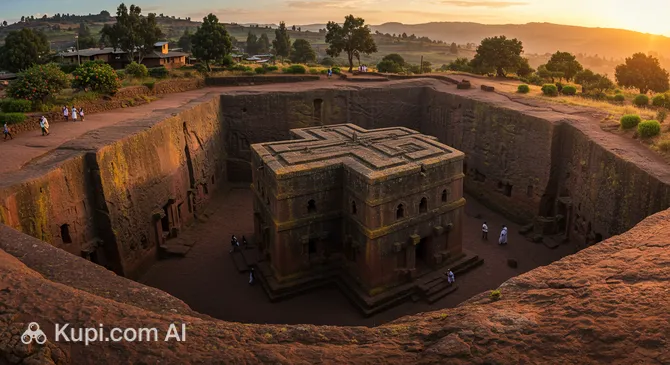
The history of Lalibela is steeped in legend and religious devotion, dating back to the 12th and 13th centuries under the Zagwe dynasty. King Lalibela commissioned the construction of the famous rock-hewn churches to create a pilgrimage site for Christians who could not travel to the Holy Land. Today, these 11 medieval structures are a UNESCO World Heritage site and a testament to incredible architectural engineering. Among them, the cross-shaped Church of St. George (Bet Giyorgis) stands out as an iconic masterpiece, carved downwards into the volcanic tuff.
Beyond the churches, visitors can explore the network of ceremonial trenches and tunnels that connect the structures, creating a mysterious and labyrinthine experience. A trip to Lalibela is more than just sightseeing; it is an immersion into a living tradition of faith and artistry. Whether you are a history enthusiast or a traveler seeking unique cultural landscapes, this extraordinary town promises an unforgettable adventure.