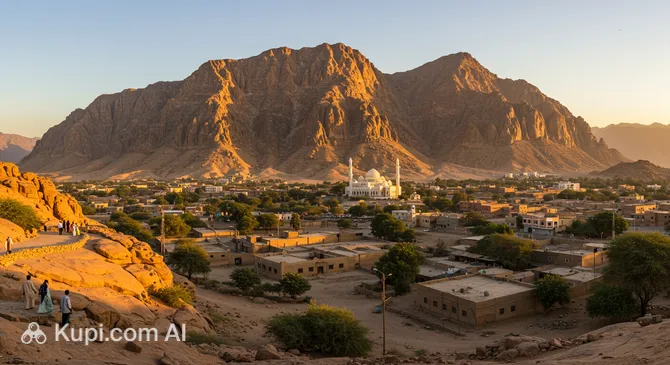
While Kassala may not be famous for manicured botanical gardens or vast modern museum complexes, it offers a rich tapestry of natural beauty and living history. The city's "green spaces" are found in its lush agricultural heartlands, and its culture is preserved not just in display cases, but in the architecture and daily life of its people.
Parks and Natural Areas
The true gardens of the city are the famous Sawagi (Orchards) that line the banks of the seasonal Gash River. These sprawling agricultural areas serve as the city's green lungs and are a favorite recreational spot for locals. Under the shade of ancient mango, guava, and grapefruit trees, families often gather for picnics, especially on weekends. Walking through these verdant groves offers a refreshing contrast to the surrounding semi-arid landscape and provides a chance to see the source of the region's renowned fruit production up close.
Although not a park in the traditional sense, the area surrounding the Taka Mountains functions as the city's primary natural playground. The base of the mountains, particularly around the Totil Spring, is a communal open-air space where nature and social life merge. Here, visitors can enjoy the rugged beauty of the granite peaks while sitting at simple tea stalls. For the more adventurous, the slopes offer natural hiking trails that reward climbers with panoramic views of the city and the Gash Delta.
Museums and Galleries
The Kassala Museum is the cultural custodian of the region, housing a modest but fascinating collection that offers insight into the diverse ethnic groups of Eastern Sudan. The exhibits focus heavily on ethnographic history, displaying traditional clothing, musical instruments, and household tools used by the Beja, Rashaida, and other local tribes. It is an excellent place to understand the complex social fabric of the area before exploring the city further.
Another significant aspect of the museum's collection is its focus on military history and regional conflicts, particularly from the Mahdiyya era. Visitors can view an array of historical weaponry, including swords, shields, and rifles that tell the story of the fierce battles fought in this strategic border region. The museum provides a quiet and educational retreat from the bustling souqs outside.
Historical and Architectural Sites
The Khatmiyya District stands as an open-air museum of Islamic history and architecture. Dominating this area is the Khatmiyya Mosque, a striking brick structure located at the foot of the mountains. Although partially in ruins, its unique conical minaret and the surrounding tombs of the Mirghani family (leaders of the Khatmiyya Sufi order) remain powerful symbols of the city's spiritual heritage. The site is atmospherically charged and offers a poignant look at the traditional Sudanese architectural style.
In the city center, attentive visitors will notice the lingering influence of the colonial past. Several government buildings and old residences display Italian and British colonial architecture, characterized by high ceilings, verandas, and sturdy stone construction. These structures, though often weathered, add a layer of historical depth to the city's streets, hinting at its strategic importance during the early 20th century.
Authentic Experiences
For a truly local experience, head to the orchards (Sawagi) during the fruit harvest season. Many farmers are welcoming and may allow you to taste fresh fruit straight from the tree. Additionally, keep an eye out for the traditional sword dancing performances often held during weddings or local celebrations in the public squares; it is a vibrant display of Beja culture that you won't find in any museum.