Support

Jinka

About the Airport

The Jinka Airport, also known as Baco Airport, is more than just a runway; it is the gateway to one of the most fascinating and distinctive regions of Ethiopia — the Omo River Valley. For many travellers, this is where the breathtaking journey to ancient tribes and untouched nature begins. This small airfield plays a key role in the tourism infrastructure of the country's south, significantly reducing travel time from the capital and providing access to unique cultural treasures.

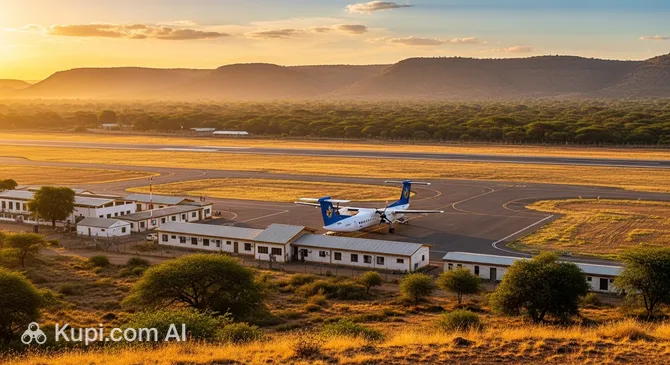
Jinka. Illustration.
Source: Kupi.com AI
PropertyValue
IATA CodeBCO
ICAO CodeHABC
CityJinka
CountryEthiopia
TimezoneAfrica/Addis_Ababa
Top AirlinesEthiopian Airlines
ScheduleOnline Timetable

The main advantage of Jinka Airport is its strategic location. It serves as the starting point for expeditions to the Mago and Omo National Parks, as well as for visiting the villages of the Mursi, Hamer, and Ari tribes. Direct flights from Addis Ababa allow visitors to avoid a long and tiring two-day drive, making travel to this remote corner of the world significantly more comfortable. It is worth noting that the airport consists of a small terminal with a basic set of services. There are no numerous shops or restaurants here, but its functionality and convenient location more than compensate for the modest infrastructure.

Contact Information

Jinka Airport (BCO) is a small regional airport serving the city of Jinka and its surroundings in Ethiopia. Due to its size and status, finding detailed contact information can be difficult. Most flight-related issues are resolved directly through the airline.

  • Official Website: Jinka Airport does not have its own official website. All information regarding flights, schedules, and services is provided by the operating carrier — Ethiopian Airlines.
  • Phone and Passenger Support: There is no direct public telephone number for the airport information desk. For all inquiries, including booking, ticket changes, and other support, please contact the Ethiopian Airlines call centre or representative office.
  • Airport Address: Jinka Airport (BCO), Jinka, Ethiopia. The airport is located in the immediate vicinity of the city.
  • Email and Social Media: The airport does not maintain official social media pages or a public email address for passenger communication.
  • Lost Luggage: Matters related to lost or damaged luggage are the responsibility of the air carrier. If your luggage has not arrived, please contact the Ethiopian Airlines representative at the airport or the airline's baggage tracing service.

How to Get to the Airport

Getting to Jinka Airport (Baco Airport, BCO) from the centre of Jinka is quite simple, as it is located just a few kilometres away. The journey generally takes no more than 10–15 minutes. The main modes of transport are local vehicles and pre-arranged transfers, as a developed public transport system in the European sense is absent here.

The most popular and budget-friendly way to reach the airport is to use a "Bajaj", a local three-wheeled auto-rickshaw. They operate throughout the city and are the primary means of transport for short trips. This is an excellent option for light travellers. The cost of the ride is low, but you must agree on the price with the driver in advance, before the journey begins. You can also find shared taxis (minibuses) that depart as they fill up, but the Bajaj offers more flexibility.

A more comfortable option is a private taxi or transfer. Taxis can be found in the city, but as with the Bajaj, it is crucial to agree on the fare before boarding, as meters are rarely used. The most reliable and convenient method is to book a transfer through your hotel or tour operator. This is highly recommended if you are travelling with a lot of luggage, with family, or arriving/departing at inconvenient times. This option will be the most expensive but will save you from unnecessary hassle.

Car rental in Ethiopia is a popular solution for exploring the Omo region, and many travellers hire an SUV with a driver for the entire duration of their trip. If you already have a rental vehicle, driving to the airport will be effortless. However, renting a car solely to get from the city to the airport is not practical. If you plan to rent a car, it is best to do so for the entire journey around the region.

Parking at Jinka Airport consists of a basic area suitable for short stops to drop off or pick up passengers. Being a small regional airport, do not expect secured multi-level parking facilities here. For most tourists arriving by taxi or transfer, the issue of parking is not relevant. It is recommended to have cash in the local currency (Ethiopian Birr) to pay for transport services.

Terminals and Map

The Jinka Airport (BCO) is a small regional aviation hub serving the eponymous city and its surroundings in southern Ethiopia. Its structure is extremely simple and straightforward, making navigation very easy even for first-time visitors.

The airport operates with just one terminal. It is a compact building that handles both departing and arriving flights simultaneously. There is no separation into domestic and international terminals or complex multi-level structures. All infrastructure is concentrated in one place, eliminating the need for transfers between terminals.

The airport layout is intuitive. Upon entering the building, you immediately find yourself in the general area where the check-in counters are located. The departure and arrival zones are essentially different parts of the same small hall. After check-in, passengers pass through security screening and enter a small waiting area. For arriving passengers, the procedure is even simpler: they enter the building from the airfield and almost immediately find themselves in the baggage claim area.

Completing all pre-flight formalities, including check-in and screening, usually takes no more than 20-30 minutes. The airport serves a small number of flights, so queues are rare. Nevertheless, it is recommended to arrive at the airport approximately 1-1.5 hours before departure to go through all procedures without haste. The main advice for navigation is not to worry; it is impossible to get lost here. Simply follow the few signs or ask any staff member, and you will be assisted immediately.

Airport History

The Jinka Airport (IATA: BCO), also known as Baco Airport, is an example of modern infrastructure created to develop tourism in remote regions of Ethiopia. Its history does not stretch back decades like many global aviation hubs, but it clearly demonstrates how the construction of a single facility can completely transform the accessibility of an entire region.

For a long time, Jinka only had a simple dirt airstrip, which could only accommodate small propeller aircraft. Flights were irregular and heavily dependent on weather conditions, especially during the rainy season. A key moment in the airport's history was 2014, when a brand-new modern terminal with an asphalt runway was inaugurated. This project was part of a government programme to develop tourism infrastructure.

The main historical event for the airport was its complete rebirth. The modernization included the construction of a new runway approximately 2,500 metres long, capable of receiving medium-haul jet aircraft such as the Boeing 737. This allowed for the launch of regular flights from the capital, significantly reducing travel time to the southern regions. For tourists, this meant that a long and exhausting journey over rough terrain was replaced by a comfortable one-hour flight.

The primary achievement of Jinka Airport is the opening of the "gates" to the Omo Valley, a UNESCO World Heritage site known for its authentic tribes and unique cultural traditions. Today, the airport serves as a key transport hub for travellers seeking to explore this amazing corner of the planet and continues to play an important role in the economic development of southern Ethiopia.

Services and Amenities

Jinka Airport (BCO) is a small regional aviation hub serving the southern part of Ethiopia. Given its compact size, the range of services here is basic and aimed at meeting the essential needs of passengers before departure.

In the terminal, you will find a few small kiosks where you can purchase bottled water, soft drinks, light snacks, and some local souvenirs. Full-service restaurants, cafés, or large shops are absent from the airport. A general waiting hall is provided for passengers awaiting their flights; separate VIP or business lounges are not available.

Access to Wi-Fi networks at the airport is typically unavailable, and the number of power outlets for charging electronic devices is severely limited. Passengers are advised to fully charge their gadgets before arriving at the airport or to carry a portable charger. Banking services, ATMs, and currency exchange points are not offered within the terminal — it is best to resolve all financial matters in the city beforehand.

There is no specialised medical centre, although staff can provide basic first aid. Separate play areas or nursing rooms are not provided for passengers with children. Travellers with reduced mobility are strongly advised to contact the airline in advance to arrange necessary assistance, as the airport infrastructure is minimal.

There are no hotels, business centres, or conference rooms within the airport or its immediate vicinity. All accommodation options and business services are concentrated in the city of Jinka, which is a few minutes' drive from the terminal.

Where to Eat

The Jinka Airport (BCO) is a small regional hub, and its infrastructure is quite simple. Dining options here are limited, so one should not expect a wide variety of restaurants and cafés as seen in major international airports.

Typically, there is one small cafeteria or kiosk operating within the airport, located in the main waiting area before the security zone. Here, travellers can purchase basic items for a snack before their flight. The assortment usually includes:

  • Beverages: Bottled water, carbonated soft drinks, juices, as well as traditional Ethiopian coffee.
  • Snacks: Biscuits, crisps, chocolate, and sometimes simple local pastries or sandwiches.

There are no full-service restaurants offering hot meals from a menu at the airport. Quick snacks are the primary dining format. Specialised dietary options, such as vegan, gluten-free, or Halal dishes, are not typically available. Although Ethiopian cuisine is rich in vegetarian dishes, finding them in the limited menu of the airport café is unlikely.

Our main recommendation: If you wish to have a full meal, it is better to do so at one of the cafés or restaurants in the city of Jinka before travelling to the airport. This will allow you to enjoy authentic local cuisine without worrying about finding food before departure. The airport cafeteria operates according to the flight schedule, opening a few hours before departure and closing after the last plane has left.

Travel Tips

Travelling through a small regional airport, such as the one in Jinka, can differ from flying out of major international hubs. To ensure your trip across Ethiopia goes smoothly, use these tips to save time, stress, and money.

Arrival Time and Check-in. Jinka Airport (Baco Airport) is small, but it is better to be safe. Arrive at least 2 hours before your domestic flight departure. This allows enough time to check in at the airline counter and pass through security without rushing, even if there are small queues. Online check-in for flights from such small airports is not always available or stable, so count on completing all procedures on-site.

Security Checks and Seat Selection. Security services follow standard rules, so have your passport and ticket ready in advance. To admire the stunning views of the Omo Valley from above, ask for a window seat when checking in. On the small turboprop aircraft that often fly this route, the best views are from seats located away from the wings.

Baggage Rules. It is prohibited to carry sharp objects and liquids in containers larger than 100 ml in hand luggage. All liquids must be packed in a transparent bag. Electronic devices, such as power banks, must be carried only in hand luggage and not in checked baggage. Be sure to check the weight and size limits for hand luggage with your airline (most often Ethiopian Airlines) to avoid extra charges.

Transfers and Customs. Most flights from Jinka fly to Addis Ababa, from where you can fly to other cities or abroad. If you have a layover planned, allow at least 3-4 hours, especially if you are flying with different airlines and need to re-check your luggage. Customs control for domestic departures is formal. However, if you are flying out of the country, remember that the export of certain souvenirs, especially ancient artefacts and cultural items, requires a special permit.

Tips for Saving Money. Book tickets in advance, especially during the tourist season, to get the best price. Travel light to avoid paying for excess weight. There may be no ATMs or exchange bureaux at the airport, so carry a sufficient amount of Ethiopian Birr in cash for small expenses, such as water or a taxi.

What to Do in Case of Delay. Delays on domestic flights do happen. Check your flight status regularly. Infrastructure at Jinka Airport is minimal, so in case of a long wait, bring a book, a charged power bank, and a light snack. In the event of a delay or cancellation, find a representative of your airline — they should provide all current information and, if necessary, arrange meals or accommodation.
Reached the end of the page?

That means the route is fully explored