Support

Carrière Wellington

About

Imagine a hidden underground world stretching 20 meters beneath the city's cobblestones. The Wellington Quarry is more than just a museum; it is a poignant place of remembrance located in the city of Arras. During the First World War, this network of chalk galleries served as a secret base for British troops, transforming into a veritable underground city.
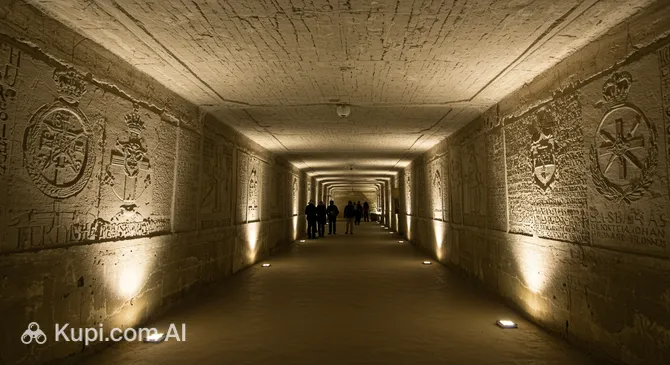
Wellington Quarry
Wellington Quarry. Иллюстрация. Источник: Kupi.com AI

Today, this site in France offers tourists a unique immersive experience. A walk through the tunnels, which span a total of 19 kilometers, allows you to touch the history of soldiers from all corners of the British Empire who lived and prepared for a decisive battle in these chalk labyrinths. The museum harmoniously combines the authenticity of the old mines with modern multimedia technologies.

Thousands of graffiti, personal belongings, and drawings on the walls left by servicemen over a century ago have been preserved here. The scale of the place is striking: it could once accommodate up to 24,000 people while remaining completely invisible to the enemy on the surface.

Contacts

To plan your visit or for more details, you can use the following museum contact information.

How to contactContact
AddressRue Arthur Deletoille, 62000 Arras, France
Phone+33 3 21 51 26 95
Websitewww.carrierewellington.com

What to Do

The visit begins with an elevator descent into the cool depths of the chalk subsoil, where you receive an individual audio guide. As you walk through the illuminated galleries, you will hear the sounds of waiting, the voices of soldiers, and the rumble of battle preparations, recreated using modern sound effects. Interactive video screens and installations help visualize daily life in this underground anthill.

Special attention should be paid to the authentic inscriptions and drawings on the walls left by soldiers from New Zealand and Australia. These personal messages make history tangible and deeply human. You will see recreated barracks and the very exits to the front line, through which thousands of soldiers stepped into the unknown early on the morning of April 1917.

After returning to the surface, it is worth spending some time in the well-maintained memorial park area. It is an ideal place for quiet reflection and processing what you have seen. The tour will be equally interesting for military history buffs and regular travelers seeking powerful emotions and unusual locations.

Getting There

Reaching this unique historical site is quite easy. The Wellington Quarry is located at Rue Arthur Deletoille, 62000 Arras. If you arrive by train, the walk from the Gare d’Arras central station takes only about 15 minutes at a leisurely pace (a distance of about 1 km).

For those who prefer public transport, it is convenient to use bus line 7, which will take you to the Jean Jaurès stop, located in the immediate vicinity of the museum entrance. You can also always use local taxi services; the ride from the city center takes literally a few minutes.

For travelers in their own or rented cars, there is parking nearby. The site is located on the eastern outskirts of the city, and signs will help you quickly find your way as you approach the memorial complex.

Ближайший город: Arras

History & Facts

The history of this place is rooted in the distant past: chalk mining in local quarries began as early as the 10th century. The material was used to build city walls and majestic abbeys, but by the 18th century, the underground workings were practically abandoned and long forgotten by residents.

Everything changed in 1916 when, during the First World War, the British command decided to use the underground tunnels to prepare for a large-scale offensive. Tunnelers from New Zealand achieved a true engineering feat: in just six months, they connected scattered medieval quarries into a single network, creating an underground city capable of hiding 24,000 soldiers.

Thanks to this secrecy, on April 9, 1917, at 5:30 AM, allied forces were able to launch a surprise attack, appearing before the enemy literally from underground. After the war ended, the tunnels were sealed once more and were only opened to archaeologists in the 1990s. Researchers discovered thousands of artifacts and personal inscriptions, leading to the opening of the museum in 2008.

Time Needed

To fully immerse yourself in the atmosphere of the underground city and explore all the exhibits without rushing, you usually need 1.5 to 2 hours. This is enough time to complete the main route with an audio guide and view the installations.

Given the emotional intensity of the exhibition, we recommend not planning your visit too close to closing time. A little extra time will allow you to linger in the reflection area on the surface after the tour or examine the artifacts preserved below in more detail.

Working Hours

The museum welcomes visitors daily, making it easy to include in your travel schedule. The operating hours are divided into morning and afternoon slots with a short lunch break.

Opening Hours:
Monday – Sunday: 09:30 – 12:30 and 13:30 – 18:00.

Please note that the last entry to the underground tunnels is usually allowed one hour before closing or the start of the lunch break to ensure visitors have enough time to complete the main route.

9:30 – 12:30, 1:30 – 18:00

Nearby

Arras is a city with a rich architectural heritage, and a visit to the quarries can be complemented by a stroll through other notable places. Exploring the central part of the city will allow you to better feel the atmosphere of the Hauts-de-France region and see how this area was restored after historical upheavals.

NameDistance
La Dame Jeanne Wine Bar1.1 km
Place des Héros1.2 km
Chez Marcel1.2 km
Grand Place1.3 km
Arras Belfry1.3 km
The Boves Underground Tunnels of Arras1.3 km
Carpediem Restaurant1.3 km

Reached the end of the page?

That means the route is fully explored