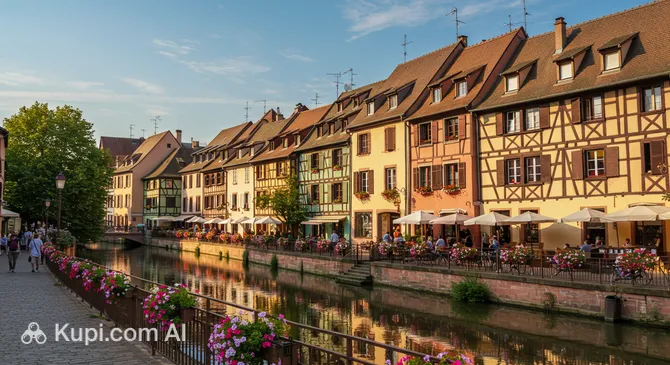
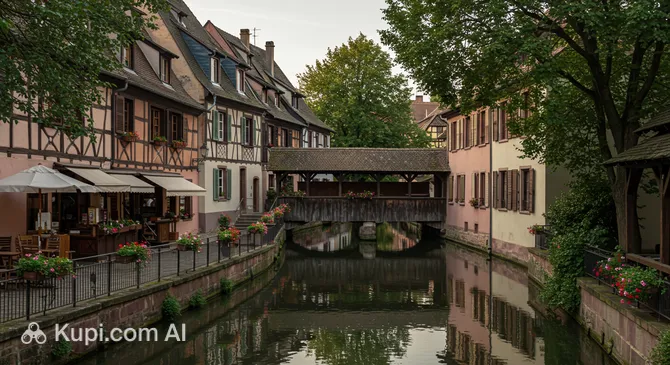
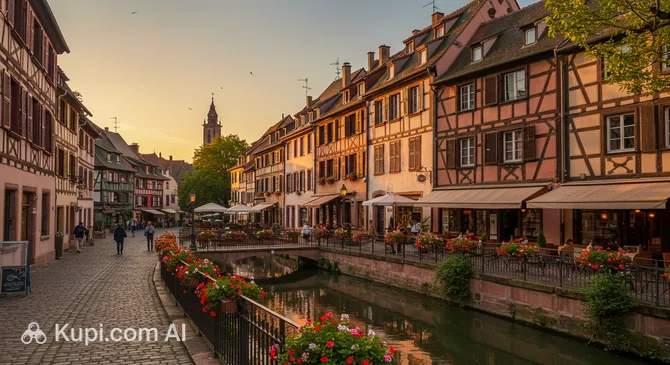
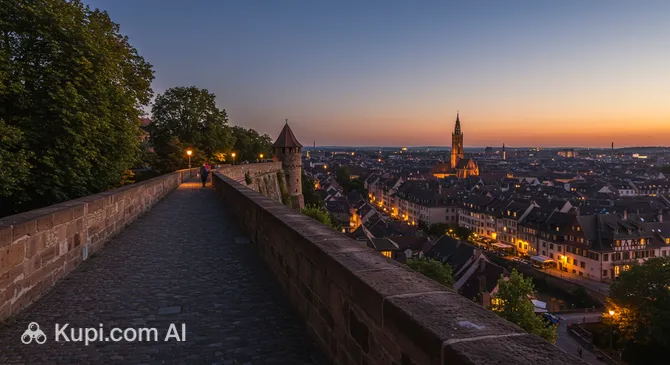
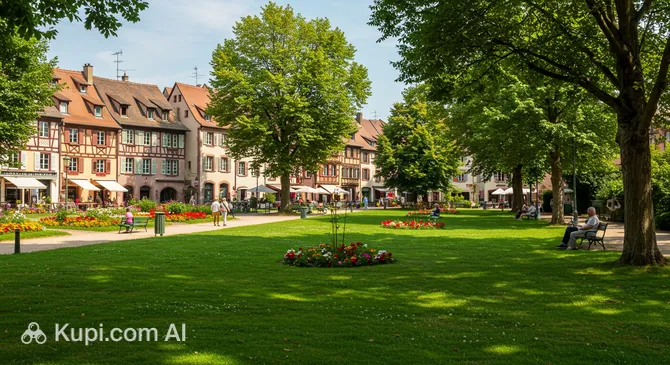
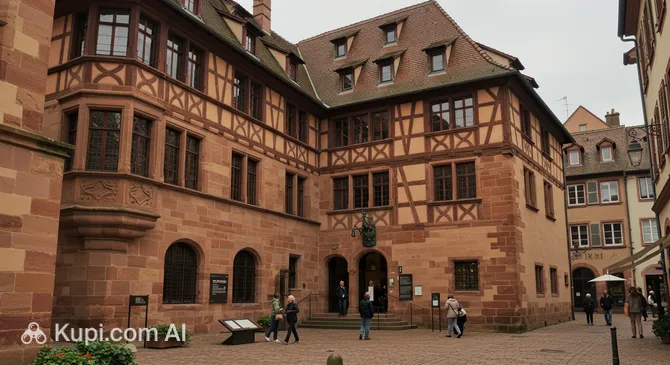
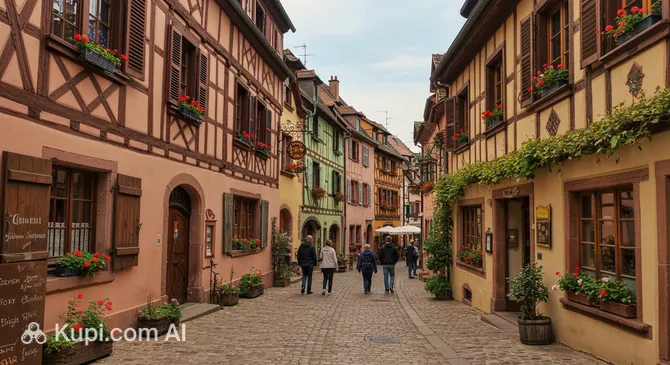
Colmar is a charming town that looks as if it stepped straight from the pages of a fairy tale, located in the Grand Est region of northeastern France. With a population of about 68,700, this town is the jewel of Alsace, famed for its unique atmosphere, picturesque canals, and beautifully preserved medieval architecture. Colmar is often called the capital of Alsatian wines, as it lies in the very heart of the famous Alsace Wine Route.
Colmar. Illustration.
Source: Kupi.com AI
One of Colmar's most famous landmarks is the "Little Venice" quarter (La Petite Venise), where colorful half-timbered houses sit snugly along the Lauch River. A boat trip through the canals of this district offers an unforgettable experience. The town also takes pride in its historic center with narrow cobblestone streets, such as Rue des Marchands, and iconic buildings like the Pfister House (Maison Pfister) and the House of Heads (Maison des Têtes). Furthermore, Colmar is the birthplace of Frédéric Auguste Bartholdi, the sculptor who created the Statue of Liberty.
Visiting Colmar gives you the feeling of being immersed in a magical world where every corner breathes history and coziness. It is the perfect place for leisurely strolls, enjoying local cuisine and wines, and discovering the rich culture of Alsace. Do not miss the chance to discover this amazing town!
In Colmar, a temperate climate with distinct seasons awaits you. Expect warm summers, with average temperatures in July and August reaching 20°C (peaking up to 25°C), with occasional but usually light rain. Winters here are cool: the average January temperature is around 2.4°C, and the mercury can drop below zero. Winter precipitation is also frequent, but usually in the form of light snow or drizzling rain, while the total precipitation in millimeters remains low year-round. Spring and autumn offer mild weather, perfect for exploring the town. To plan your trip in the best possible way, we recommend checking out the detailed information about the weather in Colmar.
Average monthly temperature
Average monthly precipitation
Interesting Facts
In addition to its famous canals and half-timbered houses, Colmar holds many surprising stories and little-known details that make it even more attractive to curious travelers. Here are just a few interesting facts about this Alsatian town:
Birthplace of the Statue of Liberty's Creator: Frédéric Auguste Bartholdi, the sculptor who gave the world the famous Statue of Liberty, was born in Colmar. In the town, you can visit the Bartholdi Museum, dedicated to his life and work, and at the northern entrance to Colmar, there is a 12-meter replica of the legendary statue—the Statue of Liberty.
Fairytale Inspiration: It is believed that the charming streets and architecture of Colmar, especially its picturesque Little Venice quarter, served as one of the main sources of inspiration for Disney artists when creating Belle's village in the famous animated film "Beauty and the Beast."
Surprisingly Dry Climate: Despite its proximity to the Lauch River and its many canals, Colmar is one of the driest cities in France. This unique phenomenon is explained by its location at the eastern foot of the Vosges Mountains, which create a "rain shadow," protecting the city from much of the precipitation coming from the west.
The City of "Heads": One of Colmar's most memorable and unusual landmarks is the House of Heads (Maison des Têtes). The facade of this remarkable German Renaissance building, constructed in 1609 for the wealthy merchant Anton Burger, is decorated with 106 sculptures of heads and grotesque masks.
Little Venice. Illustration.
Source: Kupi.com AI
Traveler photos:
How to Get There
There are various ways to reach this picturesque Alsatian town, but most tourists choose a combination of a flight and a trip by train or car. Thanks to its favorable location in the heart of Europe, Colmar is easily accessible from several major transport hubs. To plan your route in maximum detail, we recommend exploring all the ways to get to Colmar.
Colmar itself does not have its own airport, so travelers usually fly into nearby large cities. One of the most convenient options is EuroAirport Basel-Mulhouse-Freiburg (IATA: EAP). It is unique in that it serves three countries and is located just 56 km from Colmar. A transfer from here by car or shuttle takes about 45–60 minutes, making this airport a top choice.
Another popular choice is Strasbourg Airport (IATA: SXB), located about 55 km from the destination. The journey from this regional airport also takes about 45–60 minutes. For those flying from further away, a major international hub like Zurich Airport (IATA: ZRH) might be suitable. Although it is further away at 114 km (about 1.5–2 hours away), it offers a huge selection of flights from all over the world.
For your convenience, here is summary information on the main airports:
The railway network in the region is excellently developed, making the train a great alternative for the final leg of the journey. Although Colmar has its own railway station, many tourists first arrive at major junction stations nearby and then make a quick transfer. For example, Strasbourg Station is an important hub from which regional trains (TER) regularly depart for Colmar. The trip on such a train takes only about 30 minutes, which is very convenient and fast.
Another popular transfer point is Basel SBB Station, where high-speed trains arrive from various parts of Europe. From here, you can also easily transfer to a regional express to Colmar, with a travel time of about 45 minutes. This method of travel allows you to avoid traffic jams and enjoy the views of Alsace from the train window.
Below is information about the nearest major railway hubs:
Colmar is a true treasure trove for the curious tourist, and every one of its streets has a story to tell. Among the many landmarks, there are several that you simply cannot miss to fully experience the charm of this Alsatian town.
Little Venice. Illustration.
Source: Kupi.com AI
Traveler photos:
The heart of Colmar is undoubtedly Little Venice (La Petite Venise). This charming quarter, with its colorful half-timbered houses lined up along the Lauch River, looks like it came straight out of a fairy tale. A trip on a traditional flat-bottomed boat through the canals provides an unforgettable experience and allows you to see the town from a completely different perspective. It is the perfect spot for romantic walks and taking magnificent photos.
Unterlinden Museum. Illustration.
Source: Kupi.com AI
Traveler photos:
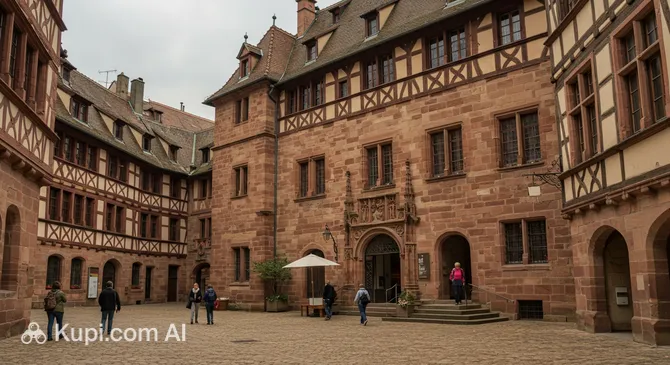
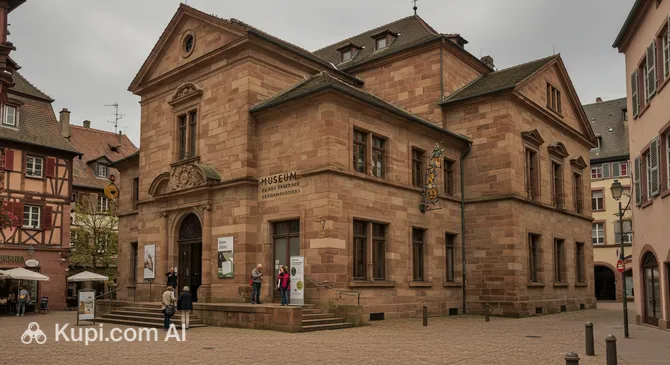
Art and history lovers should definitely visit the Unterlinden Museum. Housed in a former 13th-century Dominican convent, it holds a vast collection of artworks from the Middle Ages to the present day. The museum's crown jewel is the famous Isenheim Altarpiece by Matthias Grünewald—a world-class masterpiece striking for its expression and detail.
Old Town of Colmar. Illustration.
Source: Kupi.com AI
Traveler photos:
It is impossible to imagine Colmar without its Old Town (Vieille Ville). Stroll through its narrow cobbled streets and admire the magnificently preserved medieval and Renaissance buildings. Special attention should be paid to the Pfister House (Maison Pfister) with its painted facade and corner oriel window, as well as the House of Heads (Maison des Têtes), decorated with more than a hundred sculptures of faces. Every corner here breathes history and unique Alsatian flair.
Dominican Church. Illustration.
Source: Kupi.com AI
Traveler photos:
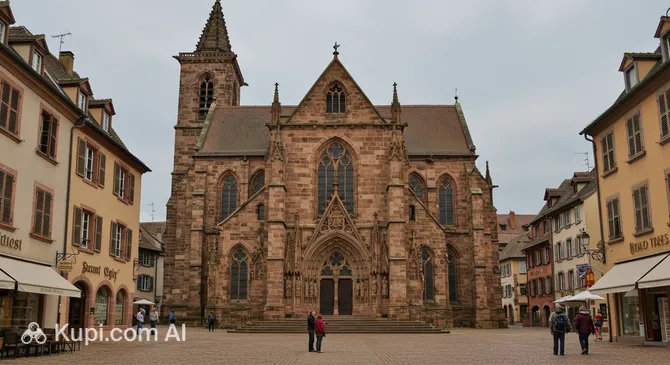
Another gem of Colmar is the Dominican Church (Église des Dominicains). This magnificent example of early Gothic architecture, built in the 13th and 14th centuries, impresses with its austere beauty and majestic stained glass. Inside the church resides a masterpiece by the Alsatian artist Martin Schongauer—the painting "Madonna in the Rose Bower," painted in 1473. This is a must-visit site for connoisseurs of sacred art and architecture.
Local Cuisine
The gastronomic scene of Colmar is a delightful immersion into the traditions of Alsace, a region at the intersection of French refinement and German heartiness. Local cuisine is famous for its satisfying, aromatic dishes and excellent wines. A trip to Colmar would be incomplete without experiencing its culinary delights, which warm the soul and please any gourmet.
Among the dishes that you should definitely try in Colmar, choucroute (choucroute garnie) stands out—braised sauerkraut served with various types of meat, sausages, and potatoes. It is a true Alsatian feast on a single plate! Another iconic dish is tarte flambée or flammekueche, a thin open-faced pie resembling pizza, topped with sour cream, onions, and bacon. Also look out for baeckeoffe—a hearty stew of three types of meat marinated in white wine, with potatoes and vegetables, which is slow-cooked in the oven for hours.
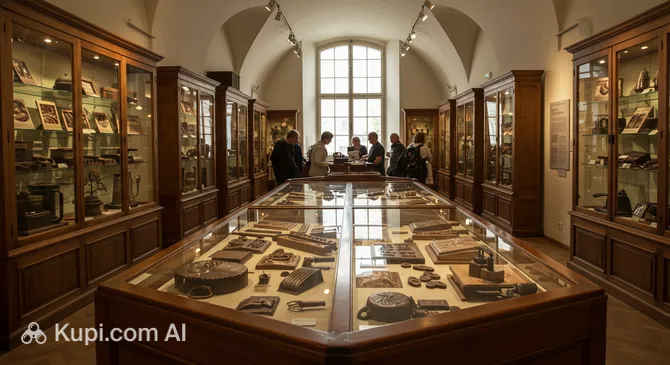
For those with a sweet tooth, Alsatian cuisine also offers many interesting treats. Be sure to try kougelhopf—a traditional yeast cake with raisins and almonds, often dusted with powdered sugar. Its recognizable shape with a hole in the middle makes it a symbol of the region. No less popular is pain d'épices (spiced bread or gingerbread), especially during the Christmas period. For true chocolate enthusiasts, the Choco Story Colmar museum might be of interest, where you can learn everything about your favorite treat.
Choco Story Colmar. Illustration.
Source: Kupi.com AI
Traveler photos:
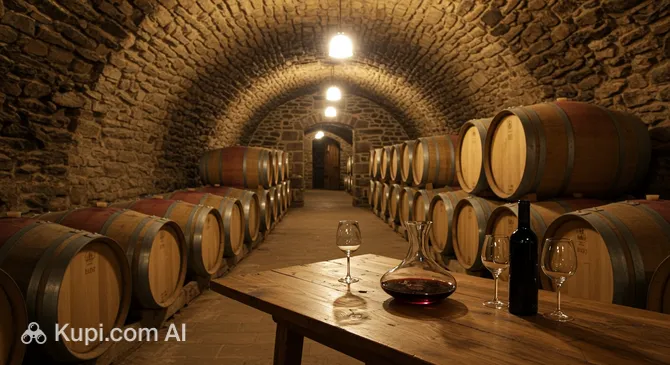
Speaking of Colmar, one cannot fail to mention the famous Alsace wines. This region is renowned for its white wines, such as Riesling, Gewürztraminer, Pinot Gris, and Muscat. Be sure to taste them in one of the local wine cellars, for example, by visiting the Wine Cellar of Eguisheim located nearby. You should also try Crémant d'Alsace—an excellent local sparkling wine. Besides wines, you can find good local beer in Colmar, and among non-alcoholic drinks, fruit juices and lemonades are popular.
Eguisheim Wine Cellar. Illustration.
Source: Kupi.com AI
Traveler photos:
The dining culture in Colmar centers around traditional restaurants called "winstubs," which serve authentic Alsatian dishes in a cozy, homey atmosphere. Many such establishments can be found in the Old Town of Colmar. Tourists and locals also love to visit the Marché Couvert (Covered Market), where you can buy fresh products and taste local delicacies. For a more refined dinner, Colmar also has fine dining restaurants. For example, you can visit the restaurant La Stub to enjoy local specialties.
Travel Tips
Planning a trip to fairytale Colmar? To ensure your journey through this jewel of France goes smoothly and leaves you with only the warmest memories, we have prepared some practical tips for you.
Clothing and items for the season: The climate in Colmar is temperate-continental. In summer (June–August), expect warm weather, so light clothing is appropriate, but it can be cool in the evening. In winter (December–February), it is quite cold, and frosts and snow are possible, so warm clothes, a hat, and gloves are essential. Spring and autumn are changeable, so layering is your best friend. It is critically important to bring comfortable shoes, as the historic center of Colmar is paved with cobblestones. Don't forget an umbrella or raincoat, especially in spring and autumn, and an adapter for power outlets (Type E). When visiting churches, such as the Dominican Church, it is advisable to wear clothing that covers your shoulders and knees.
Transport in the city: The historic center of Colmar is compact and best explored on foot. Public transport consists of Trace network buses, which can be useful for trips to more distant areas or the railway station. Taxis are available but can be expensive; check the cost in advance. Renting a car makes sense if you plan to explore the picturesque Alsace Wine Route, but it is not necessary for Colmar itself, and parking in the center can be difficult.
Financial matters: The official currency in France is the Euro (EUR). You can exchange currency at banks or exchange offices, but the rate may be less favorable than withdrawing cash from ATMs, which are widespread. Credit and debit cards (Visa, Mastercard) are accepted in most hotels, restaurants, and shops. American Express is accepted less frequently. International cards usually work without problems. An approximate daily budget (excluding accommodation) can range from €70 to €150 per person, depending on your preferences. Tips in France are often included in the bill (service compris). If you particularly enjoyed the service, you can leave 5–10% of the bill amount or just round up the total.
Health and safety:Colmar is a very safe city. Nevertheless, standard precautions against pickpockets in crowded tourist areas are never out of place. Pharmacies (pharmacie) are easy to find by the green cross; some operate on a duty schedule at night and on weekends (pharmacie de garde). To receive medical assistance, tourists from EU countries are recommended to have a European Health Insurance Card (EHIC); other tourists are strongly encouraged to take out travel insurance. In emergencies, call 112.
Communication: The official language is French. In tourist areas (hotels, restaurants, large shops), staff often speak English, but knowing a few basic French phrases will be very helpful and appreciated by locals: Bonjour (Hello/Good day), Bonsoir (Good evening), Merci (Thank you), S'il vous plaît (Please), Excusez-moi (Excuse me), Parlez-vous anglais? (Do you speak English?). You can buy a local SIM card at mobile phone shops or some supermarkets. Wi-Fi is available in most hotels and many cafes and restaurants.
Local etiquette: The French value politeness. It is customary to say hello (Bonjour) when entering small shops, cafes, or when addressing someone, and to say goodbye (Au revoir). Avoid being overly loud in public places. If you want to take a photo of locals, it is best to ask permission. Addressing strangers, especially older people, using the informal "tu" is considered impolite; use the formal "vous."
What to avoid: Do not start a conversation immediately in English without first attempting to at least say hello in French—this can be perceived as impolite. Also, avoid negative comparisons between Alsatian culture and German or exclusively French culture; Alsace has its own unique identity that locals are very proud of.
Special tip for Colmar: If your trip falls in late November or December, be sure to visit the famous Colmar Christmas Markets. The town turns into a real winter wonderland, offering a unique atmosphere, local delicacies, and handmade crafts. At other times of the year, don't miss the opportunity to take a boat trip through the canals of the Little Venice district—it offers an unforgettable experience.
We hope these tips help you better prepare for your trip and enjoy every moment in magical Colmar, one of the most charming towns in France!
Entertainment & Nightlife
Evening Colmar enchants with its fairy-tale atmosphere, and while the town is not known for wild 24-hour parties, it offers plenty of pleasant options for leisure after sunset. Here you will find cozy spots to relax with a glass of local wine, enjoy a delicious dinner, or even dance.
Most of the evening life in Colmar is concentrated in its historic center, especially around the Old Town and along the canals of Little Venice. As twilight falls, these quarters are transformed, illuminated by lights to create a magical setting for walks and gatherings. Instead of noisy nightclubs on every corner, Colmar offers more refined entertainment: numerous wine bars (winstubs), traditional Alsatian restaurants open late, and stylish lounge bars. The atmosphere here is generally relaxed and friendly, attracting both tourists and locals.
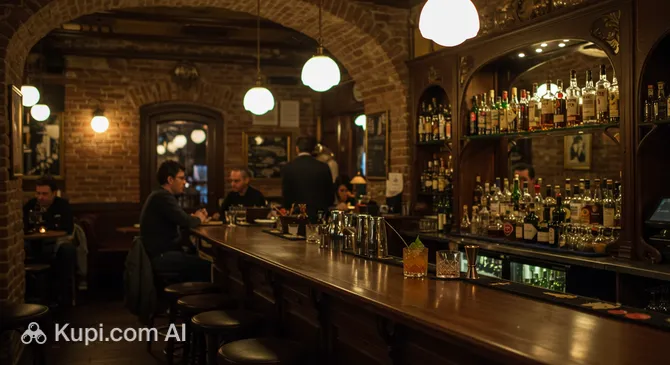
For connoisseurs of good wine and a cozy setting, Le Cercle des Arômes is an excellent choice. This wine bar offers a wide selection of local and international wines, which can be complemented by exquisite appetizers. If you are in the mood for dancing and a more lively atmosphere, you should look into the Collis Martis nightclub, where you can have fun to modern rhythms. Another interesting spot is the Grillen Brewery and Bar, offering craft beer and live music on certain evenings.
Le Cercle des Arômes. Illustration.
Source: Kupi.com AI
Traveler photos:
Collis Martis. Illustration.
Source: Kupi.com AI
Traveler photos:
Most bars and restaurants are open until midnight or 1:00 AM, especially on weekends. Nightclubs usually start later, around 10:00–11:00 PM, and close in the early morning. The dress code in most Colmar establishments is quite casual to smart-casual. The crowd is mixed, ranging from young people to middle-aged adults who appreciate high-quality relaxation. It is best to arrive at popular places when they open or book a table in advance, especially during peak season or on weekends.
As for practical advice, average drink prices in Colmar bars are comparable to other tourist cities in France: a glass of wine can cost from €5–7, and cocktails from €10–15. Getting around the city center at night is quite comfortable on foot if your accommodation is nearby. For longer trips, it is better to take a taxi. It is recommended to have the phone numbers of local taxi companies handy or use ride-hailing apps. Public transport runs rarely or not at all at night.
Colmar is considered a very safe city, and night walks along the well-lit central streets are generally not a cause for concern. Nevertheless, it is always wise to take standard precautions: keep an eye on your personal belongings and avoid poorly lit, deserted areas. You can call a taxi by phone or ask the staff at a bar or restaurant to do it for you.
During the day, Colmar also offers a variety of entertainment. The town is rich in museums, most notably the Unterlinden Museum with its famous Isenheim Altarpiece, the charming Toy Museum, which will interest both adults and children, and the Bartholdi Museum, dedicated to the creator of the Statue of Liberty. For family fun, the Okidok Colmar amusement park is a great choice. Theaters and concert halls also periodically offer interesting programs that are worth checking in advance.
Parks & Museums
Colmar offers its guests not only the charm of ancient streets but also wonderful opportunities for outdoor relaxation and immersion in a rich cultural heritage. The town's parks beckon with greenery and tranquility, while its museums house unique collections that tell the story of Alsace's history and art.
For those seeking a peaceful escape into nature, Colmar offers several wonderful green areas. One of the main places for walking and relaxation is the Parc du Champ-de-Mars. This spacious park, located near the historic center, is ideal for leisurely strolls, picnics, or simply resting on a bench in the shade of the trees. It often hosts town events and is a popular spot for both tourists and locals alike.
Champ de Mars Park. Illustration.
Source: Kupi.com AI
Traveler photos:
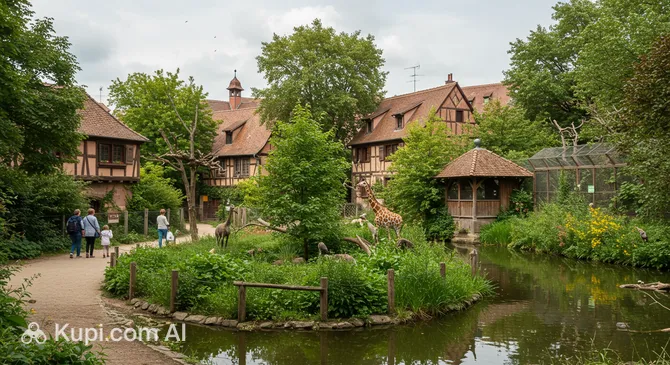
Located near the town but easily accessible is the Stork Park (NaturOparC). This is not just a park, but a real rehabilitation center for storks—the symbol of Alsace. Visitors can observe these graceful birds in their natural environment and see other representatives of the local fauna, such as otters. It is a wonderful place for family outings and getting to know the region's nature.
Stork Park. Illustration.
Source: Kupi.com AI
Traveler photos:
The cultural life of Colmar is rich and diverse, and its museums are capable of satisfying a wide range of interests. The crown jewel is undoubtedly the Unterlinden Museum, world-famous for the Isenheim Altarpiece by Matthias Grünewald. In addition to this masterpiece, the museum offers an extensive collection of archaeological finds, medieval and Renaissance art, as well as modern art.
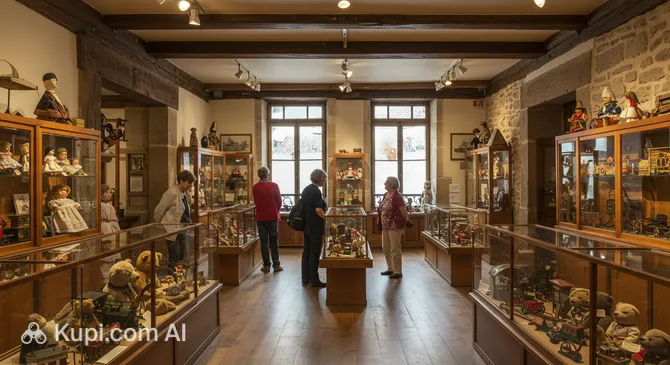
For those traveling with children or who simply want to dive into the world of childhood, the Toy Museum (Musée du Jouet) is a must-visit. Its collection, featuring thousands of exhibits from antique dolls and trains to modern games, will evoke nostalgia in adults and delight in young visitors. It is an interactive space where you can not only look but also play.
Toy Museum. Illustration.
Source: Kupi.com AI
Traveler photos:
Colmar is the birthplace of Frédéric Auguste Bartholdi, the creator of the Statue of Liberty. In the Bartholdi Museum, located in the house where the sculptor was born, you can learn about his life and work, see models of his famous pieces, and his personal belongings. This place allows for a deeper understanding of this outstanding master's contribution to world art.
Bartholdi Museum. Illustration.
Source: Kupi.com AI
Traveler photos:
Another unique museum reflecting the spirit of Alsace is the Hansi Village and Museum. It is dedicated to the work of Jean-Jacques Waltz, known by the pseudonym Hansi, whose idyllic illustrations of Alsatian life became a symbol of the region. The museum recreates the atmosphere of an old Alsatian village and introduces the artist's works, which are full of warmth and love for his homeland.
Hansi Village and Museum. Illustration.
Source: Kupi.com AI
Traveler photos:
Of course, strolls through the parks and visits to museums perfectly complement an exploration of the Old Town of Colmar itself, where every house and street is a living witness to a rich history.
For an authentic experience, stop by Choco Story Colmar to learn everything about chocolate and, of course, taste it, or if you are interested in 20th-century military history, visit the Memorial Museum of the Battles for the Colmar Pocket. These smaller but no less interesting sites will add unique touches to your journey.
Colmar Pocket Memorial Museum. Illustration.
Source: Kupi.com AI
Traveler photos:
Getting Around
Getting around Colmar is quite easy, especially if your goal is the historic center, which is best explored on foot. However, for trips to more distant areas, to the railway station, or if you simply want to save your energy, there is a public transport system in the city.
The main form of public transport in Colmar is the bus. The city and suburban bus network is called Trace (Transports de Colmar et Environs). Buses cover both the town itself and the nearest settlements. Routes and schedules can be found at bus stops, on the official Trace network website, or in their mobile app.
The fare system for Trace buses offers several options:
Single Ticket (Ticket Unité): Purchased directly from the driver (it is advisable to have small change) or from ticket machines (if available at the stop). This ticket is usually valid for one hour from the moment of validation and may allow transfers. The approximate cost is about €1.50.
Carnet (Carnet de 10 voyages): A booklet of 10 tickets, which makes each trip slightly cheaper. These can be purchased at special points of sale or machines.
Day Pass (Pass Journée): Entitles you to an unlimited number of trips during the day. This is a cost-effective option if you plan to move around a lot by bus.
Other types of passes: Weekly or monthly passes may exist, but they are geared more towards local residents.
Practical tips for tourists: Tickets must be validated immediately after entering the bus in a special machine (validator). It is usually yellow or orange. Bus operating hours are generally from early morning (around 6:00–7:00 AM) until evening (approximately 8:00–9:00 PM), but can vary depending on the route and the day of the week (intervals may be longer on weekends and holidays). Always check the current schedule.
In addition to buses, there are other ways to get around Colmar:
Bicycles: The town and its surroundings are very convenient for cycling. There are bicycle rental points, including a bike-sharing system. This is a great way to explore not only Colmar itself but also the picturesque Alsace Wine Route.
Taxis: Available, but they are a more expensive option. They can be found at special ranks (for example, near the station) or called by phone.
Tourist Land Train (Petit Train Touristique): This is not so much public transport as a way to take a sightseeing tour of the main landmarks of the historic center with an audio guide. It is very popular with tourists, especially for a first look at the town.
There are no metro, trams, or trolleybuses in Colmar. Given the town's compactness, most tourists successfully combine walking with occasional bus or bike trips for maximum convenience and enjoyment while exploring this fairytale place.
Accommodation
In Colmar, travelers will find a wide range of accommodation options to suit every taste and budget. From cozy budget hostels and guesthouses to comfortable mid-range hotels and luxury apartments—there is something for everyone. Renting apartments or rooms through online platforms is also popular, allowing for a deeper immersion into the local atmosphere.
The most sought-after areas for tourists to stay are, of course, the historic Old Town and the charming Little Venice quarter. Staying here ensures you are within walking distance of many iconic landmarks, restaurants, and shops, allowing you to fully enjoy the fairy-tale atmosphere of Colmar. Staying in these areas is also convenient in terms of transport accessibility, although the center itself is best explored on foot.
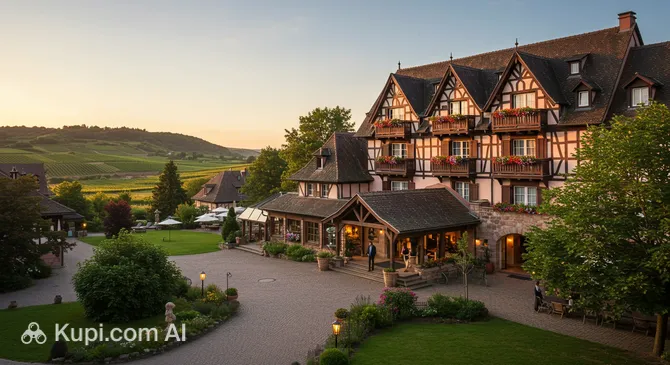
Among the many hotels in Colmar, you can find both well-known chain hotels and unique boutique hotels. For example, those looking for comfort and spa services might consider the Spa Hotel Husseren. Alternatively, you could consider an option like Residence La Petite Venise, which offers apartments in a picturesque location. The choice of a specific hotel depends on your preferences and budget.
Husseren Spa Hotel. Illustration.
Source: Kupi.com AI
Traveler photos:
The price range for accommodation in Colmar varies from budget options to luxury offers. It is recommended to book your accommodation in advance, especially if your trip coincides with the peak tourist season (summer, Christmas markets) or weekends. The most popular booking methods are international online platforms like Booking.com, Expedia, and Airbnb, as well as direct booking through official hotel websites.
Nearby Cities
For those who want to explore the surrounding area, Colmar serves as an excellent starting point for day trips to several interesting nearby locations:
City
Population
Distance
Breisach
15 606
18 km
Selestat
19 360
21 km
Guebwiller
11 022
22 km
Wittenheim
14 776
30 km
Wittelsheim
10 362
31 km
Each of these towns offers something of its own. Mulhouse, a large industrial center, is famous for its outstanding technical museums, including the renowned Cité de l'Automobile and the Railway Museum. Belfort impresses with its powerful citadel designed by Vauban and the famous "Lion of Belfort" sculpture by Bartholdi. Illkirch-Graffenstaden, a charming suburb of Strasbourg, offers a peaceful atmosphere and is part of an innovation cluster. Saint-Louis, located at the junction of the borders of France, Switzerland, and Germany, serves as a gateway to the cultures of three countries and is a convenient starting point for visiting Basel. Finally, Lingolsheim attracts visitors with its cozy atmosphere and proximity to nature, offering opportunities for walks, for example, along the Bruche Canal.
These nearby destinations provide a glimpse into the diverse culture and landscapes of the region.
Shopping & Souvenirs
Colmar offers a charming shopping experience, especially for those seeking authentic Alsatian goods and souvenirs. The town is famous for its small boutiques, craft shops, and stores offering local delicacies, rather than huge shopping malls. Here you will find unique items that will serve as a wonderful reminder of your trip to this picturesque corner of France.
The main shopping arteries of Colmar are located in its historic center. Stroll along Rue des Marchands (Merchants' Street), Rue des Têtes (Street of Heads), and Grand Rue (Main Street), where many clothing, jewelry, and book shops are concentrated, as well as confectioneries and wine shops. The atmosphere of the ancient streets themselves invites leisurely shopping and treasure hunting.
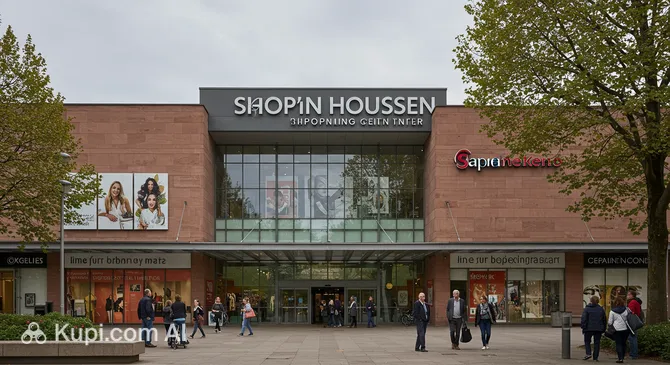
Although Colmar is better known for its cozy streets lined with shops, for those who prefer more concentrated shopping under one roof, there are options on the outskirts. For example, you can visit the Shop'in Houssen Shopping Center, which offers a selection of various brands and products.
Shop'in Houssen Shopping Center. Illustration.
Source: Kupi.com AI
Traveler photos:
Be sure to visit the Colmar Covered Market (Marché Couvert), located in a beautiful building on the banks of the Lauch River. Here you will find fresh local products: cheeses, sausages, pastries, fruits, vegetables, as well as flowers and Alsatian specialties. It is a great place to taste local delicacies and feel the town's atmosphere. During the pre-Christmas period, Colmar is transformed by its famous Christmas markets, which offer a huge selection of souvenirs, gifts, and treats.
From Colmar, it is worth bringing back the famous Alsatian white wines (Gewürztraminer, Riesling, Pinot Gris), foie gras, traditional Alsatian gingerbread (pain d'épices), ceramics depicting storks (the symbol of Alsace), or with traditional patterns. Textile products, dolls in national costumes, and souvenirs related to the work of the artist Jean-Jacques Waltz, known as Hansi, are also popular. Sweet lovers will appreciate the local chocolate and confectionery, for example, from the Choco Story Colmar shop.
Most shops in Colmar are open from Monday to Saturday, usually from 9:00–10:00 AM to 7:00 PM. Many small shops may close for a lunch break (approximately from 12:00/1:00 PM to 2:00/2:30 PM). On Sundays, most shops are closed, except for some souvenir shops in tourist areas and during major events like the Christmas markets. Credit cards (Visa, Mastercard) are widely accepted, but in smaller shops or at markets, cash may be preferred.
Tourists who are not residents of the European Union can take advantage of the VAT refund system (Tax Free) when making purchases over a certain amount in participating shops. Usually, the minimum purchase amount is around €100 in one shop on one day. Don't forget to ask the seller for a special form (détaxe) and present it along with your purchases at customs when leaving the EU to receive a refund.