Support

Obernai

About

Obernai is a true Alsatian gem, a charming town nestled at the foot of the Vosges Mountains in France. It is located just 25 kilometers southwest of Strasbourg, on the famous Alsace Wine Route, making it an ideal starting point for exploring this picturesque region. The town harmoniously combines the tranquility of the countryside with convenient transport accessibility.
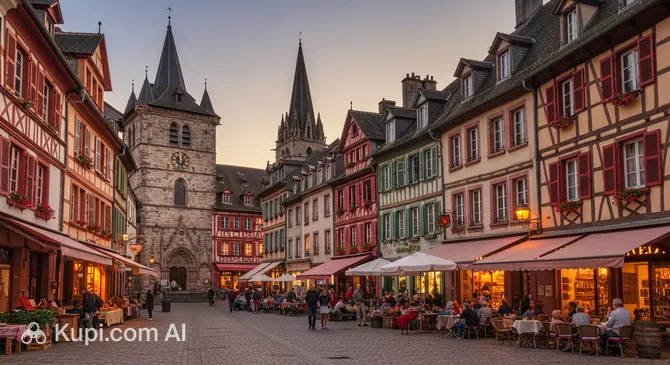
Obernai. Illustration.
Source: Kupi.com AI

With a population of about 12,000 people, Obernai is the second most tourist-attractive town in the Bas-Rhin department after Strasbourg. Its historical center, surrounded by medieval ramparts, seems to transport visitors back in time. Narrow cobbled streets adorned with traditional half-timbered houses create a unique atmosphere. Key attractions include Gothic churches, Renaissance wells, and picturesque squares that hold centuries of history.

Obernai is famous for its rich architectural heritage and hospitality. The town offers a unique opportunity to immerse yourself in the authentic spirit of Alsace, enjoy leisurely walks, taste local wines, and discover cultural traditions. Obernai is especially magical during the Christmas markets, when its streets are filled with festive lights and the aroma of mulled wine. It is a place that is undoubtedly worth visiting to experience the authentic atmosphere of the French province.

You can find more interesting facts on the history of Obernai page.
Weather Overview

In Obernai, expect warm summers, with average temperatures in July and August reaching around 20°C, and peak values rising to 24–25°C. Winters here are cool, and in January, the thermometer stays at an average of 2.6°C, with minimum temperatures potentially dropping close to zero. A characteristic feature of the local climate is frequent but not heavy precipitation (3–4 mm per month) throughout the year, with the number of rainy days ranging from 13 to 18 per month. For more detailed information, you can visit the Obernai climate page.

Average monthly temperature

Average monthly precipitation

Interesting Facts

In addition to its well-known landmarks and charming streets, Obernai holds many surprising stories and little-known details that make it truly special. Here are just a few of them:

  • Obernai is considered the birthplace of Saint Odile, the patron saint of all Alsace. The famous fountain in the town center is dedicated to her, and at the top of the nearby Mount Sainte-Odile is the monastery of the same name, which is an important pilgrimage site and attracts many believers and history buffs.

  • In the past, the town was part of the Decapolis — an influential alliance of ten free imperial cities of the Holy Roman Empire in the Alsace region. This membership gave Obernai a special status and contributed to its economic and cultural development as an important regional center.

  • One of the town's most unusual and well-preserved relics is the Six-Bucket Well (Puits à Six Seaux), dating back to 1579. This unique Renaissance engineering structure is a true symbol of the ingenuity of that time.

  • The central Market Square (Place du Marché) still remains the heart of social life in Obernai. Here stands the ancient Belfry (Beffroi) tower, one of the town's oldest symbols, surrounded by characteristic Alsatian half-timbered houses with cozy cafes and restaurants.

How to Get There

Getting to this picturesque Alsatian town is quite simple thanks to the region's well-developed transport network. Travelers can choose the most convenient route using air or rail with a subsequent transfer. We recommend exploring all the ways to get to Obernai in advance to plan the perfect trip.

Obernai does not have its own airport, but you can fly into Strasbourg Airport (SXB), which is only 13.7 km away. This is the nearest aviation hub, and a taxi or transfer ride from there will take very little time, usually about 20 minutes.

For international flights, travelers often choose EuroAirport Basel-Mulhouse-Freiburg (EAP), located near the city of Basel. It is approximately 97 km from Obernai, and the drive takes just over an hour. Another convenient option is Baden Airpark (FKB) near Karlsruhe (56.5 km), from where you can reach your destination in less than an hour.

For convenience, here is a summary of the main airports:

AirportPassenger trafficDistance
Strasbourg Airport1.3 mln14 km
Baden-Airpark1.8 mln57 km
EuroAirport Basel–Mulhouse–Freiburg8.1 mln97 km
EuroAirport Basel Mulhouse Freiburg8 mln97 km
EuroAirport Basel-Mulhouse-Freiburg8.1 mln97 km

Railway communication is also a popular way to reach the region. Obernai has its own railway station, but for long-distance travel, it is more convenient to use major hubs. You can arrive at Strasbourg Station in the city of Strasbourg, which is about 23 km away. From there, it is easy to reach Obernai by regional train or taxi in about half an hour.

Another option is to travel to the Karlsruhe Hauptbahnhof station, located 89.8 km away. The driving time from this transport hub is just over an hour.

Below is information about the nearest major railway stations:

StationPassenger trafficDistance
Strasbourg Railway Station23.9 mln23 km
Baden-Baden Railway Station2.2 mln64 km
Karlsruhe Hauptbahnhof21.9 mln90 km
Basel Badischer Bahnhof7.3 mln100 km
Basel SBB station40 mln102 km

Main Attractions

Obernai, a charming Alsatian town, offers its guests a unique blend of medieval heritage, picturesque landscapes, and Alsatian hospitality. A walk through its streets is a true journey through time, full of discoveries and vivid impressions. Here are a few key attractions you shouldn't miss:

The heart of Obernai is undoubtedly the Market Square (Place du Marché). This is the historical center of the town, surrounded by colorful 16th-17th century half-timbered houses that create a unique atmosphere. The square is dominated by the Belfry (Kapellturm) — an elegant 13th-century tower, formerly the bell tower of the town chapel, and now one of the main symbols of Obernai. It is said to offer a beautiful panoramic view of the town and its surroundings. The square remains a lively place today, hosting markets and town festivities.

Another iconic attraction on the Market Square is the Six-Bucket Well (Puits à Six Seaux). This magnificent Renaissance well, dating back to 1579, is decorated with elaborate carvings and sculptures. Its name comes from the six buckets that were once used to draw water. Today, it is a popular spot for photos and a striking example of Alsatian Renaissance art, testifying to the town's rich history.

Near the Market Square stands the majestic Church of Saints Peter and Paul (Église Saints-Pierre-et-Paul). This main Catholic church of Obernai was built in the Neo-Gothic style in 1872 on the site of older church structures. The church impresses with its size, high spire, magnificent stained glass windows, and an ancient organ. It is an important spiritual center and an architectural gem of the town, open to visitors.

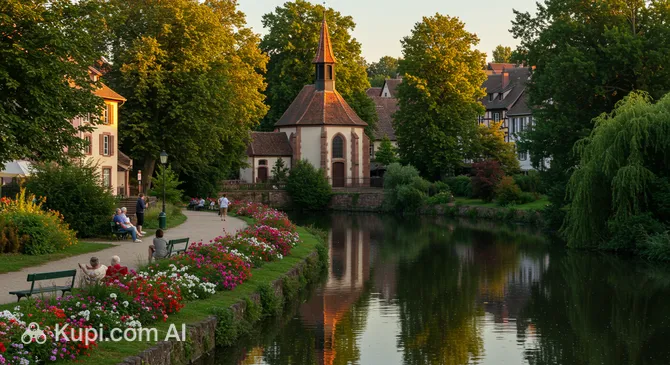
For those seeking peace and connection with nature, Ehl Municipal Park will be a true discovery. This well-maintained green oasis, located along the Ehn River, offers excellent conditions for leisurely strolls, picnics, or simply relaxing in the shade of trees. Tourists and locals alike value it for its serene atmosphere, picturesque corners, and the opportunity to escape the city bustle.

Municipal Park of Hell. Illustration.
Source: Kupi.com AI

Traveler photos:

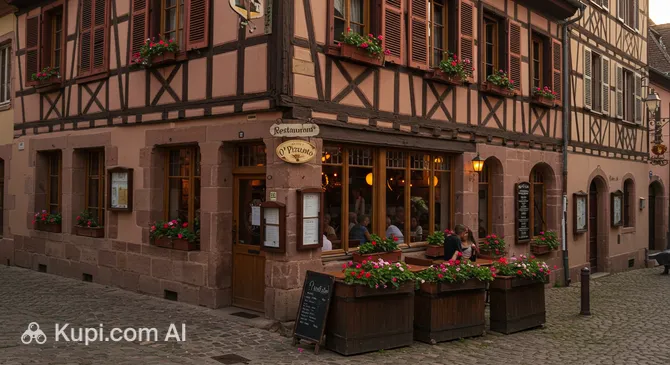
After a busy day full of impressions, it will be pleasant to refuel in one of Obernai's cozy establishments. For example, the restaurant O'Pizzicato offers guests Italian cuisine in a warm and welcoming setting. It's a great place to relax, share impressions of your walk around town, and enjoy a delicious dinner.

O'Pizzicato. Illustration.
Source: Kupi.com AI

Traveler photos:

Local Cuisine

Obernai is a true paradise for foodies, located in the heart of Alsace. The local cuisine is a unique blend of French and German gastronomic traditions, offering travelers a rich and flavorful experience. The town's culinary scene is famous for its hearty dishes, aromatic wines, and the cozy atmosphere of traditional establishments.

Among the dishes that you should definitely try in Obernai, several specialties stand out. First, there's tarte flambée (Flammkuchen) — a thin, crispy crust resembling a pizza, topped with cream or fromage blanc, onions, and bacon. Second, the famous choucroute garnie — sauerkraut simmered with various types of meat, sausages, and potatoes. And, of course, baeckeoffe — a hearty dish of marinated meat (beef, pork, lamb), potatoes, and vegetables, slow-cooked in white wine in a ceramic pot. Also, don't miss the chance to try local cheeses and aromatic Alsatian sausages.

When it comes to drinks, Obernai, as an important stop on the Alsace Wine Route, is proud of its white wines. Be sure to sample varieties such as Riesling, Gewürztraminer, and Pinot Gris, which perfectly complement the local dishes. Many wineries and family cellars are open for tastings all year round, offering a unique opportunity to try authentic beverages directly from the producers. As for non-alcoholic drinks, a standard selection of juices, lemonades, and mineral water can always be found in cafes and restaurants. Those with a sweet tooth will enjoy kouglof — a traditional Alsatian yeast cake with raisins and almonds, as well as the famous Alsatian bredele cookies, which are baked here according to ancient recipes and sold at festive fairs, especially during the Christmas period.

The food culture in Obernai is closely linked to traditions and local products. You can get acquainted with the authentic cuisine in numerous small restaurants and wine cellars (winstubs). The town offers many establishments where you can enjoy both traditional Alsatian dishes and other culinary directions. For example, for dinner, you might consider the restaurant O'Pizzicato. Farmers' markets add a special charm, where you can not only buy but also taste fresh seasonal vegetables, fruits, homemade cheeses, and sausages directly from local producers. Gastronomic festivals, especially during the grape harvest, turn Obernai into a true celebration of taste and tradition.

A visit to Obernai is an opportunity to immerse yourself in the world of Alsatian gastronomy, enjoy high-quality local products and wines, and experience the unique atmosphere of hospitality of this charming town.

Travel Tips

Welcome to Obernai! This charming Alsatian town is sure to win you over with its atmosphere. To ensure your trip goes smoothly and leaves only pleasant impressions, we have prepared a few practical tips.

  1. Clothing and essentials: The climate in France, and specifically in the Grand Est region, is temperate. In summer, bring light clothing, but don't forget a sweater or light jacket for the evenings. In winter, warm clothing will be required, including a hat, gloves, and a scarf. Comfortable shoes are your best friend for walking along the cobblestone streets of Obernai. Don't forget a power adapter (Type E). When visiting churches, such as the Church of Saints Peter and Paul, it is customary to dress modestly (shoulders and knees should be covered).
  2. Getting around town: Obernai is a small town, and its historic center is easy to explore on foot. For trips to neighboring towns or Strasbourg, you can use regional buses or trains (the town has a railway station, Gare d'Obernai). Taxis are available, but it's better to book them in advance. Renting a car is convenient if you plan to explore the Alsace Wine Route, but keep in mind that parking in the center of Obernai can be limited.
  3. Finances: The official currency is the Euro (EUR). You can exchange money at banks, but credit and debit cards (especially Visa and Mastercard) are accepted almost everywhere in shops, restaurants, and hotels. ATMs (distributeurs automatiques de billets) are easy to find. An approximate daily budget (excluding accommodation) could be 50–100 euros per person, depending on your preferences. Tips in France are usually included in the bill (service compris), but if you particularly enjoyed the service, you can leave an extra 5–10% or simply round up the amount.
  4. Health and safety: Pharmacies (Pharmacie) are easily recognizable by a green cross; check the opening hours, as not all are open 24/7 (information about the duty pharmacy can usually be found on the door of a closed one). EU citizens are recommended to carry a European Health Insurance Card (EHIC). For tourists from other countries, it is extremely important to have travel insurance. In case of emergencies, call 112. Obernai is a very safe town. Follow standard precautions: keep an eye on your belongings in crowded places.
  5. Communication: The official language is French. In tourist areas, many people speak English, but knowing a few phrases in French (e.g., \"Bonjour\" – Hello, \"Merci\" – Thank you, \"S'il vous plaît\" – Please) will be highly appreciated by the locals. You can purchase a local SIM card at mobile phone shops or some supermarkets. Wi-Fi is available in most hotels, cafes, and restaurants.
  6. Local etiquette: When entering a shop or a small cafe, it is customary to say hello (\"Bonjour\" during the day, \"Bonsoir\" in the evening) and goodbye (\"Au revoir, merci\"). Politeness is highly valued. In public places, try not to speak too loudly. When interacting with locals, an attempt to speak French is appreciated, even if it's only a few words.
  7. What to avoid: Try not to discuss controversial political topics loudly. Also, don't start a conversation immediately in English without attempting to say hello in French—this can be perceived as impolite. When photographing locals, always ask for permission.
  8. Extra tip: Obernai is famous for its wines and is part of the famous Alsace Wine Route. Be sure to visit one of the local wineries for a tasting (dégustation). Also, don't miss the weekly market—it's a great place to sample local delicacies and soak up the town's atmosphere. If your trip falls during the winter, the Obernai Christmas market will give you a fairytale experience.

We hope these tips help you plan your trip better and get the most out of your stay in beautiful Obernai. We wish you an unforgettable journey!

Entertainment & Nightlife

Obernai, a charming Alsatian town, offers its guests a cozy and authentic atmosphere for evening relaxation. Here, you won't find the noise of metropolises with neon lights, but rather a special charm of nightlife centered around hospitality and local traditions.

The main evening activity in Obernai is concentrated in its historical center, especially around the Market Square (Place du Marché) and the adjacent streets. Here you will find traditional Alsatian "winstubs" (wine taverns) where you can enjoy local wines in a casual setting, as well as several bars and restaurants open until late. The atmosphere in these establishments is generally very friendly and relaxed. The crowd is mixed—locals and tourists alike enjoying Alsatian hospitality. There is usually no specific dress code; casual style is welcome.

For a pleasant dinner, you might consider the restaurant O'Pizzicato, which offers Italian dishes. If you want to dive deeper into the local flavor, visit a traditional winstub, such as Winstub Le Freiberg, known for its Alsatian cuisine and wines. For a more laid-back setting with drinks, Bar L'Original is a good choice. As for other nocturnal entertainment, Obernai is more inclined towards quiet relaxation. You will find cozy bars here with a good selection of drinks and the opportunity to socialize.

Restaurants usually take their last dinner guests until 21:00-22:00, while bars may stay open longer, especially on weekends. If you are planning dinner, it's better to arrive early or book a table, especially in popular spots. Prices in Obernai's establishments can be described as average for the Alsatian tourist region. Getting around the town center at night is most convenient on foot, as the main points of interest are close to each other.

Obernai is considered a fairly safe town for evening and night walks. However, as elsewhere, it's worth taking basic precautions: keep an eye on your belongings and avoid poorly lit, deserted areas. If you need a taxi for longer distances, you can order one by phone through local services or ask your hotel or restaurant to call one for you. It's better to do this in advance, especially late at night.

There are few specialized nightclubs with dance music in Obernai; the town is more oriented towards quiet gatherings and gastronomic pleasures. However, some bars may offer live music on weekends, creating a pleasant atmosphere to end the day.

During the day, there is also plenty to do in Obernai. Guests can stroll through medieval streets, inspect the city fortifications, and visit local museums that tell the story of Alsatian history and culture. For a quiet break in nature, Ehl Municipal Park is perfect for enjoying the peace and fresh air. Obernai is a town that charms with its authenticity both day and night.

Parks & Museums

Obernai, a charming town in the heart of Alsace, offers its guests not only picturesque streets but also pleasant green areas for relaxation, as well as the opportunity to touch the rich cultural and historical heritage of the region.

Among the city's green corners, Ehl Municipal Park stands out. It is a wonderful place for a leisurely stroll, a family picnic, or simply relaxing in the fresh air. Well-kept alleys, shady trees, and a calm atmosphere make it popular with both locals and tourists. In addition, Obernai and its surroundings offer many opportunities for nature lovers, from walks along the Ehn River to exploring the picturesque vineyards covering the hillsides around the town.

Municipal Park of Hell. Illustration.
Source: Kupi.com AI

Traveler photos:

While Obernai is not famous for large museum complexes, it carefully preserves its history, which comes to life on its streets and in its architecture. The entire historical center of the town can be considered a kind of open-air museum. Look out for the Belfry (Beffroi) — one of the city's symbols, rising above the Market Square, as well as the Wheat Market (Halle aux Blés). A walk through the medieval streets with their characteristic flower-adorned half-timbered houses is an immersion into the history of Alsace in itself. Small exhibitions dedicated to local crafts and traditions can also be found in the town, allowing for a deeper understanding of the region's unique culture.

For a full experience, don't limit yourself to the central streets. Peek into quiet alleys to discover hidden courtyards and architectural details that often escape the gaze of hurried tourists. It is also worth exploring the remains of the town fortifications, which once protected Obernai and still serve as a reminder of its rich past.

Getting Around

Public transport in Obernai consists mainly of a bus network that provides travel within this charming Alsatian town and connects it to nearby settlements in the Grand Est region. For longer trips, such as to Strasbourg or Colmar, you can use the regional trains (TER); Obernai railway station is conveniently located. Buses are a practical way for tourists to reach various parts of the town and its surroundings.

The fare payment system in Obernai is generally quite standard for French towns of this size. Bus tickets can most often be purchased directly from the driver when boarding. Sometimes day passes or booklets of several tickets (carnets) may be available, which can be more economical for frequent travel. It is recommended to carry small change for buying tickets from the driver. Information on current fares and ticket types is best checked at bus stops, the tourist office, or on the websites of regional transport operators.

Practical tips for tourists: purchased tickets usually need to be validated in a special machine when entering the bus. Bus schedules can be found at stops or on the transport companies' websites. Keep in mind that in small towns like Obernai, buses may run less frequently in the evenings, on Sundays, and on public holidays. Therefore, it is always useful to plan your trips in advance, especially if you want to visit remote locations.

As an alternative to public transport in Obernai, you can use taxi services. This is a more expensive but comfortable option, especially for trips with luggage or if you are traveling in a small group. Given the compactness and picturesqueness of Obernai, many tourists prefer to explore it on foot. Bicycle rental is also popular, allowing you to enjoy the beauty of the town and its wine-growing surroundings at your own pace. Cycling is an excellent way to get to know the region more closely.

Accommodation

When planning a trip to Obernai, you will find a variety of accommodation options to suit different preferences and budgets. The town offers a wide choice, from cozy guesthouses and holiday rentals to comfortable mid-range hotels and more luxurious options. This allows every traveler to find the perfect place to stay according to their expectations.

Areas near historical attractions or with good access to transport hubs can be particularly convenient for tourists, facilitating exploration of the town and its surroundings. Although specific hotels are not listed in the available data, Obernai, like many towns in France, offers high-quality hospitality services. You can find family-run hotels with an authentic atmosphere as well as more modern hotel complexes.

The price range varies from budget to higher categories, allowing for flexible planning of accommodation costs. You can book accommodation through popular online platforms or by contacting hotels or apartment owners directly. To guarantee the best selection and prices, especially during the peak tourist season, it is recommended to book your stay in advance. This will allow you to prepare for your trip with peace of mind, knowing that a comfortable place to rest in Obernai is waiting for you.

Nearby Cities

For those who want to explore the surrounding area, Obernai serves as an excellent starting point for day trips to several interesting nearby locations:

CityPopulationDistance
Molsheim9 3439 km
Erstein10 66114 km
Illkirch-Graffenstaden27 08718 km
Lingolsheim19 79718 km
Ostwald12 98519 km

Each of these cities offers something unique for visitors:

Strasbourg, the capital of the Grand Est region, will enchant you with its majestic Notre-Dame Cathedral, the picturesque "Petite France" quarter with its half-timbered houses and canals, and numerous museums. It is a city with a rich history and a European atmosphere.

Colmar is often called "Little Venice" because of its canals and colorful medieval buildings. A stroll through its narrow streets and visits to the House of Heads and the Unterlinden Museum will leave lasting impressions.

Haguenau, located to the north, attracts visitors with its Historical Museum, the remains of ancient fortifications, and the large Haguenau Forest, ideal for nature walks. The city offers a blend of cultural heritage and natural beauty.

Schiltigheim, known as the "city of brewers," will delight fans of the frothy drink with its traditional breweries and festivals. You can also see interesting examples of architecture and enjoy the local atmosphere here.

Illkirch-Graffenstaden, closest to Strasbourg, offers a more modern vibe with its university campus but also has parks like Fort Uhrich for relaxation. It is a convenient point for exploring the southern outskirts of Strasbourg.

These nearby destinations provide a more complete picture of the diverse culture, history, and landscapes of the Alsace region. A trip to any of these cities will enrich your journey with new impressions and discoveries.

Shopping & Souvenirs

Shopping in Obernai is an immersion into the charming atmosphere of Alsace, where small, cozy shops and artisan stalls prevail over large retail chains. The town is famous for its local delicacies, wines, and traditional crafts, making shopping here particularly pleasant and authentic. Instead of chasing global brands, it’s worth enjoying the search for unique souvenirs and regional products.

Main shopping opportunities in Obernai are concentrated in its historic center. Strolling through the picturesque streets around Market Square (Place du Marché) and along Rue du Général Gouraud, you will find numerous boutiques, souvenir shops, patisseries, and wine cellars. This is where you can truly feel the spirit of the old town and find something special.

You won't find large modern shopping malls in Obernai, which are typical of big cities. Shopping here has a more intimate character. For large-scale purchases of branded clothing or electronics, it is better to head to larger cities in the region, such as Strasbourg. Obernai, on the other hand, offers a unique shopping experience in small, family-run stores.

Be sure to visit the local market if your stay coincides with market day (usually Thursday mornings on Market Square). Here you can buy fresh farm products, cheeses, cured meats, pastries, as well as flowers and local handicrafts. It’s a great place to taste local specialties and get a feel for the everyday life of the town.

It is worth bringing home traditional Alsatian souvenirs from Obernai. Look out for Alsatian wines (especially Riesling and Gewürztraminer), local liqueurs, and spirits (eaux-de-vie). Other popular items include pain d'épices (gingerbread) in various shapes and flavors, pottery with traditional patterns, textiles (such as tablecloths and towels with Alsatian motifs), and, of course, stork figurines—the symbol of Alsace.

Shops in Obernai are usually open from 9:00–10:00 to 19:00, and many may close for a lunch break from approximately 12:00 to 14:00. On Sundays, most shops are closed, except for some souvenir shops and grocery stores during the tourist season. Bank cards (Visa, Mastercard) are accepted almost everywhere, but it is better to have some cash on hand for purchases at the market or in small shops.

Tourists from non-EU countries can take advantage of the Tax Free system when making purchases over a certain amount in a single store. Look for shops with the \"Tax Free Shopping\" sign. To claim a VAT refund, you will need to fill out a special form and present it along with your purchases and passport at customs when leaving the EU.

Reached the end of the page?

That means the route is fully explored