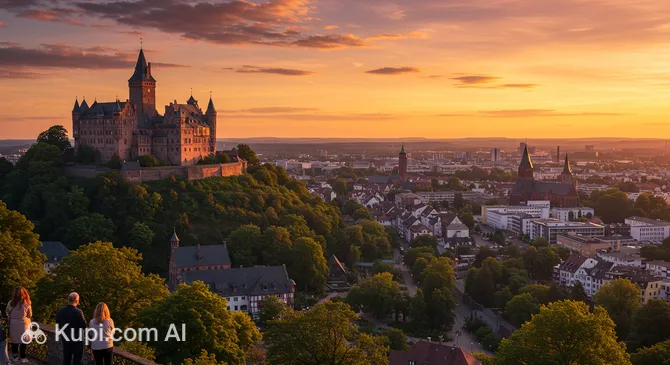
Bielefeld is a cozy and remarkably green city located in the heart of the North Rhine-Westphalia region. It harmoniously combines the dynamics of a major economic center with the tranquility of nature. It is here, where city streets transition smoothly into the scenic slopes of the Teutoburg Forest, that travelers can experience the genuine coziness and hospitality for which Germany is famous.
Bielefeld. Illustration.
Source: Kupi.com AI
With a population of around 334,000, Bielefeld offers tourists a well-developed infrastructure while remaining comfortable for leisurely strolls. The city's symbol is the majestic Sparrenberg Castle, whose walls offer breathtaking panoramic views. The rich history of Bielefeld can be felt at every step: in the Old Town, charming half-timbered houses and ancient churches stand alongside modern museums, theaters, and lively cafes.
This city is ideal for both culture enthusiasts and those who prefer active outdoor recreation. Here, you can find solitude in the beautiful botanical garden, go for a bike ride along forest trails, or visit one of the vibrant local festivals. Bielefeld is definitely worth including in your itinerary to enjoy its unique atmosphere, where medieval heritage meets modern comfort.
Weather Overview
The climate in Bielefeld is moderate and mild, without extreme temperature changes, making the city accessible for visiting all year round. Expect comfortable warm summers and cool but not freezing winters, though you should be prepared for precipitation in any season. When planning your trip, keep in mind that the weather in Bielefeld is often changeable, so an umbrella or a light raincoat in your luggage will not be redundant.
The warmest months are July and August, when the average daytime temperature reaches +23°C, creating ideal conditions for walking in the Teutoburg Forest and city parks. Winters here are quite mild: in January and December, the thermometer rarely drops below +1°C, averaging around +3...+4°C. Precipitation is distributed relatively evenly, but December is usually the cloudiest month, when the number of rainy days can reach 18.
Average monthly temperature
Average monthly precipitation
Interesting Facts
Beyond its main attractions, Bielefeld holds many fascinating secrets and unique stories that make a visit even more memorable. From amusing urban legends to global culinary brands — this German city definitely has something to surprise travelers.
The main urban legend is the famous "Bielefeld Conspiracy." According to this popular joke, born in 1994, the city doesn't actually exist, and all stories about it are the result of a global hoax. Locals support this myth with humor, and city authorities have even held contests for "proof" of Bielefeld's non-existence.
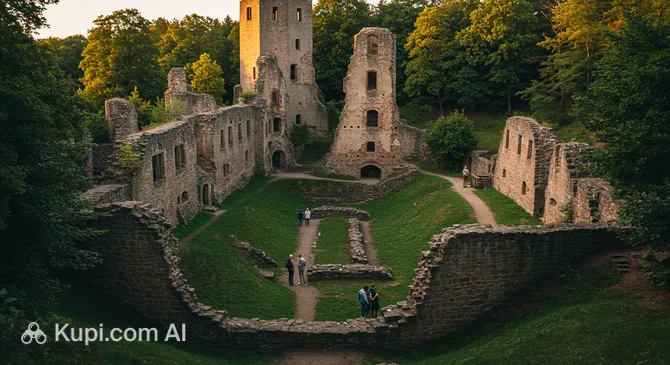
Sparrenberg Castle is not just a historical 12th-century fortress, but the heart of the city's cultural life. It has survived many historical storms and today serves as a venue for colorful knight tournaments and the famous medieval festival, attracting guests from all over Europe.
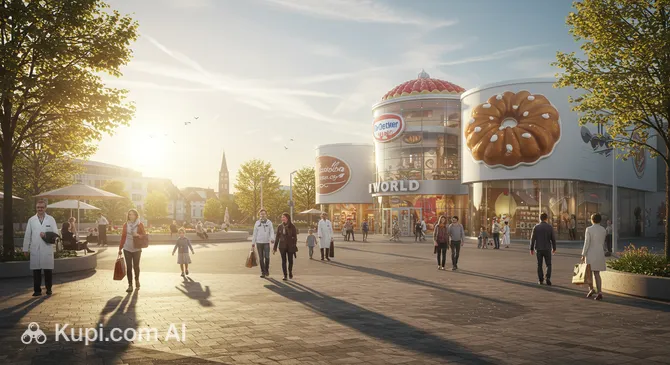
The city is inextricably linked with the name of a famous food manufacturer. Here you will find Dr. Oetker World — a unique interactive museum where you can learn the history of the brand, see the product creation process, and, of course, try original puddings and pizzas right on the spot.
In the historical center, you can find a true architectural gem — one of the oldest civic houses in the region, built back in 1485. This building has miraculously survived through the centuries and allows tourists to touch the authentic medieval atmosphere.
Bielefeld is an important point on the map of modern art. The famous Bielefeld Kunsthalle attracts connoisseurs not only with its exhibitions but also with the unusual architecture of the building, which has become one of the city's symbols.
Sparrenberg Castle. Illustration.
Source: Kupi.com AI
Traveler photos:
How to Get There
Bielefeld is conveniently located at the intersection of important transport routes, making it easy to reach from various parts of Europe. Although the city does not have its own passenger airport, travelers can use one of the neighboring air hubs and then quickly reach their destination by land transport. You can find out more about how to get to Bielefeld to plan your optimal route.
The closest to the city is Paderborn-Lippstadt Airport (PAD). It is located in the city of Paderborn, about 46 km from Bielefeld. This is a small regional airport, valued for its lack of queues and calm atmosphere. A car trip from there will take approximately 40–50 minutes, making it a very convenient arrival option.
For those looking for more international flight options, Hanover Airport (HAJ) is an excellent choice. It is located about 93 km from the city. This is a major transport hub with a well-developed infrastructure. Thanks to high-quality German autobahns, the drive by car from Hanover Airport to the center of Bielefeld takes about 1 hour.
It is also worth considering Dortmund Airport (DTM), located 84.5 km away. A transfer from here also takes about an hour.
Railway connections in North Rhine-Westphalia and neighboring states are excellent. If you are traveling by train from afar, your route may pass through major hub stations in neighboring metropolises, from where it is easy to transfer to a regional express to Bielefeld.
One of the key points is Hanover Main Station. This station is located about 92 km from Bielefeld. The station serves a huge flow of passengers and receives high-speed trains (ICE) from all over Europe. The travel time by train between Hanover and Bielefeld is usually less than an hour, and by car — about 1 hour and 10 minutes.
Another important transport hub is Dortmund Main Station (about 93 km from Bielefeld). This is a large station with high passenger traffic, through which many international routes pass.
Information on nearby major railway stations is presented below:
Bielefeld offers travelers a harmonious blend of medieval architecture, modern entertainment, and picturesque natural spots. Despite its size, the city is very cozy, and most iconic locations are situated so that they can be conveniently visited one after another.
The absolute symbol of the city is the mighty Sparrenberg Castle. Towering over the city on a ridge of the Teutoburg Forest, this 13th-century fortress attracts tourists not only with its history but also with stunning panoramic views of the surroundings. Visitors can walk along the massive fortress walls, explore the mysterious underground casemates, and climb the 37-meter tower. This is the perfect place to start your acquaintance with Bielefeld and take impressive photos.
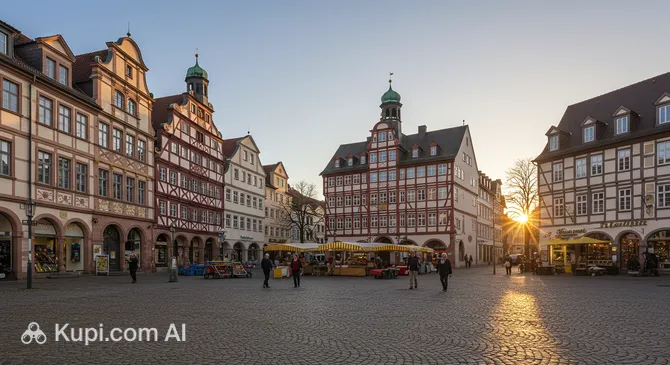
The heart of the historical center is considered to be the Old Market (Alter Markt). This square has preserved its old-world charm thanks to the beautiful facades of restored patrician houses and the historical theater building. A special atmosphere reigns here: cozy cafes set up tables outside, and the Mercury Fountain stands in the center of the square. This is a wonderful place for a leisurely walk, where you can feel the rhythm of the city and enjoy a cup of coffee surrounded by architectural beauty.
Old Market. Illustration.
Source: Kupi.com AI
Traveler photos:
Nature lovers and families with children should definitely visit Olderdissen Animal Park. This unique animal park is located right in the forest and specializes in European fauna. Here, you can see bears, wolves, lynxes, and wild boars in conditions as close as possible to their natural habitat. A special feature of the zoo is that it is open 24 hours a day and admission is free, making it one of the favorite recreation spots for both locals and tourists.
For those interested in culinary brands and industrial history, the doors are open at Dr. Oetker World. Bielefeld is the birthplace of the world-famous company, and this interactive exhibition center offers a fascinating journey into the history of baking and puddings. The tour includes a visit to the experimental kitchen, an introduction to production processes, and, of course, a tasting of sweet products, which will not leave any sweet tooth indifferent.
If you are looking for privacy and silence, take a look at the Bielefeld Botanical Garden. Located on the slope of Mount Kahlenberg, it pleases the eye with a variety of plants: from alpine gardens to a collection of rhododendrons and azaleas. The garden, with its winding paths and a 19th-century half-timbered house, is a picturesque oasis where you can relax from the city bustle at any time of the year.
Local Cuisine
Bielefeld's gastronomic scene is a harmonious blend of hearty Westphalian traditions and modern culinary trends. The basis of the local menu is the famous Westphalian cuisine, characterized by simplicity and rich flavor. Travelers should definitely try the savory Westphalian ham, which is considered a true delicacy here, as well as appetizing potato sausages and stewed cabbage with smoked meats — dishes that warm you up perfectly and give a sense of comfort.
Baking plays a special role in the lives of the townspeople. A morning in Bielefeld is impossible to imagine without the aroma of fresh rolls and traditional black bread baked in numerous private bakeries. For those with a sweet tooth, it's a real paradise: it is customary to order various pies and strudels with a cup of coffee, becoming an integral part of the local food culture Kaffee und Kuchen (coffee and cake).
Dr. Oetker World. Illustration.
Source: Kupi.com AI
Traveler photos:
The city is proud of its status as the birthplace of a world-famous culinary brand. Here is Dr. Oetker World — a unique space where you can not only learn the history of popular desserts and pizza but also take part in tastings. This is not just a museum, but a real gastronomic attraction where you can buy exclusive products not available in regular supermarkets.
As for drinks, as in all of Germany, beer traditions are honored here, with a preference for high-quality Pilsner. However, lovers of wine and a calm atmosphere will also find places to their liking, such as the Giardino Enoteca bar, where you can enjoy a glass of excellent wine. If you want to take a break from the German classics and try Asian flavors, the restaurant S'j Ramen offers a great alternative.
Food culture in Bielefeld goes beyond restaurants. Colorful farmers' markets regularly take place in the city center, where local producers offer the freshest cheeses, honey, sausages, and regional vegetables. In summer, gastronomic life bustles at street festivals, bringing together lovers of good food, music, and lively social interaction in the fresh air.
Travel Tips
Welcome to Bielefeld! To make your acquaintance with this green city near the Teutoburg Forest perfect, we have gathered several important recommendations to help you avoid minor troubles and focus on your holiday.
Clothing and seasonality. The weather in the region is quite changeable, so the best strategy is to dress in layers ("the onion principle"). Even in summer, a light raincoat or a compact umbrella in your backpack won't hurt. Since Bielefeld invites long walks through parks and hilly terrain, comfortable flat shoes are your main must-have. If you plan to visit active churches, you should avoid overly revealing beachwear.
Transport. The city's transport network moBiel works excellently: a combination of light rail (Stadtbahn) and buses allows you to reach any corner without needing to rent a car. For convenience, we recommend downloading the moBiel or DB Navigator app — there you can plan routes and buy tickets online, which is often cheaper than from the driver. Taxis are easy to call via apps (e.g., Uber or FreeNow) or find at special stands.
Finance and payment. The official currency is the Euro. Although Germany is actively switching to cashless payments and cards are accepted in most places, cash (Bargeld) is still necessary. Always have small denomination banknotes with you for payments in small bakeries, kiosks, or for souvenirs. Tipping in cafes is not a strict obligation, but it is considered good manners to round up the bill or leave 5–10% for good service.
Health and safety. Bielefeld is a calm city, and there are no clearly dangerous areas, but standard vigilance in crowded places and at the station won't hurt. Pharmacies are easily recognized by the red letter "A"; if a pharmacy is closed, the address of the nearest on-duty one (Notdienst) is always indicated on the door. The emergency number is 112.
Communication and language. The main language is German, but most locals, especially the youth, speak English well. Learn a couple of polite phrases, such as "Guten Tag" (good day) or "Danke" (thank you) — this always helps in communication. A SIM card can be bought in supermarkets (Aldi, Lidl) or mobile phone shops, but a passport is required for activation. Free Wi-Fi (Freifunk) is available in the city center and many cafes.
Local etiquette. Germans value personal space and silence. In public places, try not to speak too loudly. When entering small shops, it is customary to greet the staff. It is important to remember "Ruhetag": on Sundays, almost all shops and supermarkets are closed; only some bakeries and food outlets are open, so it's better to buy groceries in advance.
What to avoid. The main rule for pedestrian safety: never walk on bicycle paths. There are many cyclists in Bielefeld, they ride fast, and stepping onto their lane (usually marked by color or tiles) can lead to a collision and conflict. Also, try not to cross the road on a red light, even if there are no cars — this is considered bad manners and a bad example for children.
Useful life hack. Don't throw away empty plastic bottles and cans! There is a Pfand deposit system in the city. By returning the container to a special machine in any supermarket, you will receive a voucher (usually 25 cents per bottle) that can be used to pay for purchases at the checkout. It is both ecological and economical.
We hope these tips help you easily plan your trip. Bielefeld is a city that opens up to those ready to stroll leisurely through its streets and enjoy the moment, so relax and enjoy the Westphalian hospitality!
Entertainment & Nightlife
Bielefeld's nightlife can be a pleasant surprise for those who consider this city exclusively quiet and provincial. Thanks to the large number of students, evenings here are lively and informal. The main fun is concentrated in the historical center (Altstadt) and in the area around Siegfriedplatz, which locals often call the heart of alternative and youth culture. On Friday and Saturday, the streets fill with people moving from one bar to another, creating a relaxed and friendly atmosphere.
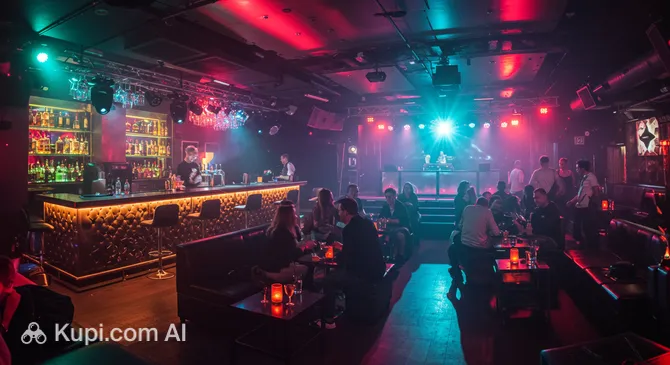
If you are looking for a place to dance and dive into club culture, pay attention to Cosa Nostra Bielefeld. This popular venue attracts guests with high-quality music and stylish parties. The dress code in most of the city's clubs is quite casual: smart casual style will be appropriate almost everywhere, although for themed parties, it is worth checking the requirements in advance.
Cosa Nostra Bielefeld. Illustration.
Source: Kupi.com AI
Traveler photos:
For those who prefer a more respectable and quiet rest with a signature cocktail, the Bar at the Légère Hotel Bielefeld is an excellent choice. An elegant lounge atmosphere reigns here, perfect for ending a busy day or a romantic date. Drink prices in the city vary: a beer in a pub will cost on average 4–5 euros, while cocktails in higher-level bars range from 9 to 14 euros.
Fans of active evening leisure should check out the Elite Bowling Center. This place is great for large groups and families, offering not only the game but also the opportunity for a tasty snack. Those who want to diversify their weekend with something unusual will like the Lasertag Arena in Bielefeld — an exciting entertainment available during both daytime and evening hours.
Safety and transport at night: Bielefeld is considered a safe city for night walks, especially in the central districts. Nevertheless, as everywhere, it is worth sticking to well-lit streets. On weekends, special night buses (Nachtbus) run every hour, taking passengers to main destinations. Taxis are easy to find at stands near the station or to order through popular mobile apps.
The daytime entertainment program in the city is also rich. Besides shopping in malls like LOOM, culture enthusiasts can visit LENKWERK — a unique space in a restored historical building that combines classic car exhibitions, gastronomy, and events. It is a great example of how Bielefeld manages to combine history with a modern lifestyle.
Parks & Museums
Bielefeld is often called the "city in the forest," and it rightfully bears this title. Green zones here do not just supplement the urban environment; they are an integral part of it, smoothly transitioning into rich cultural spaces. For travelers, this means a unique opportunity to combine a morning walk along forest trails with a daytime visit to world-class exhibitions.
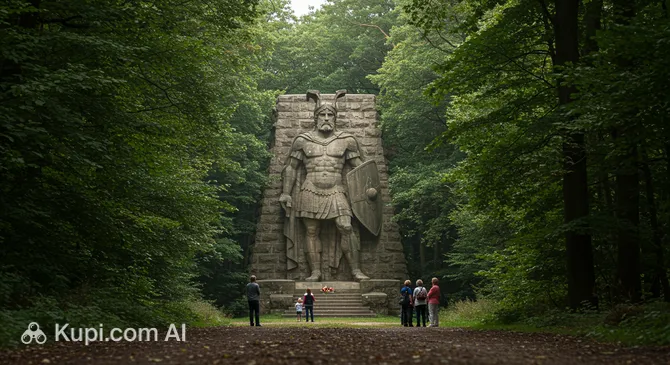
The main natural treasure of the region is undoubtedly the Teutoburg Forest (eastern part). This huge forest mass starts literally a few minutes' walk from the central streets. It is an ideal place for hiking: the famous Hermann Trail (Hermannsweg), one of the most beautiful walking routes in Germany, passes through here. Tourists value this place for its dense beech groves, fresh air, and picturesque hills that give a sense of complete unity with nature.
Teutoburg Forest (Eastern Part). Illustration.
Source: Kupi.com AI
Traveler photos:
Within the city limits, Ravensberger Park is particularly popular. This is a unique space where nature meets industrial history: green lawns are surrounded by the majestic buildings of former 19th-century spinning mills. Today, the park has become a center of cultural life: in summer, open-air film screenings and concerts are held here, and the historical Huelsmann building houses the museum of artistic crafts.
For those looking for silence and classical aesthetics, Bürgerpark is a wonderful choice. Located next to the Rudolf Oetker Hall concert venue, this park delights the eye with well-kept rose gardens, ponds, and shady alleys. It is a favorite place for citizens for leisurely Sunday walks and picnics away from the noise of shopping streets.
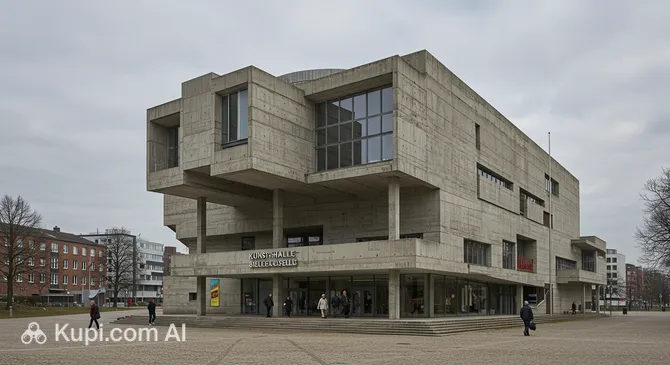
Bielefeld's museum scene can surprise even sophisticated art connoisseurs. The architectural and cultural dominant of the city is the Bielefeld Kunsthalle. The museum building, resembling a red sandstone cube, was designed by the famous American architect Philip Johnson. Inside is an impressive collection of 20th and 21st-century art, including works by Picasso and Warhol, and the sculpture park surrounding the building is open for viewing free of charge at any time.
Kunsthalle Bielefeld. Illustration.
Source: Kupi.com AI
Traveler photos:
The Bielefeld Farmhouse Museum offers completely different impressions. It is the oldest open-air museum in Westphalia, located in a picturesque green zone. Here you can see authentic half-timbered houses, an old mill, and learn how the local residents lived in the mid-19th century. This atmospheric place allows you to literally touch the history of the region.
Insider tip: If you want to enjoy a panorama of the city without the crowds, head to Nordpark. Locals love this place for its tranquility and excellent viewpoints, offering views of Bielefeld that are in no way inferior to those seen from the walls of Sparrenberg Castle.
Getting Around
The public transport system in Bielefeld is characterized by German punctuality and thoughtfulness, making movement around the city comfortable even for those here for the first time. The main operator is the moBiel company, which integrates a network of light rail (Stadtbahn) and buses into a single structure. The central transport hub of the city is Jahnplatz: it is here that almost all key routes intersect, allowing you to easily transfer and reach any point in Bielefeld.
The main artery of the city is the Stadtbahn, a hybrid of a metro and a tram. In the city center, the trains run underground, functioning as a subway, and on the outskirts, they come to the surface and move along dedicated lines like trams. The system consists of four main lines, each with its own color and number (1, 2, 3, and 4). This is the fastest way to get from the station to Sparrenberg Castle or the university. Intervals are about 10 minutes during the day, which eliminates the need to wait long on the platform.
The bus network supplements the tram lines, covering areas where the tracks do not reach. The buses are modern, low-floor, and equipped with information displays. The NachtBus night network deserves special attention. On weekends (nights from Friday to Saturday and Saturday to Sunday), night buses depart from Jahnplatz every hour, taking late-night tourists and locals home. This is a safe and inexpensive alternative to taxis late at night.
Bielefeld is part of the WestfalenTarif fare zone. This means the same ticket is valid for all types of transport: trams, buses, and regional trains within the city. For tourists, the most advantageous option is often the TagesTicket (day ticket). It allows for unlimited travel during the day for one person or a group of up to 5 people. If you only need to travel a couple of stops (up to 4), ask for a Kurzstrecke — a short-trip ticket that costs less than a standard one.
Tickets can be purchased in several ways. The most convenient is through the moBiel or DB Navigator mobile app, which saves you from searching for change and queues. Tickets are also sold in machines at metro stations and major stops (accepting cards and cash) or directly from the bus driver (usually only for cash). Important: paper tickets bought from machines or kiosks must be stamped (validated) before entering the vehicle or immediately inside the bus/tram. Tickets without a time stamp are considered invalid, and fines for fare evasion in Germany are quite substantial.
As an alternative to public transport, bicycles are very popular in Bielefeld. The city's bike-sharing system is called meinSiggi. The bikes of this service are located throughout the city, and to rent one, you just need to download the app. This is a great way to explore the city's green zones and parks at your own pace. E-scooters from international operators (e.g., Tier or Voi) are also available and convenient for short trips around the center.
Classic taxis can be found at special stands near the station and major squares or ordered by phone. Popular international taxi apps work but may have less coverage than local services. For those used to car-sharing, services (e.g., cambio) operate in the city, but their use often requires prior registration and driver's license verification, which may not always be convenient for a short-term visit.
Accommodation
Bielefeld offers travelers a decent choice of accommodation options: from budget hostels and cozy guesthouses to modern business hotels and stylish apartments. The city is not overloaded with tourist flows, so you can expect a good price-quality ratio, and the level of service is traditionally high, which is characteristic of German hospitality.
For those who want to be in the center of things, staying in the Mitte district is the best solution. By choosing a hotel in the historical center, you will be within walking distance of main attractions such as the Old Market, theaters, and museums. This is an ideal location for evening walks through lively streets. Another convenient area is located around the main railway station — an excellent option for those planning active movements around the region or a short business trip.
The city is dominated by mid-range and business-class hotels, due to Bielefeld's status as an industrial and university center. Many modern hotels pay great attention to the design and comfort of public areas. For example, in some hotels, you can find trendy establishments such as the Bar at the Légère Hotel Bielefeld, where it is pleasant to relax after a busy day without leaving the building.
Booking Tip: Although Bielefeld is not a mass tourist destination, during periods of major trade fairs or city festivals, the demand for housing increases sharply. We recommend booking a room in advance, especially if your trip falls during the summer months or December holidays.
The price range varies from budget to mid-range. Luxury resorts are rare here, but comfortable "four-star" hotels and functional city hotels are widely represented. To search for accommodation, it is most convenient to use major international online platforms that offer a wide choice and up-to-date prices.
Nearby Cities
For those who want to explore the surroundings, Bielefeld serves as an excellent starting point for day trips to several interesting nearby places:
Just a 15–20 minute drive away is the charming resort town of Bad Salzuflen. It is an ideal place for those seeking relaxation and wellness. The town is famous for its powerful graduation towers — massive structures for salt evaporation that create a unique microclimate around them, beneficial for breathing, similar to sea air. A walk through the resort park and the historical center with its beautiful half-timbered houses will give a sense of tranquility and comfort.
Modern art and architecture enthusiasts should visit Herford. The main point of attraction here is the MARTa Herford museum, designed by the famous architect Frank Gehry. This building, with its flowing, "dancing" brick forms, contrasts sharply with the city's ancient churches, creating an interesting dialogue of eras. Herford is also known for its history as one of the region's oldest Hanseatic cities.
Another great option for a short trip is Gütersloh. This city is often called the "green living room" of the region thanks to its magnificent Botanical Garden and city park, which are considered among the most beautiful in Germany. Here you can enjoy leisurely walks among flower beds and centuries-old trees, taking a break from the city bustle.
City
Population
Distance
Steinhagen
20 698
8 km
Werther
11 274
10 km
Oerlinghausen
17 286
12 km
Leopoldshoehe
16 413
12 km
Enger
20 483
13 km
These nearby destinations provide an insight into the region's diverse culture and landscapes.
Shopping & Souvenirs
Shopping in Bielefeld is a pleasant and relaxed activity, free from the bustle of huge metropolises. The city offers a compact but rich shopping area, where large chain department stores sit alongside cozy family shops. Thanks to the city center being almost entirely pedestrianized, moving from one shop to another here is particularly comfortable. Bielefeld is famous for its attention to detail: you can easily find high-quality German clothing as well as unique interior items or local delicacies.
The main shopping artery of the city is Bahnhofstraße. This lively pedestrian street stretches from the railway station to the historical center and is literally dotted with shops of famous world brands of clothing, shoes, and electronics. If you are looking for something more exclusive, turn into the alleys of the Altstadt (Old Town). Here, among the historical facades, are hidden small boutiques, antique shops, bookstores, and jewelry workshops where you can purchase items with individual character.
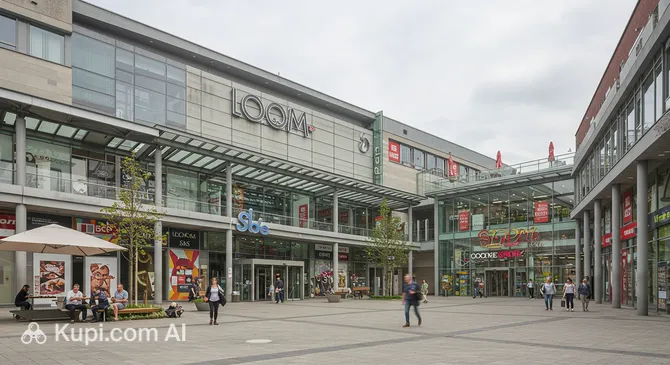
The center of attraction for those who like shopping under one roof is the modern LOOM shopping center. Located in the very heart of the city, it impresses not only with its architecture but also with its variety: more than 100 stores, a food court, and entertainment zones make it an ideal place for shopping in any weather. Another popular location, especially for residents of the northern part of the city, is the Nordpark Center, which also offers a wide selection of everyday goods.
LOOM. Illustration.
Source: Kupi.com AI
Traveler photos:
The special atmosphere of Bielefeld can be felt at its markets. The most colorful is the market on Siegfriedplatz, which operates on Wednesdays and Fridays. This is a cult meeting place for townspeople: they buy the freshest farm vegetables, cheeses, and flowers here, and then discuss the latest news over a cup of coffee. Although the historical Old Market square is now better known for its restaurants, it transforms during the pre-Christmas period, becoming home to one of the coziest Christmas markets in the region.
When choosing souvenirs, pay attention to the regional gastronomic symbols. A real Westphalian ham on the bone or traditional pumpernickel black bread would make a great gift. Since Bielefeld is the birthplace of a world-famous brand, many tourists head to Dr. Oetker World to buy branded baking mixes, puddings, or cookbooks that are hard to find in regular supermarkets abroad. Sports fans often purchase merchandise from the local football club, Arminia.
Shops in the city center are usually open from Monday to Saturday from 10:00 to 20:00. Large supermarkets may work until 21:00 or 22:00. It is important to remember that Sunday in Germany is a day of rest, and almost all shops, including grocery stores and shopping centers, are closed. The only exceptions are some bakeries in the morning and shops at the station.
Bank cards (Visa, Mastercard) and contactless payments via smartphones are widely accepted. However, in small kiosks, at markets, or in old traditional cafes (Imbiss), you may be asked to pay in cash, so having a small amount in euros is always useful. Tourists from non-EU countries can use the Tax Free system when buying goods for over 50 euros in stores marked with the Global Blue sign and get a tax refund when leaving the country.