Support

Gottingen

About

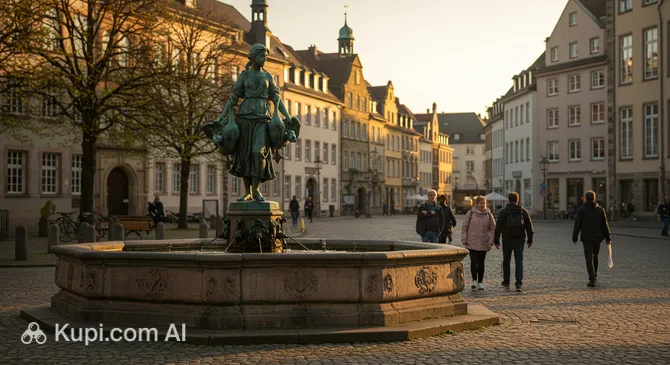
Göttingen is not just a point on the map, but a true intellectual oasis and the heart of Lower Saxony. Located in the geographical center of the country, this city is surrounded by picturesque green hills and forests, creating a cozy atmosphere for living and traveling. It is here that Germany reveals an unexpected side: as a place where medieval traditions harmoniously intertwine with the energy of youth and science.

Göttingen. Illustration.
Source: Kupi.com AI

Local residents take special pride in the fact that the historic center remained practically undamaged during World War II. Thanks to this, authentic half-timbered houses have been preserved, giving the streets a unique charm. The rich history of Göttingen is inextricably linked with enlightenment: the famous Georg-August University has given the world more than 40 Nobel Prize winners. With a population of about 120,000, the city remains lively and dynamic, as every fifth resident here is a student.

A stroll through Göttingen is a journey through time, where fairy tales coexist with reality. You can enjoy the view of ancient architecture, visit the city's symbol—the Gänseliesel (Goose Girl) fountain on the market square—or relax in one of the many cafes filled with international chatter. It is worth coming here for the unique atmosphere of freedom, knowledge, and comfort that can be felt at every step.

Weather Overview

The city's climate is characterized by its mildness and the absence of sharp temperature changes, which is typical for this region of Germany. Typical weather in Göttingen is conducive to leisurely walks, but travelers should keep in mind the changeability of the heavens and always have an umbrella or raincoat with them.

The summer here is comfortable and not exhaustingly hot. The warmest months are July and August, when the average temperature stays around 18–19°C, and during the day the air warms up to a pleasant 22–23°C. This is the best time for tourism, although even in the height of the season, rain is not uncommon: an average of 12 to 14 rainy days is recorded monthly in summer.

Winters in Göttingen are cool, but generally without severe frosts. In January and December, the thermometer fluctuates between 0°C and 4°C. This period is characterized by high humidity: the number of days with precipitation can reach 17 per month, so shoes should be waterproof and warm.

Spring and autumn delight with smooth transitions. By May, the air already warms up to 17°C, and September often brings a mild \"Indian summer.\" Expect a moderately warm summer with occasional rain and a cool, damp winter.

Average monthly temperature

Average monthly precipitation

Interesting Facts

Göttingen is a city that knows how to surprise not only with its architecture but also with its living traditions. Beyond its main attractions, it holds many fascinating stories and unofficial titles that make it a unique spot on the map of Germany.

  • Göttingen is often called the \"city of kisses\" thanks to one of the sweetest student traditions in Europe. On the market square is the Gänseliesel Fountain, adorned with a figure of a girl with geese. She is considered the most kissed statue in the world: every university graduate, after receiving their doctoral degree, must climb onto the pedestal, give the bronze beauty flowers, and kiss her for good luck.

  • This city rightfully bears the title of a \"forge of minds.\" More than 40 Nobel Prize winners have studied or worked here, as well as such great figures as the mathematician Carl Friedrich Gauss and the famous storytellers, the Grimm brothers. Such a concentration of intellect has created a special academic atmosphere that can still be felt on the streets today.

  • The popular \"German Fairy Tale Route\" tourist trail passes through Göttingen. The city is closely linked to the work of the Brothers Grimm, and many of its corners look as if they stepped out of the pages of their magical stories. Strolling through the ancient streets, it is easy to imagine yourself as a character in one of the famous German legends.

  • The city is home to a unique natural oasis—the Old Botanical Garden of Göttingen University. Founded in the 18th century, it is one of the oldest and richest in the country, allowing visitors to see rare plants from all over the globe right in the city center.

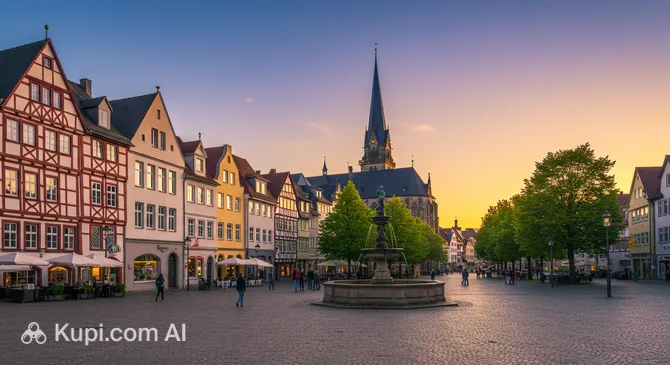
Gänseliesel Fountain. Illustration.
Source: Kupi.com AI

Traveler photos:

How to Get There

Thanks to its central location in Germany, getting to the city is quite simple, even though it doesn't have its own airport. Travelers can choose a convenient route through neighboring large transport hubs, combining a flight with a train or car trip. You can find more about how to get to Göttingen by exploring all the available route options.

There is no airport in the city of Göttingen itself, so most tourists fly into neighboring cities. One of the most convenient options is Hannover Airport (HAJ), located in the city of Hannover, about 103 km from the destination. It is a major international hub receiving flights from all over the world. The journey from there by taxi or rental car takes about 1 hour and 40 minutes.

An alternative could be Paderborn Lippstadt Airport (PAD), which is slightly closer—90 km away, in the city of Paderborn. This is a regional airport with less passenger traffic, which guarantees a calmer passage through formalities. Also worth considering is Leipzig/Halle Airport (LEJ), located 160 km away. Despite the greater distance, good transport links allow you to reach Göttingen in a reasonable amount of time.

For clarity, here is a summary of the main airports:

AirportPassenger trafficDistance
Kassel-Calden Airport107 61540 km
Paderborn Lippstadt Airport818 37891 km
Erfurt Airport138 00296 km
Hannover Airport5.3 mln103 km
Dortmund Airport3.1 mln160 km

The railway connection in Germany is excellently developed, making a train journey a great choice. There is a railway station in the city of Göttingen itself, but it is often more convenient to use major interchange hubs nearby, especially if you are traveling from afar on a high-speed express (ICE).

The closest and strategically important hub is Kassel-Wilhelmshöhe station in the city of Kassel, located just 41.5 km from Göttingen. This is a major station with a huge passenger flow, where high-speed trains from all over the country arrive. From there, you can quickly reach Göttingen by regional train or taxi. Another important transport hub is Hannover Hauptbahnhof in Hannover (about 94 km). It is one of Germany's key railway stations, providing excellent connections to most directions.

Below is information about the nearest major railway stations:

StationPassenger trafficDistance
Kassel-Wilhelmshöhe Station10.9 mln41 km
Eisenach Hauptbahnhof1.8 mln69 km
Hanover Main Station91.3 mln94 km
Erfurt Hauptbahnhof16.8 mln101 km
Messe Bahnhof (Messe-Bf) Station102 km

Main Attractions

Göttingen is a city best explored at a leisurely pace, soaking in the atmosphere of ancient streets and green oases. The attractions here are located compactly, allowing you to see a lot even in a single day. The heart of the city and the starting point for most routes is the Market Square, where life hums and people meet.

It is here, on the main square in front of the medieval Town Hall, that the famous Gänseliesel Fountain is located. This small but elegant bronze figure of a girl with geese has become the unofficial symbol of the city. Tourists come here not only for photos but also to feel the rhythm of the city: there are always many students, street musicians, and travelers relaxing in open-air cafes around the fountain.

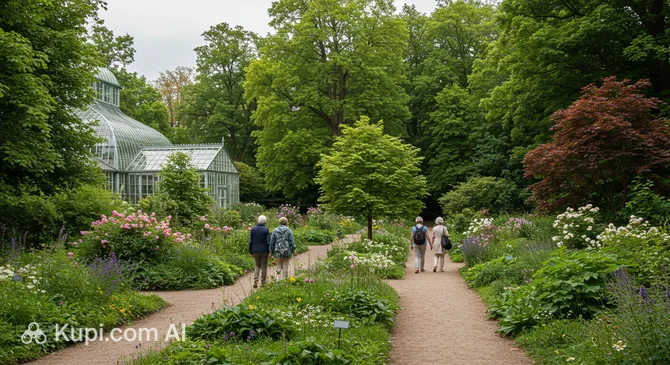
For those seeking solitude and the beauty of nature, the Old Botanical Garden of Göttingen University is a must-visit. Founded in 1736, it is one of the oldest gardens in Germany. Here you can stroll among ancient trees, peek into historic greenhouses with exotic plants, and enjoy the silence in the very center of a bustling city. The garden is a unique combination of science and landscape art.

Old Botanical Garden of Göttingen University. Illustration.
Source: Kupi.com AI

Traveler photos:

Fans of active recreation and water treatments should visit the Badeparadies Eiswiese. This modern complex combines thermal pools, saunas, and sports areas. It is the perfect place to relax after long walks on the cobblestones of the old town, especially if you are traveling with family.

Another picturesque green area is Levin Park. Located around a large pond, it attracts locals and tourists with the opportunity to have a picnic by the water or simply stroll along well-kept alleys while watching the birds. It is an excellent example of how harmoniously nature is integrated into the urban environment of Göttingen.

Local Cuisine

The culinary scene in Göttingen is a cozy mix of hearty Lower Saxony traditions and modern trends brought by university students. Here, substantial meat dishes and quick street food, which can be grabbed on the go between lectures or tours, are equally loved.

If you find yourself in the city during winter, be sure to try the region's main seasonal dish—Grünkohl mit Bregenwurst. This is stewed curly kale served with a spicy, rich sausage; the dish is so popular that friendly social gatherings are held in its honor. Meanwhile, in spring, the \"white gold\" of Germany—asparagus (Spargel)—reigns on the tables, traditionally served with boiled potatoes, ham, and delicate melted butter or hollandaise sauce.

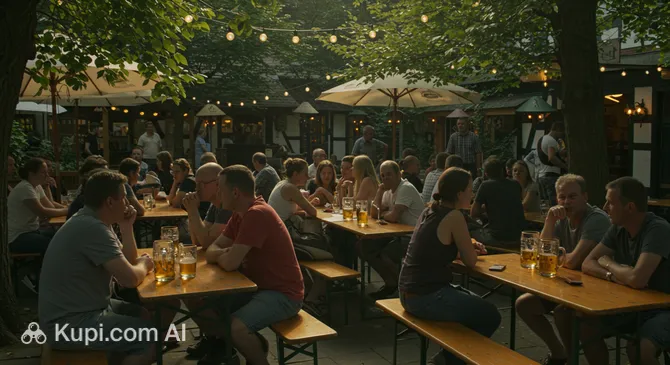
Zum Szültenbürger. Illustration.
Source: Kupi.com AI

Traveler photos:

The food culture in Göttingen is democratic. Locals often buy fresh produce and homemade delicacies at the farmers' market, which sets up on the Market Square. Here you can find aromatic honey, smoked fish, and fresh pastries, such as apple or plum cakes. From the street food, tourists should pay attention to hot bratwurst (fried sausages) and crispy potato pancakes sold in the kiosks of the old town.

For a full lunch or dinner, you can choose one of the colorful establishments. For example, the Zum Sültenbürger restaurant will offer you an immersion into the atmosphere of a traditional German feast with large portions. If you just want a cup of coffee or a lighter snack, stop by the Kaffeehaus. Evening leisure enthusiasts should remember that Göttingen is famous for its breweries, where excellent craft beer is brewed, as well as cozy spots like El Punto Tapas Bar, where you can pleasantly end your day.

Travel Tips

Göttingen is a city with a young soul and ancient traditions, where traveling is easy and pleasant. To ensure your trip is as comfortable and hassle-free as possible, we have prepared a list of useful practical recommendations to help you quickly settle into this university center.

  1. Clothing and essentials: The weather in Lower Saxony is changeable, so dress in layers. Even in summer, bring a light jacket and an umbrella, as rain is not uncommon here. Be sure to bring comfortable flat shoes: the historic center is paved with old cobblestones, and long walks in heels will be extremely tiring. No strict dress code is required for visiting churches, but modest clothing is appropriate.
  2. Transport: Göttingen's historic center is very compact and is best explored on foot. For trips to remote areas, the bus network is well-developed. Renting a car for travel within the city makes little sense due to narrow streets and parking difficulties. If you want to feel like a true local, rent a bicycle—it is the most popular form of transport among students.
  3. Finance: The official currency is the Euro. Although cards (Visa, Mastercard) are accepted in supermarkets and large restaurants, Germany remains a country where people love cash. Small cafes, bakeries, and souvenir shops may not accept cards, so always have small bills and coins with you. Tipping is usually not included in the bill; it is customary to simply round up the amount or leave 5–10% of the check.
  4. Health and safety: Göttingen is a quiet and safe city. Pharmacies (Apotheke) are easy to recognize by the large red letter \"A\". If a pharmacy is closed, there is always an address for the nearest on-call location posted on the door. The emergency services number is 112. The tap water here is of excellent quality and can be safely drunk.
  5. Communication: The official language is German, but thanks to the university city status and the huge number of international students, the level of English proficiency here is very high. You will easily communicate in a cafe, museum, or hotel. Nevertheless, polite \"Hallo\" (hello) and \"Danke\" (thank you) in German will always bring a smile and help win over your interlocutor.
  6. Local etiquette: Germans value punctuality and adherence to rules. On Sunday, most shops (except those at the station and gas stations) are closed—it is a day of rest (Ruhetag), so buy your groceries in advance. When entering a small shop, it is customary to greet the shopkeeper.
  7. What to avoid: The main rule of safety and etiquette in Göttingen is never walk on bicycle paths. Cyclists here ride fast and confidently, considering this territory their own, so a pedestrian stepping onto their lane can lead to a collision and intense indignation.
  8. Returning containers (Pfand): Do not throw plastic bottles and aluminum cans into ordinary bins. In Germany, a deposit system is in place: when you buy a drink, you pay a deposit (usually 25 cents), which can be returned. Look for special reverse vending machines in supermarkets, return the bottles, and get a voucher that can be redeemed for cash at the register.

Göttingen charms with its intelligence and coziness, and you will quickly feel at home here. By following these simple tips, you can avoid minor misunderstandings and focus entirely on enjoying the atmosphere of the \"city of knowledge.\"

Entertainment & Nightlife

Entertainment and nightlife:

Nightlife in Göttingen is inextricably linked to its status as a university city. Energy is in full swing here: when the libraries close, students fill the streets of the historic center, creating a lively and relaxed atmosphere. Unlike metropolises with their pretentious clubs and strict face control, Göttingen offers a more democratic form of relaxation—from cozy basement pubs to noisy student parties where every guest is welcome.

The epicenter of evening activity is the historic center (Innenstadt). The most popular routes run through the streets around the Market Square, as well as in the area of Jüdenstraße and Rote Straße. The concentration of bars per square meter here is incredible. The crowd is very diverse: you might find professors discussing science and freshmen celebrating a passed exam at the same table. There is practically no dress code—casual style and comfortable shoes are appropriate in any establishment here.

For starting the evening, El Punto Tapas Bar is an excellent choice. This place is famous for its warm atmosphere and great selection of drinks, which can be complemented by light snacks. Groups of friends often gather here to warm up before a long night. If you prefer a more classic setting, stop by Kaffeehaus—an establishment that functions as a cozy cafe during the day and turns into a pleasant spot for long conversations over a glass of wine or beer in the evening.

Those who enjoy dancing should look for signs saying \"Club\" or \"Keller\" (cellar). Many of Göttingen's iconic spots are located in ancient vaulted cellars, which gives the parties a special flair. The musical repertoire ranges from pop hits and rock to electronic music. The fun usually starts after 11:00 PM, with peak activity occurring on Thursday (the traditional student night), Friday, and Saturday.

As for safety, Göttingen is considered one of the safest cities in Germany. You can walk through the center at night without fear; the streets are well-lit and populated. Nevertheless, for returning to your hotel at a late hour, it is convenient to use a taxi or the night buses (Nachtbus) that run on weekends. The average bill in bars will be a pleasant surprise: prices here are geared towards student budgets, so a beer or a cocktail will cost less than in major tourist centers.

Daytime entertainment in the city is also diverse. Shopping fans can head to Kauf Park Göttingen—a large shopping center where you can find everything from fashion to souvenirs. For those traveling with family, Kinderstadt (Children's City) will be a real find. This is an entertainment center where young travelers can have fun while adults plan their evening route. Additionally, several theaters operate in the city, including the famous Deutsches Theater, which offers both classical and modern productions.

Parks & Museums

Göttingen harmoniously combines the atmosphere of an old university town with an abundance of green zones and a rich museum heritage. Cultural life here is not limited to lecture halls: the city offers many places for contemplative relaxation in nature and intellectual leisure in exhibition halls that hold centuries of history.

Among the green oases, a special place is held by Kiessee—a picturesque lake on the outskirts of the city that has become a favorite spot for jogging, walking, and boating. It is an ideal location to escape the city bustle and enjoy the silence by the water. Equally popular is Schillerwiesen—vast meadows bordering the Göttingen Forest. Students often gather here for picnics, outdoor games, and sports, creating a lively and relaxed atmosphere.

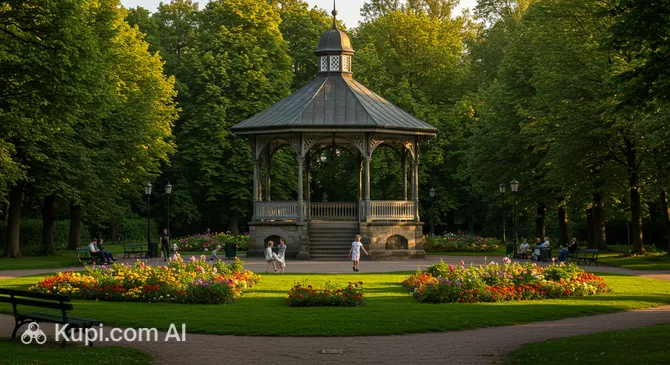
For lovers of landscape art, Levin Park will be of interest. This corner of nature, transformed from former gravel pits into a picturesque English-style park, attracts with its winding paths and ponds where waterfowl nest. It is also worth visiting the Old Botanical Garden of Göttingen University, which, despite its compact size, amazes with its diversity of flora and historic greenhouses, being a true monument of science under the open sky.

Levinscher Park. Illustration.
Source: Kupi.com AI

Traveler photos:

Göttingen's museum map reflects its scientific status. A must-visit is the City Museum (Städtisches Museum), located in the city's only surviving noble palace. Its exhibition covers the region's history from the early Middle Ages to the present day, including unique collections of religious art and everyday life. Another important point is Forum Wissen—a modern museum of knowledge at the university where science becomes tangible, and visitors can immerse themselves in the process of research and discovery.

The city's historical image is formed by majestic architectural monuments. The Old Town Hall (Altes Rathaus), built in the 13th century, is always in the spotlight. Its medieval hall with wall paintings served as a place for trade and court, and today exhibitions and receptions are held here. Next to it, on the market square, is the famous Gänseliesel Fountain, around which the architectural ensemble of the center is formed, complemented by the Gothic spires of St. James Church.

For those looking for unusual experiences, we recommend heading to the Bismarckturm (Bismarck Tower). This tower, hidden in the forest on Hainberg hill, offers perhaps the best panorama of the city and the Leine River valley. Climbing up there will be a great short walk, allowing you to look at the \"city of knowledge\" from a bird's eye view.

Getting Around

The public transport system in Göttingen is characterized by German punctuality and convenience, though it does not match the scale of a metropolis. There are no subways or trams here; the main means of transport around the city are buses. A dense network of routes operated by the local company GöVB covers both the historic center and residential areas, as well as university campuses. Buses run frequently and strictly on schedule, making them a reliable choice for planning trips.

A unified tariff system of the transport association VSN applies for fare payment. Tickets can be purchased directly from the driver upon boarding (usually only cash is accepted), from blue ticket machines at major stops, or through mobile apps such as \"VSN Fahrplan\" or \"DB Navigator\". For tourists, the most advantageous option is often a day ticket (Tageskarte), which allows an unlimited number of trips during the day for one person or a group. There is also a 4-trip ticket (Vierer-Karte), which is cheaper than buying four single tickets separately.

An important practical tip: if you bought a paper ticket in advance from a machine or kiosk, you must validate it immediately upon entering the bus. Validators are usually small, orange or red in color. A ticket without a time stamp is considered invalid, and ticket inspectors on the lines work regularly; fines for fare evasion are quite substantial. On weekends (Friday and Saturday nights), special night buses run through the city, which is convenient for those who enjoy late walks.

Göttingen is rightfully considered a city of cyclists. The terrain here is predominantly flat, and the network of bike paths is excellently developed, making two-wheeled transport perhaps the most popular alternative to buses. Bicycle rental points can be found right at the central railway station and at several points in the old town. This is a great way to feel the rhythm of life of local students and quickly reach any attraction.

Taxi services also operate in the city, with stands located at the station and on central squares, and popular car-sharing services are available. However, it is worth remembering that the historic core of Göttingen is quite compact, and many streets there are pedestrianized. Therefore, for exploring the center, it is best to rely on your feet and use public transport for trips to thermal springs, remote parks, or the station.

Accommodation

As a vibrant university center, Göttingen offers travelers a wide range of accommodation options that will satisfy both budget tourists and those accustomed to a high level of comfort. You can find everything here: from inexpensive youth hostels and cozy guesthouses (Gasthaus) to modern business hotels and spacious apartments for family vacations. Thanks to the city's compactness, most accommodation facilities are within easy reach of the main attractions.

The most popular area for staying remains the historic center (Innenstadt), surrounded by the city wall ramparts. By staying here, you will be within walking distance of the old Town Hall, cafes, and shops. For those planning to travel frequently around the region, hotels near the railway station (Bahnhof) are a convenient option: it's a practical choice that allows you to reach your train quickly, while the city center is just a 10–15 minute walk away. Quiet and green residential areas on the outskirts are suitable for those traveling by car and seeking peace.

Among the well-known hotel complexes offering a high level of service and additional amenities, the Hotel Freizeit In is worth highlighting. This is not just a place to sleep, but a true resort hotel with a wellness area, perfect for a relaxed vacation. Another worthy example is the Hotel Eden, known for its comfort and hospitality. These hotels are often chosen by both business travelers and tourists wishing to recharge after long walks.

When planning a trip, it is important to consider the city's event-filled life. During periods of major university events, scientific conferences, or exhibitions in neighboring Hannover, demand for housing increases sharply. Therefore, the main advice for booking is to take care of your accommodation in advance, preferably a few weeks or even months before the intended date of your visit, to guarantee the best price-to-quality ratio.

The price range in Göttingen can be described as moderate, especially compared to Germany's major metropolises. Budget options are available for students and thrifty tourists, while mid-range and luxury hotels offer rates corresponding to their status. Booking is most convenient through popular international online platforms, which allow you to compare prices and read reviews; however, direct booking on the websites of small family hotels can sometimes offer pleasant bonuses or discounts.

Nearby Cities

For those who want to explore the surroundings, Göttingen serves as an excellent starting point for day trips to several interesting nearby places. Thanks to its convenient location in the center of Germany, you can quickly reach picturesque historic towns, each with its own unique character.

Special attention should be given to Hann. Münden, often called the \"city of three rivers,\" as it is here that the Werra and Fulda merge to form the Weser. This place is famous for its fairy-tale atmosphere: more than 700 half-timbered houses rich in carvings and paintings have been preserved here, making a walk through the center a real journey into the past.

Fans of culinary history should visit Einbeck. This ancient Hanseatic city is known as the birthplace of bock beer. In addition to its famous breweries, Einbeck impresses with its architecture, in particular, the magnificently decorated wooden facades of buildings that testify to the former wealth of the city.

Another gem of the region is Duderstadt. The city is known for its medieval town hall with characteristic turrets, which is considered one of the oldest and most beautiful in the country. A walk along the city wall and winding streets will provide a sense of comfort and tranquility.

CityPopulationDistance
Rosdorf11 9494 km
Bovenden13 9726 km
Friedland14 05013 km
Northeim29 10719 km
Witzenhausen15 16723 km

These nearby destinations provide an insight into the diverse culture and landscapes of the region, making your stay in Lower Saxony even more rewarding and memorable.

Shopping & Souvenirs

Shopping in Göttingen is a pleasant and relaxed activity, devoid of the bustle of metropolises. Thanks to the compact historic center, which is almost entirely dedicated to pedestrians, you can combine sightseeing with shopping. The city offers a harmonious combination of famous world brands, large department stores, and charming small boutiques hidden in side streets. A special atmosphere is created by the bookstores, of which there are many, which is not surprising for a university center.

The main shopping artery of the city is the pedestrian zone on Weender Straße. It stretches across the entire old town and is literally dotted with shops for clothing, shoes, perfumes, and accessories. Here you will find familiar European mass-market brands. If you are looking for something more unique and authentic, turn into the side streets, such as Barfüßerstraße or Kurze-Geismar-Straße. These quarters are home to antique shops, designer goods stores, and cozy gift shops.

For those who prefer to shop in one place, Göttingen has several shopping complexes. The largest and most popular is Kauf Park Göttingen. It is located a bit away from the center but is easily reachable by bus. This is a true city of shopping with dozens of stores, a hypermarket, and a food court where you can spend several hours. Within the city, you can also stop by the Köhler Shopping Center, offering a range of goods for everyday life and fashion.

Markets are an integral part of local culture. The main city market (Wochenmarkt) traditionally takes place on the square by the Old Town Hall and St. John's Church several times a week (usually on Tuesday, Thursday, and Saturday mornings). Here, local farmers sell fresh vegetables, fruits, cheeses, flowers, and regional delicacies. This is a great place to buy something delicious for a picnic or simply feel the lively rhythm of the city.

When choosing souvenirs, look for products related to the symbol of the city—the girl with geese (Gänseliesel). Figurines, mugs, and postcards with her image are sold everywhere. A unique gift would be salt from Luisenhall (Luisenhaller Saline). This is the only saltworks in Europe still in operation, where salt is extracted by evaporation from natural underground brines; such a product is highly valued by gourmets. Also, given Göttingen's status, a good book or a university hoodie would make an excellent souvenir.

Shops in the city center are usually open Monday to Saturday from 10:00 AM to 6:00 PM or 8:00 PM. Large shopping centers operate until 8:00 PM. It is important to remember that on Sunday, almost all shops, including grocery supermarkets, are closed (except for small kiosks at the station and gas stations). As for payment, major chains accept Visa and Mastercard without problems, but small cafes, bakeries, and souvenir shops still prefer cash in Euros.

Tourists residing permanently outside the European Union can take advantage of the Tax Free system and get a partial VAT refund when purchasing goods above a certain threshold (usually 50 euros) in one shop. Look for the \"Global Blue\" logo in shop windows or ask sellers for a Tax Free Form when paying for your purchase.
Nearby cities

Reached the end of the page?

That means the route is fully explored