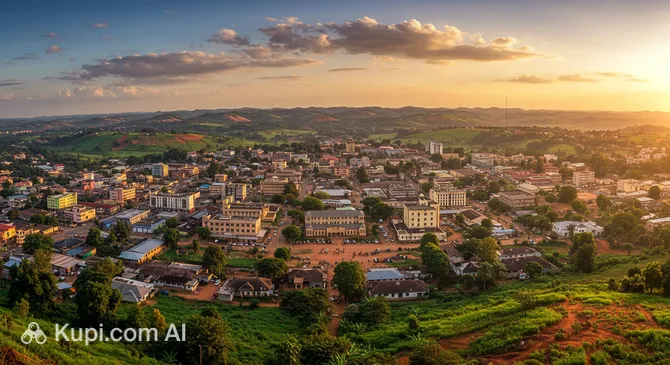
Sunyani is a dynamic and welcoming city that serves as the administrative center of the Bono Region in the western part of Ghana. Situated on the picturesque forested Ashanti Plateau at an altitude of 150 to 300 meters above sea level, the city charms visitors with its calm atmosphere and abundant greenery, which sets it apart from the country's more bustling metropolises.
Founded in 1924 by British colonial authorities, the city grew on the site of a former 19th-century elephant hunters' camp. The construction of the railway to Kumasi played a vital role in establishing Sunyani's historical heritage, transforming it into a key trading hub. Today, it is a thriving center for the trade of cocoa, kola nuts, and agricultural products such as yams and plantains, with a population of over 200,000 people.
Sunyani. Illustration.
Source: Kupi.com AI
For tourists, the city is primarily attractive for its authenticity and the opportunity to get acquainted with the culture of the Akan people. Here, you can visit the local Technical University or observe city life at the Coronation Park sports arena. While the tourism infrastructure is still developing, the genuine hospitality of the locals and vibrant traditions make a trip to Sunyani an unforgettable experience for those seeking the real Africa.
Weather Overview
Sunyani is characterized by a typical tropical climate with a clearly defined alternation of wet and dry seasons. The hottest month is usually February, when average daytime temperatures reach +36°C. Generally, throughout the year, the air warms up to a comfortable +25...+30°C, and the abundance of vegetation on the plateau helps make the heat more manageable.
The rainy season lasts from April to October, peaking in September. During this time, humidity increases significantly, and frequent downpours can make traveling on unpaved roads in the surrounding areas difficult. Detailed information on current conditions can be found in the weather in Sunyani section.
The best time to visit is considered the dry season, lasting from November to March. During these months, rainfall is minimal, and the sky often remains clear, which is ideal for sightseeing and walks. January and December delight with dry and sunny weather, although the Harmattan—a dry wind from the Sahara bringing a light haze—is possible during this time.
Average monthly temperature
Average monthly precipitation
Interesting Facts
In the 19th century, even before the official founding of the city, a large temporary camp for elephant hunters was located on the territory of modern-day Sunyani.
The city's name is derived from the word "Osono," which means "elephant" in the Twi language, recalling the place's past as hunting grounds.
Sunyani officially became an administrative center only in 1924, following a decision by the British colonial administration.
The city is considered an important educational hub for the Bono Region, being home to the well-known Sunyani Technical University.
Thanks to its location on a forested plateau, the city is considered one of the most eco-friendly and greenest administrative centers in Ghana.
How to Get There
The city of Sunyani is an important transport hub in the central part of Ghana. You can learn more about the region's logistics on the how to get to Sunyani page. The city is conveniently located at the intersection of roads linking the western regions of the country with the central plateau, making it accessible by various modes of transport.
For those who prefer air travel, the city is served by Sunyani Airport (IATA: NYI). It handles domestic flights, mainly connecting the city with the country's capital, Accra. This is the fastest way to reach the region, although flight schedules may depend on weather conditions. From the airport to the city center, you can easily take a taxi in 15–20 minutes.
Historically, Sunyani was connected by rail to Kumasi, which gave a powerful boost to its development as a trade center. Currently, the main land transport consists of buses and minibuses (tro-tros). Modern bus terminals serve regular routes from major cities across the country, offering travelers a budget-friendly travel option.
Station
Passenger traffic
Distance
Kojokrom Train Station
1
270 km
Gare ferroviaire Treichville
2
293 km
Main Attractions
Despite the lack of world-class landmarks, Sunyani offers travelers a unique opportunity to immerse themselves in the atmosphere of authentic Ghana. The heart of the city's social and sporting life is Coronation Park. It is not just a sports arena, but a venue for key city events, football matches, and cultural festivals that allow visitors to feel the passion and unity of the local residents.
The city is famous for its "green" appearance—thanks to its location in the forested zone of the Ashanti Plateau, the streets of Sunyani are adorned with lush vegetation. A walk through the city allows you to appreciate the beauty of the local landscapes. Special attention should be paid to visiting local markets, which are attractions in themselves: they bustle with the trade of cocoa and traditional crafts reflecting the skill of the Akan people.
If your trip coincides with the time of regional festivals, you will witness vibrant ceremonies, traditional dances, and the lavish attire of chiefs. These cultural events are a crucial element of the region's heritage and provide a deep understanding of the customs and beliefs of local communities that have been preserved for centuries.
Local Cuisine
A gastronomic journey through Sunyani is an introduction to the rich flavors of West Africa. Since the city is an important agricultural center, fresh produce is always readily available. The basis of the local cuisine consists of dishes made from yams, plantains, and maize. Be sure to try traditional fufu—a thick mash served with aromatic soups (such as groundnut soup or light soup with goat meat).
No less popular in Sunyani is jollof—spicy rice cooked in tomato sauce with local spices, often served with fried chicken or fish. In local markets, it's worth looking for kelewele—deep-fried pieces of spicy plantain with ginger and pepper, which are a favorite street snack for both locals and tourists.
Regarding drinks, fresh tropical fruit juices and traditional palm wine are widespread. For those who prefer non-alcoholic options, bisap (a hibiscus drink) or refreshing coconut water are excellent choices. Although there are few fine-dining restaurants in the city, numerous local eateries (chop bars) offer a truly authentic taste of Ghana in a relaxed atmosphere.
Travel Tips
Planning a trip to Sunyani requires considering several practical points that will make your stay in this region of Ghana as comfortable and interesting as possible.
Clothing and Season: The best time to visit is the dry season from November to March. Bring light cotton clothing, but don't forget closed shoes for walking on forest trails and a light windbreaker for cool evenings.
Transport: To move around the city, use Uber or official taxis. If you want to save money and experience local flavor, try riding a tro-tro, but avoid them during peak hours.
Finances: The official currency is the Ghanaian cedi (GHS). Cards are accepted in major hotels, but always carry cash for markets and cafes. Currency exchange is best done at banks or official Forex bureaus in the city center.
Health: Consult a doctor about malaria prevention before your trip. Use repellents and drink only bottled or filtered water.
Communication: English is the official language and is spoken by almost everyone. However, a few phrases in the local Twi language (for example, "Akwaaba" — Welcome) will immediately endear you to your interlocutor.
Local Etiquette: Ghanaians are very polite. Always greet people before asking for anything. Remember that it is customary to pass items or money only with the right hand.
What to Avoid: Do not photograph government buildings, military sites, or people without their prior consent. Avoid walking alone in unfamiliar outskirts after dark.
Connectivity: Buy a local SIM card (such as MTN or Vodafone) right at the airport or at one of the service centers in the city for stable mobile internet, as hotel Wi-Fi can be slow.
Following these simple rules will help you focus on the beauty and hospitality of the Bono Region, making your journey truly enjoyable.
Entertainment & Nightlife
Entertainment in Sunyani is predominantly local and authentic in character. The main center of attraction for residents and visitors is Coronation Park, where football matches and public celebrations are regularly held. If you want to feel the spirit of the city, be sure to attend a game of the local team—it is the best way to see the genuine emotions of the townspeople.
Evenings in the city are quite peaceful. Nightlife is concentrated in small bars and cafes scattered throughout the center, where you can try local beer and listen to contemporary African music (highlife or hiplife). There are no giant nightclubs like those in Accra, but instead, there is a friendly and safe atmosphere that encourages interaction with the locals.
For lovers of cultural leisure, the periodic festivals and fairs organized by city communities are of great interest. Daytime can be spent walking through the green streets or attending student events at the Technical University, which brings youthful energy and dynamics to city life.
Parks & Museums
Nature is the main ornament of Sunyani. The city is located in the forested zone of the Ashanti Plateau, which is why it is often called one of the greenest cities in Ghana. While there are few classical museums in the conventional European sense, the urban environment itself, with its lush vegetation and well-kept streets, serves as an excellent place for outdoor relaxation.
The central place for walks and mass gatherings is the Coronation Park sports arena. It is not only a stadium but also an important public space where you can feel the rhythm of the city. Green zones are concentrated around it, which locals use for meetings and recreation. The natural landscapes of the Ashanti Plateau surrounding the city offer picturesque views and opportunities for short trips into nature.
For those interested in culture, local markets and craft centers often perform the functions of museums, where you can see the process of creating traditional products live. The cultural heritage of the Akan people is carefully preserved in traditional communities, and attending local festivals can replace a visit to any art gallery, offering living and dynamic art instead of static exhibits.
Getting Around
The transport system in Sunyani is considered one of the most efficient and organized in Ghana. The backbone of urban and suburban communication is the shared minibuses known as tro-tros. This is the most affordable and popular way to get around among locals. Routes cover all areas of the city, and departure points are usually concentrated near large markets and bus stations.
For more comfortable trips, tourists can use taxi services. In Sunyani, both regular street taxis (easily recognizable by their distinctive colors) and modern services via mobile apps like Uber are available. A taxi ride through an app is often cheaper and eliminates the need to negotiate the price, which is especially convenient for foreign guests.
Payment in tro-tros is made in cash to the conductor, so it is always useful to have small change with you. The city also houses large bus terminals from which comfortable intercity buses depart for Accra, Kumasi, and Tamale. During peak hours (morning and evening), congestion can occur on main streets, so plan your trips in advance to avoid the rush.
Accommodation
The choice of accommodation in Sunyani is primarily geared towards business travelers and those visiting the city for administrative purposes. There is a decent selection of mid-range hotels and cozy guest houses. Most of them are concentrated in the central part of the city, providing convenient access to government offices, markets, and transport terminals.
For those looking for comfort at a reasonable price, it is worth looking at local hotels that offer basic amenities: air conditioning, Wi-Fi, and breakfast. While the city lacks luxury five-star complexes of international chains, local guest houses are famous for their personal touch and homey comfort, allowing you to better experience Ghanaian hospitality.
If you plan to visit during major regional festivals or holidays, it is recommended to book accommodation in advance, as the number of quality rooms is limited. The general price level for accommodation here is lower than in Accra or Kumasi, making Sunyani an attractive option for budget travelers exploring the interior of Ghana.
Nearby Cities
Thanks to its location, Sunyani is an excellent starting point for exploring other towns and settlements in the Bono Region. The city's surroundings offer travelers the chance to see life in provincial Ghana in all its diversity, from bustling trade centers to quiet agricultural communities.
Just a few kilometers away is Odumase, which practically merges with the outskirts of Sunyani. A bit further away is Berekum—a city known for its economic potential and rich cultural traditions. Also worth noting is Techiman, which is one of the largest market centers in all of West Africa, attracting traders from across the region.
City
Population
Distance
Odumase
16 542
4 km
Duayaw Nkwanta
27 476
29 km
Berekum
62 364
33 km
Bechem
17 677
42 km
Techiman
104 212
50 km
Trips to these cities allow tourists to gain a deeper understanding of the regional economic structure and see how historical ties, including old trade routes and the railway to Kumasi, continue to influence the lives of modern Ghanaians. Exploring neighboring cities will provide you with many interesting encounters and new discoveries.
Shopping & Souvenirs
Shopping in Sunyani primarily involves visiting vibrant traditional markets where you can find everything from the freshest tropical fruits to handmade goods. The city is famous as an important trade hub specializing in cocoa and kola nuts, so products based on them make excellent and authentic souvenirs. Market squares are the heart of city life, where trade goes briskly from early morning until sunset.
Modern shopping centers and specialized stores are located in the city center, where you can purchase clothing, electronics, and essentials. Pay attention to fabrics: in Sunyani, you can buy high-quality textiles with traditional Adinkra patterns or bright wax prints, which local tailors can quickly turn into an exclusive outfit for you.
If you are looking for something special, check out the craft shops selling carved wooden figurines, traditional ceramics, and bead jewelry. Most shops are open from 8-9 am to 6-7 pm. Large retail outlets accept cards, but for market trips, be sure to stock up on cash in the local currency (Ghanaian cedis)—this will help you not only make a purchase but also haggle with local vendors.