Support

Archaeological Museum of Kos

About

In the heart of the lively Eleftherias Square on the island of Kos sits an elegant two-story building that holds centuries-old secrets of antiquity. The Archaeological Museum of Kos is more than just a treasury of antiquities; it is a true architectural gem of the city, built in a neoclassical style during the period of Italian rule. Walking through its halls, you will take a journey through time, exploring the rich heritage that Greece has left behind.
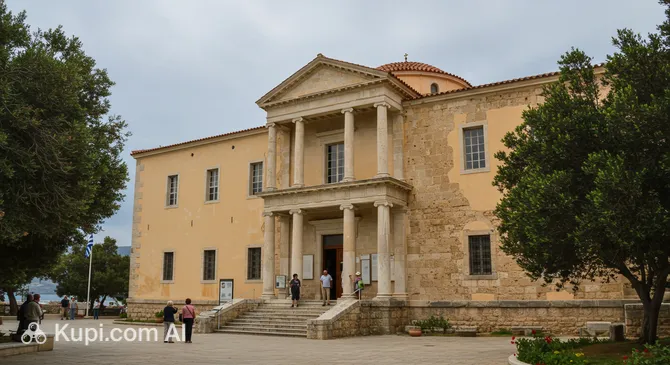
Archaeological Museum of Kos
Archaeological Museum of Kos. Иллюстрация. Источник: Kupi.com AI

The museum's exposition spans a vast period of time, starting from the Mycenaean period and ending with Late Antiquity. It houses unique artifacts found during excavations across the island: from exquisite sculptures and rare coins to bronze figurines, each telling its own chapter in the history of the Aegean Sea.

Visitors are particularly drawn to the beautifully preserved ancient mosaics and monumental statues that once adorned public buildings and the villas of the local nobility. The museum is considered a must-visit for anyone who wants to experience authentic classical culture in a cozy and aesthetic setting.

Contacts

To clarify information about visiting the museum or ticket prices, you can use the following contact details:

How to contactContact
AddressPlatia Eleftheria, Kos 853 00, Greece
Phone+30 2242 028326

What to Do

Within the museum's walls, you will discover outstanding works of ancient art. First and foremost, you should pay attention to the sculpture collection, featuring striking depictions of gods and heroes. Strolling through the halls, you will see how artistic styles and techniques evolved from the Archaic to the Roman period. A special place in the exposition is occupied by mosaic floors, which amaze with their fine craftsmanship and vibrant colors that have survived for millennia.

Since Kos is inextricably linked with the name of Hippocrates, the "father of medicine," the museum features many exhibits shedding light on the development of healing in antiquity. Studying medical instruments and dedicatory inscriptions will help you better understand why the island became the leading scientific center of its time.

The museum halls are organized in a strict chronological order, turning a simple tour into a fascinating exploration of the evolution of civilization. It is an ideal place for those seeking a quiet and thoughtful cultural experience, the chance to take beautiful photos of historical relics, and a deeper immersion into the atmosphere of classical Greece.

Getting There

The Archaeological Museum of Kos is located right in the heart of urban life, on Eleftherias Square. Thanks to such a prime location, it is very easy to reach on foot from anywhere in the city center or the port area. A walk from the waterfront will take just a few minutes and allow you to enjoy the atmosphere of the old streets.

If you are staying in another part of the island and arriving from the airport, the distance is about 26 kilometers. In this case, it is most convenient to use a taxi or a rented car. Also, regular buses run between the airport and the capital, arriving at the central bus station, from where you can walk to the museum in 10–15 minutes.

For those who prefer public transport, city buses connect the main tourist areas with the center. Your landmark for getting off is always Eleftherias Square (Freedom Square), where the neoclassical museum building sits next to the Defterdar Mosque.

Ближайший город: Kos

History & Facts

The island's history is incredibly rich: the first traces of human settlements here date back to the Neolithic era. However, the true period of prosperity began when Kos was conquered by the Dorians in the 11th century BC. It was they who brought the cult of the god Asclepius to these lands, which later turned the island into one of the most important medical centers of the ancient world.

The modern appearance of the city began to take shape in 366 BC, when a polis was founded on the site of a Mycenaean settlement. At that time, the island was part of the Doric Hexapolis—an influential union of six cities. The region's significance is also evidenced by the fact that during the Peloponnesian War, the greatest generals of the time fought for control of the island.

The museum's exhibits bear silent witness to how Kos became the cradle of Western medicine. It was here that a systematic medical school, inspired by the works of Hippocrates, was born and developed. The museum's collection, including artifacts ranging from the Mycenaean necropolis to finds from Late Antiquity, allows visitors to trace the continuous thread of civilizational development in this corner of the Aegean Sea.

Time Needed

To take your time exploring all the halls and appreciating the skill of ancient sculptors, most travelers need about 1.5–2 hours. This is enough time to get acquainted with the collection's key masterpieces and feel the atmosphere of each era.

If you are a deep history enthusiast and like to carefully study every information plaque, you should set aside 2–3 hours for your visit. The museum is quite compact, but the wealth of detail in the mosaics and statues may keep you longer than planned.

Working Hours

When planning your visit to the Archaeological Museum of Kos, please note its schedule to ensure your experience with antiquity is as comfortable as possible:

  • Monday: 08:00 – 20:00
  • Tuesday: Closed
  • Wednesday – Sunday: 08:00 – 20:00

Please note that the museum is closed on Tuesdays, but on other days it remains open until late evening, allowing you to visit even after a day at the beach or an afternoon stroll through the city.

DayWorking hours
Понедельник8:00 – 20:00
ВторникЗакрыто
Среда8:00 – 20:00
Четверг8:00 – 20:00
Пятница8:00 – 20:00
Суббота8:00 – 20:00
Воскресенье8:00 – 20:00

Nearby

A stroll around Eleftherias Square allows you to literally travel through the centuries in just a few hours. The density of historical monuments in the center of Kos town is so high that exploring neighboring sites becomes a natural and very interesting extension of your museum visit.

Below are the most interesting places located within walking distance:

NameDistance
Harbor Quarter – Ancient Agora of Kos0.1 km
Camel Bar0.1 km
Global0.1 km
Kos Municipal Market0.1 km
'I Love Kos' Sign0.1 km
Kos Old Town0.2 km
Hippocrates Plane Tree0.2 km

Reached the end of the page?

That means the route is fully explored